Iffa Jayyana

In the meticulously crafted world of email marketing, where subject lines are honed to perfection, calls-to-action are A/B tested to optimal engagement, and preview text is strategically deployed, one crucial element often remains an afterthought: the email footer. Many marketers, after expending considerable effort on the primary content, simply paste in a previous version, overlooking its profound implications. This common oversight represents not only a missed opportunity for brand reinforcement and subscriber engagement but, more critically, a significant compliance risk in an increasingly regulated digital landscape. The email footer, often relegated to the bottom of the message, stands as the most consistent piece of digital real estate in every communication, simultaneously serving as a legally regulated component and a subtle, yet powerful, builder of trust and brand identity.
The Regulatory Landscape: A Mandate for Transparency
The significance of the email footer is fundamentally rooted in its legal obligations. As digital communication channels expanded, so did the need for regulations to combat unsolicited commercial messages (spam) and protect consumer privacy. Governments worldwide have enacted legislation specifically targeting email marketing practices, transforming the humble footer from a mere formality into a non-negotiable legal requirement.

A brief chronology of key legislation highlights this evolution:
- CAN-SPAM Act (Controlling the Assault of Non-Solicited Pornography and Marketing Act) – United States, 2003: This landmark legislation established the first national standards for the sending of commercial email. It mandated that commercial emails must include a clear and conspicuous unsubscribe mechanism, a valid physical postal address of the sender, and clear identification that the message is an advertisement. Non-compliance can result in substantial penalties, including fines up to tens of thousands of dollars per email.
- Canada’s Anti-Spam Legislation (CASL) – Canada, 2014: CASL is considered one of the strictest anti-spam laws globally. It requires explicit consent from recipients before sending commercial electronic messages, in addition to demanding clear identification of the sender and an easily accessible unsubscribe mechanism. Penalties for CASL violations can reach up to CAD $10 million for organizations.
- General Data Protection Regulation (GDPR) – European Union, 2018: While broader in scope, covering all aspects of personal data processing, GDPR significantly impacts email marketing and, by extension, the email footer. It emphasizes explicit, affirmative consent for data processing, including sending marketing emails. This necessitates that email footers often link to comprehensive privacy policies explaining how subscriber data is collected, stored, and used, and reinforce the right to withdraw consent (unsubscribe) or access/rectify personal data. Fines for GDPR non-compliance can be astronomical, up to €20 million or 4% of annual global turnover, whichever is higher.
- Other Regional Laws: The trend of robust data privacy and anti-spam legislation continues globally, with examples like the California Consumer Privacy Act (CCPA) and its successor, the California Privacy Rights Act (CPRA) in the United States, and Brazil’s Lei Geral de Proteção de Dados (LGPD), all reinforcing the need for transparent communication and user control, elements often addressed within the email footer.
These regulations collectively underscore that a thoughtful footer is not merely good practice but a legal imperative. It tells recipients who the sender is, provides legitimate contact details, and, crucially, offers a straightforward exit if they no longer wish to receive communications. Omitting or obscuring these details can lead to severe legal ramifications, reputational damage, and a detrimental impact on email deliverability, as internet service providers (ISPs) often use footer compliance as a signal of legitimate sending practices.
Beyond Legality: Cultivating Trust and Professionalism
While compliance is paramount, the footer’s utility extends far beyond legal checkboxes. A well-constructed footer is a powerful instrument for building trust with subscribers and reinforcing brand identity. In an era rife with phishing attempts and spam, a footer featuring a verifiable physical address, a functional and easily discoverable unsubscribe link, and transparent sender information signals professionalism and legitimacy. Conversely, a footer lacking these details, or one that makes unsubscribing difficult, can instantly erode subscriber confidence, leading even a brilliantly designed campaign to be perceived as spam.
Industry data consistently supports the notion that recipient trust is a cornerstone of successful email marketing. Studies indicate that a significant percentage of recipients mark emails as spam not because the content is irrelevant, but because they do not recall subscribing or cannot easily find an unsubscribe option. This frustration directly impacts sender reputation, which is a critical factor in deliverability. A strong sender reputation ensures emails reach the inbox rather than the spam folder, directly correlating with higher engagement rates and return on investment. According to various marketing analytics, email marketing consistently delivers a high ROI, often cited as $36 for every $1 spent, underscoring the importance of maintaining an untarnished sender reputation, where the footer plays a silent yet crucial role.
Optimizing the Footer: Essential and Value-Added Elements
For marketers, the challenge lies in balancing legal necessities with strategic enhancements. The "quick check" test—if you removed everything from your footer except the address and the unsubscribe link, would you still be compliant?—serves as a fundamental guideline. If the answer is no, something critical is missing.
Non-Negotiable Elements (Required by Law):
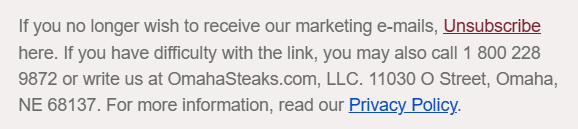
- Physical Postal Address: This is a universal requirement in most anti-spam legislation. It legitimizes the sender and provides a tangible point of contact.
- Clear and Functional Unsubscribe Link: The ability to opt-out easily is not just a courtesy; it’s a legal mandate. The link must be prominent, easy to find, and functional, leading to an immediate unsubscribe process or a preference center. Hiding this link is counterproductive, as frustrated subscribers are more likely to report an email as spam, which is far more damaging to sender reputation than a simple unsubscribe.
- Sender Identification: Clearly stating who the email is from is essential. This usually includes the company name and, if applicable, the specific brand or division sending the message.
Strategic Additions (Nice-to-Have for Enhanced Engagement and Trust):
Once the legal prerequisites are met, the footer transforms into a valuable space for deepening subscriber relationships and extending brand reach.
- Preference Center Link: Instead of a full unsubscribe, offering a preference center allows subscribers to tailor the frequency or type of emails they receive. This empowers users, reduces blanket unsubscribes, and enhances engagement.
- Social Media Links: Connecting to social profiles provides additional avenues for engagement, fostering community and expanding the brand’s digital footprint.
- Privacy Policy Link: Beyond legal requirements (especially under GDPR), a link to the privacy policy demonstrates transparency about data handling, building trust.
- Contact Information/Customer Service: Providing an email address or a link to a contact page offers another channel for customer support, reinforcing accessibility.
- Website Link/Brand Logo: A consistent brand logo and a direct link back to the company website reinforce brand identity and drive traffic.
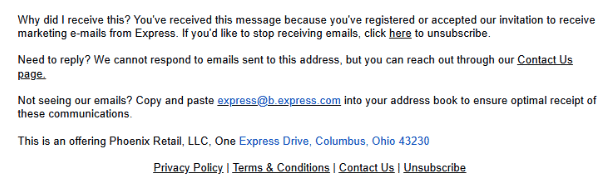
- "Why You’re Receiving This Email" Statement: A short, reassuring message reminding subscribers why they are receiving the email (e.g., "You are receiving this email because you subscribed to our newsletter…") can significantly reduce spam complaints by jogging recipients’ memory.
- Forward-to-a-Friend Link: Encourages organic sharing and expands reach to new potential subscribers.
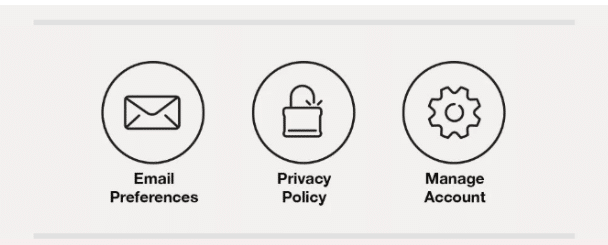
Examples from leading brands demonstrate effective integration of these elements. Some brands, like Omaha Steaks, strategically place large, clear Call-to-Action (CTA)-type buttons for links like "Manage Preferences" or "View in Browser" just above the traditional footer, improving accessibility, particularly on mobile devices. This approach acknowledges that a significant portion of email opens—often over 50%—occur on mobile phones, making tappable elements critical for user experience. Another effective strategy is including the "Why you’re receiving this email" statement, which preemptively addresses common reasons for spam complaints.
Best Practices for Design and Implementation
To ensure the footer works effectively, several best practices should be rigorously followed:
- Keep it Clean and Concise: A cluttered footer with an overwhelming number of links and disclaimers is easily ignored. Prioritize essential elements and add only those extras that genuinely offer value or enhance the user experience. Readability is key.
- Don’t Bury the Unsubscribe Link: This cannot be stressed enough. Hiding the unsubscribe link out of fear of losing subscribers is a self-defeating strategy. Frustrated recipients will bypass a hidden link and mark the email as spam, severely damaging sender reputation and deliverability. A clearly visible and functional unsubscribe link is a sign of respect for the subscriber and a safeguard for the sender.
- Design for Mobile-First: With the majority of email opens occurring on smartphones, footer text must be legible without zooming, and links must be adequately spaced to prevent accidental taps. Responsive design principles are non-negotiable for the footer.
- Maintain Consistency: Use the same footer format, fonts, and brand colors across all email campaigns. This consistency builds brand recognition and reinforces trustworthiness over time.
- Test All Links Rigorously: Broken unsubscribe links, dead social media icons, or defunct privacy policy links are common and entirely avoidable mistakes. Every link in the footer must be tested before each send, especially after template updates or platform migrations.
- Revisit Periodically: Regulations evolve, and businesses change. A physical address that was accurate two years ago, or a social media channel your company no longer actively uses, can quietly become a liability or a dead end. Conduct an annual audit of your email footer to ensure all information is current, compliant, and relevant.
The Impact of a Strategically Designed Footer
The strategic design and consistent application of an effective email footer yield multifaceted benefits for businesses and subscribers alike:
- For Businesses: Improved deliverability rates due to a strong sender reputation, mitigated legal risks from non-compliance, enhanced brand perception through consistent branding and professionalism, and deeper customer engagement facilitated by accessible preference centers and social links. Email marketing strategists consistently emphasize that a robust footer transforms a mere legal obligation into a powerful tool for engagement and brand loyalty.
- For Subscribers: Increased confidence in the legitimacy of communications, greater control over the types and frequency of emails received, and a perception that their inbox is respected. Legal experts frequently caution that overlooking footer details is a significant oversight, comparable to neglecting critical disclaimers in other marketing materials.
- For the Email Marketing Industry: The collective adherence to robust footer practices elevates industry standards, promotes ethical marketing, and contributes to a healthier email ecosystem, reducing spam and fostering trust between senders and recipients. Data from major email service providers consistently shows that emails with transparent, well-designed footers experience lower spam complaint rates and higher engagement metrics.
Conclusion: The Footer as a Strategic Asset
The email footer, despite its often-diminutive size and placement at the bottom of a message, carries an outsized responsibility. It is the silent guardian of compliance, the subtle architect of trust, and an indispensable extension of your brand identity. Treating it with the same intentionality and strategic foresight as the rest of your email campaign is not merely a recommendation; it is a strategic imperative for navigating the complexities of modern email marketing. By meticulously crafting and regularly reviewing your email footer, marketers can transform a potential liability into a powerful asset that supports deliverability, strengthens subscriber relationships, and reinforces brand integrity with every single send.

To ensure every email send remains compliant, deliverable, and consistently on-brand, advanced solutions like Validity Engage leverage AI-powered email intelligence. Built on the world’s largest email data network, such platforms automatically remove compliance risks and boost email performance, allowing marketers to produce exceptional results more efficiently.
Originally published on August 26, 2026

 Pevita Pearce
 Sagoh