Sagoh
Every September, the global technology community anticipates Apple’s annual keynote address, a pivotal event that consistently unveils the company’s latest advancements across its hardware and software ecosystems. The September 2026 presentation proved no exception, delivering a suite of transformative updates designed to redefine user interaction and digital engagement. Alongside enhancements to perennial favorites like the Apple Watch and AirPods, the spotlight shone brightly on several groundbreaking introductions: the highly anticipated foldable iPhone, christened "The Duo," a significantly overhauled operating system, iOS 27, and the debut of Apple Intelligence, a sophisticated on-device artificial intelligence framework. While these innovations promise a more intuitive and integrated user experience, their implications for digital communication, particularly email marketing, are profound and warrant immediate attention from businesses worldwide.
The Dawn of a New Era: Unpacking Apple’s Core Announcements
Apple’s strategic product releases are rarely isolated events; they often signal a broader vision for the future of personal computing. The September 2026 announcements collectively represent a significant leap forward, marrying cutting-edge hardware with intelligent software.
The Duo: Apple Enters the Foldable Frontier
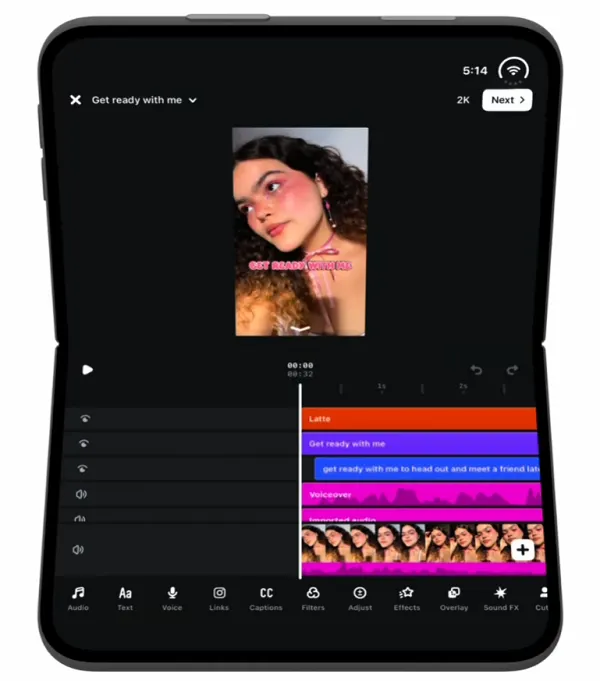
For years, rumors of an Apple foldable device have circulated, and in 2026, "The Duo" officially arrived, marking Apple’s entry into the burgeoning foldable smartphone market. This device stands out with the largest screen ever seen on an iPhone, a meticulously engineered display that adapts seamlessly as the device transitions between folded, unfolded, and rotated orientations. Its design philosophy emphasizes versatility, allowing users to leverage a compact outer display for quick interactions while offering an expansive, tablet-like inner screen for immersive content consumption and productivity. A key feature of The Duo is its robust support for the "Split View" functionality, enabling two applications to run simultaneously side-by-side, a capability that significantly enhances multitasking.
The introduction of The Duo places Apple squarely in a competitive segment previously dominated by manufacturers like Samsung and Huawei. While Apple has historically waited to enter nascent markets until its technology is refined, The Duo’s unveiling suggests a matured foldable display technology, likely featuring advanced hinge mechanisms and durable screen materials designed to withstand daily use. Early reports from industry analysts suggest The Duo’s entry could significantly accelerate the adoption of foldable devices, given Apple’s vast customer base and reputation for premium user experiences. Data from market research firms like IDC and Canalys indicate a steady growth in the foldable phone market, projected to reach tens of millions of units annually by the mid-2020s, with Apple’s involvement expected to inject considerable momentum.
iOS 27: A Foundation for Intelligent Interaction
Accompanying The Duo is iOS 27, the latest iteration of Apple’s mobile operating system, meticulously engineered to complement the new hardware’s capabilities while introducing a paradigm shift in user interaction. Central to iOS 27’s innovation is the deep integration of advanced Siri AI. This enhanced artificial intelligence engine moves beyond simple command recognition, enabling natural-language questions and complex task automation. According to Apple’s official statements, users can now "automate daily tasks with a simple description, and all of the required steps are assembled on your behalf." This means Siri AI can proactively understand context, anticipate user needs, and execute multi-step processes with minimal input. For instance, a user could verbally request Siri to "find that old email from Sarah about the project deadline," and the system would intelligently parse through messages, identify the sender, topic, and even specific dates, retrieving the relevant communication without requiring precise keywords.
The advancements in Siri AI within iOS 27 are indicative of a broader industry trend towards more sophisticated, context-aware digital assistants. Unlike previous iterations, which often relied on rigid command structures, the new Siri leverages large language models and on-device processing to interpret nuances in human speech and intent. This shift promises a more fluid and less friction-filled interaction with the device, extending across all native applications and, crucially, influencing how third-party applications can integrate with the system.
Apple Intelligence: The Orchestrator of the Ecosystem
Perhaps the most significant underlying technology unveiled is Apple Intelligence, a comprehensive framework designed to imbue Apple’s entire ecosystem with proactive, context-aware intelligence. This system is not merely an upgrade to Siri but a fundamental re-architecture of how data is managed and utilized across applications. The Apple Intelligence upgrades mean that the native Mail application can now proactively surface suggestions drawn directly from message content. This is facilitated by a "system orchestrator" that possesses the unique ability to pull information from Mail—and indeed, from other applications like Calendar, Messages, and Safari—to complete actions elsewhere within iOS.
A compelling example provided by Apple illustrates this capability: if a user receives a flight confirmation email, Apple Intelligence can automatically retrieve the flight number, departure time, and gate information, and then proactively suggest adding it to the Calendar, providing real-time flight status updates in the Notifications center, or even offering to open the information directly in the Phone app for easy access during check-in. This level of cross-app intelligence signifies a shift from siloed applications to a truly integrated digital assistant that understands the user’s workflow and anticipates their needs, all while prioritizing user privacy through on-device processing where possible and transparent data handling.
Chronology of Innovation and Market Trajectory
Apple’s annual September events serve as critical milestones in its product release cycle. The 2026 announcements followed a predictable pattern:
- Early 2026: Initial developer betas for iOS 27 and Apple Intelligence were likely seeded, allowing app developers to begin adapting their applications to the new features and foldable form factor. This period is crucial for ensuring a robust ecosystem ready for launch.
- September 2026: The official public unveiling of The Duo, iOS 27, and Apple Intelligence during the highly anticipated keynote address. This event generates global media coverage and sets market expectations.
- Late September/Early October 2026: General availability of iOS 27 for compatible devices, followed closely by the retail launch of The Duo. This staggered release allows for immediate software updates for existing users while introducing the flagship hardware.
The market impact of these releases is expected to be substantial. The foldable phone market, while growing, has faced challenges related to cost, durability, and software optimization. Apple’s entry with The Duo, backed by its design prowess and software integration, is poised to address many of these concerns, potentially driving mainstream adoption. Furthermore, the advancements in AI with iOS 27 and Apple Intelligence are not just incremental updates but foundational changes that will influence how users interact with their devices for years to come, setting a new benchmark for intelligent mobile operating systems.
Broader Industry Reactions and Anticipated Developer Response
The announcements from Apple’s 2026 event have elicited a mix of excitement and strategic deliberation across the tech industry. Competitors, particularly in the Android foldable space, are expected to intensify their innovation efforts to counter Apple’s formidable entry. Samsung, a pioneer in foldables, has consistently pushed the envelope with its Galaxy Z Fold and Flip series, and Apple’s arrival will likely spur further advancements in display technology, hinge design, and software optimization for flexible screens.
From the developer community, the initial reaction is one of enthusiastic challenge. Adapting existing applications to seamlessly function across The Duo’s varying screen states and leveraging the new Apple Intelligence APIs will require significant investment in development resources. However, the promise of deeper integration with the OS and the potential for enhanced user engagement through AI-driven features presents a compelling opportunity. Developers will be keen to explore how to make their apps "Apple Intelligence-aware," ensuring their content is discoverable and actionable by the system orchestrator.
Redefining Engagement: The Impact on Email Marketing
For email marketers, Apple’s 2026 announcements are not merely technical updates; they represent a fundamental shift in the landscape of digital communication. Given that iPhones command a significant portion of the global smartphone market—with market share in the U.S. often hovering around 60% according to data from sources like Litmus and StatCounter—businesses operating at enterprise scale simply cannot afford to overlook these developments. The implications span design, content strategy, deliverability, and even the very metrics used to measure success.
Design for the Foldable Future: The Duo’s Influence
The Duo’s unique form factor presents both opportunities and challenges for email design. Its larger unfolded display provides unprecedented screen real estate, allowing image-heavy and multi-column email campaigns to "breathe" more effectively. This could translate into richer, more engaging visual experiences, potentially supporting stronger engagement for campaigns designed to showcase products or provide detailed information. Marketers now have the canvas for more immersive storytelling within the email client.
However, this opportunity comes with a critical caveat: the majority of immediate interactions, such as scanning notifications, checking alerts, or quickly triaging messages, will likely still occur on The Duo’s compact outer display. This necessitates a dual-pronged approach to email design, demanding impeccable responsiveness. Emails must render just as cleanly and legibly on the smaller screen as they do on the expansive inner display. This reinforces the paramount importance of robust responsive design principles, utilizing media queries and flexible layouts to ensure optimal viewing across all screen sizes and orientations. Marketers must prioritize clear, concise hero content visible on the outer display, while reserving more detailed or interactive elements for the unfolded experience. Neglecting optimization for the compact screen risks messages being truncated or appearing cluttered, leading to immediate disengagement.
The Rise of Email SEO: Optimizing for Siri AI Searchability
Siri AI’s enhanced natural-language search capabilities are a game-changer for email discoverability. Subscribers often save emails for future reference—be it a receipt, a discount code, or important information—and Siri’s ability to intelligently retrieve these messages through natural language is a significant positive development for user experience. However, this also introduces a new imperative for email marketers: optimizing for "Email SEO."
To ensure their messages are favorably surfaced by Siri AI, marketers must make subject lines, sender names, and the structured content within emails utterly unambiguous. Vague or overly promotional language in subject lines, for example, could hinder Siri’s ability to accurately categorize and retrieve an email when a user asks for something specific. Sender names should be consistent and recognizable. More critically, structured content such as dates, order numbers, confirmation codes, and event details must be clearly identifiable within the email’s HTML. Employing semantic HTML tags, microdata, or schema markup (where applicable and supported) can significantly aid AI systems in parsing and understanding the context of information within an email. This shift puts greater pressure on content strategy, moving beyond mere click-throughs to ensuring the utility and discoverability of information contained within the message.
Apple Intelligence: The Intermediary and the Data Source
Apple Intelligence’s system orchestrator, with its ability to pull information from Mail and other apps, fundamentally redefines the role of transactional and confirmation emails. These messages, which contain critical structured data like flight details, reservation numbers, shipping updates, or account changes, are no longer just static communications. They become valuable sources of actionable data that Apple Intelligence can find, interpret, and act upon on behalf of the user. For instance, a flight confirmation email could directly populate a user’s calendar with travel details, or a shipping notification could trigger a Maps integration to track a package, all initiated by the AI without the user ever opening the email itself.
This enhanced utility for transactional emails presents an opportunity for marketers to ensure these messages are not only informative but also highly "AI-readable." Clear, concise, and structured presentation of key data points will be crucial. However, for promotional emails, the implications are more nuanced. Marketers should anticipate that traditional engagement metrics—such as open rates and click-through rates—may increasingly underrepresent the actual usefulness or impact of a message. As Apple Intelligence deepens its role as an intermediary between brands and recipients, a user might glean all necessary information from an AI summary or a proactive suggestion without ever explicitly "opening" the email in the traditional sense or clicking a link within it. This necessitates a re-evaluation of how email campaign success is measured, potentially shifting focus towards downstream conversions, app engagement, or other proxies for value derived from the email content, even if not directly tracked within the email client.
Privacy, Trust, and the "Cost of Bad Emails"
Apple’s steadfast commitment to user privacy will undoubtedly extend to Apple Intelligence. While the system orchestrator leverages personal data, Apple emphasizes that much of the processing occurs on-device, and data shared with cloud services is anonymized or handled with explicit user consent. For marketers, this reinforces the need for transparency and value-driven communication. Emails perceived as intrusive, irrelevant, or spammy are less likely to be surfaced favorably by an intelligent system designed to prioritize user experience.
The overarching message from Apple’s 2026 releases is unequivocally clear: these new features do not change the fundamental principles of what constitutes a good email—namely, relevance, value, and clarity. Instead, they substantially raise the "cost" of sending bad ones. Emails that are not responsive, contain ambiguous content, lack clear calls to action, or fail to provide readily extractable structured data will be at a severe disadvantage. They risk being ignored by users, deprioritized by Siri AI, or entirely bypassed by Apple Intelligence’s proactive suggestions.
Strategic Imperatives for Email Marketers
To thrive in this evolving landscape, email marketers must embrace a proactive and adaptive strategy:
- Prioritize Hyper-Responsiveness: Invest in robust responsive design frameworks that flawlessly adapt emails across all screen sizes, from the compact outer display of The Duo to its expansive inner screen, and every device in between.
- Optimize for AI Searchability: Craft clear, concise, and unambiguous subject lines and sender names. Critically, structure email content, especially transactional and informational messages, using semantic HTML and clearly labeled data points to enhance AI discoverability.
- Rethink Engagement Metrics: Move beyond sole reliance on open and click rates. Explore alternative metrics that capture the value derived from email content, such as app engagement triggered by email information, direct conversions, or interactions with AI-generated summaries.
- Embrace Structured Data: For transactional and confirmation emails, ensure that key information (e.g., dates, order numbers, addresses) is presented in a highly parsable format. This makes emails more valuable as data sources for Apple Intelligence.
- Focus on Value and Relevance: With AI acting as a potential filter, emails must consistently deliver clear value to the recipient. Irrelevant or overly promotional content risks being deprioritized or ignored by an intelligent system aiming to enhance user experience.
- Personalization with Purpose: Leverage AI’s ability to understand user context to deliver highly personalized and timely content. This could mean dynamic content blocks based on user behavior or location, driven by insights from Apple Intelligence.
The September 2026 announcements from Apple represent a watershed moment for digital communication. The Duo, iOS 27, and Apple Intelligence collectively usher in an era where device hardware and software are deeply intertwined with artificial intelligence, fundamentally altering how users interact with their digital world. For email marketers, this is not merely an upgrade cycle but a clarion call to innovate. How marketers respond to these profound shifts—by adapting their design, content, and measurement strategies—will ultimately determine whether their messages are favorably surfaced by Siri AI and Apple Intelligence, or whether they are routed around entirely in the quest for a more intelligent and frictionless user experience.


 Iffa Jayyana

 Pevita Pearce