Suro Senen

In an increasingly digitized and interconnected corporate landscape, the concept of employee advocacy has evolved from a niche marketing tactic into a cornerstone of holistic brand strategy. Companies are recognizing the immense power their own workforce holds in shaping public perception, driving recruitment, and even influencing sales. However, the true value of an employee advocacy program remains elusive without a robust framework for measurement. This article delves into the critical components of assessing employee advocacy success, providing a comprehensive guide to key performance indicators (KPIs), industry benchmarks, and methods for calculating tangible return on investment (ROI).
The Strategic Imperative of Employee Advocacy in the Modern Era
Employee advocacy, broadly defined, is the promotion of an organization by its employees. This can manifest through sharing company news, job openings, industry insights, or personal experiences related to their work on social media platforms and beyond. The rise of this phenomenon is rooted in several converging trends: a general decline in trust for traditional corporate messaging, the increasing influence of peer recommendations, and the ubiquity of social media. Research consistently indicates that messages shared by employees carry significantly more weight and credibility than those originating directly from a company’s official channels. For instance, a report by Edelman revealed that employees are often seen as more trustworthy spokespeople than CEOs or public relations departments, lending greater authenticity to shared content.

In this environment, merely encouraging employees to share content is insufficient. To justify resource allocation, secure sustained leadership buy-in, and continuously refine strategies, organizations must meticulously measure the impact of their advocacy efforts. Without quantifiable data, an employee advocacy program risks being perceived as a superficial initiative, struggling to compete for budget and attention against other, more easily measurable business functions. This lack of data can lead to underinvestment, missed opportunities for optimization, and ultimately, the program’s stagnation or abandonment.
Building a Comprehensive Measurement Framework
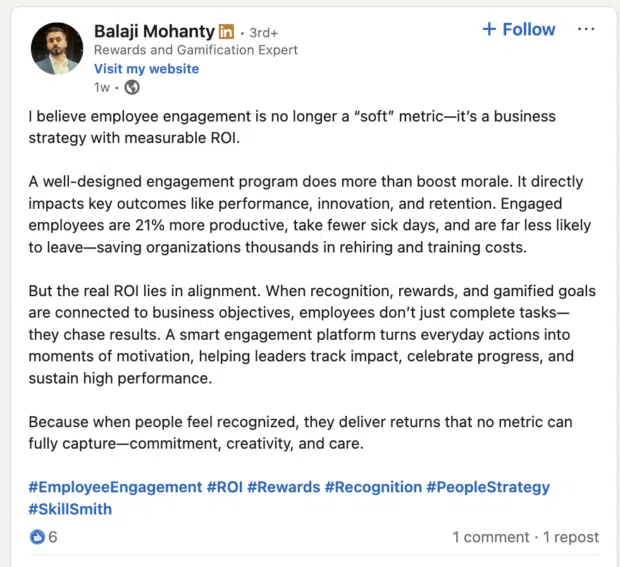
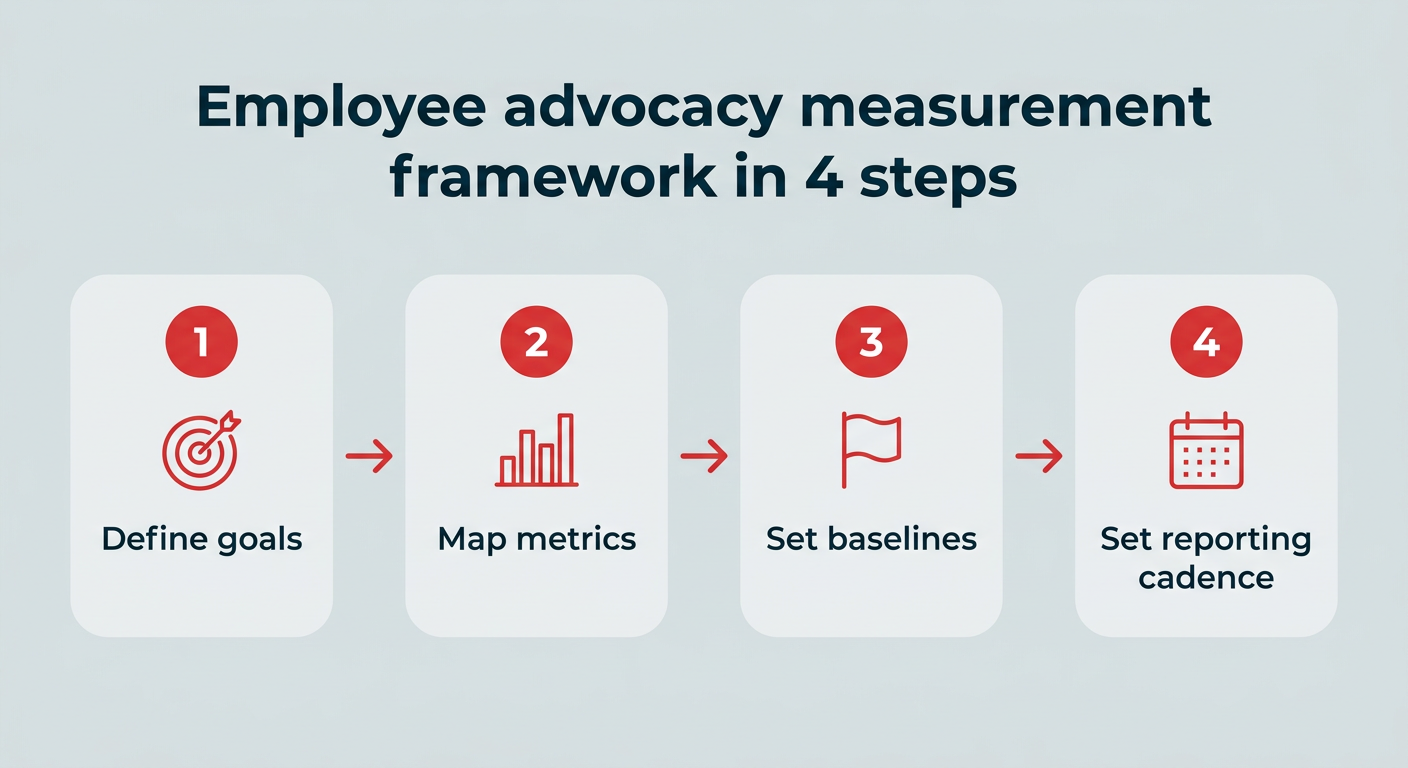
The foundation of successful employee advocacy measurement lies in establishing a clear framework that aligns program activities with overarching business objectives. This process typically involves four sequential steps: defining clear goals, mapping relevant metrics to these goals, setting realistic baselines, and establishing a consistent reporting cadence.

-
Define Program Goals: Before tracking any data, it is imperative to articulate what the employee advocacy program is intended to achieve. Common objectives include increasing brand awareness, enhancing employer branding for recruitment, driving website traffic and lead generation, fostering a positive company culture, and improving employee engagement and retention. Each goal necessitates a different set of metrics. For example, a program focused on recruitment will track applicant volume and quality, while one centered on lead generation will monitor click-through rates and conversions.
-
Map Metrics to Goals: Once goals are established, specific KPIs must be identified that directly reflect progress toward those goals. This ensures that measurement efforts are focused and yield actionable insights rather than a deluge of irrelevant data. This mapping creates a direct line of sight between employee activities and business outcomes.
-
Set Baselines: To demonstrate actual impact, it is crucial to establish baseline metrics before the program is fully implemented or significantly scaled. This provides a point of comparison, allowing organizations to quantify the program’s contribution over time. Baselines can be derived from previous social media performance, recruitment data, or sales figures prior to the advocacy initiative.
-
Establish Reporting Cadence: Regular reporting is essential for demonstrating value and facilitating continuous improvement. Operational metrics, such as employee participation and content engagement, might be reviewed monthly. Broader business impact metrics, like pipeline influence and cost savings, are typically reported quarterly to senior leadership, aligning with existing financial and marketing reporting cycles.
Key Performance Indicators (KPIs) Across Business Functions
Employee advocacy impacts various facets of an organization, and its success should be measured through a diverse set of KPIs categorized by their business function.
-
Awareness and Reach Metrics: These KPIs quantify how widely company content travels when shared by employees.
- Reach: The total number of unique individuals who saw employee-shared content.
- Impressions: The total number of times employee-shared content was displayed.
- Share of Voice: The percentage of overall online conversations about a brand or industry that originate from employee advocacy compared to competitors or other brand channels.
- Analysis: High reach and impressions demonstrate expanded brand visibility without incurring paid advertising costs. Calculating the "earned media value" (EMV) of these impressions by equating them to what a similar paid campaign would cost provides a tangible dollar figure. A common formula is EMV = (Impressions / 1,000) * CPM (Cost Per Mille/Thousand). For example, if employees generate 1 million impressions and the average CPM for paid ads is $15, the EMV is $15,000.
-
Engagement Metrics: These indicators reveal how audiences interact with employee-distributed content.
- Likes, Comments, Shares: Traditional social media engagement metrics. Employee-shared content often garners higher engagement rates due to its perceived authenticity.
- Click-Through Rate (CTR): The percentage of people who click on a link within an employee’s post. LinkedIn data suggests that CTR on employee-shared content can be twice as high as that from company pages.
- Sentiment: The emotional tone (positive, neutral, negative) of comments and discussions around employee-shared content. This qualitative metric provides deeper insights into audience perception.
- Analysis: Higher engagement and CTR signal that employee voices resonate more effectively with audiences, fostering stronger connections and driving more qualified traffic.
-
Recruiting Metrics: Employee advocacy is a potent tool for talent acquisition.

- Applicant Volume & Quality: The number of applications received, and the caliber of candidates, directly attributable to employee referrals or shares.
- Time-to-Hire: The duration from job posting to candidate acceptance. Employee advocacy can shorten this cycle by attracting pre-qualified candidates.
- Cost-per-Hire: The average cost incurred to recruit a new employee. Advocacy can significantly reduce this by minimizing reliance on expensive external recruiters or job boards.
- Analysis: A strong employee advocacy program turns every employee into a brand ambassador, creating an authentic portrayal of company culture that attracts candidates who are a better fit, leading to more efficient and cost-effective hiring.
-
Sales and Lead Generation Metrics: These KPIs link advocacy directly to revenue.
- Website Traffic from Employee Shares: The volume of visitors directed to the company website via links shared by employees, often tracked using UTM parameters.
- Leads Generated & Conversions: The number of new leads and subsequent conversions (e.g., demo requests, whitepaper downloads, sales inquiries) originating from employee advocacy.
- Pipeline Influence: The impact of employee advocacy on the sales pipeline, including accelerating deal cycles or influencing deal closures. Integration with CRM systems is crucial here.
- Analysis: The direct correlation between employee shares and sales outcomes demonstrates the tangible economic value of advocacy, moving it beyond a mere "soft" marketing activity. Victoria Samways, Marketing & Brand Manager at Major Tom, exemplified this by attributing over $100k in pipeline value and a higher-than-average win rate to a single employee advocacy campaign.
-
Employee Participation Metrics: These metrics assess the internal health and engagement of the program itself.
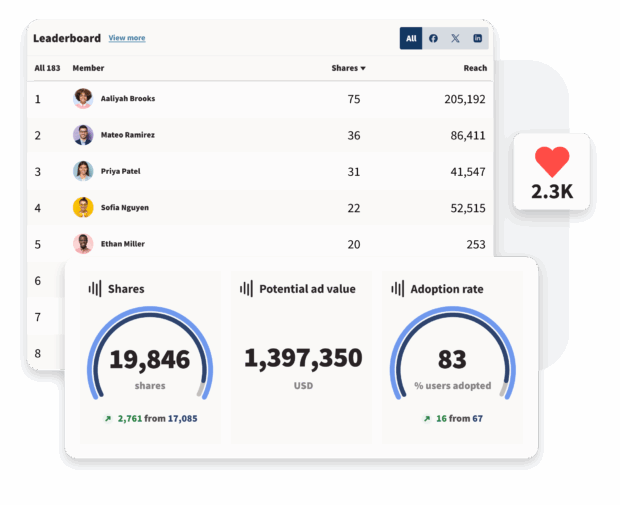
- Adoption Rate: The percentage of eligible employees who have signed up for and are actively using the advocacy platform.
- Participation Rate: The percentage of signed-up employees who regularly share content.
- Average Shares Per Employee: The frequency with which active participants share content.
- Analysis: High adoption and participation rates indicate a healthy, engaging program that employees value. Low rates signal potential issues with content, incentives, or ease of use.
-
Cultural Impact Metrics: Beyond direct business outcomes, advocacy fosters a stronger internal culture.
- Employee Survey Scores: Changes in scores related to employee pride, engagement, and satisfaction after joining the advocacy program.
- Thought Leadership Growth: The number of employees actively creating original content, participating in industry discussions, and growing their professional networks.
- Qualitative Feedback: Testimonials and anecdotal evidence from employees about the program’s benefits to their personal brand and career development.
- Analysis: A positive cultural impact often translates into increased loyalty and motivation, contributing indirectly to retention and productivity.
-
Employee Retention Metrics: Loyal advocates often become long-term employees.
- Retention Rate of Advocates vs. Non-Advocates: Comparing the turnover rates between employees actively participating in the program and those who are not.
- Voluntary Turnover Rate: A general measure of employees leaving voluntarily, which can be positively influenced by a strong advocacy culture.
- Analysis: When employees feel valued and empowered to represent their company, they are more likely to stay. This reduces recruitment costs and preserves institutional knowledge, offering significant long-term savings.
Benchmarking for Continuous Improvement
Establishing effective benchmarks is crucial for evaluating performance and setting realistic targets. While comparing against industry averages can provide some context, the most valuable benchmark is often an organization’s own historical performance.
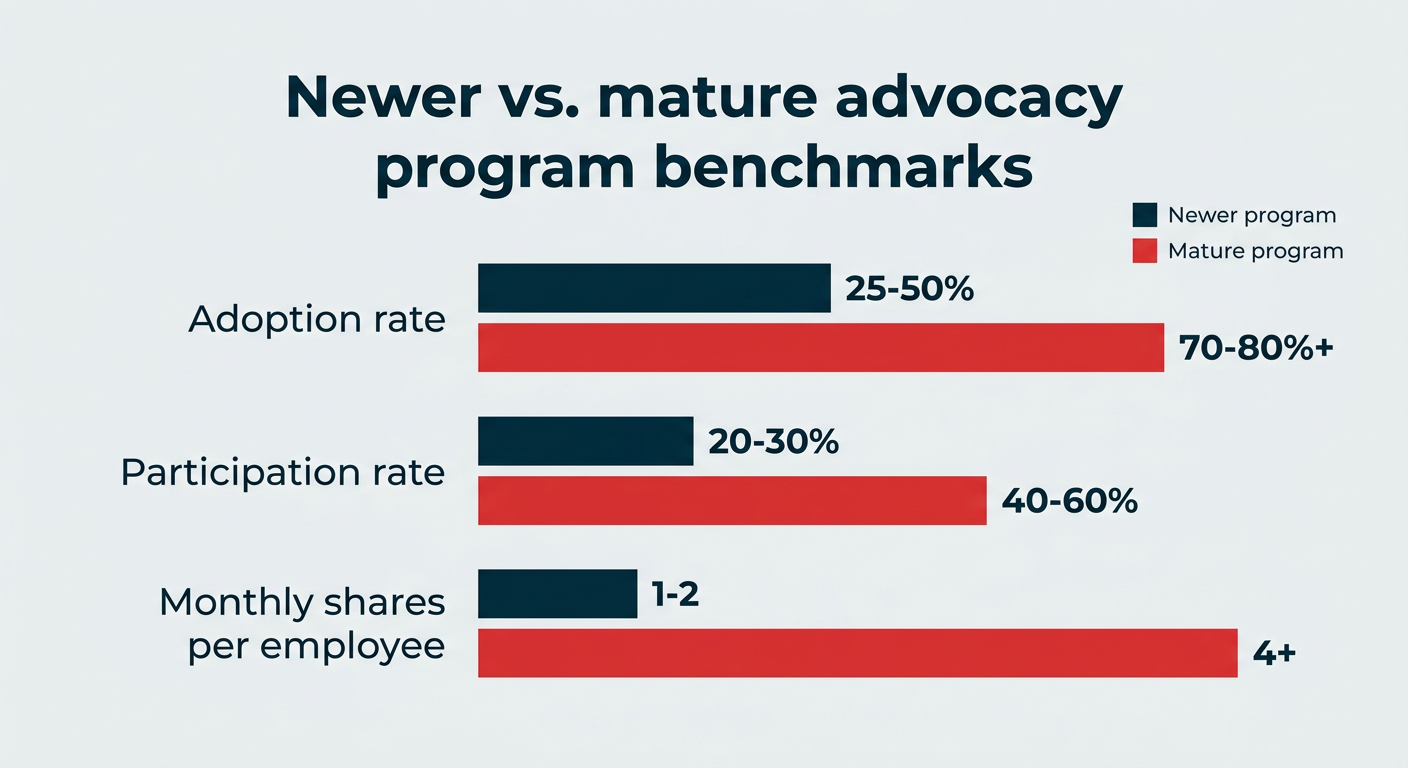
For newer programs, initial benchmarks will naturally be lower. An adoption rate of 25-50% might be a good starting point, with a participation rate of 20-30% of signed-up employees. As a program matures, these figures should ideally rise to 70-80%+ for adoption and 40-60% for participation. Similarly, average shares per active employee might begin at 1-2 per month for new programs, evolving to 4+ in mature programs. The goal is consistent upward trend across all key metrics.
Hootsuite’s own employee advocacy program, for example, a mature initiative, achieved an 80% sign-up rate and generated 4.1 million employer brand impressions in a single quarter, demonstrating the potential of a well-established program. These figures serve as aspirational targets rather than immediate expectations for nascent programs.
Calculating the Return on Investment (ROI) of Employee Advocacy
The ultimate measure of any business initiative is its ROI. For employee advocacy, this involves quantifying the total value generated by the program against its total costs. The standard ROI formula is:
ROI (%) = [(Value Generated – Program Costs) / Program Costs] × 100
To calculate "Value Generated," organizations must assign a dollar value to the various positive outcomes:
- Attributed Revenue: Direct sales or pipeline influence from employee-generated leads.
- Recruiting Savings: Reductions in cost-per-hire and time-to-hire.
- Earned Media Value (EMV): The equivalent cost of achieving the same reach and impressions through paid advertising.
- Retention Savings: The cost avoided by retaining employees who might otherwise have left, potentially inferred by comparing retention rates of advocates vs. non-advocates.
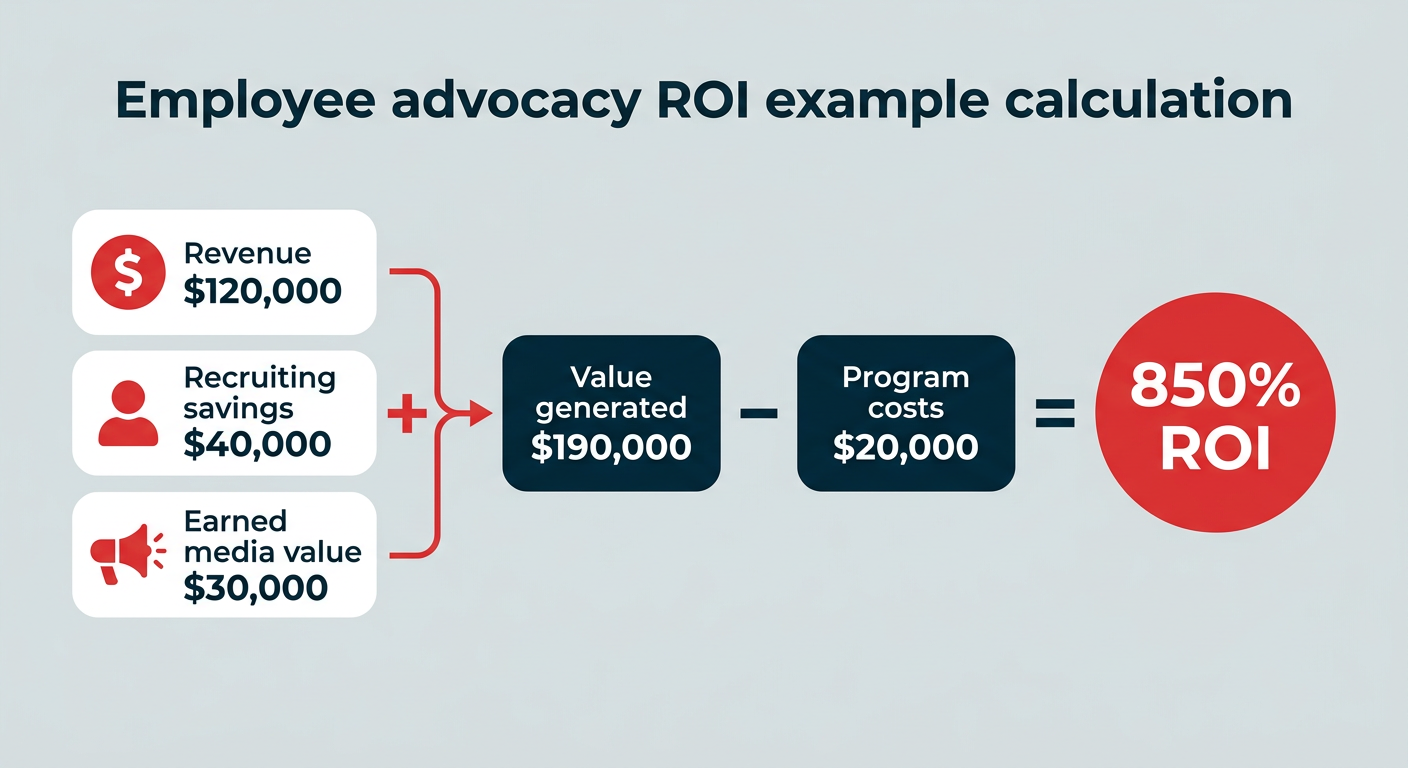
Example: If an advocacy program generates $120,000 in attributed revenue, $40,000 in recruiting savings, and $30,000 in earned media value, the total value generated is $190,000. If the program costs (platform fees, incentives, administrative time) amount to $20,000, the ROI would be:
([$190,000 – $20,000] / $20,000) × 100 = 850%. This demonstrates a highly effective program.
Reporting Results to Leadership: Focus on Business Outcomes
When presenting employee advocacy results to senior leadership, the emphasis must always be on business outcomes, not superficial metrics. Executives are primarily concerned with how the program contributes to the bottom line: lead generation, talent acquisition, cost savings, and brand reputation.

Five best practices for impactful reporting:
- Lead with the "So What": Start with the most significant business impact (e.g., "Employee advocacy generated $X in pipeline this quarter").
- Quantify in Dollars: Wherever possible, translate metrics into monetary terms (e.g., "saved $Y in recruitment costs," "achieved $Z in earned media value").
- Benchmark Against Goals: Show progress against the predefined goals and baselines.
- Connect to Broader Strategy: Explain how advocacy supports overarching company objectives (e.g., "contributing to our goal of becoming a top employer").
- Keep it Concise: Provide a high-level overview in the main report, reserving detailed operational metrics (like specific click counts or shares) for an appendix.
Tools and Technology for Seamless Measurement
Effective measurement is significantly streamlined by leveraging specialized tools.
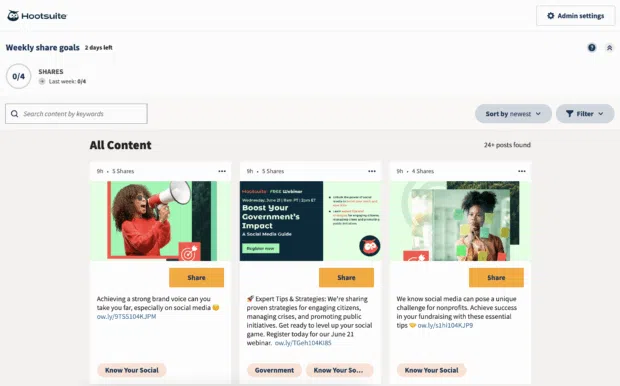
- Employee Advocacy Platforms: Dedicated platforms (like Parliament within Hootsuite Social OS) are designed to facilitate content distribution, one-click sharing, and comprehensive analytics specific to employee activity. They track adoption, participation, engagement, and post impact, often integrating with other social media management features.
- Social Media Analytics Tools: These provide broader insights into content performance across various social networks, including audience demographics, trending topics, and overall sentiment.
- Web Analytics Tools: Platforms like Google Analytics are crucial for tracking website traffic, conversions, and user behavior originating from employee-shared links, especially when combined with UTM tracking.
- CRM Systems: Integration with CRM allows for tracking lead origins, sales pipeline influence, and revenue attribution directly from advocacy efforts.
The ideal scenario involves an integrated solution that combines advocacy management with robust analytics, minimizing the need to switch between multiple platforms and ensuring data consistency. Such tools often include features like leaderboards and gamification, which Major Tom uses effectively with gift card draws to incentivize employee participation.
Seven Best Practices for Maximizing Advocacy Success
- Cultivate a Culture of Voluntary Advocacy: Employees should feel genuinely proud and empowered to share, viewing advocacy as a means to build their personal brand, not a corporate mandate. Opt-in programs are more successful.
- Separate Adoption from Activity Rates: Monitor both how many employees join the program and how many actively participate. A high adoption rate with low activity indicates a need to re-engage participants.
- Implement UTM Tracking Universally: Every link shared through the program must include UTM parameters to accurately attribute traffic, conversions, and leads back to specific employee shares. This is non-negotiable for proving ROI.
- Communicate the "Why": Ensure employees understand the strategic importance of the program, its benefits to the company, and, crucially, its benefits to their individual professional growth.
- Align Metrics with Business Goals: Continuously link advocacy data to broader business objectives (e.g., recruitment targets, sales quotas) and use insights to refine content strategy.
- Maintain a Reliable Tech Stack: Technical issues, such as disconnecting social profiles, can quickly erode trust and participation. Prioritize prompt resolution of platform glitches.
- Identify and Reward Top Advocates: Recognize and incentivize power users who consistently share and generate significant impact. This fosters a sense of appreciation and encourages continued participation.
Employee advocacy is no longer an optional add-on but a powerful, measurable force that can significantly contribute to an organization’s success across marketing, HR, and sales functions. By meticulously defining goals, tracking the right KPIs, establishing benchmarks, and calculating ROI, companies can transform "fluffy" social media activity into compelling evidence of business impact, securing its rightful place as a strategic imperative.

 Pevita Pearce

 Nana