The traditional strategy for generating software-as-a-service (SaaS) reviews—running a Net Promoter Score (NPS) survey, identifying the happiest users, and offering them gift cards for five-star feedback—is rapidly becoming obsolete. For over a decade, this formula served as the primary engine for visibility on platforms like G2, Capterra, and TrustRadius. However, a fundamental shift in how business buyers consume information, driven by the proliferation of Large Language Models (LLMs) and AI-powered search engines, has rendered the "glowing recommendation" model insufficient. As traffic to traditional review hubs plateaus or declines, vendors are being forced to overhaul their approach to customer evidence, moving away from sanitized testimonials toward honest, detailed, and comprehensive data sets that can withstand the interrogation of artificial intelligence.
The Erosion of the Traditional Review Model
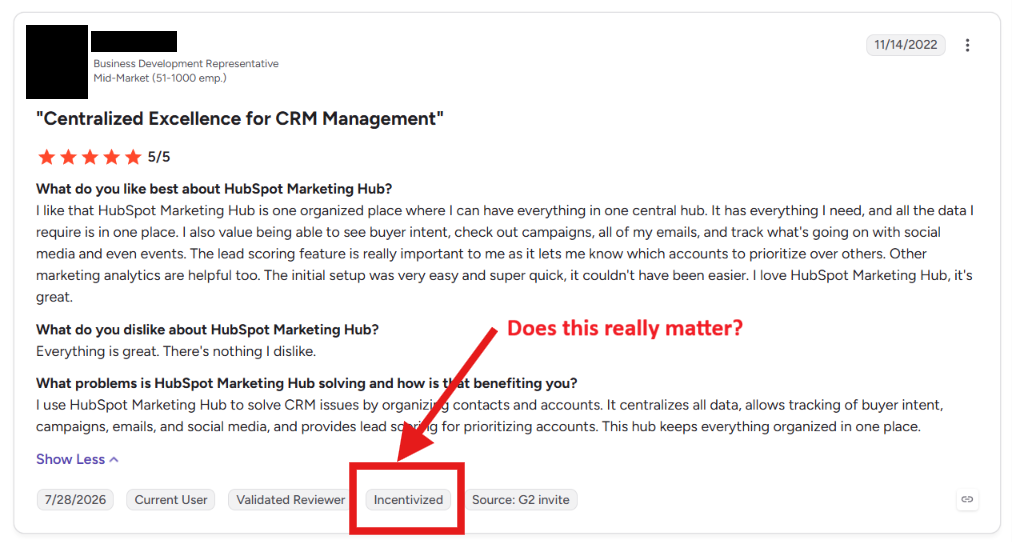
Since the mid-2010s, the B2B SaaS industry has operated under a "pay-to-play" or "incentivize-to-win" mindset regarding reviews. Marketing teams would strategically time review requests to coincide with product milestones or successful renewals, effectively "soft-gating" feedback to ensure only positive sentiment reached the public domain. This created a landscape where many platforms functioned less as objective review sites and more as repositories for marketing-generated testimonials.
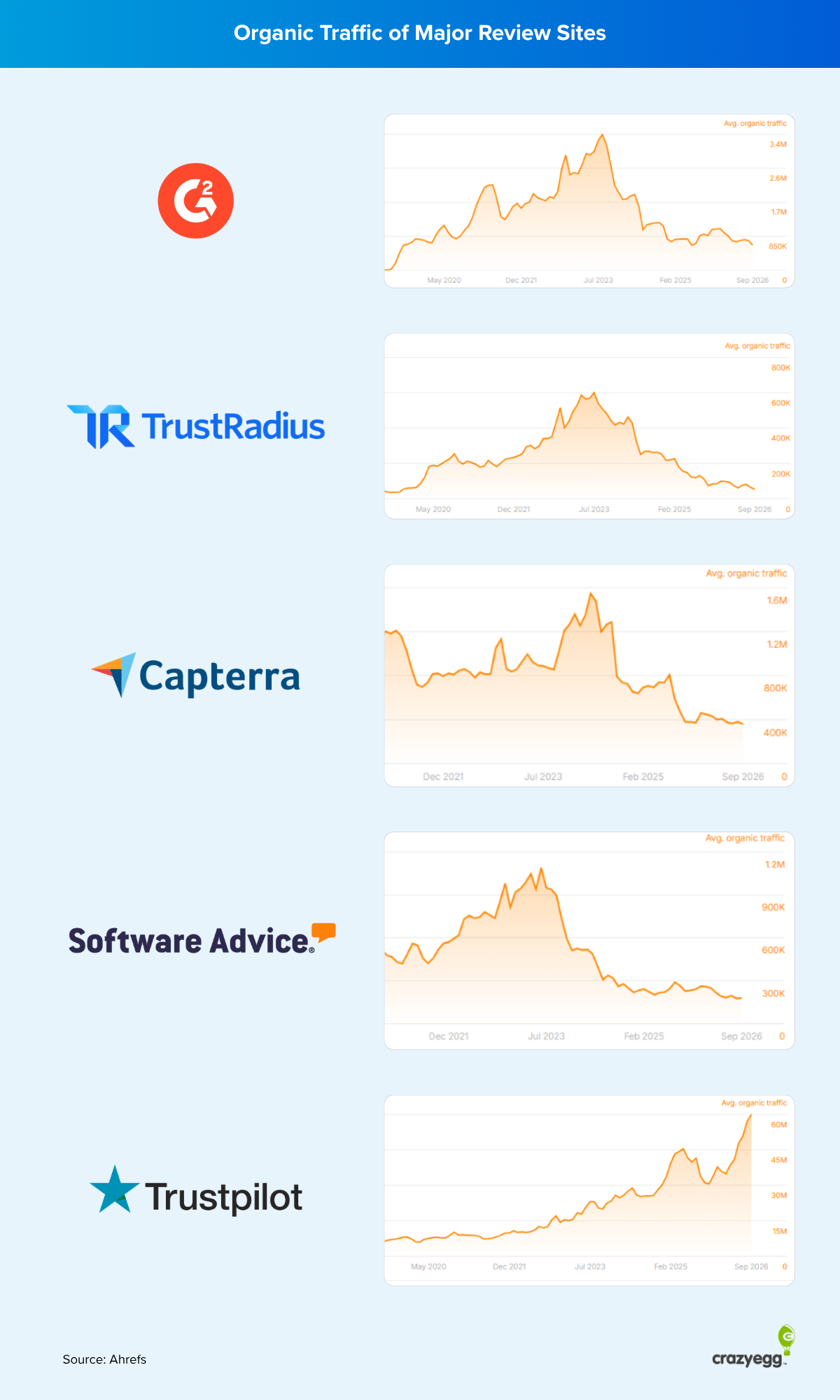
While this method successfully boosted rankings and earned vendors "Leader" badges for their pricing pages, its effectiveness was predicated on the buyer’s willingness to manually browse these sites. Recent data suggests this behavior is changing. According to organic traffic analysis from Ahrefs, major review platforms like G2, TrustRadius, and Capterra have seen significant traffic volatility and, in several cases, steady declines since their peaks in 2023. Conversely, Trustpilot has seen growth, largely due to its role as a high-authority citation source for search engines.
The primary catalyst for this decline is the rise of AI intermediaries. Instead of visiting a review site directly and scrolling through dozens of filtered comments, modern buyers are using AI tools—such as ChatGPT, Perplexity, and Claude—to synthesize information. These tools act as "consensus engines," scraping reviews, forum discussions, and technical documentation to provide a consolidated answer to specific user queries. In this new environment, a high volume of five-star ratings is less valuable than the depth and variety of the qualitative data contained within those reviews.
Chronology of the Shift: From Directories to AI Synthesis
The evolution of software evaluation has moved through three distinct phases. In the early 2000s, buyers relied on analyst firms like Gartner and Forrester for top-down expertise. By the 2010s, the "democratization of feedback" led to the rise of peer-to-peer review sites, where volume and star ratings became the dominant currency.
Starting in 2023, the industry entered the "AI Synthesis Era." Buyers now treat reviews as raw data rather than final verdicts. A 2025 study on B2B buying behavior indicates that 94% of business buyers now use AI in some form during their journey. Research from Semrush further clarifies this usage: 72% of buyers use AI for early-stage research, 62% for product comparisons, and 45% to support the final procurement decision.
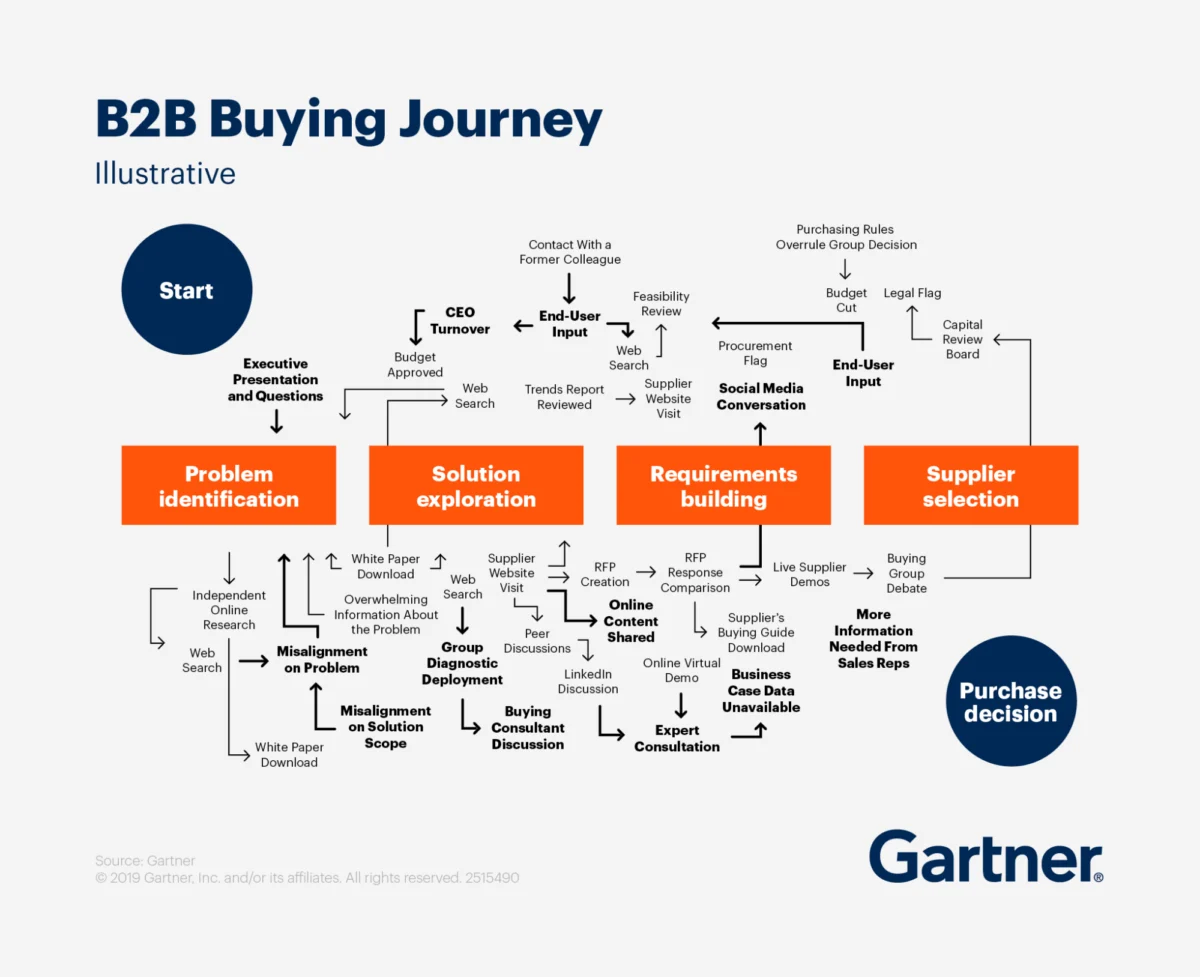
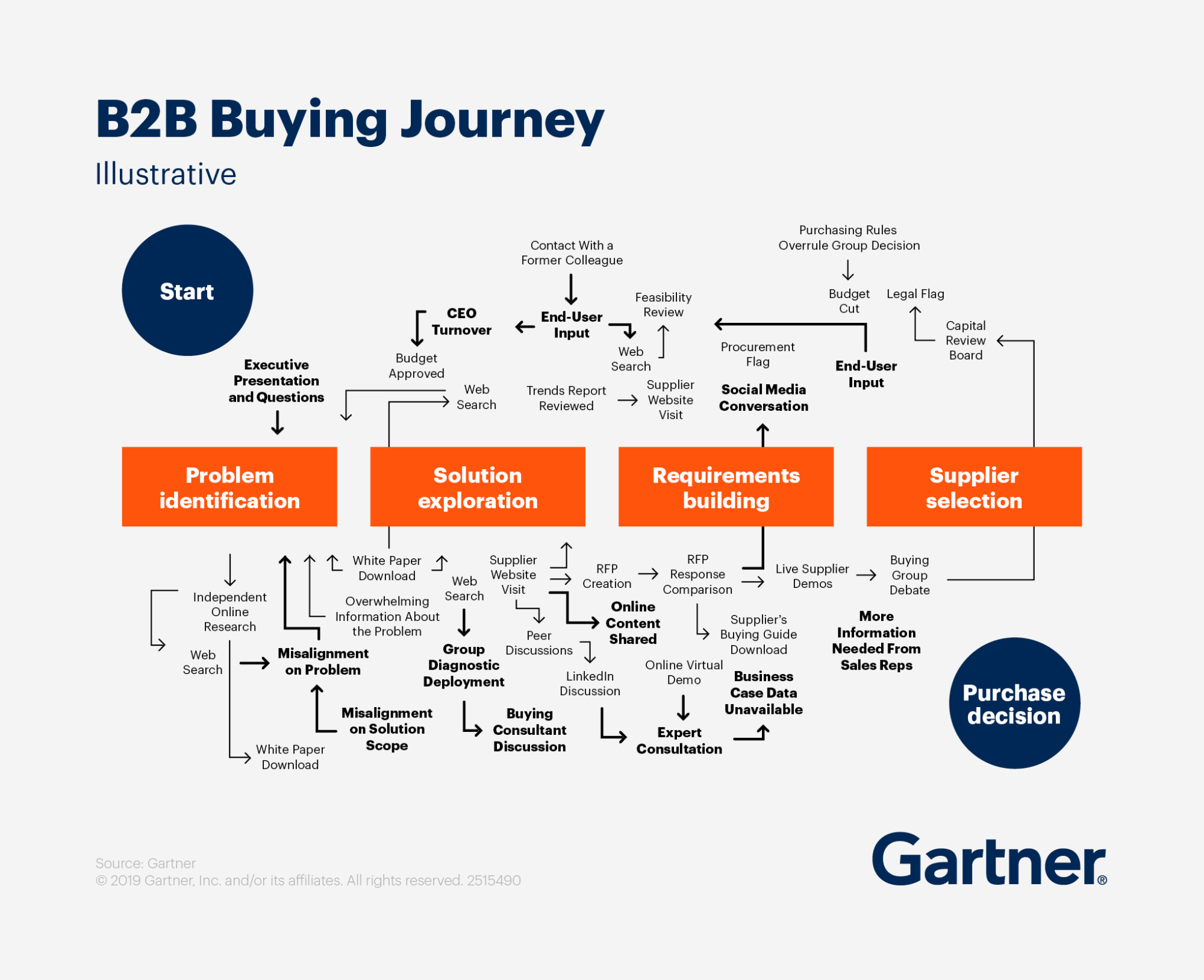
This transition has fundamentally altered the "buyer journey." Historically viewed as a linear funnel, the process is now recognized as a complex, non-linear web of tasks. Gartner’s buying-jobs model identifies six key tasks: problem identification, solution exploration, requirements building, supplier selection, validation, and consensus creation. Reviews no longer sit solely at the "selection" stage; they are now used by AI to help buyers build requirements and validate specific use cases long before a salesperson is ever contacted.
Supporting Data: The Impact of AI on Citations and Traffic
The influence of review sites has moved from the foreground to the background. While direct traffic to these sites may be waning, their role as training data for LLMs has never been more critical. Research by Omniscient found that G2 remains the top-cited source for AI prompts seeking proof and evidence for B2B software. Furthermore, following its acquisitions of Capterra, Software Advice, and GetApp, the G2 network is projected to hold the second-largest share of citations for bottom-of-funnel software queries, trailing only behind major tech news outlets.
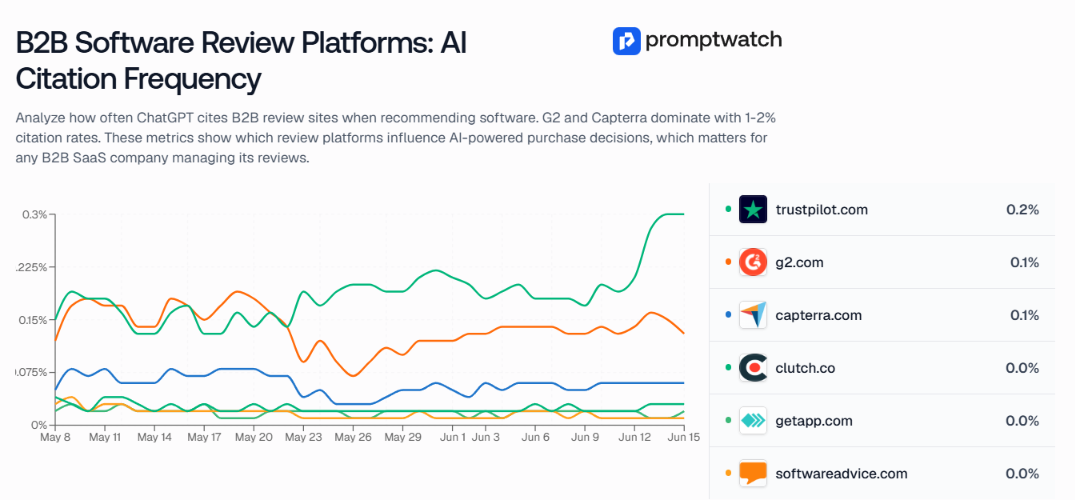
Data from PromptWatch confirms this trend, showing that ChatGPT frequently cites Trustpilot and G2 when answering queries about software reliability and performance. This creates a paradox for SaaS vendors: they must continue to generate reviews on these platforms not for human readers, but to feed the AI models that their prospective customers are using.
Expert Perspectives: The Move Toward Radical Transparency
Industry experts are increasingly vocal about the need for a "balanced narrative" in customer feedback. Russell Rothstein, CEO of the review platform PeerSpot, notes that the era of sanitized pictures is ending. "Soliciting reviews only from ‘promoters’ with high NPS scores creates a sanitized, unrealistic picture of the software, which ultimately frustrates buyers," Rothstein stated. He emphasizes that enterprise buyers are looking for "rigorously verified, qualitative insights" that highlight both strengths and weaknesses.
Axel Lavergne, founder of the review management platform Reviewflowz, argues that vendors should stop fearing negative feedback. "Reading the 10 most recent negative reviews on G2 about any software solution will tell you more than any complex prompt," Lavergne noted. He suggests that in the B2B space, a lack of negative feedback is actually a red flag for buyers, as it suggests the reviews have been heavily curated or incentivized.
Branca Ballot, a B2B SaaS consultant and former VP of Marketing at GoDaddy, highlights the importance of use-case specificity. She suggests that rather than chasing general "great product" reviews, companies should encourage users to describe specific workflows, integrations, and challenges. This level of detail allows LLMs to more accurately match a product to a buyer’s specific requirements.
Five Strategic Directives for the AI Era
To adapt to this new reality, SaaS companies must modernize their review generation models. The following five strategies are becoming the new standard for effective digital presence:
-
Broaden the Solicitation Pool: Instead of only reaching out to NPS promoters (those who score a 9 or 10), companies should encourage all users to leave feedback. A diverse range of scores provides a more "human" and believable data set for AI models to synthesize. Furthermore, B2B users are statistically unlikely to "shame" a company publicly unless there is a catastrophic failure, as it reflects poorly on their own professional judgment.

-
Prioritize Use-Case Depth Over Star Ratings: Vendors should prompt reviewers to provide details on their specific vertical, the size of their team, and the exact problem the software solved. This "triangulation" allows an AI to tell a prospective buyer, "This tool is highly effective for 50-person marketing teams in the healthcare sector," which is far more persuasive than a generic "5/5 stars."
-
Align Owned Assets with Public Evidence: LLMs act as consensus engines, comparing a company’s website claims against third-party reviews. If a vendor’s homepage claims a "seamless 5-minute setup" but reviews consistently mention a "three-week implementation period," the AI will flag this inconsistency, damaging the brand’s "trust score" within the model.
-
Diversify Platform Presence: While G2 remains a leader, other platforms like PeerSpot, Gartner Peer Insights, and Trustpilot carry significant weight in different segments. PeerSpot, for instance, is the sole provider of first-party reviews for the AWS and Google Cloud marketplaces—channels that now account for over $1 trillion in annual sales.

-
Focus on Narrative Consistency: Because LLMs have a "recency bias," prioritizing fresh reviews that reflect the current state of the product is essential. This ensures that the AI’s synthesized answers are based on the latest features and positioning rather than outdated versions of the software.
Broader Impact and Implications for the SaaS Industry
The shift toward AI-driven research is forcing a maturation of the SaaS marketing department. The "volume at all costs" approach to reviews is being replaced by a more sophisticated "evidence management" strategy. This change has broader implications for the industry’s cost of acquisition (CAC). As buyers become better at using AI to filter out marketing fluff, vendors who rely on superficial rankings may find themselves excluded from shortlists earlier in the process.
Moreover, the decline of "pay-to-play" badges suggests a return to product-led growth and genuine customer satisfaction. When AI tools can synthesize thousands of data points in seconds, the truth about a product’s shortcomings becomes impossible to hide behind a "Leader" badge.

Ultimately, the goal for modern SaaS vendors is to build a body of customer evidence that is consistent, detailed, and honest. In an era where AI interrogates every claim, the most successful brands will be those that embrace transparency, allowing their actual users—flaws and all—to shape the narrative. This evolution from "review generation" to "narrative validation" marks the end of the NPS promoter formula and the beginning of a more rigorous, data-driven era of B2B procurement.