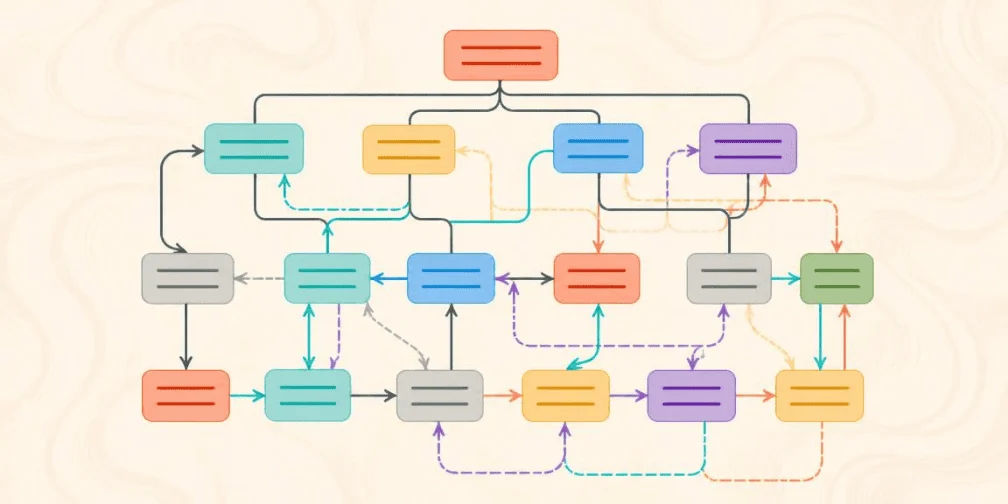
In the dynamic landscape of modern business, organizational structures often evolve organically rather than through deliberate design. This phenomenon, where the formal chart of reporting lines and departmental responsibilities becomes a relic of past decisions rather than a blueprint for current operations, can lead to significant inefficiencies, duplicated efforts, and a frustrating paralysis in decision-making. Lisa Heay, Vice President of Business Operations at Heinz Marketing, argues that many companies are operating with org charts that were never intentionally constructed, but rather inherited through a series of ad-hoc adjustments, leading to a fundamental disconnect between how work is performed and how it is organized.
Heay’s analysis suggests that the root of this structural drift lies in a series of reactive decisions made under pressure. "Ask someone why their team is set up the way it is, and you rarely get a strategy; you get a story," she observes. These stories often involve filling immediate gaps: absorbing the responsibilities of a departed employee without reassignment, merging teams due to management changes, or creating roles based on individual strengths rather than strategic necessity. Over time, these individual, seemingly reasonable adjustments accumulate, resulting in an organizational chart that no longer accurately reflects the flow of work or the collaborative needs of the business. This "structural drift" can manifest in various costly ways, including redundant tasks, delayed approvals, and broken handoff processes between departments.
The problem, as Heay highlights, is analogous to the issue of job descriptions becoming outdated. Just as a specific employee’s responsibilities can expand or contract over time without a corresponding update to their formal job title, so too can entire team functions and reporting structures become misaligned with the evolving demands of the business. The introduction of new technologies, shifts in market strategy, or the natural growth and maturation of a company can all render an existing organizational framework obsolete, even if the individual components were once strategically sound.
The Silent Cost of Structural Drift
The consequences of an organization’s structure failing to align with its operational reality are often subtle but pervasive. Friction, rather than overt chaos, is the hallmark of this misalignment. This friction can manifest as:
- Duplicated Work: When departmental boundaries are unclear or have become blurred due to historical adjustments, different teams may unknowingly undertake the same or similar tasks. This wastes valuable resources, manpower, and can lead to conflicting outputs. For instance, two separate departments might invest in developing similar market research reports because the responsibility for this function has never been clearly delineated in the current organizational structure.
- Stalled Decision-Making: A common symptom is the delay or complete halt of crucial decisions. This often occurs when the individual with the formal authority to approve a decision is no longer the person with the contextual understanding of the work involved. This disconnect can be a direct result of reassignments, team mergers, or the gradual migration of knowledge and responsibility over time. A decision might languish for weeks because it needs to be routed through multiple individuals whose roles in the approval process no longer align with the actual execution of the task.
- Broken Handoffs: The seamless transition of work between teams or individuals is critical for efficiency. When organizational structures are not optimized for current workflows, handoffs can become convoluted and prone to failure. A process that was once straightforward might now require the involvement of three or four people, each having inherited a piece of a responsibility that originally belonged to a single role or team. This can lead to miscommunication, delays, and errors.
A Case Study in Misalignment
Consider a hypothetical demand generation function that began with a single individual responsible for email campaigns and web forms. Over several years, as the company grew and this individual proved highly competent, their responsibilities expanded organically. They took on lead scoring, event follow-up, and even some sales enablement content creation, not because these tasks were strategically aligned with the core definition of demand generation, but because they were available and capable.
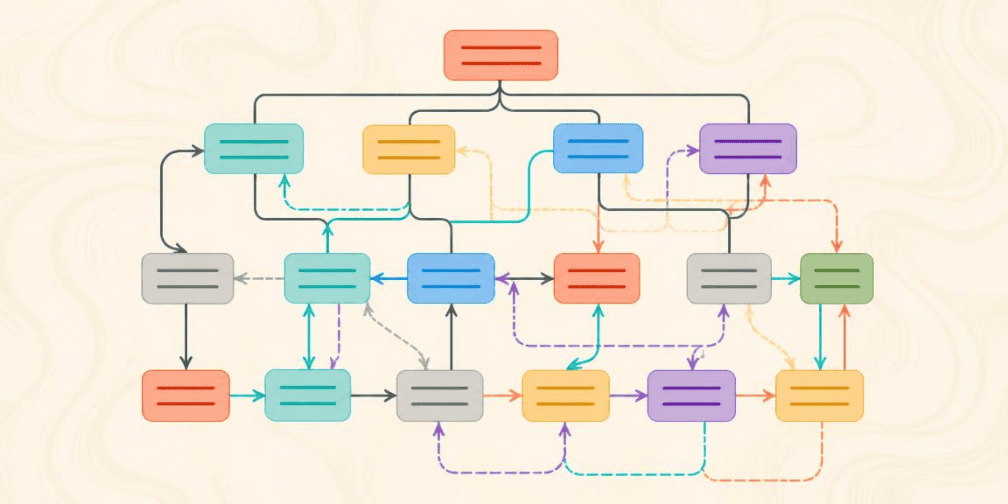
This expansion, while seemingly beneficial in the short term, created a structural disconnect. The demand generation team might now report to a director whose expertise lies in brand management rather than lifecycle marketing. Furthermore, a significant portion of the team’s stakeholders – individuals in sales operations who rely on the demand generation team’s output – may not have a formal reporting line or even regular collaborative channels with them. This can lead to a situation where priorities are set based on the loudest voice in a meeting, or the most influential manager, rather than on what truly drives pipeline growth. The entire structure has become a product of accretion, not strategic design.
The Amplifying Effect of AI
The rapid integration of Artificial Intelligence (AI) tools into business operations has the potential to exacerbate these existing structural inefficiencies. While AI can significantly accelerate tasks such as drafting initial reports, generating content, or analyzing data, its benefits are curtailed when they encounter outdated or illogical approval chains. If an AI-generated report needs to pass through a series of individuals whose roles in the process are no longer relevant, the speed of the AI’s input merely creates a larger backlog at the existing bottleneck. As Heay points out, "Speed doesn’t fix a structure that was never designed for the work it’s doing now." AI, in this context, doesn’t solve the problem; it merely exposes the underlying structural weaknesses more rapidly.
Rethinking the Foundation: From Boxes to Outcomes
Heay advocates for a fundamental shift in how organizations approach their structure, moving away from a focus on individual roles and reporting lines to a concentration on desired outcomes. The crucial question leadership should ask is not "Who currently owns this task?" but rather, "If we were building this function from scratch today, knowing the current demands and complexities, would we organize it this way?" The honest answer, in most cases, is likely to be no. The discrepancy between this honest assessment and the current organizational chart represents the core problem that needs to be addressed.
To initiate this process, Heay suggests mapping desired business outcomes to specific teams. By clearly defining what result each team is responsible for achieving, the necessary structure to support those outcomes becomes far more apparent. This outcome-centric approach naturally highlights where the current organizational design is falling short.
Addressing the Drift Without Overhauling Everything
It is important to note that identifying structural drift is not about assigning blame. Businesses operate at a rapid pace, and the prioritization of immediate operational needs often overshadows the periodic reassessment of organizational design. Furthermore, fixing these issues does not necessarily require a comprehensive, disruptive reorg. Often, targeted interventions can yield significant improvements. This might involve clarifying a single, problematic handoff between two teams or reassessing a function that has outgrown its original departmental placement. The key is to conduct an honest evaluation of how the current structure aligns with the actual work being performed before introducing new initiatives, especially those involving advanced technologies like AI.
Practical Steps for Realigning Structure
To begin addressing structural misalignment, Heay recommends focusing on one function that currently exhibits the most significant entanglement. For that chosen function, leadership should ask a series of probing questions:
- What are the specific, measurable outcomes this function is intended to achieve? This question forces a clear articulation of purpose.
- Who are the primary internal and external stakeholders who rely on this function’s output, and what are their critical needs? This highlights dependencies and customer requirements.
- If you were designing this function today, considering current resources, technology, and business objectives, what would be the optimal structure and reporting lines? This encourages a strategic, forward-looking perspective, free from the constraints of legacy thinking.
These questions are designed to reveal patterns of work that have outgrown their original boundaries, often established by individuals solving different problems in the past. The starting point for improvement, therefore, is not necessarily a wholesale restructuring, but a candid examination of where the existing organizational shape no longer matches the evolving nature of the work.
Companies experiencing a sense of inherited rather than intentional structure are encouraged to engage in this honest evaluation. By identifying and addressing the friction points caused by structural drift, organizations can unlock greater efficiency, accelerate decision-making, and better leverage new technologies like AI to drive sustainable growth. The investment in understanding and realigning organizational structure is a critical step toward ensuring that the business is not just busy, but strategically orchestrated.


 Asep Darmawan