The official rollout of AI Overviews in the United States, a feature previously developed under the moniker Search Generative Experience (SGE), represents the most significant transformation to the digital search landscape in over two decades. As Google integrates generative artificial intelligence directly into its search engine results pages (SERPs), the traditional hierarchy of "ten blue links" is being superseded by AI-synthesized responses that aim to answer complex queries directly on the search page. This evolution necessitates a fundamental shift in how digital marketing departments operate, demanding a level of synergy between Search Engine Optimization (SEO) and Pay-Per-Click (PPC) advertising that was previously considered optimal but is now essential for survival.
The Evolution of the Search Interface: A Chronology of Change
The journey toward AI-integrated search began in earnest in early 2023, following the rapid public adoption of large language models (LLMs) like OpenAI’s ChatGPT. In May 2023, during the Google I/O keynote, the company introduced SGE as an experimental feature within "Search Labs," allowing a subset of users to opt-in to a generative search experience. Over the following year, Google refined the speed and accuracy of these models, culminating in the May 2024 announcement that AI Overviews would begin rolling out to hundreds of millions of users in the U.S., with a global rollout planned shortly thereafter.
Historically, Google’s updates—such as Panda (2011), Penguin (2012), and Hummingbird (2013)—focused on refining the quality and relevance of the links provided. However, the introduction of BERT in 2019 and MUM in 2021 laid the groundwork for natural language processing (NLP) capabilities that allow the engine to understand context rather than just keywords. AI Overviews are the technological peak of this trajectory, moving the engine from a "discovery" tool to an "answer" engine.
Quantifying the Impact on Organic and Paid Traffic
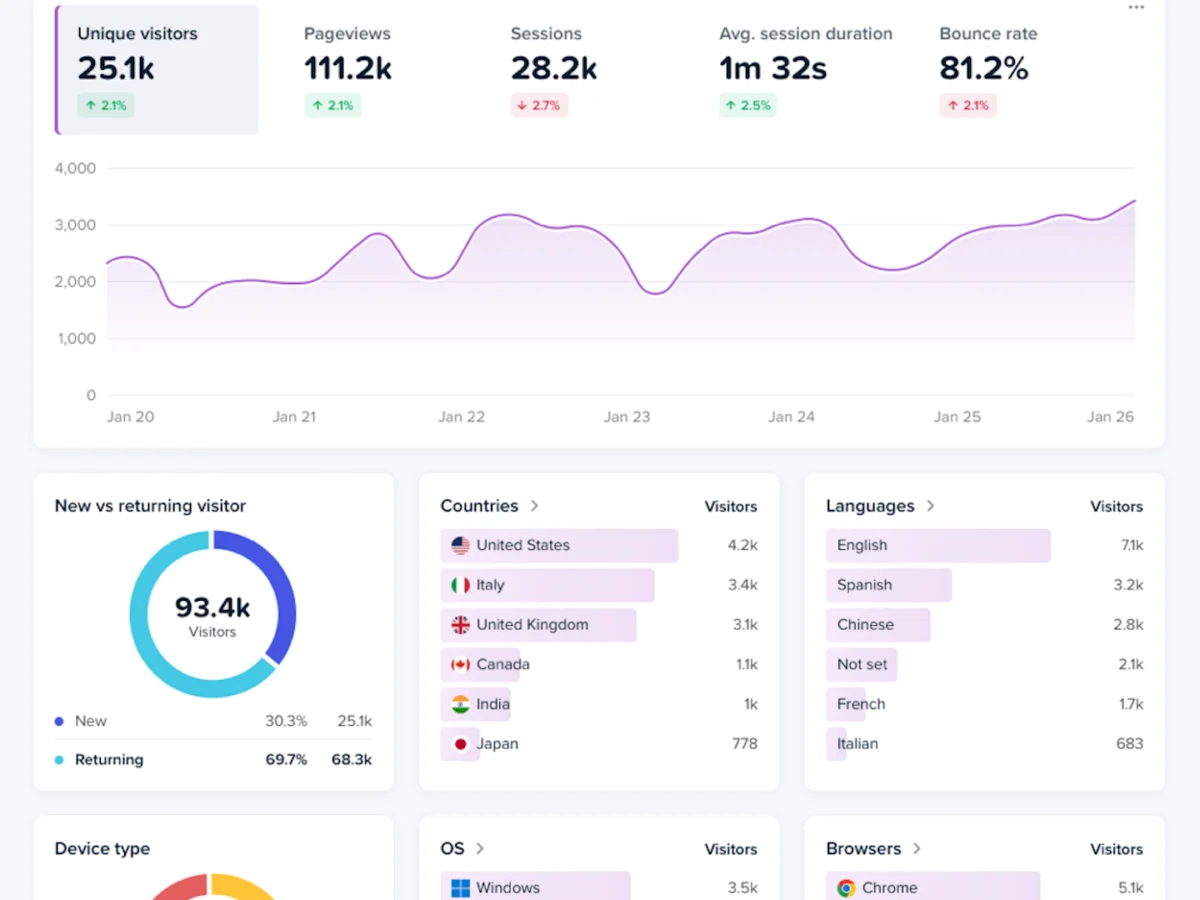
The primary concern for digital stakeholders is the anticipated decline in organic traffic. While the update is still in its early stages of mass adoption, preliminary data from SEO analysis firms suggest a significant shift in user behavior. According to industry research, AI Overviews can occupy up to 80% of the "above the fold" space on mobile devices, pushing traditional organic results further down the page. Early estimates indicate that for informational queries—where AI provides a comprehensive summary—organic click-through rates (CTR) could drop by as much as 15% to 25%.
Conversely, the impact on paid search remains a point of intense observation. While organic links are pushed down, Google has maintained that search ads will continue to appear in dedicated slots. However, the "zero-click" phenomenon—where a user finds their answer in the AI summary and exits the search engine without clicking any link—poses a challenge to both organic and paid disciplines. To mitigate this, brands are increasingly looking toward a "Total Search" approach, where SEO and PPC budgets and strategies are managed as a single ecosystem rather than in silos.
The Rise of Conversational Search and Long-Tail Optimization
As users interact more frequently with AI tools, their search behavior is shifting from fragmented keywords (e.g., "best running shoes") to conversational, long-tail queries (e.g., "what are the best running shoes for someone with flat feet training for a marathon?"). Traditional keyword research tools, such as Semrush or Ahrefs, often struggle to provide accurate volume data for these hyper-specific queries because they fall into the "long-tail" category with low individual search volumes.
To capture this traffic, marketing teams must leverage alternative datasets. Google Search Console (GSC) remains a vital tool for identifying emerging queries that are gaining impressions even if they do not yet have high click volume. Furthermore, PPC campaigns provide a real-time laboratory for testing these conversational phrases. By analyzing Search Query Reports (SQRs) from paid campaigns, SEO teams can identify which long-form questions are driving user interest and then develop on-page content—such as FAQ sections or in-depth guides—to address those specific needs. This cross-pollination of data ensures that the SEO strategy is grounded in actual user behavior rather than theoretical keyword metrics.
Content Strategy in the Age of Generative Citations
Despite the prominence of AI-generated summaries, the importance of high-quality content has not diminished; rather, its role has evolved. Google’s AI Overviews do not generate information in a vacuum; they aggregate data from across the web and provide citations or "link cards" to the source material. Research has indicated that the websites cited within an AI Overview do not always mirror the top three organic results. This creates a new competitive frontier where a website might rank in position five for a standard search but be featured as a primary source in the AI Overview.
To secure these citations, content must adhere strictly to Google’s E-E-A-T guidelines (Experience, Expertise, Authoritativeness, and Trustworthiness). Furthermore, content that is structured to be easily parsed by LLMs—using clear headings, schema markup, and concise answers to specific questions—is more likely to be selected as a reference for the AI summary. This overlap also benefits PPC efforts, as high-quality, relevant landing page content is a core component of "Quality Score," a metric that determines ad placement and cost-per-click (CPC).
Leveraging PPC as an Organic Bridge
For brand-new content or websites entering a competitive niche, organic ranking is a slow process. In the era of AI Overviews, where visibility is even more constrained, PPC serves as a crucial bridge. When a brand publishes a significant piece of thought leadership or a new product page, a targeted PPC campaign can drive immediate traffic, providing the "social proof" and engagement signals that may indirectly assist in organic indexing and ranking.
Moreover, if a specific informational query is now dominated by an AI Overview that does not cite a brand’s website, the only way to maintain "share of voice" for that query may be through a paid advertisement. By coordinating efforts, a company can decide to "bid" on terms where their organic visibility has been compromised by the AI update, ensuring they do not lose market share to competitors who are still visible in the paid slots.
Technical Foundations: Site Speed and Core Web Vitals
The technical health of a website is the common ground where SEO and PPC interests converge most significantly. Google’s Core Web Vitals (CWV)—which measure Largest Contentful Paint (LCP), Interaction to Next Paint (INP), and Cumulative Layout Shift (CLS)—are formal ranking factors for organic search. Sites that provide a fast, stable user experience are prioritized by the algorithm.
From a PPC perspective, site speed is a critical determinant of conversion rates. Industry data shows that a one-second delay in mobile load times can decrease conversion rates by up to 20%. When a user clicks an ad or an AI-cited link, the cost of that acquisition is wasted if the user bounces due to a slow-loading page. Consequently, investing in technical optimization provides a dual return on investment: it improves organic ranking potential in the AI-driven SERP and lowers the effective CPC by increasing the Quality Score and conversion efficiency of paid campaigns.
Industry Reactions and Market Sentiment
The reaction from the digital marketing community has been a mix of caution and strategic adaptation. Analysts from major agencies have noted that while the "threat" of reduced organic traffic is real, the "opportunity" lies in the quality of the remaining traffic. Users who click through from an AI Overview or a deeply specific long-tail search are often further along in the buyer’s journey, having already had their initial informational needs met by the AI summary.
"The goal is no longer just about volume; it’s about relevance and intent," says one industry analyst. "If a user reads an AI summary and still clicks through to your site, they are a high-intent lead. The synergy between SEO and PPC ensures that we are visible at every stage of that journey, whether the user is asking a broad question or looking to make a specific purchase."
Conclusion: The Necessity of a Unified Search Strategy
The rollout of AI Overviews marks the end of the era where SEO and PPC could function as independent departments with separate goals. The compression of the SERP and the shift toward conversational AI demand a holistic approach to search engine marketing. By sharing data, aligning content strategies, and focusing on technical excellence, brands can navigate the uncertainties of the generative search era.
The future of search is no longer about winning a single spot on a page of links; it is about becoming a trusted source of information that the AI itself relies upon, while simultaneously using paid channels to capture the attention that the algorithm might otherwise obscure. In this rapidly changing environment, a united front is the only sustainable path forward for maintaining and growing digital visibility.