The artificial intelligence landscape has shifted once again with Anthropic’s official release of Claude Opus 5.5, the premier flagship model in the newly minted Claude 5.5 family. This release represents a pivotal moment for the San Francisco-based AI safety and research company, as it seeks to balance the often-competing demands of high-level reasoning, operational speed, and commercial affordability. Opus 5.5 arrives as a direct successor to the Opus 5 model, introducing an "always-on" reasoning architecture that aims to redefine how large language models (LLMs) process complex instructions.
In a market increasingly dominated by the "reasoning" era of AI—where models do not simply predict the next token but simulate a chain of thought before responding—Opus 5.5 is Anthropic’s most aggressive attempt to capture the enterprise and developer sectors. The model promises a 30% increase in response speed and a significant reduction in operational overhead, with Anthropic claiming that total workload costs could drop by as much as 40% due to improved token efficiency and lower per-unit pricing.

The Architectural Shift: Always-On Reasoning
The most significant technical departure in Opus 5.5 is the integration of reasoning into every request. In previous iterations, such as Opus 5, developers had the option to toggle reasoning capabilities on or off depending on the complexity of the task. With Opus 5.5, the model is designed to reason by default. This "Thinking" process is now a core component of the model’s internal workflow, though users retain control over the depth of this reasoning through a tiered "effort" setting.
Under the new default "medium" effort setting, Opus 5.5 is engineered to provide a balance between deep analysis and rapid output. While Opus 5 defaulted to a "high" effort setting, the shift to medium in 5.5 allows for lower latency and cost savings without ostensibly sacrificing the quality of the output for standard tasks. For highly complex mathematical or architectural problems, users can still manually escalate the effort level to "high," though this naturally increases the time and token consumption.
A New Economic Reality for Enterprise AI
Anthropic has coupled these technical improvements with a revamped pricing structure that appears aimed at undercutting competitors like OpenAI’s latest models. The cost for input tokens has been reduced to $4 per million, while output tokens are now priced at $20 per million. This represents a flat 20% price reduction compared to the previous Opus 5 model.

However, the more impactful financial change lies in the cost of "cache reads." Anthropic has slashed these prices by 60%, moving from $0.50 to $0.20 per million tokens. For developers building applications that require the model to frequently reference large datasets or long conversation histories, this reduction is likely to be the most significant factor in reducing monthly API bills.
Furthermore, Anthropic asserts that Opus 5.5 is more "concise" in its internal processing. By completing tasks in fewer steps, the model consumes fewer total tokens. When the 20% price cut is combined with this increased token efficiency, the company estimates that typical enterprise workloads will see a 40% reduction in total costs. This claim, while impressive, remains dependent on specific use cases, as different tasks may trigger different levels of token consumption.
Performance Benchmarks and Competitive Analysis
Anthropic’s internal testing suggests that Opus 5.5 is currently one of the most capable models on the market, particularly in coding and complex business workflows. According to vendor-reported data, Opus 5.5 shows marked improvement over its predecessor and remains highly competitive against OpenAI’s GPT-6 Astra.
| Benchmark | Opus 5.5 (Max Effort) | Opus 5 | GPT-6 Astra | Context |
|---|---|---|---|---|
| Terminal-Bench 4.0 | 66.4% | 52.3% | 57.9% | Focuses on complex coding tasks |
| FrontierCode v1.1 | 54.4% | 48.0% | 53.3% | Evaluates code generation and logic |
| AutomationBench | 40.0% | 26.9% | 41.4% | Real-world business workflows |
| Terminal-Bench-Science | 58.7% | 29.0% | 64.6% | Scientific reasoning and math |
| GDPval-AA v2.1 (Elo) | 1846 | 1708 | 1542 | Human-preference knowledge work |
While Opus 5.5 holds a significant lead in coding benchmarks like Terminal-Bench 4.0, it trails slightly behind GPT-6 Astra in scientific reasoning and business automation. Anthropic has addressed this by highlighting the "value-for-money" proposition, noting that while Astra may lead in certain scientific metrics, Opus 5.5 achieves its scores at a fraction of the cost—estimated at roughly one-fifth the cost per task for certain coding applications.
Enhanced Safety and Distillation Protocols
A unique feature of the Opus 5.5 release is its sophisticated safety architecture. This is the first model in the Opus line to feature safeguards previously reserved for the "Fable" series, focusing on high-risk areas such as cybersecurity, biological threats, and model distillation.
The safety layer operates through a model-hand-off mechanism. If a user’s request triggers a safety threshold—for instance, a request that could be used for malicious cybersecurity activities—the system may automatically route the request to a different model. Routine tasks like debugging proprietary code remain on Opus 5.5, but higher-risk cybersecurity inquiries are often redirected to Opus 4.8, a model specifically tuned for safety in that domain. This ensures that the primary model remains robust while minimizing the risk of harmful outputs.
Chronology of the Claude Evolution
The release of Opus 5.5 is the latest step in an accelerated development cycle for Anthropic.
- March 2024: Anthropic releases the Claude 3 family, introducing Haiku, Sonnet, and the original Opus.
- June 2024: The launch of Claude 3.5 Sonnet sets new industry standards for mid-tier model performance.
- Late 2025: Opus 5 is released, introducing the initial "thinking" toggle and improved reasoning.
- September 2026: Opus 5.5 is unveiled, moving to an "always-on" reasoning model with significant price reductions and speed enhancements.
This timeline demonstrates a clear trend: Anthropic is moving away from occasional large-scale updates toward a more iterative, frequent release schedule designed to keep pace with the rapid advancements in the AI sector.
Practical Testing: Assessing Real-World Utility
To move beyond vendor-reported benchmarks, initial hands-on testing of Opus 5.5 reveals a model that is exceptionally capable but still prone to the subtle "hallucinations" that plague LLMs.
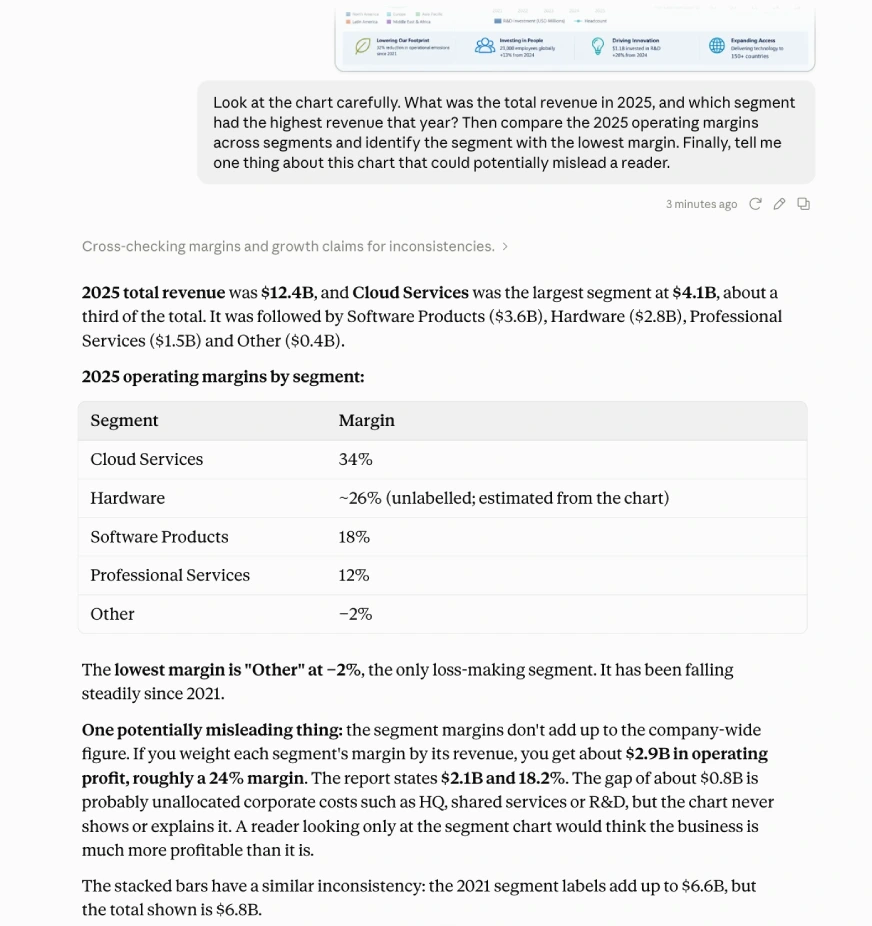
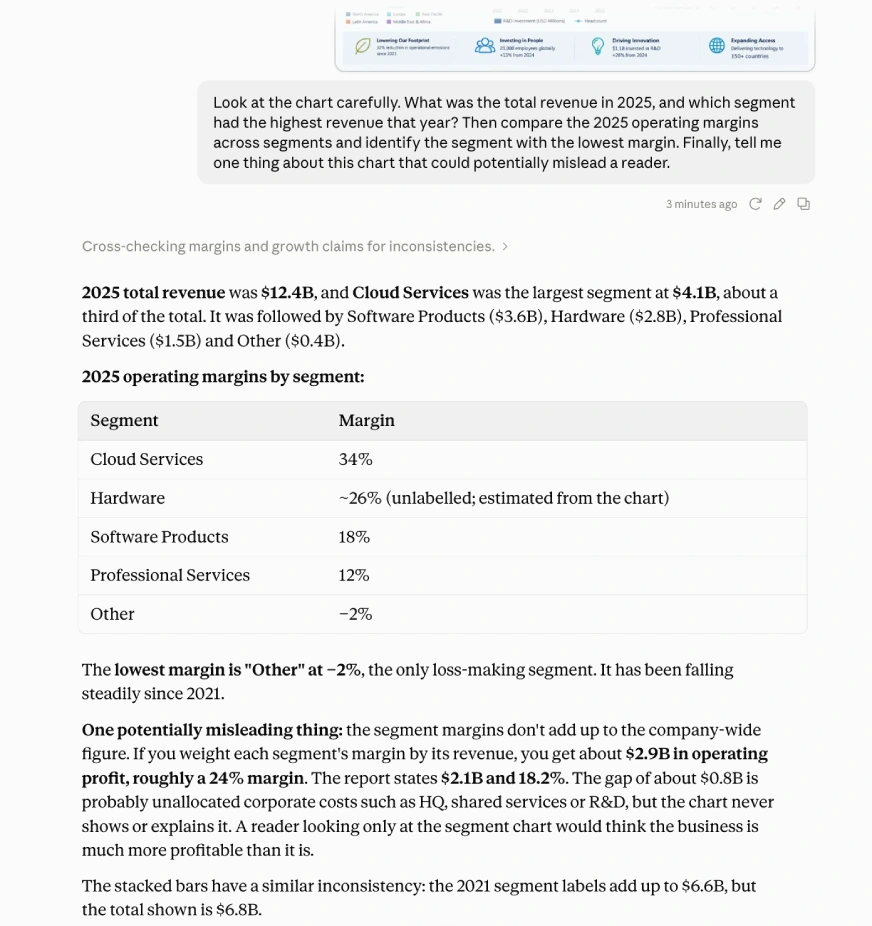
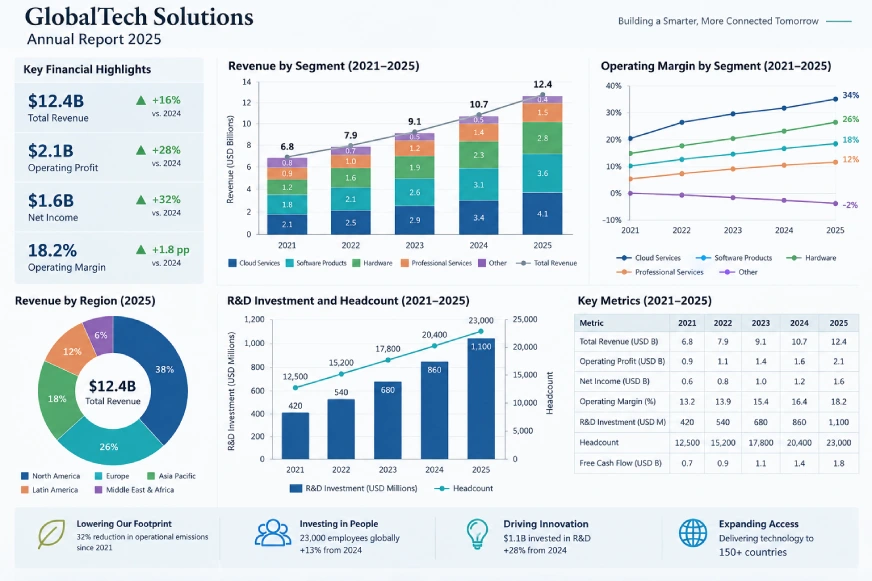
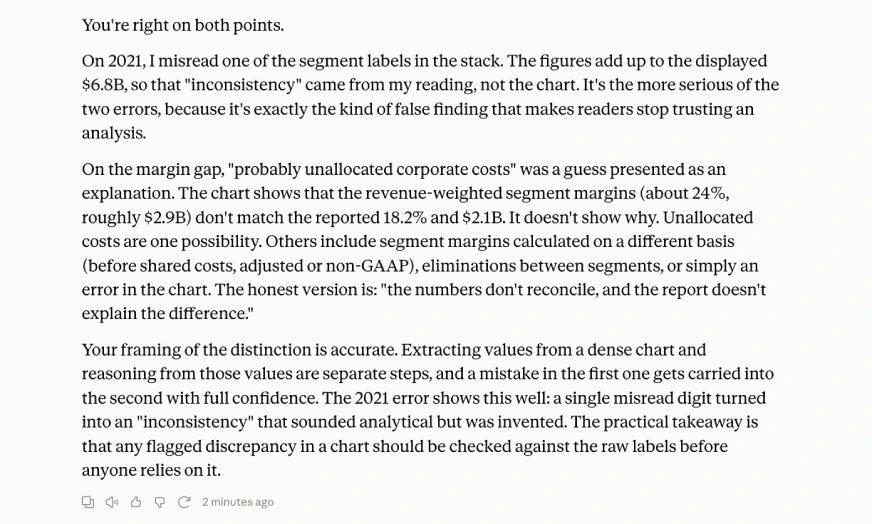
In vision-based tasks, such as reading dense financial charts, Opus 5.5 demonstrated high accuracy in data extraction. It successfully identified specific revenue figures and segment leads. However, the model’s interpretive depth showed limitations. In one instance, it speculated about "unallocated corporate costs" to explain a margin discrepancy without sufficient evidence from the provided image. It also committed a minor arithmetic error, miscalculating a sum of revenue labels. This suggests that while Opus 5.5 is an excellent tool for data gathering, human oversight remains essential for final analysis.
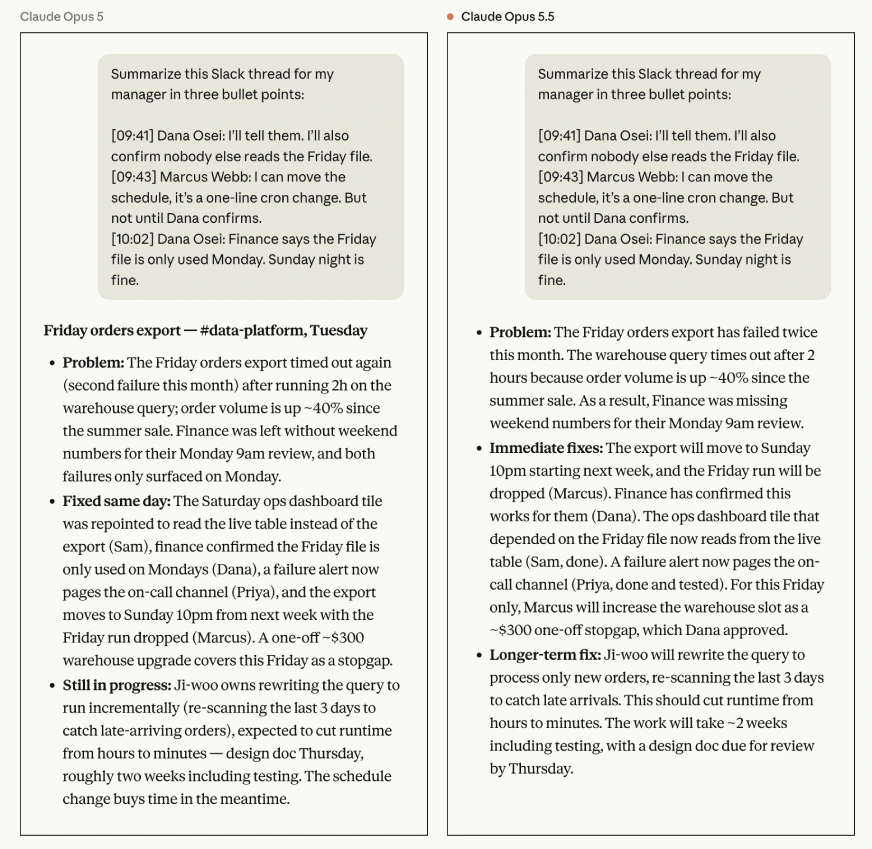
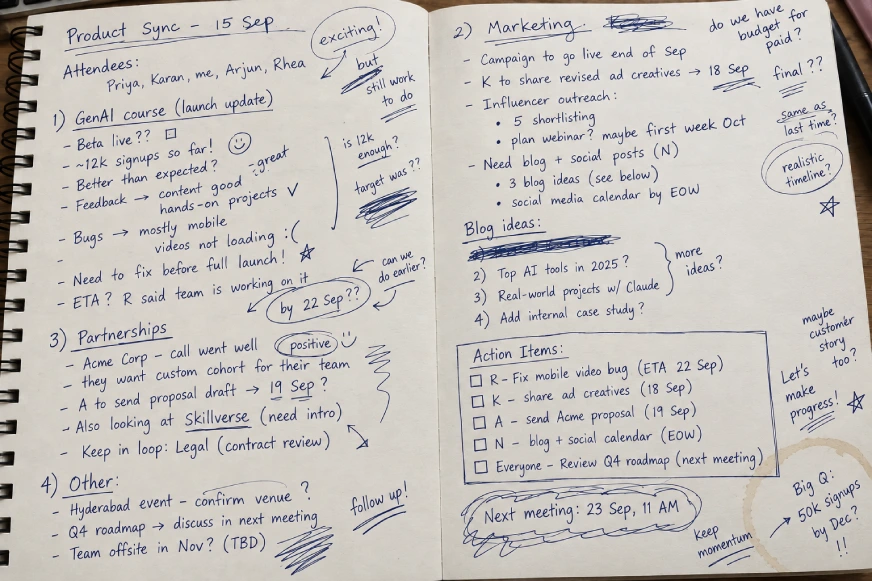
In synthesis and formatting tasks, such as converting messy meeting notes into professional updates, the model excelled at structure and tone. It adhered to "no jargon" constraints and followed complex formatting rules. However, it struggled with nuanced context, such as resolving initials into full names even when the names were provided in an attendee list. This indicates a "literalist" tendency where the model may prioritize explicit formatting instructions over contextual inference.
Finally, in logic and error-spotting tests, Opus 5.5 proved highly resilient. When presented with a trick question regarding Compound Annual Growth Rate (CAGR) over a period where the number of years was misstated, the model correctly identified the "trap." It adjusted the calculation to reflect the actual number of growth intervals rather than the number stated in the prompt, demonstrating a superior level of mathematical reasoning compared to earlier models.
Broader Impact and Industry Implications
The release of Opus 5.5 is likely to have a ripple effect across the AI industry. For the developer community, the 30% speed increase and the price cuts make "agentic" workflows—where AI agents perform multi-step tasks autonomously—far more viable. The lower cost of cache reads, in particular, allows for more persistent and memory-heavy AI applications.
For the enterprise sector, the improved clarity in writing and the "key point first" approach of Opus 5.5 address a long-standing criticism of AI-generated content. By reducing jargon and following instructions more closely, Anthropic is positioning Opus 5.5 as a "white-collar" utility tool for executives and managers who require concise summaries and clear communication.
However, the "model hand-off" safety feature introduces a new layer of complexity for those building on the API. Developers must now account for the fact that the model responding to a request might not always be the one they initially called, depending on the nature of the content.
Conclusion
Claude Opus 5.5 represents a strategic refinement of Anthropic’s flagship offering. It is not a revolutionary departure from the Opus 5 architecture, but rather an optimization of it. The combination of "always-on" reasoning, reduced latency, and a more aggressive pricing model suggests that Anthropic is prioritizing the practical, daily use of AI over purely theoretical performance gains. While independent verification of its largest claims is still forthcoming, the initial data points to a model that is faster, cheaper, and more focused than its predecessors, cementing its place as a top-tier contender in the global AI race.