The landscape of search engine optimization (SEO) has undergone a profound transformation, moving far beyond the rudimentary keyword matching that once dominated digital content strategies. What began as a simple algorithm to connect search queries with exact keyword strings within web documents has evolved into a sophisticated artificial intelligence system capable of discerning user intent, contextual relevance, and, most critically, content quality. This paradigm shift necessitates a fundamental re-evaluation of how publishers and content creators approach their digital presence, with Google’s E-E-A-T guidelines emerging as the cornerstone of contemporary ranking success.
The Genesis of Quality: From Keywords to Context
In the nascent days of the internet, search engines like AltaVista and an early Google primarily functioned as advanced keyword indexes. A user’s query for "best Italian restaurants" would trigger a scan for pages containing those exact words, returning a list of documents where they appeared most frequently. This era gave birth to the concept of "keyword research and optimization," a methodology that, surprisingly, many publishers still cling to as their primary ranking strategy. However, Google’s ambitions quickly outgrew this simplistic model.
The challenge was evident: while keyword matching could locate relevant terms, it struggled to differentiate between high-quality, authoritative information and low-quality, spammy content designed purely to manipulate search rankings. The web became a battleground where black-hat SEO tactics, such as keyword stuffing and hidden text, often overshadowed genuine value. This necessitated a shift towards understanding content quality from a human perspective.
Google embarked on a long and complex journey to teach machines what constitutes "quality." This was no small feat, as the very definition of "quality" is subjective and dependent on the individual searcher’s needs and the context of their query. For instance, "quality" for a medical query differs significantly from "quality" for a recipe search. To bridge this gap, Google introduced a system where human raters manually assessed auto-generated search results, providing crucial feedback that allowed algorithms to learn and refine their understanding of valuable content. This iterative process laid the groundwork for the E-A-T framework, which was later expanded.
Understanding E-E-A-T: The Core Pillars of Trust
E-E-A-T stands for Experience, Expertise, Authoritativeness, and Trustworthiness. This framework is not merely a set of abstract principles but a tangible guide for how Google evaluates both the content itself and, crucially, the creator and website hosting that content. The guidelines are meticulously detailed in Google’s "Search Quality Raters Guidelines," an extensive public document used by a global network of over 10,000 human quality raters to assess the quality of search results. These human evaluations do not directly impact rankings but serve as vital training data for Google’s machine learning algorithms.
The original E-A-T framework, introduced around 2014, focused on Expertise, Authoritativeness, and Trustworthiness. In December 2022, Google officially added a second "E" for "Experience," recognizing the value of first-hand knowledge and practical engagement with a topic. This update underscored Google’s ongoing commitment to surfacing content from individuals who possess direct, lived experience in addition to academic or professional expertise.
- Experience: Does the content creator have direct, first-hand experience with the topic? For example, someone reviewing a product should have used it; someone writing about a travel destination should have visited it. This emphasizes practical, lived knowledge.
- Expertise: Does the content creator possess the necessary knowledge and skills in a particular field? This could be formal qualifications (e.g., a doctor writing about health) or demonstrated proficiency through consistent, high-quality output (e.g., a seasoned gamer reviewing video games).
- Authoritativeness: Is the website and/or content creator recognized as a go-to source or authority on the topic by others in the field? This is often indicated by backlinks from reputable sites, mentions, and industry recognition.
- Trustworthiness: Is the content accurate, truthful, and safe? This is the foundational pillar, encompassing factors like transparency, factual accuracy, security (e.g., HTTPS), and a clear understanding of who is behind the information.
It is critical to note that E-E-A-T is not a universal constant. A website or creator may exhibit high E-E-A-T for one subject but not another. A renowned chef would have high E-E-A-T for culinary topics but likely low E-E-A-T for astrophysics. Google’s algorithms are designed to understand this nuance, applying E-E-A-T signals contextually.
Contextual E-E-A-T: Navigating the YMYL Landscape
The importance of high E-E-A-T intensifies dramatically for what Google terms "Your-Money-Your-Life" (YMYL) topics. These are subjects where inaccurate or misleading information could directly impact a person’s health, financial well-being, safety, or stability. For YMYL content, Google applies the most stringent E-E-A-T standards to ensure users receive reliable and safe information.
Examples of YMYL topics demanding exceptional E-E-A-T include:
- Medical, Health, and Science-Related Topics: Content must demonstrate expertise from qualified sources such as doctors, scientists, or established scientific publications. Misinformation in this domain can have severe consequences.
- Financial and Legal Advice: Information pertaining to investments, taxes, loans, or legal matters requires professional sources like certified accountants, lawyers, or official governmental and regulatory organizations.
- News Reporting: Articles must be factually accurate, well-researched, and produced by experienced, reputable journalists adhering to journalistic ethics.
- Civic and Public Policy Topics: Information concerning voting, legislation, or public services should originate from official government sources or highly authoritative, non-partisan organizations.
- Topics Related to Children: Any advice or information concerning children, especially their health, safety, or development, must come from highly reliable and expert sources.
- Product Reviews: While less critical than medical advice, product reviews still benefit from demonstrating first-hand experience with the product, transparent methodology for testing, and an objective assessment. Here, the "Experience" component of E-E-A-T is paramount.
An important nuance highlighted by Google is that "lack of reputation is not evidence of low E-E-A-T." Many small websites, niche bloggers, or independent creators may not have extensive public reputations but can still produce high E-E-A-T content, especially if they demonstrate significant first-hand experience and genuine expertise. This ensures that valuable, specialized content isn’t overlooked simply due to the absence of broad brand recognition.
Strategic Imperatives for Elevating E-E-A-T
For content creators and businesses aiming to succeed in modern search, "gaming Google" through outdated tactics like keyword stuffing is a relic of the past. The focus must squarely be on creating truly valuable, user-centric content that aligns with the E-E-A-T framework.
1. Beyond Surface-Level Analysis: Deep Dive into Quality Content
Understanding what constitutes "quality" in your niche is the first step. This involves analyzing successful content, not just for keywords, but for its depth, engagement, and authority signals. Tools like BuzzSumo’s Content Analyzer can provide invaluable insights:
- Shares and Engagement: Identify content that garners significant social shares and user engagement globally. This indicates what resonates with your target audience. For instance, searching for "Social Media Marketing" can reveal popular headlines and content formats.
- Links: Examine articles that are frequently referenced and linked to by other reputable sites. High-quality backlinks are a strong signal of authoritativeness and trustworthiness.
- Evergreen Visibility: Prioritize content with a high "evergreen score," meaning it consistently receives social engagements and traffic over a sustained period, long after its initial publication. This suggests enduring value.
- Rankings: Utilize keyword tools to see what content currently ranks highest for your target topics. Analyze these top-ranking pages for structure, depth, sources, and author credentials.
By dissecting these successful examples, content creators can glean actionable insights to inform their own strategies, moving beyond mere replication to innovation that meets and exceeds user expectations.
2. Cultivating Authority: The Human Element in SEO
Google actively encourages its quality raters to investigate the author and website behind the content to ascertain their topical authority. While not always a strict requirement, strong author and brand authority significantly bolster E-E-A-T. Building this authority is a long-term commitment but yields substantial benefits, including improved rankings and increased brand trust.
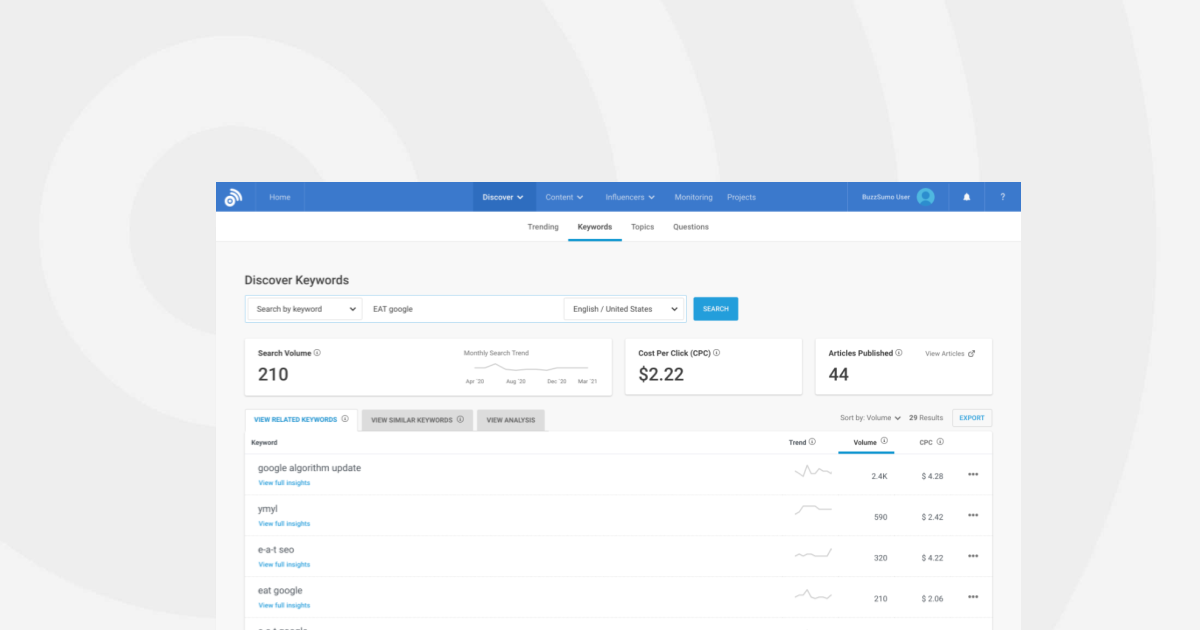
Tactics for establishing niche authority include:
- Public Presence: Seek opportunities for interviews, podcasts, and guest contributions on reputable platforms. Tools like BuzzSumo’s Content Analyzer can help identify publications featuring experts in your field.
- Monitoring Leaders: Keep track of established authorities in your niche. Learn from their content, their engagement strategies, and their public profiles.
- Structured Data (Schema Markup): Implement Organization Schema to provide Google with clear information about your brand and Author Schema to link individual content pieces to their respective creators. Platforms like Beacons.ai can help consolidate multiple online channels.
- Consistent Branding: Ensure your bylines, social media bios, and "About Us" pages clearly articulate your expertise, experience, and credentials. Mentioning relevant qualifications, awards, or years of experience can significantly enhance perceived E-E-A-T.
By making it easy for Google (and users) to connect your brand and authorship across the web, you strengthen your entity recognition and overall E-E-A-T signals.
3. Thematic Dominance: Shifting from Keywords to Topic Clusters
As Google’s understanding of language has matured, its focus has shifted from individual keywords to broader topics and entities. This necessitates a move towards a topic-centric content strategy, often implemented through "topic clusters" and "pillar content."
- Pillar Content: A comprehensive, authoritative piece of content covering a broad topic in depth (e.g., "The Ultimate Guide to Content Marketing").
- Cluster Content: Supporting articles that delve into specific sub-topics related to the pillar content, linking back to the pillar page (e.g., "Blogging Strategies for Small Businesses," "Measuring Content Marketing ROI").
This interconnected approach helps Google understand the breadth and depth of your coverage on a subject, signaling comprehensive expertise and authority. Tools like BuzzSumo’s Topics Explorer can help identify thousands of popular associated topics around a core keyword, guiding your content planning. For example, for "Content marketing," related clusters might include "Blogging," "SEO content," or "Email marketing strategy." This strategy not only improves search engine understanding but also enhances user navigation and engagement, as readers can easily explore related subjects.
4. Content Depth: Satisfying User Intent with Comprehensive Information
Google’s guidelines emphasize a "satisfying amount" of content, which is entirely dependent on the searcher’s intent and the topic’s complexity. There’s no magic word count; a quick factual query might only need a short, concise answer, while a complex "how-to" guide or a deep dive into a YMYL topic demands extensive coverage.
To determine the optimal content length for your specific topic, analytical tools can be invaluable. BuzzSumo’s Content Analysis report, for example, allows you to analyze "Average engagement by content length." By examining thousands of articles on a given subject, you can identify word count ranges that correlate with higher engagement. For a topic like "Social Media Marketing," analysis might reveal that content between 3,000 and 10,000 words performs best, suggesting the need for a thorough, authoritative guide. This data-driven approach helps avoid both thin content and unnecessary bloat, ensuring your content is as long as it needs to be to fully satisfy user intent.
5. Network and Nurture: Building Relationships for Enhanced Visibility
Modern SEO extends beyond technical optimizations and on-page content; it encompasses building genuine relationships. Google employs human quality raters to manually grade content, and their feedback feeds into the self-learning algorithms. Crucially, how your brand and content are perceived by influential entities is a significant E-E-A-T signal.
Building real relationships with journalists, industry experts, and influential publications can dramatically impact your content’s performance. The BuzzSumo Journalist Database, for instance, allows you to identify authoritative voices in your niche. By engaging with these individuals, understanding their interests, and offering them exclusive, compelling insights, you can foster collaborations and mentions. This goes beyond mere link building; it’s about establishing your brand as a recognized and respected entity within your industry. Even without explicit backlinks, Google’s sophisticated semantic understanding can connect your brand to influential "entities," signaling your own authority and trustworthiness.
6. Verifiable Information: The Cornerstone of Trustworthiness
Providing trusted sources is fundamental to demonstrating trustworthiness and thorough research. Citing sources, especially for YMYL topics, shows that your content is well-researched, factual, and unbiased. While some might fear linking out could drive traffic away, it reinforces credibility and offers readers diverse, verifiable information, enriching their experience.
Best practices for sourcing include:
- Variety of Sources: Include academic papers, government reports, industry studies, expert interviews, and reputable news outlets.
- Official Data: Prioritize official sources for any data, statistics, or recommendations. For example, when discussing health policy or scientific findings, use advanced search operators like
site:govorsite:eduin Google to find official government or educational institution websites. - Transparency: Clearly attribute information and provide direct links to sources where appropriate.
This commitment to transparent, verifiable sourcing signals to Google that you uphold journalistic integrity and prioritize factual accuracy, bolstering your E-E-A-T, particularly for sensitive topics.
Broader Implications and The Future of Content
Google’s continuous refinement of E-E-A-T, driven by advancements in AI and machine learning, underscores a clear directive: the future of search favors genuinely helpful, high-quality content created by credible sources. This shift has profound implications for the entire digital ecosystem.
For content creators, it means a greater investment in subject matter expertise, thorough research, and a commitment to transparency. It elevates the role of ethical content practices and discourages superficial, SEO-driven content designed solely for algorithms. Businesses must now strategically cultivate their brand reputation and the authority of their individual content creators. Those who embrace E-E-A-T as a core principle will build stronger brands, foster greater user trust, and achieve more sustainable long-term visibility in search results.
For users, this evolution translates into a more reliable and satisfying search experience. As Google becomes increasingly adept at discerning true quality, the internet becomes a more trustworthy repository of information, mitigating the spread of misinformation and low-value content.
In essence, Google’s intelligence is evolving to understand content with human-like discernment. Therefore, the imperative for SEOs and content marketers is to create content for human customers—addressing their questions, satisfying their intent, and building genuine trust—rather than simply chasing fleeting algorithmic loopholes. The journey to E-E-A-T friendly content is an ongoing process of assessment, refinement, and a steadfast commitment to delivering unparalleled value.