The shift from traditional keyword-based search to generative AI-driven discovery represents the most significant transformation in digital marketing since the inception of the search engine. As platforms like OpenAI’s SearchGPT, Perplexity, and Google’s AI Overviews redefine how consumers access information, brands are facing a critical choice: adapt their visibility strategies or risk digital obsolescence. The transition from Search Engine Optimization (SEO) to Generative Engine Optimization (GEO) has created an urgent demand for specialized training that moves beyond the mere use of AI tools toward a deeper understanding of how to be discovered by artificial intelligence.
In the current digital ecosystem, the traditional "recipe" for online visibility is failing. For years, marketers relied on long-form content designed to satisfy search engine algorithms, often resulting in "fluff" that prioritizes word count over immediate utility. However, as Large Language Models (LLMs) increasingly act as intermediaries between brands and consumers, the value of direct, authoritative, and corroborated information has skyrocketed. AI engines reward organizations that demonstrate deep "owned" authority and "earned" credibility, making integrated communications strategies more vital than ever.
The Evolution of Digital Discovery: From SEO to GEO
The transition to AI-centric discovery did not happen overnight, but the pace of change accelerated significantly following the public release of ChatGPT in late 2022. Historically, search engines functioned as directories, providing a list of links that users would then navigate. Today, AI engines provide synthesized answers, often eliminating the need for a user to click through to a website.
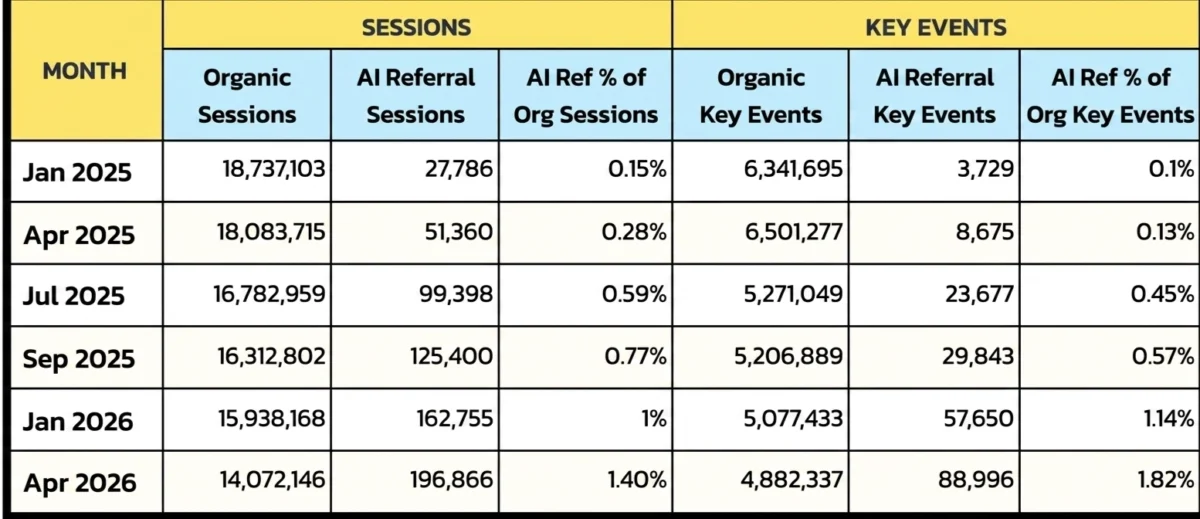
Data from recent industry reports indicates that AI-driven search could reduce traditional organic search traffic by as much as 25% by 2026. This shift necessitates a new discipline known as "Visibility Engineering." Unlike traditional SEO, which focuses on keywords and backlinks, Visibility Engineering focuses on "corroboration loops"—the process of ensuring that a brand’s message is consistent across paid, earned, shared, and owned media channels. When an LLM "crawls" the internet to form an answer about a product or service, it looks for consistent signals. If a brand’s own website (Owned), news coverage (Earned), social media presence (Shared), and advertising (Paid) all tell a cohesive story, the AI is more likely to cite that brand as a trusted authority.
Professional Training Landscapes for 2025 and Beyond
To meet this technological shift, several leading organizations in the marketing and public relations sectors have developed certification programs. These courses generally fall into two categories: those that teach professionals how to use AI to increase productivity, and those that teach how to be found by AI to drive business growth.
Centre for Strategic Communication Excellence: AI for Strategic Communication Professionals
The Centre for Strategic Communication Excellence (CSCE) offers a three-week virtual course priced at $695. This program is designed specifically for mid-to-senior level communication professionals who need to integrate AI into their broader organizational strategy. The curriculum focuses on using AI for content creation, insight generation, and stakeholder engagement. Participants walk away with the CAICP (Certified AI Communication Professional) designation and a customized AI toolkit tailored to their specific organizational needs. This course is particularly valuable for leaders who need to bridge the gap between technical AI capabilities and high-level communication goals.
Coursera: AI SEO & GEO
For early-career digital marketers, Coursera’s AI SEO & GEO professional certificate offers a technical deep dive into the mechanics of Generative Engine Optimization. This program, which requires approximately 10 hours of study per week over two months, focuses on auditing visibility across both search engines and LLMs. It covers AI-driven performance analysis and the optimization of AI-generated content to ensure brand alignment. At the cost of a Coursera subscription (approximately $59/month), it is one of the most accessible options for those seeking to master the technical side of AI visibility.
IABC x Spin Sucks: Visibility Engineering
The International Association of Business Communicators (IABC), in collaboration with Spin Sucks, provides a free, one-hour on-demand webinar focusing on the "Visibility Engineering" framework. This program is an entry-point for professionals looking to understand how the PESO Model (Paid, Earned, Shared, Owned) can be used to build compounding visibility. It emphasizes the metrics that predict demand and how to create the corroboration loops necessary for AI engines to recognize brand authority.
The PESO Model Certification
Developed in partnership with the S.I. Newhouse School of Public Communications at Syracuse University, this $1,500 certification program is widely considered the industry standard for integrated communications. The PESO Model Certification provides an "operating system" for marketing and PR programs. The logic behind this approach is that AI engines do not look at content in a vacuum; they reward deep owned authority and consistent signals across all media types. The program includes eight self-paced modules and provides participants with a working PESO plan, access to a proprietary AI prompt library, and a Newhouse-backed credential. This course is designed for those who want to build a sustainable, repeatable system that ensures long-term AI visibility.
PRSA Certificate Programs and Webinars
The Public Relations Society of America (PRSA) has expanded its professional development to include "Modern Media Relations in the AI and Creator Economy." These programs, ranging from free webinars for members to $1,295 live certificate programs, focus on the intersection of AI tools and media relations. PRSA’s training is particularly relevant for Accredited in Public Relations (APR) holders, as these courses provide continuing education units (CEUs) while teaching how to elevate brand visibility in an increasingly automated media landscape.
Ragan AI Certificate Programs & Workshops
Ragan Communications offers specialized workshops starting at $1,499 that cover the practical application of AI in PR. Their curriculum includes AI-search structuring, the creation of custom GPTs, and AI governance. These programs are designed for practitioners who need to manage the risks of AI—such as bias and misinformation—while leveraging its power for content distribution and measurement.
Trust Insights Academy: Generative AI for Marketers
Priced at $799, this 36-lesson course by Trust Insights Academy focuses on the fundamentals of Large Language Models. It provides a technical foundation in how LLMs work, best practices for prompting, and the regulatory environment surrounding generative AI. This course is ideal for marketers who want to understand the "engine under the hood" to better predict how AI models will behave and evolve.
Supporting Data: The Cost of Inaction
The necessity of this training is underscored by shifting consumer behavior. According to a 2024 survey by the Reuters Institute, nearly 30% of internet users in major markets have used AI chatbots for information discovery, a number that is expected to double by 2026. Furthermore, Gartner predicts that by 2025, a brand’s "AI search share" will be a more critical KPI than traditional "share of voice."
Organizations that fail to implement an integrated operating system—such as the PESO Model—often find themselves producing "random acts of content." Without a system to ensure that earned media (third-party validation) backs up owned media (brand-controlled content), AI engines may perceive a brand as less credible than competitors who have a more synchronized digital footprint.
Chronology of the AI Shift in Communications
The timeline of AI’s integration into the professional communication sphere shows a rapid progression from curiosity to necessity:
- November 2022: Launch of ChatGPT; initial focus on AI as a writing assistant.
- Early 2023: Introduction of Microsoft Bing AI and Google Bard; marketers begin exploring the impact on search results.
- Late 2023: Rise of "Generative Engine Optimization" (GEO) as a distinct field of study.
- Early 2024: Major professional bodies (PRSA, IABC) launch formal AI certification tracks.
- Mid-2024: Google fully integrates AI Overviews into its search results, leading to a significant shift in organic click-through rates.
- Present: The industry moves toward "Visibility Engineering," focusing on systemic brand authority rather than tactical keyword placement.
Industry Implications and Strategic Analysis
The move toward AI visibility training signals a professionalization of AI use in the corporate world. No longer is it sufficient for a marketer to simply know how to write a prompt; they must now understand the architectural requirements of the modern web.
One of the most profound implications of this shift is the "democratization of authority." Smaller brands that invest in high-quality, corroborated content can now outrank larger corporations that rely solely on massive advertising budgets. AI engines prioritize the "best" answer, not necessarily the one with the most financial backing. However, this requires a level of strategic discipline that many marketing departments currently lack.
Industry analysts suggest that the future of the profession lies in the ability to manage "intelligence relationships." Just as PR professionals once managed relationships with journalists, they must now manage how their brand is "perceived" by the algorithms of OpenAI, Google, and Meta. This requires a blend of technical SEO knowledge, traditional PR storytelling, and data-driven analysis.
Ultimately, the choice of training program depends on an organization’s current maturity. For those without a structured marketing system, an "operating system" course like the PESO Model Certification is often the most logical first step. For teams that already have a strong framework but lack technical AI skills, the Trust Insights or Coursera programs may offer the necessary specialized knowledge. Regardless of the path chosen, the objective remains the same: ensuring that when a consumer asks an AI for a recommendation, your brand is the answer provided.