Launching a website, whether for a burgeoning blog, an e-commerce storefront, or a corporate portal, necessitates more than just a compelling design and engaging content; it fundamentally requires web hosting. This often-overlooked yet critical service ensures that your digital presence is accessible to audiences worldwide, acting as the indispensable backbone of any online venture. Without web hosting, your carefully constructed website remains a collection of files on your local machine, invisible to the internet. Understanding the intricacies of web hosting, from selecting a provider to discerning between hosting types, is paramount for securing a reliable, fast, and secure online platform.
Web hosting is essentially the service that stores your website’s files – including text, images, videos, code, and databases – on powerful computers called servers. These servers are maintained by web hosting companies within secure data centers, offering high-speed internet connectivity. When a user types your website’s domain name into their browser, their computer connects to the server hosting your site, which then transmits the necessary files, allowing the website to load and display in their browser. This continuous process underpins every interaction on the internet.
The Evolution and Imperative of Web Hosting
The concept of web hosting has evolved significantly since the early days of the internet. Initially, hosting was a niche service, often requiring substantial technical expertise. Today, it has become a commoditized yet essential utility, reflecting the internet’s transformation into a central hub for commerce, communication, and information. The global web hosting services market, valued at approximately $80 billion in 2023, is projected to grow to over $200 billion by 2030, underscoring the relentless expansion of online activities. This growth is driven by the increasing number of small and medium-sized businesses establishing online presences, the proliferation of e-commerce, and the growing demand for cloud-based solutions.
For businesses, reliable web hosting is not merely a technical requirement; it is a strategic imperative. A website that is slow, frequently unavailable, or insecure can lead to lost revenue, diminished brand reputation, and poor customer experience. Conversely, robust hosting contributes directly to a website’s performance, stability, and security, all of which are crucial for achieving business objectives and maintaining a competitive edge in the digital marketplace.
Understanding the Core Components: Servers, Data Centers, and Connectivity
At the heart of web hosting are physical servers – high-performance computers optimized for continuous operation and handling numerous requests simultaneously. These servers are housed in specialized facilities known as data centers, which provide a controlled environment with redundant power supplies, climate control, advanced security measures, and high-bandwidth internet connections. Data centers are strategically located globally to ensure efficient content delivery and disaster recovery.
When you rent space on a server from a hosting company, you are essentially purchasing a portion of its resources, including:
- Storage Space: The amount of disk space allocated to store your website files. This can range from a few gigabytes for a simple blog to hundreds of gigabytes or even terabytes for large e-commerce sites with extensive media libraries.
- Bandwidth: The amount of data that can be transferred from your server to users’ browsers over a given period. Every time a visitor accesses your site, data is consumed. High traffic websites or those with many large images and videos require substantial bandwidth.
- RAM (Random Access Memory) & CPU (Central Processing Unit): These resources dictate how quickly your server can process requests and execute tasks. Sufficient RAM and CPU are vital for website speed, especially under heavy load.
- Uptime Guarantee: A metric indicating the percentage of time a hosting provider guarantees your website will be online and accessible. Industry standards typically aim for 99.9% uptime or higher, translating to minimal downtime over a year.
The Foundational Decision: Fully-Hosted vs. Self-Hosted
Before delving into the technical types of hosting, a fundamental choice lies between fully-hosted and self-hosted platforms. This decision significantly impacts the level of control, maintenance, and flexibility you will have.
-
Fully-Hosted (SaaS – Software as a Service): These platforms provide an all-in-one solution where the platform provider handles all aspects of hosting, maintenance, security, and software updates. Examples include Shopify for e-commerce, WordPress.com for blogs, and website builders like Squarespace and Wix.
- Pros: Extremely user-friendly, ideal for beginners, minimal technical knowledge required, automatic updates and security, integrated features.
- Cons: Limited customization options, vendor lock-in, recurring subscription fees, less control over the underlying code and server environment, potential scalability limitations for highly unique needs.
- Best for: Small businesses, personal portfolios, simple blogs, and those prioritizing ease of use over deep customization.
-
Self-Hosted (Open Source): With self-hosting, you choose a content management system (CMS) like WordPress.org, Joomla, or Drupal, and then independently select a web hosting provider. You are responsible for installing the CMS, managing updates, security, and backups.

- Pros: Full control over your website, complete ownership of data, extensive customization capabilities through themes and plugins, greater scalability, access to the full codebase.
- Cons: Requires more technical expertise, responsibility for maintenance and security, potential for higher costs if not managed efficiently.
- Best for: Developers, businesses requiring bespoke functionality, large-scale projects, and users who desire maximum control and flexibility.
Diverse Hosting Types: Matching Solutions to Needs
Once you decide on a self-hosted approach, you encounter various hosting types, each designed to cater to different levels of performance, control, and budget.
-
Shared Hosting: This is the most common and economical option, where your website shares server resources (CPU, RAM, storage, bandwidth) with numerous other websites.
- Pros: Low cost, easy to set up, suitable for beginners and small websites.
- Cons: Performance can be affected by other sites on the same server ("noisy neighbor effect"), limited control, potential security vulnerabilities if one site is compromised.
- Ideal for: Personal blogs, small business websites with low traffic, portfolio sites.
-
Virtual Private Server (VPS) Hosting: VPS hosting utilizes virtualization technology to divide a physical server into several isolated virtual servers. Each VPS operates independently, with its own dedicated resources, giving you more control and better performance than shared hosting.
- Pros: Improved performance and reliability, root access for customization, better security, scalable resources.
- Cons: More expensive than shared hosting, requires some technical knowledge for server management (unless managed VPS is chosen).
- Ideal for: Growing businesses, e-commerce stores, websites with moderate traffic, developers needing more control.
-
Dedicated Hosting: With dedicated hosting, you lease an entire physical server exclusively for your website. This provides maximum performance, security, and control.
- Pros: Unparalleled performance and speed, ultimate control over server configuration, enhanced security, no resource sharing.
- Cons: Most expensive hosting option, requires advanced technical expertise for server administration.
- Ideal for: Large enterprises, high-traffic e-commerce sites, applications requiring specific software configurations, mission-critical websites.
-
Cloud Hosting: Cloud hosting leverages a network of interconnected virtual servers, allowing resources to be scaled on demand. Instead of a single physical server, your website draws resources from a vast pool, offering high availability and fault tolerance.
- Pros: Highly scalable and flexible, pay-as-you-go pricing (you only pay for what you use), high reliability and uptime due to distributed infrastructure.
- Cons: Cost can be unpredictable if not managed carefully, can be complex to configure for non-technical users.
- Ideal for: Websites with fluctuating traffic, applications requiring high availability, businesses needing elastic scalability.
-
Managed Hosting: This service can apply to various hosting types (shared, VPS, dedicated, cloud) where the hosting provider takes on the responsibility for server management, including software updates, security patches, backups, and performance optimization. Managed WordPress hosting is a popular example.
- Pros: Significantly reduces the technical burden, expert support, optimized performance for specific platforms, enhanced security.
- Cons: Generally more expensive than unmanaged counterparts, less control over server configuration.
- Ideal for: Users who prefer to focus on content and business operations without technical worries, those lacking server administration skills.
Key Considerations for Choosing a Web Hosting Provider
Selecting the right web host is a pivotal decision that can profoundly impact your website’s success. Several critical factors warrant careful evaluation:
-
Performance: Speed and Uptime: A website’s loading speed is crucial for user experience and search engine rankings. Google’s Core Web Vitals emphasize page loading speed (Largest Contentful Paint), interactivity (First Input Delay), and visual stability (Cumulative Layout Shift). A reputable host will offer fast server hardware (SSDs), efficient caching mechanisms, and robust network infrastructure. An uptime guarantee of 99.9% or higher is standard, ensuring your site remains accessible.
- Industry insight: Studies show that a one-second delay in page load time can lead to a 7% reduction in conversions and 11% fewer page views.
-
Scalability: Your hosting solution should be able to accommodate your website’s growth. Can you easily upgrade your plan to handle increased traffic or more complex functionalities without significant migration hurdles? This foresight is crucial for long-term planning.
-
Security Features: In an era of escalating cyber threats, robust security is non-negotiable. Look for features such as free SSL certificates (essential for encrypting data and gaining browser trust), DDoS protection, firewalls, regular malware scanning, and automated daily backups. Data breaches can be catastrophic for businesses, leading to financial losses and reputational damage.
-
Customer Support: When technical issues arise, responsive and knowledgeable customer support is invaluable. Evaluate the availability (24/7), channels (live chat, phone, email, ticketing system), and the quality of support offered. A comprehensive knowledge base and community forums can also be beneficial.
-
Pricing and Renewal Costs: While initial introductory prices can be attractive, always scrutinize renewal rates, which are often significantly higher. Understand what is included in each plan and be wary of hidden fees. Consider your budget against the features provided.
-
Server Location: The physical location of your host’s servers relative to your primary audience affects website loading speed due to latency. If your audience is predominantly in North America, choosing a host with data centers in the US or Canada will yield faster load times than one with servers in Asia, for example. Some hosts offer Content Delivery Networks (CDNs) which cache your website content on servers globally, delivering it from the nearest location to the user, irrespective of the main server location.
-
Storage and Bandwidth: Accurately estimate your needs. A small blog might need only 1-5 GB of storage, while a large e-commerce site could require 50 GB or more. Similarly, bandwidth needs scale with traffic and content size. Be cautious of "unlimited" claims, which often come with fair usage policies.
-
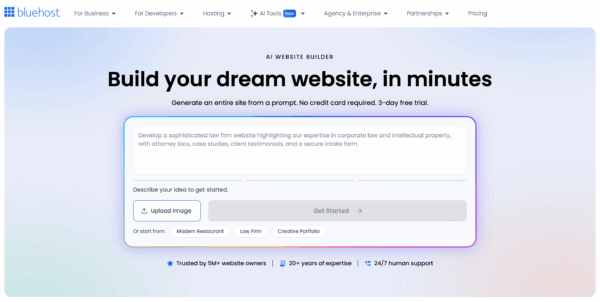
Additional Services and Features: Many hosts bundle valuable services like domain registration, professional email hosting, website builders (e.g., Bluehost’s AI Website Builder, which generates basic sites based on prompts), one-click installers for popular CMS platforms, and staging environments for testing website changes. These add convenience and value.
Web Hosting’s Direct Impact on SEO
The choice of web hosting directly influences your Search Engine Optimization (SEO) efforts. Search engines like Google prioritize websites that offer a superior user experience, and hosting plays a foundational role in this:
- Website Speed: A fast-loading website is favored by search algorithms. Slow sites lead to higher bounce rates and negatively impact rankings. Hosting features like SSD storage, optimized server configurations, and efficient caching are crucial for speed.
- Uptime and Reliability: Search engines expect websites to be consistently available. Frequent downtime can lead to search engine crawlers encountering errors, which can result in pages being de-indexed or rankings dropping. Consistent uptime signals reliability.
- Security (HTTPS): Google has explicitly stated that HTTPS (secured by an SSL certificate) is a ranking signal. Most reputable hosts offer free SSL certificates, which encrypt data transmitted between the user’s browser and your server, ensuring privacy and trust.
- Server Location: While not a direct ranking factor, a server located geographically closer to your target audience can reduce latency, leading to faster load times, which in turn benefits SEO.
- Scalability and Resource Allocation: As your website grows, it demands more resources. A hosting plan that can scale ensures your site maintains performance, even under increased traffic, preventing potential SEO penalties from slow loading times during peak periods.
Specialized Hosting for WordPress.org Sites
Given WordPress’s dominant market share (powering over 43% of all websites), many hosting providers offer specialized WordPress hosting plans. These plans are optimized for WordPress, often including:
- Pre-installed WordPress: Eliminating the manual installation process.
- WordPress-specific caching: To enhance site speed.
- Enhanced security measures: Tailored for common WordPress vulnerabilities.
- Automatic updates for WordPress core and plugins.
- Expert support staff: Knowledgeable in WordPress troubleshooting.
WordPress.org itself maintains a list of recommended hosting providers, signifying the importance of choosing a host that understands the platform’s unique requirements.
Emerging Trends in Web Hosting
The web hosting industry is dynamic, constantly adapting to technological advancements and user demands:
- Green Hosting: With increasing environmental awareness, many hosting companies are investing in renewable energy sources, energy-efficient data centers, and carbon offsetting programs. Choosing a green host aligns with sustainable business practices.
- Serverless Computing (Functions as a Service – FaaS): This model allows developers to build and run application services without managing servers. The cloud provider dynamically manages the allocation and provisioning of servers. While not traditional hosting, it represents a shift for certain application architectures.
- Edge Computing: Bringing computation and data storage closer to the data source (i.e., the user) to reduce latency and improve real-time processing, especially relevant for IoT devices and streaming content.
- AI-Powered Website Builders: Tools like the Bluehost AI Website Builder simplify site creation by leveraging artificial intelligence to generate initial website designs based on user prompts, democratizing web development for those without coding or design skills.
Conclusion
Web hosting is far more than just server space; it is a foundational pillar of your online presence, directly influencing your website’s performance, security, and search engine visibility. A thoughtful approach to selecting a hosting provider, considering factors like performance, scalability, security, support, and pricing, is crucial for long-term success. Whether you opt for the simplicity of a fully-hosted platform or the robust control of a self-hosted solution, understanding the nuances of different hosting types and the impact of your choices will empower you to build a resilient and effective digital platform. As the digital landscape continues to evolve, a well-informed hosting decision remains one of the most strategic investments an individual or business can make.