The dropshipping model, far from being a relic of the past, continues to be a robust and rapidly expanding sector within e-commerce. Projections for 2026 estimate the global dropshipping market to reach a staggering $543.53 billion. This substantial growth, however, intensifies competition, making the strategic selection of reliable dropshipping partners more critical than ever for businesses aiming to differentiate themselves and achieve sustainable success. Among the leading platforms catering to a burgeoning online retail environment, Spocket and Doba stand out, particularly for merchants utilizing platforms like Shopify. While both offer comprehensive solutions, they cater to distinct operational needs and business scales, presenting unique advantages and considerations for entrepreneurs.
Understanding the Core Offerings: A Strategic Divide
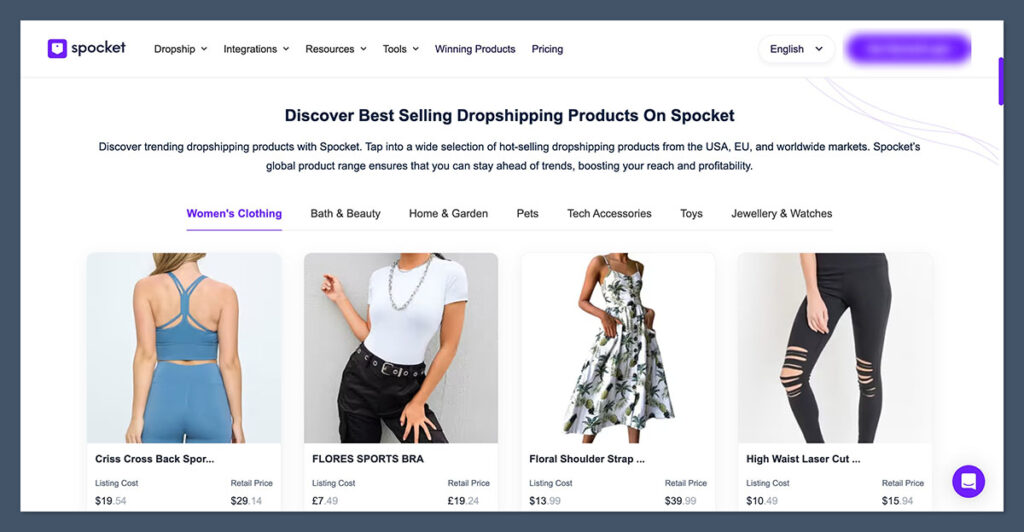
Spocket has carved out a niche by emphasizing selectivity and quality. Its curated catalog predominantly features trending products, often sourced from suppliers based in the United States and Europe, appealing to businesses prioritizing fast shipping and potentially higher perceived product quality. This approach streamlines the product discovery process for sellers seeking established and vetted partners.
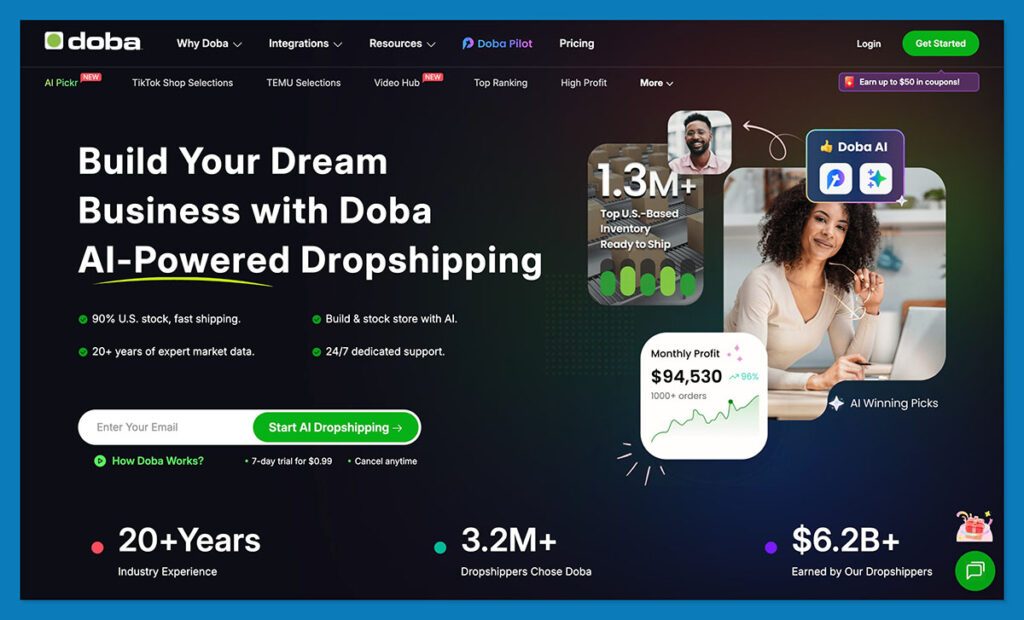
In contrast, Doba boasts a significantly larger inventory, with a pronounced focus on U.S.-based suppliers and products stored in U.S. warehouses. This strategy is particularly advantageous for businesses targeting the American consumer base, where domestic shipping and readily available stock are key competitive factors. Furthermore, Doba distinguishes itself through a broader array of integration options for various online marketplaces and the advanced capabilities of its AI agent, Doba Pilot, which has evolved to manage a more comprehensive suite of daily operational tasks.
Doba vs. Spocket: A Swift Assessment for Strategic Decisions
For larger dropshipping enterprises or those aiming to expand their reach across multiple sales channels, including established giants like Amazon and emerging platforms such as TikTok Shop, Doba emerges as the compelling choice. Its strength lies in its capacity to significantly reduce administrative burdens through sophisticated automation tools. These features ensure real-time synchronization of pricing and inventory across channels, facilitate the seamless migration of product listings, enable the application of dynamic pricing rules, and adeptly manage extensive product catalogs.
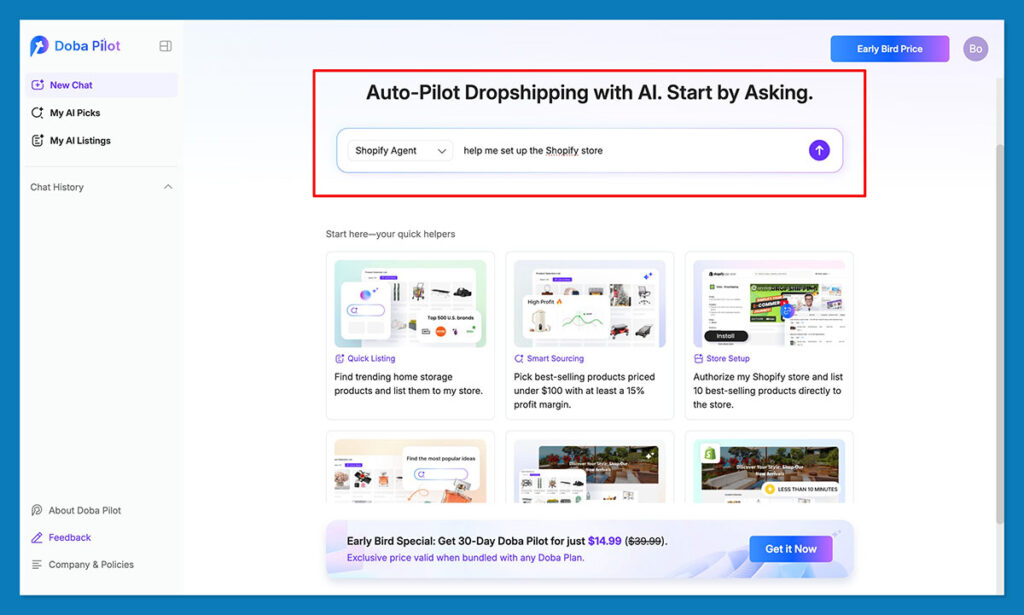
The recent enhancements to Doba Pilot represent a significant leap forward. This AI agent now encompasses the entire dropshipping workflow, from initial market research and product sourcing through to listing creation, order fulfillment, and even after-sales support. This holistic approach liberates entrepreneurs from time-consuming manual processes, allowing them to focus on strategic growth. For businesses operating within the U.S. market, Doba’s extensive network of warehouse-based products and robust domestic shipping support further solidify its position as a dominant player.
Spocket, on the other hand, offers a more streamlined experience, ideal for dropshippers who prefer a curated selection of products and direct access to local suppliers. While it may present fewer complex features to master, Spocket still provides substantial control over pricing, listing management, and the creation of branded invoices. However, a notable drawback for businesses with multiple online stores is that each new store requires a separate subscription, a factor that can significantly impact overall operational costs.
The Foundational Differences: Operations Hub vs. Curated Marketplace
At their core, both platforms provide robust dropshipping infrastructure and a wide array of product choices. However, Doba’s evolution has positioned it as more than just a supplier directory; it functions as a comprehensive operations hub. It integrates product sourcing, supplier management, store integrations, inventory control, listing management, order processing, and fulfillment into a unified system. This centralized approach is particularly beneficial for retailers targeting the U.S. market, offering access to over a million products and the strategic advantage of U.S. warehouse options for expedited domestic delivery, a crucial element for businesses whose value proposition hinges on swift shipping.
Spocket’s focus remains on assisting sellers in making informed product choices from the outset. Its carefully selected network of U.S. and EU suppliers allows for a more curated browsing experience. Sellers can easily import desired products, edit them as needed, and then publish them to their stores. This simplicity makes Spocket an excellent entry point for smaller businesses and individuals new to dropshipping.
Comparative Overview: Key Features at a Glance
| Comparison Point | Doba | Spocket |
|---|---|---|
| Best Fit | Growing dropshippers, marketplace sellers, especially U.S.-focused operations. | Beginners focused on supplier discovery and curated product selection. |
| Monthly Starting Price | $29.99 | $39.99 |
| Catalog Size | Over 1 million SKUs, including U.S. warehouse options. | Approximately 1 million products. |
| Store Connections | Up to 15, plan-dependent. | Multiple stores possible per account, but each requires a separate subscription. |
| Samples | Test orders can be placed, often requiring coordination with individual suppliers. | Dedicated "order samples" button for easy access; up to five units per item per order. |
| Branding | Branding and packaging options vary by supplier; blind shipping for marketplace orders is standard. | Supports branded invoices on higher-tier plans. |
| Primary Channels | Shopify, Amazon, Walmart, eBay, TikTok Shop, WooCommerce, and numerous others. | Shopify, Wix, WooCommerce, BigCommerce, Squarespace, Amazon, and eBay. |
| Advanced Controls | Doba Pilot AI (research, sourcing, listing, fulfillment), extensive automation, API, FTP, bulk downloads, listing migration. | Supplier chat, premium products, bulk checkout on select tiers. |
| Biggest Drawback | Potential learning curve, though Doba Pilot mitigates initial complexity. | Increased cost for managing multiple stores due to individual subscription requirements. |
Pricing and Total Cost of Ownership: A Detailed Examination
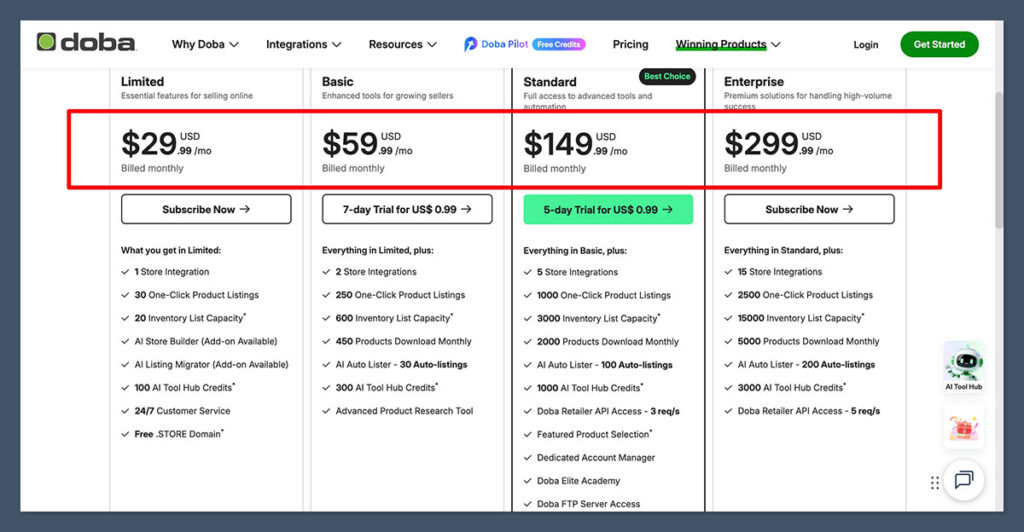
When evaluating the financial investment, Doba presents a more accessible entry point. Its "Limited" plan begins at $29.99 per month, offering one store integration, 30 one-click product listings, 20 inventory list capacity, and 100 AI Tool Hub credits, with optional add-ons for AI Store Builder and AI Listing Migrator. Discounted rates are available for quarterly and annual payments. The "Basic" plan at $59.99 per month increases capacity and credits, while the "Standard" plan, priced at $149.99 per month, unlocks advanced features such as API access, dedicated account management, FTP server access, and enrollment in the Doba Elite Academy.
Spocket’s entry-level plan starts at $39.99 per month, with an incentive of eight months free on an annual subscription. This initial plan provides full catalog access, the ability to list 25 unique products, AliExpress dropshipping integration, and multi-store management capabilities. However, the critical distinction is that each store managed under a Spocket account necessitates its own subscription, a factor that can rapidly escalate costs for businesses operating multiple online storefronts.
While both platforms offer compelling value, Spocket’s per-store subscription model can become considerably more expensive for sellers managing a diverse portfolio of online businesses. It is also essential to remember that neither platform’s subscription fees cover the cost of the actual products sold; these remain an additional expense for the retailer.
Ease of Use and Onboarding: Navigating the Learning Curve

For individuals new to dropshipping, Spocket generally offers a gentler initial learning curve. Its interface is designed for straightforward navigation: users browse the curated catalog, select products for import, make necessary edits, and then publish them to their stores. It’s worth noting that shipping costs may need to be managed separately. A minor inconvenience with Spocket is the individual product import process, although bulk publishing of imported lists is possible later.
Doba, conversely, is a more feature-rich platform, incorporating tools like its AI store builder. While this offers greater potential, it also means there is more to learn. The initial setup may require a bit more time to configure, but Doba provides functionalities that significantly accelerate manual tasks. The enhanced Doba Pilot AI agent, for instance, assists with product research based on niche or shipping preferences, streamlining the selection process.
The recent upgrade to Doba Pilot has demonstrably eased the initial onboarding experience. Merchants can now engage in a conversational process to navigate product discovery, store connection, and initial listing setup, mitigating the challenges of finding specific settings. While the platform remains more complex than Spocket, this AI-driven assistance lowers the barrier to entry for beginners to launch functional stores. Doba also provides extensive online resources, including a comprehensive Academy accessible with higher-tier plans, invaluable for sellers seeking to scale their operations.
AI, Automation, and Product Research: The Future of Dropshipping Operations
Doba has heavily invested in artificial intelligence and automation, with Doba Pilot serving as its flagship AI dropshipping agent. This tool has undergone a significant transformation, evolving from a catalog search assistant to a comprehensive agent that manages market research, product sourcing, listing creation, and fulfillment.
- Market Research (Market Scout): Analyzes demand, competition, pricing trends, and seasonality to inform category selection.
- Smart Sourcing: Generates product recommendations based on user-defined criteria such as category, price range, and shipping location, reducing manual filtering.
- Listing and Store Management: Guides users through store connections and can assist with Shopify store building, including themes and banners. Its workflows extend across Shopify, BigCommerce, Wix, eBay, Walmart, and TikTok. Recent updates include AI-assisted product attributes, UPC uploads, listing previews, and bulk publishing for Walmart and TikTok, significantly enhancing multi-channel listing capabilities.
- Order and Fulfillment Automation: Provides real-time logistics status updates, exception monitoring, shipment tracking, and streamlined handling of refund-related actions within a single interface. The expanded fulfillment capabilities include proactive monitoring for logistics exceptions and the ability to intercept unshipped purchase orders when store orders are canceled.
- Recurring Jobs and Inquiries: Allows scheduling of recurring tasks like sourcing and auto-listing, and users can query Pilot about Doba’s policies and supplier information.
Beyond Doba Pilot, the platform offers additional AI-powered tools such as AI Pickr for image generation and background removal, AI Auto Lister, and the AI Store Builder. Doba provides AI credits with its plans, with specific tools like AI Store Builder and AI Auto Lister operating under separate quotas or pricing structures. New Doba users receive 30 complimentary Doba Pilot credits upon signup.
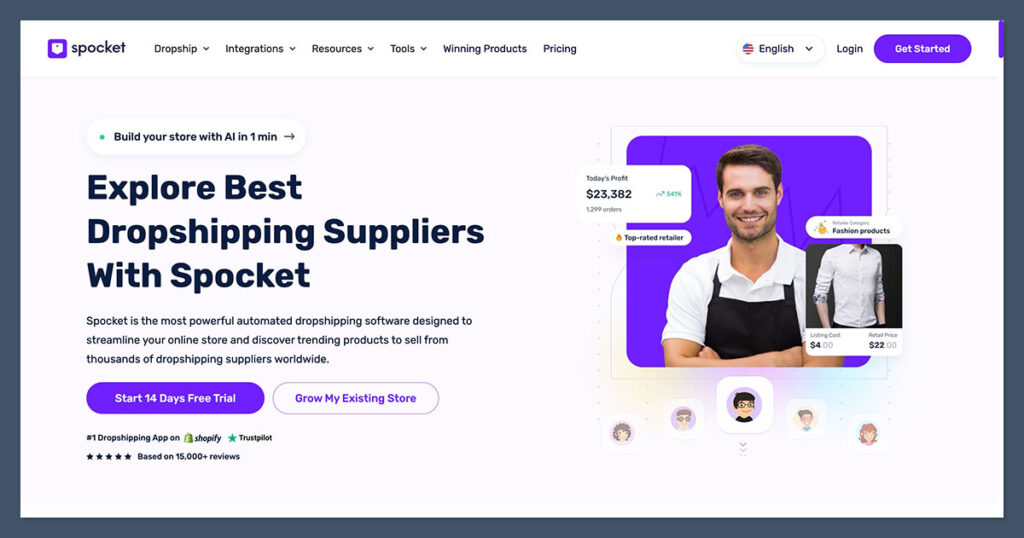
Spocket, while not as extensively focused on dedicated AI tools as Doba, incorporates intelligent filtering features. Users can sort products by origin, destination, price, supplier, premium status, or best-seller ranking. Spocket also offers shipping time and cost estimations, though these features are currently limited to U.S. sellers. Both platforms automate core order workflows, with Doba further extending automation to inventory and pricing updates, listing management, and AI-assisted operational tasks, dependent on channel capabilities.
Product Range, Quality, and Supplier Vetting: Depth vs. Curation
Both Doba and Spocket offer a comparable volume of products, with Doba presenting a seemingly broader diversity across categories like homeware, beauty, and automotive goods. Doba’s network of over a million SKUs is beneficial for testing various product angles across multiple stores. However, it’s important to note that Doba partners with a large number of suppliers, and while vetting processes are in place, product quality can exhibit variability.
Spocket maintains a more stringent approach to supplier selection. Every supplier must either manufacture or physically hold their inventory, or offer retailers a minimum discount of 25% off their public pricing. This curated approach often translates to a higher perceived level of quality and reliability. Spocket’s supplier base is predominantly U.S. and EU-based, although Doba also provides location filtering options.
Shipping, Fulfillment, and Returns: Ensuring Customer Satisfaction
Spocket’s emphasis on U.S. and EU suppliers facilitates relatively swift local delivery. Doba also boasts a strong U.S. shipping infrastructure, with approximately 90% of its products shipping domestically. This can result in comparable delivery times for U.S.-focused retailers, although specific transit times remain dependent on product, supplier, destination, and shipping method. Doba highlights products shipping from U.S. warehouses, which are ideal for prioritizing rapid domestic delivery and mitigating common fulfillment issues like long transit times and stockouts. It is crucial to understand that not all products on either platform ship domestically, and neither platform guarantees specific delivery windows.
Both companies have established supplier guidelines to ensure operational efficiency. Doba mandates that suppliers refund any order not dispatched within their stated processing time. Damaged items are typically accompanied by a prepaid return label upon submission of evidence. Invalid tracking information also triggers a refund if the supplier cannot rectify the issue. Doba further offers optional After-Sales Protection Services to mitigate losses from common post-purchase problems, such as non-defective returns and lost packages.
Spocket requires its suppliers to maintain a 95% order success rate, provide tracking details, adhere to stated delivery windows, and respond to inquiries within 24-47 hours. However, individual suppliers retain the right to set their own return policies, which can sometimes lead to outright refusals of returns.
Both platforms offer automation to expedite fulfillment processes. Nevertheless, merchants may still need to manage certain complexities, such as split-basket orders, on their own with either partner.
Integrations, Store Management, and Scalability: Expanding Your Reach
Doba and Spocket seamlessly integrate with a wide array of e-commerce platforms, including Shopify, WooCommerce, Wix, BigCommerce, and Square. However, Doba distinguishes itself with more robust marketplace integration capabilities. Its advanced multi-channel listing features simplify the expansion of sales into platforms like Temu, TikTok Shop, Amazon, eBay, and Walmart. While Spocket also offers Amazon and eBay integrations, Doba’s structure is more conducive to diverse external marketplace listings.
Doba centralizes operations once sales channels are connected, managing product, inventory, store, and order data from a single dashboard. Automatic synchronization of inventory levels and orders across channels helps prevent common multi-channel selling headaches like outdated stock counts and manual processing errors. It is important to note that while Doba integrates with a broad spectrum of platforms, the Doba Pilot workflows are currently focused on Shopify, BigCommerce, Wix, Walmart, TikTok Shop, and eBay.
Both platforms provide API integrations. Spocket’s API is primarily designed for streamlined storefront integration, automating checkout and inventory tracking. Doba’s API is more geared towards bulk data streaming, multi-channel marketplace synchronization, fulfillment routing, and comprehensive inventory updates, catering to larger-scale operations.
Samples, Branding, and Packaging: Enhancing Brand Presentation
Ordering samples is a recommended practice for any e-commerce venture, and both Doba and Spocket support this. Spocket features an "order samples" option on each listing, allowing for the purchase of up to five units of an item per order. Bulk sampling is not available. Obtaining samples from Doba can be more involved, often requiring coordination directly with individual suppliers.
Spocket offers branded invoicing on its higher-tier plans, whereas Doba mandates blind shipping for marketplace orders, with custom branding and packaging options contingent on individual supplier capabilities. Spocket generally holds an advantage in this area due to its more straightforward sampling and invoicing processes.
Doba vs. Spocket: The Concluding Verdict
Both Doba and Spocket are exceptional tools that cater to different segments of the dropshipping market. Spocket is an excellent choice for entrepreneurs prioritizing local suppliers, a simple setup process, easy access to product samples, and branded invoicing. It is particularly well-suited for beginners in dropshipping, especially those managing a single online store.
However, Doba presents a more comprehensive and scalable solution overall. While its starting price is competitive, its true value lies in the enhanced control it offers over listings, orders, inventory, marketplace connections, and multi-store management. The advanced AI and automation features are invaluable for businesses experiencing growth and looking to streamline operations. The significant upgrade to Doba Pilot has also addressed previous concerns about its learning curve, enabling a more guided and conversational approach to initial setup and ongoing management. Although Doba may offer more functionality than some very small businesses might initially require, it provides a clear pathway for growth. For businesses aiming to scale effectively and expand their reach, Doba emerges as the more adaptable and robust partner in the dynamic dropshipping landscape of 2026.