


As the digital commerce landscape continues its rapid evolution, e-commerce leaders Bill D’Alessandro and his unnamed co-author have unveiled their annual set of predictions for the coming year. Their insights, presented with a renewed emphasis on accountability through AI-driven evaluation, forecast significant shifts driven by artificial intelligence, evolving global trade policies, and widening economic disparities. The duo’s pronouncements offer a strategic roadmap for businesses navigating the complex terrain of online retail in 2026.
The AI Revolution in Advertising and Content Creation
A central theme resonating through both sets of predictions is the profound impact of artificial intelligence. The authors foresee AI’s integration into advertising reaching unprecedented levels of personalization, moving beyond mere data-driven targeting to what they describe as "telepathic" precision. The expectation is that platforms like OpenAI, upon launching their advertising capabilities, will leverage AI to understand consumer needs and motivations with an intimacy previously unimaginable. This predictive power is anticipated to offer early adopters a significant competitive advantage.

"Meta knows your interests," the co-author notes, highlighting the current state of personalized advertising. "ChatGPT knows you’re afraid your business partner resents you, you’ve Googled ‘signs of burnout’ four times this month, and you’re one bad quarter away from seriously considering selling." The implication is that future AI-driven advertising will not only understand demographic and behavioral data but also infer deeper psychological states, enabling hyper-targeted campaigns that resonate on a personal level. This sophisticated targeting could lead to dramatically improved conversion rates and a more efficient allocation of advertising spend for businesses that successfully integrate these tools.
Beyond advertising, AI’s influence is expected to democratize content creation. The prediction that video and audio editing will become largely automated at a "7/10 quality" suggests that sophisticated production tools will become accessible to smaller businesses and individual entrepreneurs. Software like Descript is already demonstrating this capability, and by the end of 2026, the authors anticipate that users will be able to input raw footage and receive polished edits through AI, significantly reducing the need for dedicated production teams and budgets. This could level the playing field for content marketing, allowing smaller brands to produce high-quality visual and auditory content that was previously the domain of larger corporations.
Further cementing AI’s pervasive role, Bill D’Alessandro predicts that AI will "completely take over Meta ads content." He cites evidence of proof-of-concept pipelines generating hundreds of unique ads daily, leveraging AI to analyze customer reviews, incorporate brand assets, and create both static and video content that can be directly deployed via APIs. This automation is poised to streamline advertising workflows, enabling rapid A/B testing and optimization at a scale previously unattainable. The transition of ad content generation to AI is expected to become mainstream in 2026, fundamentally altering how online advertising is created and managed.
Navigating Economic Headwinds and Global Trade

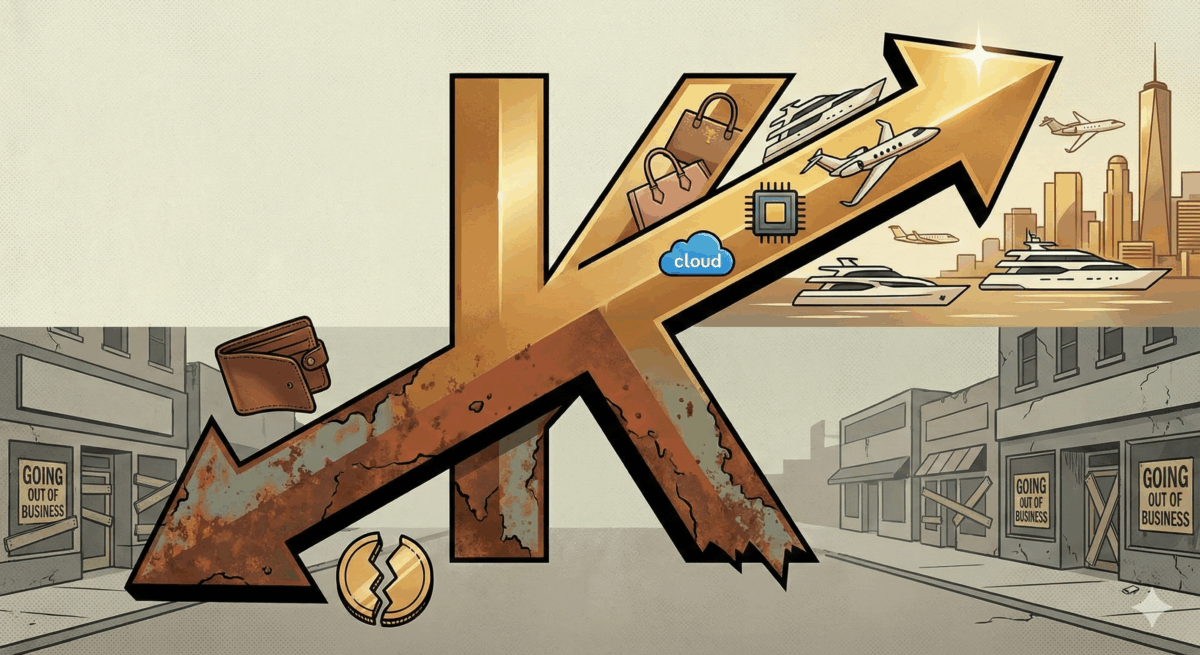
The predictions also address the macroeconomic environment, with particular attention to inflation and global trade policies. D’Alessandro foresees 2026 as a year characterized by a "K-shaped economy," where large technology firms and major market players continue to thrive, potentially seeing growth of 20% or more, while the broader economy and average consumers face ongoing struggles. This economic bifurcation presents a strategic challenge for e-commerce businesses, suggesting a need to either cater to affluent consumers with premium offerings or focus on providing essential goods at competitive prices. The "middle ground" is identified as a particularly precarious position.
Inflation is another significant concern. D’Alessandro predicts that inflation will remain above 3% in 2026, attributing this to persistent deficit spending and a lack of political will to curb government expenditures. He views this inflationary trend as a long-term issue, potentially impacting the economy for the next decade. This outlook necessitates that businesses and investors position themselves for a sustained period of rising prices, potentially influencing inventory management, pricing strategies, and investment portfolios.
On the international trade front, the predictions suggest a stabilization of tariffs on goods from China. The co-author anticipates that tariffs will settle between 30% and 50%, rather than escalating further. This forecast is based on the observed sensitivity of bond markets to tariff announcements and the potential negative impact of higher tariffs on an already fragile economy. While not a reduction in trade barriers, this predicted stabilization offers a degree of predictability for businesses reliant on Chinese manufacturing. However, the ongoing geopolitical tensions and evolving trade relationships could still introduce unforeseen complexities.
The Shifting Sands of Online Business Models

The predictions also delve into the evolving viability of different e-commerce business models. A stark pronouncement from D’Alessandro is that "the lifestyle brand is dead." He argues that unless businesses possess strong intellectual property protection or are among the top 5-10% of brands in their niche, smaller e-commerce ventures will struggle to compete. Larger entities, armed with AI-powered advertising machines and the capacity to absorb higher customer acquisition costs, are expected to dominate the market, squeezing out smaller players. This suggests a consolidation trend and an increased barrier to entry for new lifestyle-focused brands.
In parallel, the mergers and acquisitions (M&A) landscape is predicted to bifurcate significantly. D’Alessandro anticipates robust M&A activity at the high end of the market, with deals exceeding $1 billion showing strong growth. Conversely, M&A in the small and mid-size e-commerce sectors is expected to remain anemic. This indicates that while top-tier businesses will continue to attract significant investment and achieve high valuations, smaller or mid-market brands may find it increasingly difficult to find buyers or secure favorable deal terms.
Technological Trust and Digital Assets
The rise of AI-generated content also raises concerns about authenticity and trust online. The co-author’s observation of a significant portion of content on social media platforms appearing AI-generated leads to the prediction that major platforms will begin testing "verified human content" badges. This initiative aims to combat the erosion of trust by providing users with a clear indication of content origin. Such a system could be crucial in maintaining user engagement and differentiating genuine human interaction from AI-generated output.
Finally, the predictions touch upon the volatile world of digital assets. D’Alessandro forecasts that Bitcoin will experience a dip below $70,000 in the first half of 2026 before recovering to finish the year above $100,000. He attributes this volatility to competing pressures: a struggling consumer economy potentially impacting Bitcoin as a risk asset, and persistent inflation bolstering its appeal as a digital store of value. This suggests a turbulent year for cryptocurrency investors, with significant price swings anticipated.
The annual predictions from D’Alessandro and his co-author serve as a crucial barometer for the e-commerce industry. The emphasis on AI’s transformative power, coupled with insights into economic trends and evolving business models, provides a comprehensive outlook for 2026. The authors’ commitment to an AI-judged evaluation of their predictions underscores a dedication to actionable foresight, setting a high standard for forecasting in the dynamic world of digital commerce.
For businesses seeking to stay ahead of these trends, the authors emphasize that passively observing predictions is insufficient. They advocate for active engagement within communities of experienced e-commerce operators to gain real-time insights into what is currently working and what lies on the horizon. This collaborative approach, they suggest, offers a more robust pathway to navigating the complexities of the future e-commerce landscape.








