The landscape of digital recruitment has reached a critical inflection point where traditional job boards and generic career sites are no longer sufficient to capture high-quality talent in a competitive labor market. Organizations are currently facing a significant drain on their human resources budgets, often paying upwards of $5 per click to drive traffic to job postings, only to see candidates abandon the process before completing an application. Industry data suggests that the primary bottleneck in the talent pipeline is not the quality of the advertisement or the attractiveness of the role itself, but rather the digital “handshake” that occurs immediately after a potential candidate clicks an ad. When candidates are directed to a cluttered corporate career site with complex navigation and dozens of unrelated listings, the resulting cognitive load leads to immediate bounce rates. To combat this, leading enterprises are shifting toward recruitment landing pages—standalone, goal-oriented web pages designed specifically to convert visitors into applicants by eliminating distractions and streamlining the user journey.
The Evolution of Digital Recruitment Strategy
The transition from broad career portals to specialized recruitment landing pages marks a significant evolution in human capital management. In the early era of digital hiring, companies relied on “post and pray” tactics on massive job aggregators. However, as the digital advertising market became more saturated, the cost per acquisition for a single applicant began to skyrocket. Modern recruitment marketing now mirrors high-end e-commerce strategies, utilizing dedicated landing pages to maintain “message match” between the initial advertisement and the final application form.
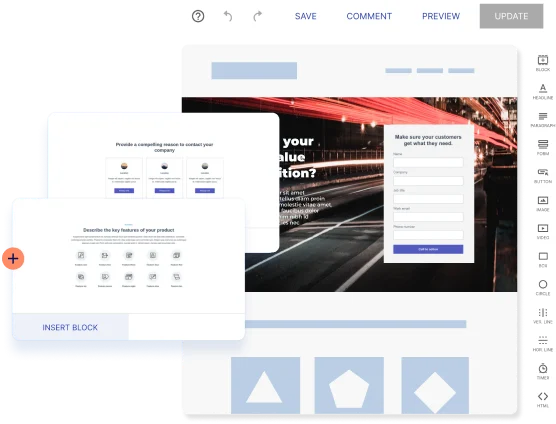
A recruitment landing page serves a singular purpose: conversion. Unlike a standard corporate website, which may feature “About Us” sections, investor relations, and product catalogs, a recruitment landing page removes the navigation menu and external links. This architectural choice forces the user to focus entirely on the value proposition of the specific role and the steps required to apply. For high-volume hiring sectors, such as the gig economy or seasonal retail, this focused approach has become the industry standard for maintaining a sustainable cost-per-hire.
Core Principles of High-Performing Recruitment Pages
To understand why some organizations successfully scale their workforce while others struggle with “ghost” traffic, it is necessary to examine the technical and psychological principles that drive recruitment conversions.
Message Consistency and the Headline Match
One of the most frequent points of failure in digital recruitment is the “expectation gap.” If a social media advertisement promises a “Remote Project Manager role with a $130,000 salary,” but the landing page displays a generic “Join Our Team” headline, the candidate experiences immediate friction. Professional recruiters now emphasize that the landing page headline must mirror the ad copy almost exactly. This continuity reassures the candidate that they have arrived at the correct destination and that the opportunity they clicked on is legitimate and available.
The Critical Nature of Above-the-Fold Content
In the attention economy, candidates decide whether to stay on a page within the first three to five seconds. Consequently, the “above-the-fold” area—the portion of the webpage visible without scrolling—must contain the most compelling information. This includes the job title, a clear value proposition (such as salary, flexibility, or sign-on bonuses), and a prominent Call to Action (CTA) button. Data from digital marketing studies indicates that including at least one trust signal, such as a company rating from Glassdoor or a “Top Workplace” award, within this initial view can increase conversion rates by as much as 20%.
Reducing Friction through Form Optimization
Application abandonment is perhaps the greatest challenge in modern HR. Lengthy forms that require candidates to create an account, upload a resume, and then manually re-type their entire work history are major deterrents. High-conversion recruitment pages limit initial forms to three to five essential fields: name, email, phone number, and a resume upload option. Some organizations have moved toward a two-step “lead capture” process, where the candidate submits basic contact information first, allowing the recruitment team to follow up even if the candidate does not complete the full application in one sitting.
Case Studies: Industry Leaders in Recruitment Optimization
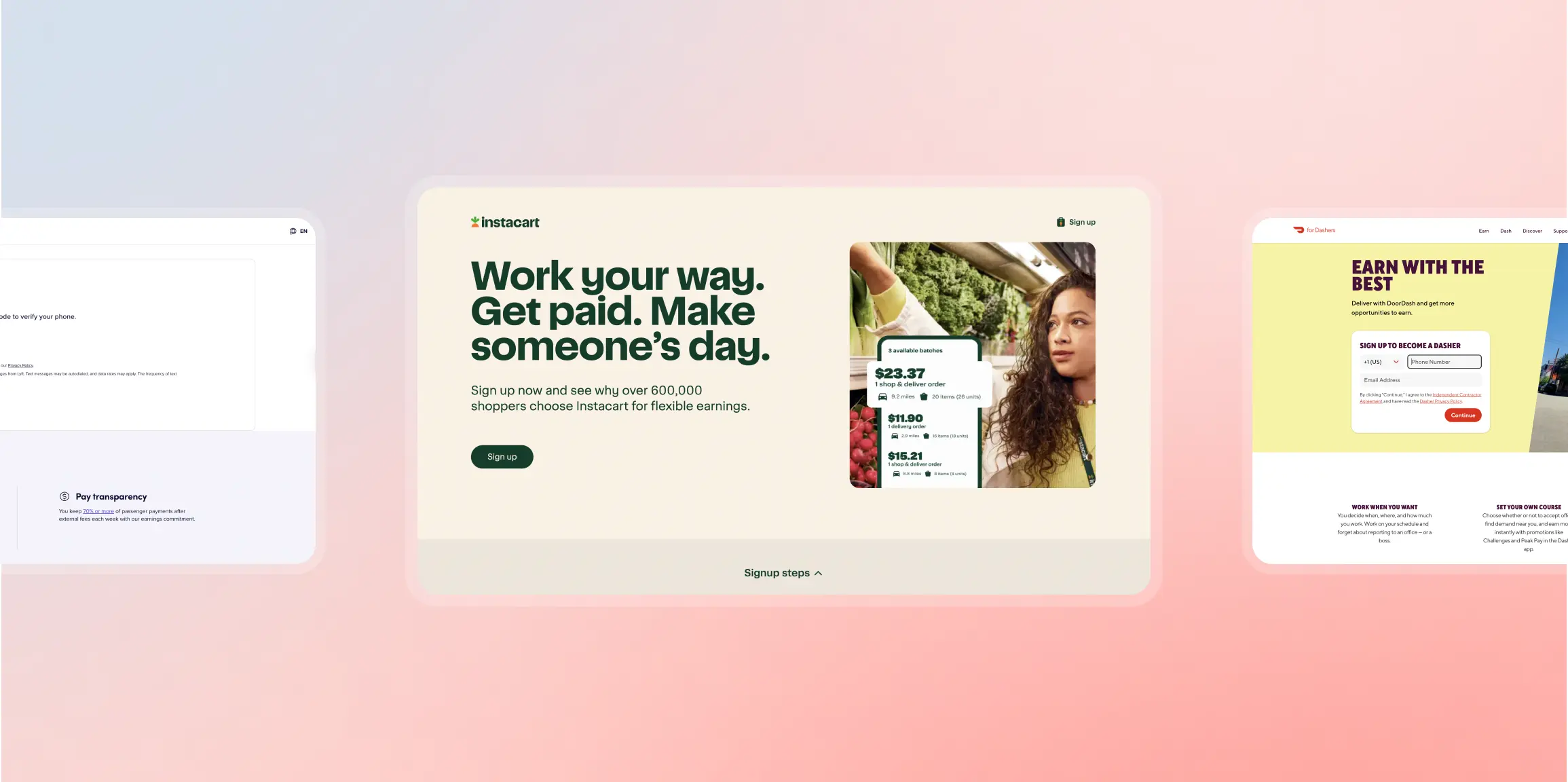
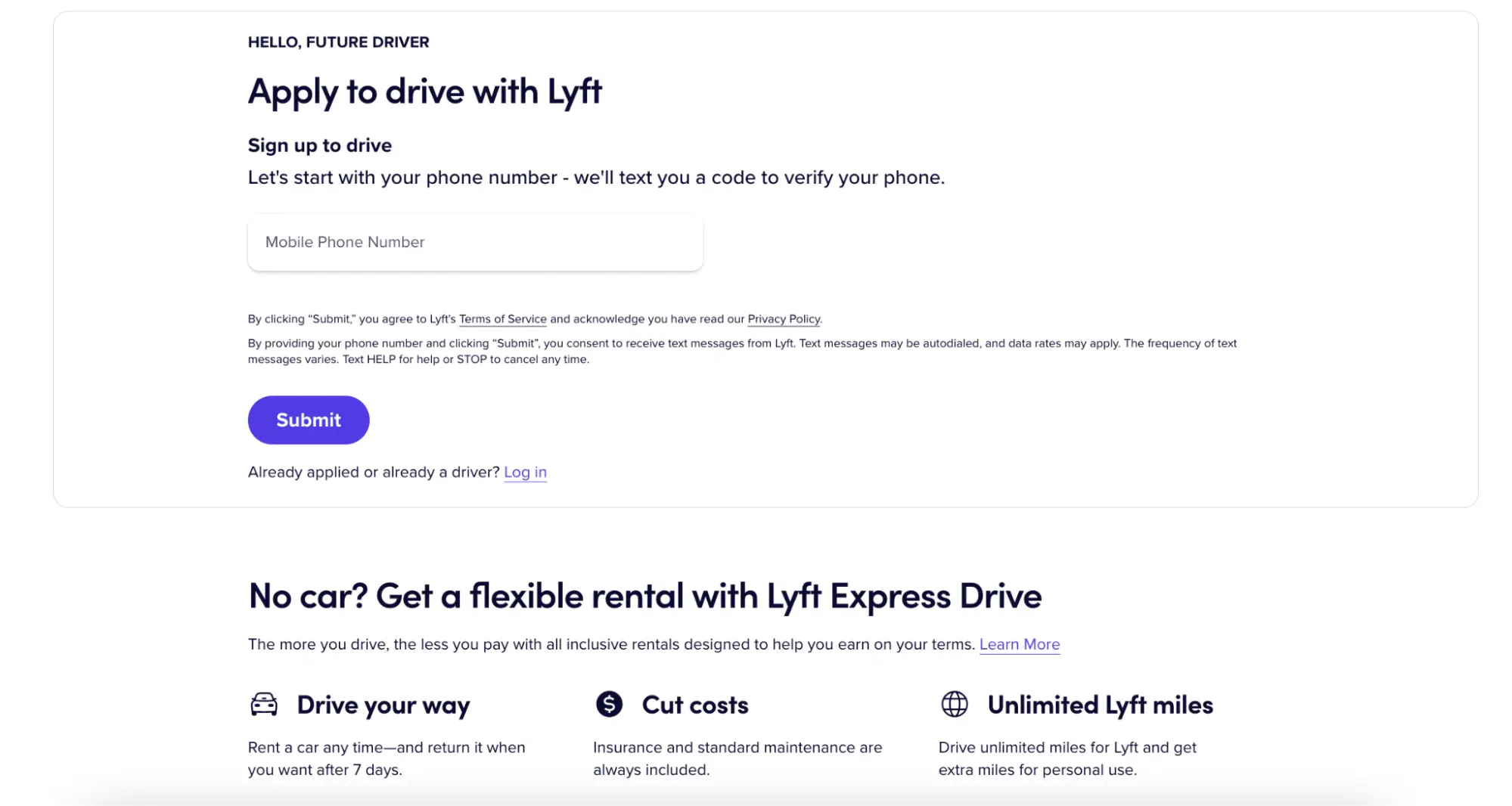
Analyzing the digital strategies of market leaders like Uber, Lyft, and DoorDash reveals a sophisticated approach to high-volume talent acquisition. These companies have perfected the art of the recruitment landing page to fuel their global driver networks.
Uber and the Minimalist Onboarding Flow
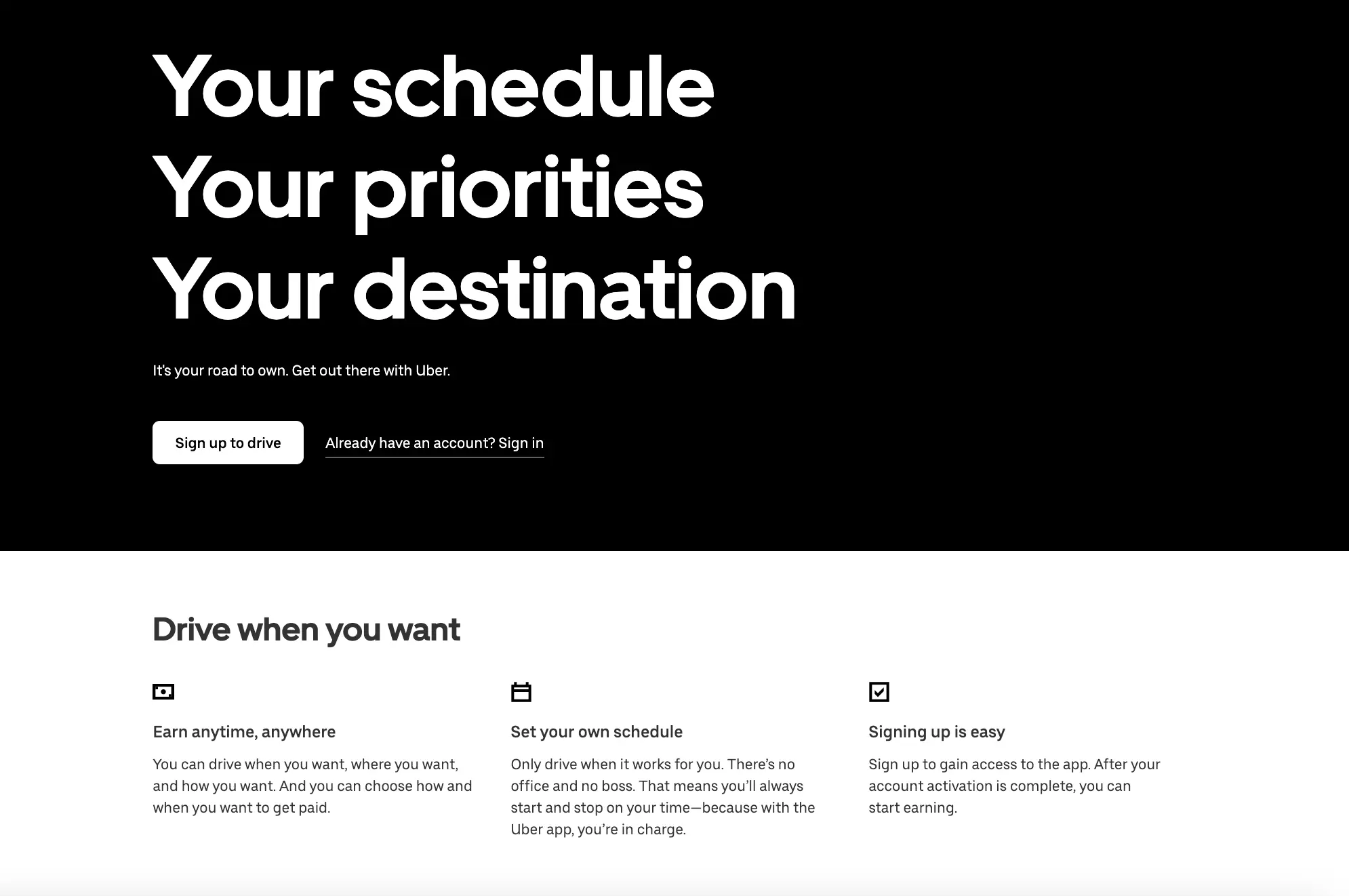
Uber’s recruitment landing pages are often cited as benchmarks for the gig economy. Their strategy focuses on extreme clarity and the removal of all non-essential elements. The page typically features a bold headline regarding earnings potential, a simple zip code entry to start the process, and clear imagery that reflects the flexibility of the work. By treating the applicant like a customer, Uber reduces the psychological barrier to entry.
DoorDash and Geographic Personalization
DoorDash utilizes recruitment landing pages that leverage geographic data to show candidates exactly where “Dashers” are needed most. By personalizing the content to the user’s location, they increase the relevance of the ad. Their pages also prominently feature “How it Works” sections that break down the payment structure, addressing the candidate’s primary concern—compensation—before they even begin the application.
Specialized Platforms: Writers Work and Instacart
For skill-based platforms like Writers Work, the recruitment landing page acts as a “qualification” gate. They use a professional, clean design that emphasizes the benefits of the platform’s tools. Instacart, similarly, focuses on the “Shopper” experience, using high-quality photography and testimonials to build a sense of community. Both examples demonstrate that social proof—real photos and quotes from current workers—is essential for building the trust required to secure a completed application.

The Role of A/B Testing in Recruitment ROI
The most successful recruitment campaigns are never static; they are the result of continuous experimentation. A/B testing, or split testing, allows recruitment marketers to run two versions of a landing page simultaneously to see which performs better. Even a 1% increase in conversion rate can lead to thousands of dollars in savings across a large-scale campaign.
Key variables that organizations prioritize for testing include:
- CTA Button Copy: Testing “Apply Now” vs. “Get Started” or “Join the Team.”
- Media Types: Comparing the impact of a static hero image versus a short testimonial video.
- Benefit Ordering: Determining if candidates respond more to “Flexible Hours” or “High Earnings Potential.”
- Form Placement: Testing whether a form embedded on the page outperforms a button that opens a pop-up.
Modern tools, such as the Instapage platform, have democratized these testing capabilities. By using AI-powered traffic allocation, these systems can automatically direct more visitors to the version of the page that is yielding the most applications, effectively optimizing the recruitment budget in real-time.

Broader Economic Impact and Future Implications
The shift toward specialized recruitment landing pages has broader implications for the global labor market. As the “quit rate” remains high in various sectors, the speed at which a company can identify and onboard talent has become a competitive advantage. Organizations that fail to optimize their digital recruitment funnels will inevitably face higher acquisition costs, leading to a disadvantage in their respective markets.
Furthermore, the rise of mobile-first job searching cannot be ignored. With over 60% of job seekers now using mobile devices to find and apply for roles, recruitment landing pages must be optimized for speed and touch-navigation. A page that takes longer than three seconds to load on a mobile network will see a significant drop-off in candidate engagement.
Conclusion: Data-Driven Talent Acquisition
In conclusion, the era of the generic career site as a primary recruiting tool is coming to an end for companies serious about digital growth. Recruitment landing pages represent a data-driven solution to the problem of wasted advertising spend and high candidate abandonment. By focusing on message match, reducing form friction, and utilizing rigorous A/B testing, organizations can transform their recruitment process from a cost center into a streamlined engine for growth. As competition for top-tier talent and high-volume labor continues to intensify, the ability to convert a single ad click into a qualified applicant will remain the most vital metric in the recruiter’s toolkit. Organizations that adopt these strategies today will be best positioned to navigate the complexities of the future workforce.

 Siti Muinah
 Nana
Nana