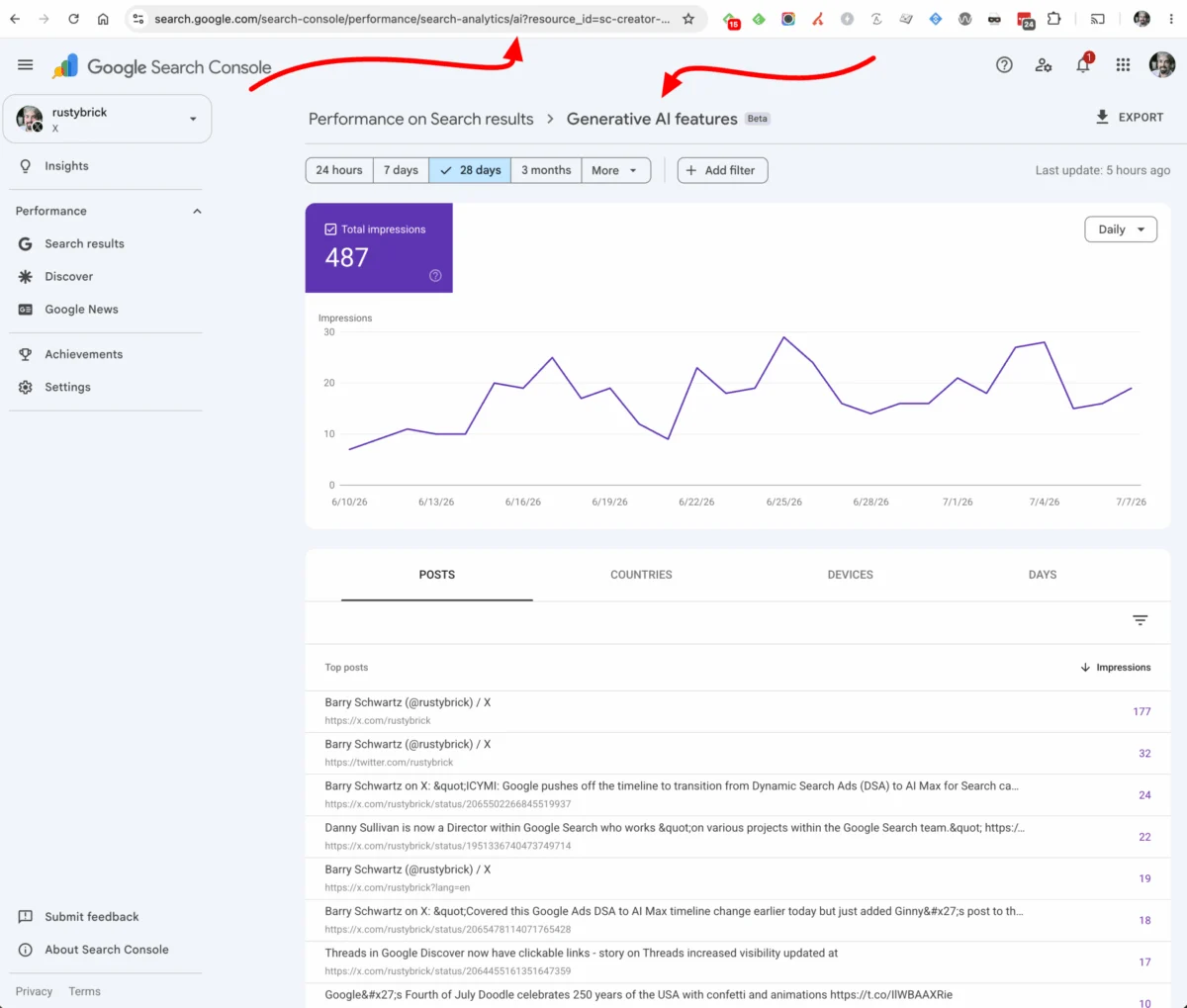
A previously undocumented URL manipulation technique has been discovered, enabling content creators and digital marketers to access generative AI performance reports within Google Search Console for their social and video platform properties. This method, which involves appending "/ai" to specific URLs within the Search Console interface, provides a unique insight into how content published on platforms like YouTube and X (formerly Twitter) is interacting with Google’s evolving AI-powered search features. While this workaround currently applies exclusively to platform properties and not standard website properties, its discovery highlights the increasing demand for transparency regarding AI’s influence on content visibility and performance.
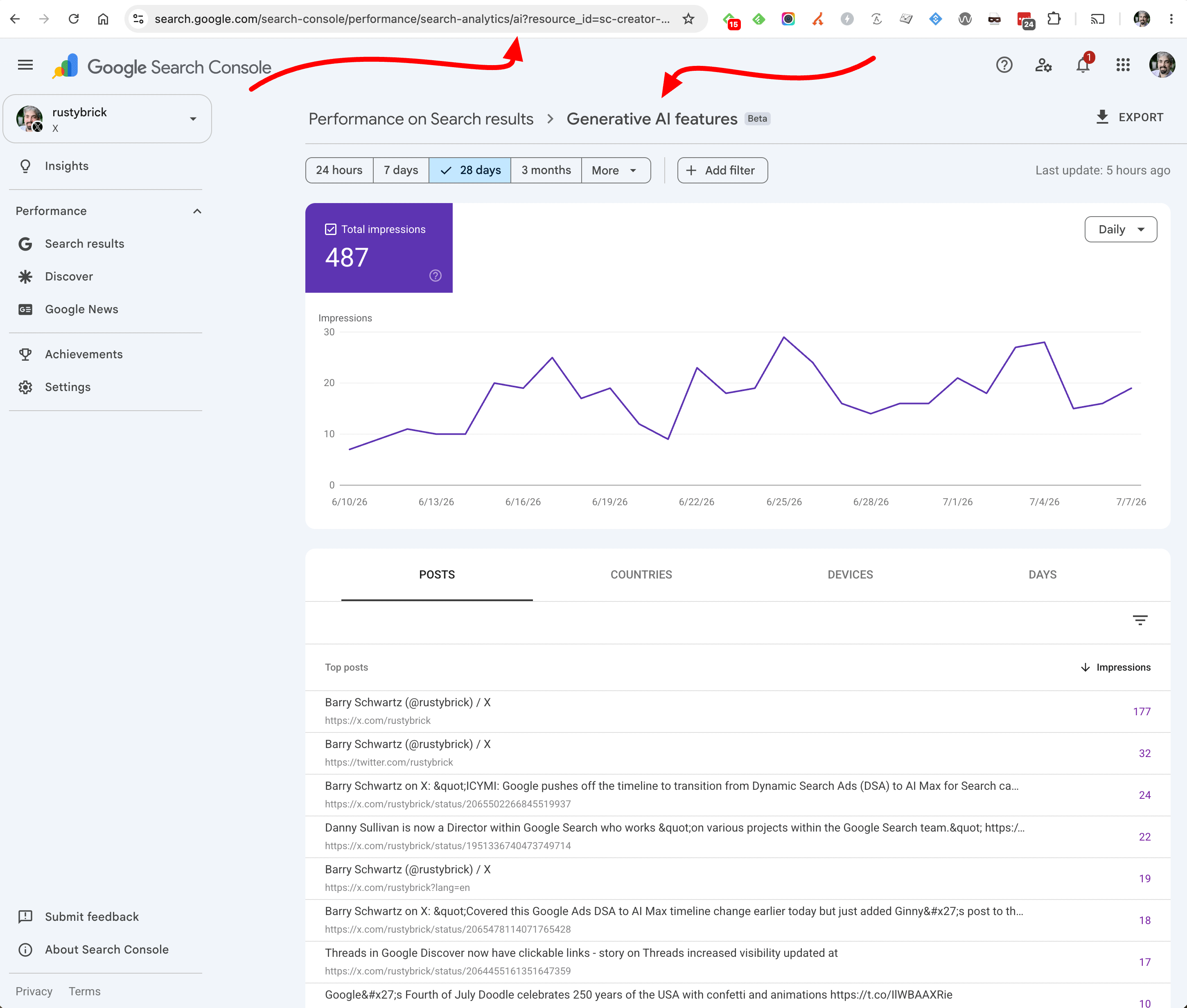
The revelation, initially shared by digital marketing expert Kenichi Suzuki on X, indicates that by modifying the URL in Google Search Console from https://search.google.com/search-console/performance/search-analytics?resource_id=sc-creator-profile to https://search.google.com/search-console/performance/search-analytics/ai?resource_id=sc-creator-profile, users can toggle between the standard performance report and a dedicated generative AI performance report. A similar modification applies to discover reports. This immediate access provides a distinct visual and data-driven difference, showcasing how content is being surfaced and consumed through Google’s nascent AI Overviews and other generative search features.
Google’s AI-Driven Search Evolution
The landscape of online search has undergone a significant transformation with the advent of generative artificial intelligence. Google, a dominant force in search, has been at the forefront of this evolution, introducing its Search Generative Experience (SGE), which integrates AI Overviews directly into search results. SGE aims to provide users with concise, AI-generated summaries and answers to their queries, often drawing information from multiple sources across the web. This paradigm shift fundamentally alters how users discover content and how content creators must strategize for visibility.
The initial rollout of SGE began in May 2023, with Google gradually expanding its availability to more users and regions. The core premise of SGE is to streamline information retrieval, offering immediate answers without necessarily requiring users to click through to individual websites. While beneficial for user experience, this development has raised questions among content creators and publishers about the potential impact on organic traffic and the metrics traditionally used to measure content performance. Understanding how content performs within these AI Overviews—whether it’s cited, summarized, or directly answered by the AI—becomes paramount.
The Critical Need for AI Performance Data
For content creators, marketers, and SEO professionals, performance data is the lifeblood of their strategy. Google Search Console (GSC) has long served as the primary nexus for understanding how Google interacts with a website. It provides invaluable insights into search queries, impressions, clicks, indexing status, and core web vitals. However, the emergence of AI in search has introduced a new dimension of performance that traditional GSC reports were not initially designed to capture.
The generative AI performance report, whether accessed officially or via this undocumented method, is designed to bridge this gap. It offers specific metrics related to AI Overviews, such as how often content appears as a source in an AI-generated summary, the queries that trigger such appearances, and the subsequent user engagement. Without this data, creators would largely be operating in the dark, unable to discern the efficacy of their content in an AI-dominated search environment. The ability to track impressions and clicks stemming from AI-powered search results allows creators to:
- Identify AI-driven user intent: Understand what types of queries are being fulfilled by AI Overviews that incorporate their content.
- Optimize for AI visibility: Refine content structure, clarity, and summarizability to increase the likelihood of being cited or featured by AI.
- Measure AI impact: Quantify the influence of AI Overviews on their overall traffic and visibility, differentiating it from traditional organic search.
- Adapt content strategies: Adjust editorial calendars and content creation processes to better align with how AI systems discover, process, and present information.
This data is particularly crucial as the creator economy continues to expand, with an estimated 50 million individuals worldwide identifying as creators. Their livelihoods often depend on discoverability, and as search evolves, so must their tools for analysis.
Google Search Console: A Cornerstone for Webmasters and Creators
Google Search Console, formerly known Google Webmaster Tools before its rebranding in 2015, is a free web service provided by Google that allows webmasters to check indexing status and optimize visibility of their websites. It acts as a direct communication channel between website owners and Google, providing critical insights into a site’s health and performance in Google Search. Its functionalities are extensive, covering everything from identifying crawl errors and mobile usability issues to submitting sitemaps and disavowing backlinks.
Over the years, GSC has continually evolved to reflect changes in Google’s search algorithms and the broader web landscape. Its performance reports, in particular, have been a cornerstone for SEO efforts, offering granular data on search queries, page performance, and device-specific trends. The introduction of specific reports for "Discover" traffic, which refers to content surfacing in personalized feeds on Google apps, marked a significant expansion beyond traditional search results. This continuous evolution underscores Google’s commitment to providing tools that empower content owners to thrive in an ever-changing digital ecosystem.
Understanding Platform Properties: A New Frontier in GSC
A relatively recent and significant addition to Google Search Console is the introduction of "Platform Properties." Traditionally, GSC focused exclusively on websites that users owned and could verify through various methods like HTML file upload or DNS record verification. However, the rise of powerful content platforms like YouTube, X, TikTok, and Instagram has meant that a substantial portion of user-generated content, though not hosted on a traditional website, is still highly discoverable through Google Search.
Recognizing this shift, Google began rolling out support for Platform Properties in early 2024. This feature allows creators to link their profiles or channels on these third-party platforms directly to GSC, enabling them to monitor the performance of their social and video content in Google Search results. For instance, a YouTube creator can now see how their videos are performing in Google Search, including impressions and clicks, without needing to own a separate website. This move represents a strategic acknowledgment by Google that content exists and gains significant traction beyond traditional owned web domains, and that creators on these platforms also require performance insights.
Platform properties are distinct from standard website properties in several key ways:
- Verification: Verification methods are often streamlined, leveraging existing platform authentication.
- Content Focus: They focus on content types inherent to the platform (e.g., videos for YouTube, short-form posts for X).
- Data Scope: Reports are tailored to the specific nature of content discoverable from that platform within Google Search.
This distinction is crucial, as it explains why the newly discovered "/ai" trick currently works exclusively for these platform properties. It suggests that Google might be testing or rolling out AI performance reporting differently across various content types and verification models, perhaps prioritizing insights for the rapidly growing creator economy on these platforms.
The Undocumented Access Method Revealed
The discovery of this specific URL manipulation technique by Kenichi Suzuki, widely shared on X (formerly Twitter), has provided an immediate workaround for creators seeking AI performance data for their platform properties. Suzuki noted that by simply appending /ai after search-analytics or discover in the URL string within Google Search Console, users could unlock a distinct view of performance data specifically related to generative AI interactions.
For example, a typical GSC performance URL for a platform property might look like:
https://search.google.com/search-console/performance/search-analytics?resource_id=sc-creator-profile
By modifying it to:
https://search.google.com/search-console/performance/search-analytics/ai?resource_id=sc-creator-profile
The report transforms to display metrics relevant to AI Overviews. This immediate visual and data-driven difference is stark, providing creators with a report focused on how their content is being processed and presented by Google’s AI. The discovery was quickly verified by numerous users within the SEO community, confirming its functionality.
The key specificity and limitation of this method are its exclusive applicability to platform properties. Attempts to apply the same URL modification to standard website properties have not yielded the same generative AI performance report. This suggests a segmented rollout or testing phase by Google, where AI reporting for platform-based content might be handled or prioritized differently than for traditional websites. While Google has indeed expanded official access to AI performance reports for many standard properties, the fact that this specific URL trick is needed for platform properties underscores the ongoing, somewhat uneven, evolution of these new reporting tools. The transient nature of such "hacks" means that Google could formalize this feature, integrate it differently, or even deprecate the workaround in the future.
Implications and Analysis
The availability of this AI performance data, even through an undocumented channel, carries significant implications for various stakeholders in the digital ecosystem.
Empowering Platform Creators
For individuals and brands primarily operating on platforms like YouTube and X, this data is a game-changer. It offers a direct lens into how their videos, tweets, and other social content are being consumed and cited by Google’s AI Overviews. This intelligence can inform content strategies in several ways:
- Content Optimization: Creators can analyze which pieces of content are most frequently featured in AI Overviews and understand the associated queries. This allows them to optimize future content for clarity, conciseness, and information density, making it more amenable to AI summarization.
- Audience Understanding: By seeing the queries that trigger AI Overviews featuring their content, creators gain deeper insights into their audience’s information needs when interacting with AI.
- Competitive Advantage: Early adopters of this data can gain a competitive edge by adapting their content creation and distribution strategies before the official widespread rollout of such features.
Google’s Evolving Data Transparency
The discovery of this undocumented feature reflects Google’s broader, albeit sometimes staggered, commitment to data transparency. As AI becomes more integral to search, the demand for clear metrics on its impact will only grow. While the specific method is a workaround, its existence suggests that the underlying data and reporting infrastructure for AI performance are already in place within Google’s systems. This could foreshadow a more formalized integration of these reports across all property types in the near future. Google faces the challenge of rapidly innovating its search experience with AI while simultaneously providing robust, understandable tools for publishers and creators to measure their performance within this new paradigm.
The Broader Landscape of AI Content Optimization
This development contributes to the emerging field of "AI SEO" or "Generative AI Optimization." Traditional SEO focused heavily on keywords, backlinks, and technical site health. While these remain important, optimizing for AI Overviews introduces new considerations:
- Contextual Relevance: Ensuring content provides comprehensive, authoritative answers that AI can easily synthesize.
- Structured Data: Utilizing schema markup and clear headings to help AI understand the hierarchy and intent of information.
- Summarization Potential: Crafting content that is easily digestible and summarizable, as AI Overviews aim for conciseness.
The ability to directly measure AI performance allows for empirical testing of these new optimization strategies, moving beyond mere speculation.
Chronology of Key Developments
Understanding the timeline of related developments provides context for this discovery:
- Early 2000s: Google Sitemaps, the precursor to Google Search Console, is launched, offering basic site health and indexing tools.
- 2015: Google Webmaster Tools is rebranded as Google Search Console, signaling an expanded focus beyond just "webmasters" to all content creators and publishers.
- May 2023: Google officially announces the Search Generative Experience (SGE) at its I/O conference, initiating a limited rollout for testing. This marks the beginning of AI Overviews in mainstream search.
- Late 2023 / Early 2024: Google begins a limited rollout of generative AI performance reports within GSC for some users and standard website properties, allowing them to see AI Overview impressions and clicks.
- March 2024: Google officially introduces "Platform Properties" in Google Search Console, allowing creators to link and monitor their social media and video platform accounts (e.g., YouTube, X) for performance in Google Search.
- May 2024: Kenichi Suzuki publicly shares the discovery of the "/ai" URL trick, enabling generative AI performance reports specifically for platform properties in GSC.
This chronology illustrates a concerted effort by Google to integrate AI into search and provide corresponding analytics, albeit with staggered rollouts and differing levels of access across various property types.
Potential Future Directions and Official Stance
While Google has not issued an official statement regarding this specific URL manipulation technique, its broader actions suggest a clear trajectory towards more comprehensive AI performance reporting. It is plausible that this undocumented feature is either part of an ongoing internal test, an accidental exposure of a future official feature, or a temporary workaround that Google may eventually formalize or address.
Historically, Google tends to either fully integrate widely discovered "hacks" into official features or, less frequently, deprecate them if they pose a security risk or misrepresent data. Given that this specific method merely accesses existing data structures within GSC, it is more likely to be a precursor to a formalized feature. Content creators should anticipate that Google will eventually provide official, easily accessible generative AI performance reports for all property types, including a seamless user interface for accessing this data without URL modifications.
Google’s general stance emphasizes empowering publishers and creators with data to adapt to search changes. The existence of this report, even in its current accessible form, aligns with this philosophy. It underscores Google’s acknowledgment of the significant impact AI Overviews will have on content discovery and the necessity for creators to have the tools to measure and respond to these changes. User feedback, often gathered through community discoveries like Suzuki’s, plays a crucial role in shaping the development and prioritization of new GSC features.
The discovery of this undocumented method to access generative AI performance data for platform properties in Google Search Console is a pivotal moment for content creators. It provides immediate, actionable insights into how content on social and video platforms is engaging with Google’s AI-powered search results. While currently a workaround specific to platform properties, its implications are far-reaching, signaling the ongoing evolution of search, the increasing importance of AI content optimization, and Google’s commitment to providing creators with the tools necessary to navigate this new digital frontier. As AI continues to reshape information discovery, the ability to measure its impact will be indispensable for sustained online visibility and success.