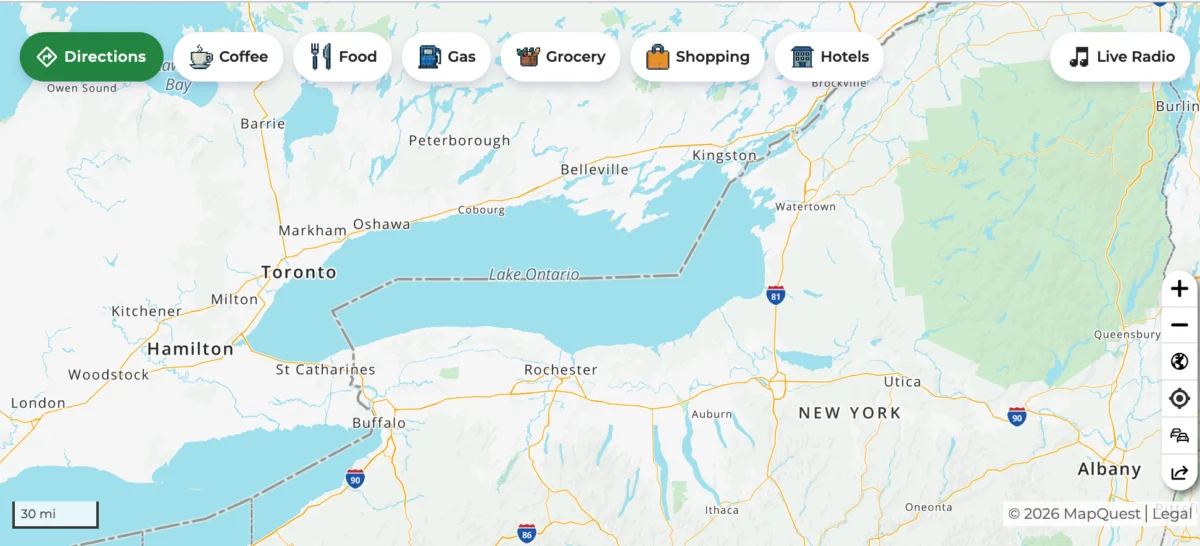
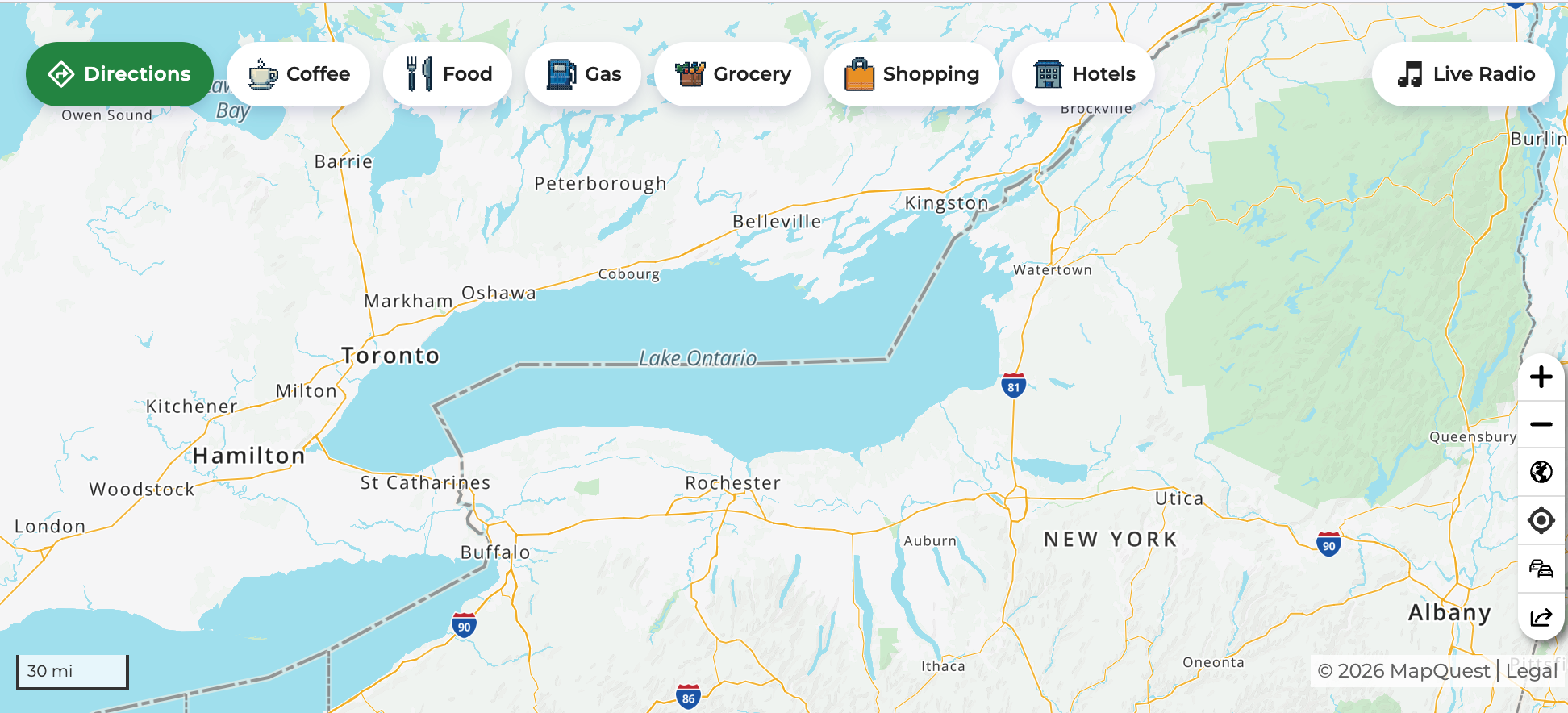
The landscape of American public relations and digital branding reached a significant turning point on August 30, 2026, when MapQuest, a pioneer of the online mapping industry often considered a relic of the early internet, surged to the number one position in the U.S. Apple App Store’s maps category. This unexpected resurgence, which saw the app climb to the eighth position overall, was not the result of a massive advertising campaign or a technological breakthrough, but rather a calculated decision to maintain cartographic status quo in the face of executive intervention. By refusing to update its maps to reflect the renaming of Lake Ontario to "Lake America"—a change mandated by President Donald Trump following a high-stakes trade dispute with Canada—MapQuest transformed a geopolitical controversy into its most significant brand moment in three decades. The incident highlights a growing trend in which private corporations are increasingly forced to choose between federal compliance and consumer-facing credibility, a dilemma that is currently reshaping the fields of crisis communications and institutional reputation management.
The Cartographic Conflict: A Chronology of Renaming
The controversy began in late August 2026, following a breakdown in trade negotiations between the United States and the Canadian government. In a move characterized by international observers as a symbolic assertion of sovereignty and economic leverage, the Trump administration issued an executive order declaring that the U.S. portion of Lake Ontario would henceforth be officially recognized in federal documents and by government agencies as "Lake America." While the decision was met with immediate legal challenges and diplomatic protests from Ottawa, major tech infrastructure providers, including Apple Maps and Google Maps, moved quickly to update their platforms to reflect the new federal designation.
For MapQuest, the moment offered an opportunity to revisit a strategy it had first deployed several years prior. Earlier in the administration, when the Gulf of Mexico was similarly rebranded as the "Gulf of America" via executive decree, MapQuest had opted to retain the traditional name. At that time, the company went a step further by launching a microsite that allowed users to input their own preferred names for the body of water, effectively crowdsourcing the concept of geographical identity. When the Lake Ontario directive was issued, MapQuest General Manager Doug Berger and his team decided to replicate this approach. By keeping the name "Lake Ontario" and expanding their interactive naming tool, the brand positioned itself as an arbiter of familiarity rather than a vehicle for political messaging.
The result was a download surge approximately 50 times the app’s normal daily rate. This reaction suggests a significant appetite among the American public for brands that prioritize continuity and user-recognized reality over shifting political directives. According to data from Adtaxi, approximately 42% of consumers express a preference for brands that maintain neutrality and focus on product utility rather than social or political engagement. MapQuest’s success indicates that "neutrality" in a highly polarized environment can be achieved by simply refusing to change, thereby allowing the brand to occupy a "lane" of reliability that its larger, more compliant competitors vacated.
The Strategic Cost of Compliance
The decision by Apple and Google to adopt the "Lake America" nomenclature has sparked a broader debate about the risks of corporate capitulation to political pressure. Brett Bruen, President of the Global Situation Room and a former U.S. diplomat, notes that the administration has applied unprecedented pressure on private enterprises to align their operations with specific policy preferences. While complying with federal directives may seem like a prudent way to avoid regulatory retribution or public criticism from the executive branch, it often carries a hidden cost in brand equity.
Bruen points out that as institutional trust fluctuates, companies that are seen as too eager to please the government may alienate large segments of their user base. With midterm elections approaching, the long-term loyalty of consumers may be more valuable than the short-term benefit of avoiding administrative friction. The MapQuest example serves as a case study in how "defiance through consistency" can serve as a powerful marketing tool, particularly when the public perceives official changes as arbitrary or politically motivated.
USPS and the Communication of Uncertainty
While MapQuest navigated the waters of brand identity, the United States Postal Service (USPS) found itself at the center of a different kind of communication crisis involving the intersection of technology and democratic processes. On September 1, 2026, the USPS issued a formal statement addressing concerns over the development of a new Federal Ballot Mail Portal. The portal, designed to facilitate the submission of absentee voter information under a previous executive order, became a flashpoint after a whistleblower report was submitted to Senator Richard Blumenthal (D-Conn.). The report alleged that the agency was rushing the deployment of insufficiently tested technology as midterm elections drew near.
The USPS response was a study in "strategic nonresponsiveness," a term used by some communications experts to describe statements that provide a veneer of transparency without committing to specific corrective actions. The agency’s statement noted that it was "carefully reviewing" the whistleblower’s concerns while emphasizing that the portal remained voluntary for state election officials. Furthermore, the USPS highlighted its adherence to existing court orders that had blocked certain ballot verification requirements.
John Guilfoil, Principal of John Guilfoil Public Relations, argues that this type of messaging is a deliberate byproduct of a weakened media environment. In his analysis, the "carefully reviewing" stance is a calibrated tactic designed to satisfy a news cycle without offering substantive disclosures. Guilfoil suggests that as newsrooms become understaffed and less capable of sustained investigative pressure, organizations—both public and private—have shifted toward vague, defensive postures. He posits that this trend represents a "bad effective" form of communication: it successfully manages the immediate PR risk but fails the broader test of public accountability.
The Erosion of Corporate Credibility: New Research Findings
The challenges facing MapQuest and the USPS are reflected in a broader crisis of confidence across the American corporate sector. A national survey conducted by the crisis communications firm Resonant Advisory Group, in partnership with DHM Research, reveals a startling decline in institutional trust. The study found that only 5% of Americans find corporate statements to be "completely credible," while 63% believe that crisis communications have become less believable over the past year. Perhaps most concerning for brand managers is the finding that one-third of the population approaches any corporate announcement with a baseline of outright skepticism.
The research identified several key areas where the gap between corporate rhetoric and public perception is widening:
- The Audience Paradox: Credibility is eroding fastest among high-earning and highly educated demographics—the very audiences that many premium brands and political entities are most desperate to retain. These groups are more likely to scrutinize the nuances of a statement and recognize when information is being withheld or massaged.
- The Disconnect of Daily Operations: The study suggests that credibility is not lost in a single moment of crisis but is drained through daily interactions. When a company’s actions—such as announcing record profits while simultaneously conducting mass layoffs—contradict its stated values, the public loses faith in the brand’s fundamental honesty.
- The Complexity Trap: As organizations use increasingly jargon-heavy or legalistic language to navigate sensitive issues, they further alienate a public that craves simplicity and directness.
- The Vacuum Effect: In the absence of clear, honest information, the public will fill the void with their own interpretations, often fueled by social media speculation.
Erik Moser, President of Resonant Advisory Group, emphasizes that the solution to this crisis lies in a return to fundamental principles. He argues that communicators must ensure their statements address the actual issues at hand in a way that a "reasonable person" can understand. The goal should be to provide enough information for the audience to make their own informed decisions, rather than attempting to dictate a specific narrative.
Implications for the Future of Public Relations
The convergence of the MapQuest resurgence, the USPS portal controversy, and the Resonant Advisory Group’s findings points toward a new era in public relations—one defined by the "reputation risk" of political alignment and the "credibility premium" of operational transparency. For years, the standard PR playbook focused on "controlling the narrative." However, in a fragmented media landscape where consumers have instant access to alternative viewpoints and historical data, the ability to control a narrative has been replaced by the necessity of maintaining a consistent, believable identity.
The MapQuest story proves that in an era of rapid change, there is immense value in being the "app that keeps the names you know." For the USPS and other public institutions, the lesson is more cautionary: vague statements may win a news cycle, but they contribute to a long-term erosion of trust that can be catastrophic during a national event like an election.
As John Guilfoil suggests, the American PR industry may need to look toward global standards, such as those set by the Public Relations and Communications Association (PRCA), to restore professional norms. This would involve a more rigorous commitment to ethics and a willingness within the industry to call out deceptive practices. Without such a shift, the "credibility gap" is likely to continue widening, leaving corporations and government agencies alike struggling to find an audience that believes them, regardless of the facts. The success of MapQuest in 2026 may ultimately be remembered as the moment when the industry realized that sometimes, the best way to move forward is to refuse to move at all.