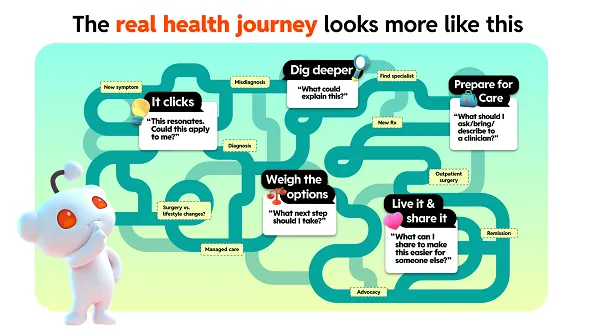
Reddit’s inaugural Health Summit, held in New York on September 4, served as a pivotal moment for the social media giant to delineate its burgeoning role in the landscape of digital health. The event, which convened a diverse group of healthcare industry leaders, marketers, and platform strategists, presented compelling data underscoring how its vast network of communities has become an indispensable resource for health-related research, peer support, and even self-diagnosis. Following the summit, Reddit shared a comprehensive overview of key insights, revealing trends that highlight the platform’s escalating value as a critical health information conduit and a unique ecosystem for understanding lived experiences related to medical conditions.
The impetus behind Reddit hosting a dedicated Health Summit at this juncture reflects a broader recognition of the platform’s organic evolution into a significant health information hub. For years, users have flocked to Reddit’s specialized subreddits to discuss everything from rare diseases and chronic conditions to mental health challenges and general wellness queries. This user-driven aggregation of knowledge and experience, largely unsupervised by traditional medical gatekeepers, has cultivated a unique environment distinct from conventional medical websites or even other social media platforms. The summit aimed not only to quantify this phenomenon but also to explore strategic avenues for health-related marketers and professionals to engage with these vibrant, often highly niche, communities in an authentic and impactful manner. By formally addressing its role in health, Reddit is signaling its intent to further legitimize and potentially monetize this aspect of its platform, while also grappling with the inherent responsibilities that come with hosting such sensitive discussions.
A central revelation from the summit was the sheer scale of health-related discourse occurring on the platform. Over the past year, healthcare conversations on Reddit generated more than 36 billion views, a staggering figure that firmly positions the platform as a dominant force in online health discussions. This metric alone speaks to the immense public interest and engagement with health topics within Reddit’s ecosystem. To put this in context, similar reports from organizations tracking online health-seeking behavior, such as the Pew Research Center, consistently show that a significant percentage of adults turn to the internet for health information, with search engines being primary gateways. However, Reddit offers something distinct: a forum not just for information retrieval, but for interactive, nuanced dialogue, often with individuals navigating similar health journeys.
Perhaps even more striking is the reported statistic that 46% of doctors in the U.S. are now active on the app. While the nature of this "activity"—whether it’s passive observation, active participation in medical communities, or simply general use of the platform—requires further granularity, it nonetheless signifies a remarkable penetration into the medical professional community. This presence could serve multiple functions: for doctors to stay abreast of patient perspectives, to engage in professional discourse within medical subreddits, or even to monitor public health trends and sentiment. The involvement of nearly half of U.S. physicians lends a layer of credibility and potential for expert input within certain discussions, though it also raises questions about professional boundaries and the ethical implications of doctors participating in public health forums.
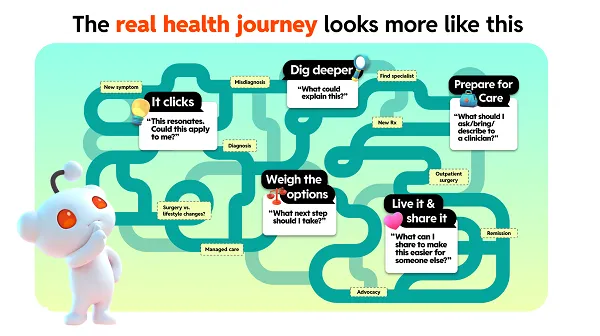
One of the most compelling use cases highlighted by Reddit is its role in "diagnosis," albeit in an unconventional, peer-driven sense. The company reported that in 2025 (likely referring to the past year, or a projection for the current fiscal year ending in 2025), there were 473 million Reddit posts that connected symptoms to a possible condition. This statistic doesn’t imply that Reddit is replacing professional medical diagnosis; rather, it illustrates the profound human impulse to seek patterns, compare experiences, and crowdsource possibilities when faced with health uncertainties. Users often post detailed accounts of their symptoms, seeking input from others who might have experienced similar issues, potentially guiding them towards a conversation with a medical professional armed with more specific questions or observations. This phenomenon underscores the gap that traditional healthcare often leaves in terms of immediate, accessible peer support and preliminary information gathering.
The unique value proposition of Reddit in health discussions, as elucidated by the platform, lies in its capacity to offer "lived experiences." Unlike static medical websites that provide clinical facts, Reddit communities are dynamic forums where individuals officially diagnosed with specific health conditions share their first-hand accounts of diagnoses, treatment journeys, and care plans. This human element is critical, offering perspectives that clinical information alone cannot convey. As Reddit itself articulated, "Search and AI may help people find answers quickly, but online communities help them understand what those answers mean in real life. People turn to Reddit for lived experiences, nuanced perspectives, and candid conversations that can add context to clinical information." This philosophy recognizes that health is not merely a biological state but a lived reality, deeply intertwined with emotional, social, and practical considerations that only those who have walked a similar path can truly articulate.
This emphasis on lived experience also implicitly addresses one of the major criticisms of online health information: the proliferation of misinformation. While Reddit, like any open platform, grapples with this challenge, its community-driven nature and focus on peer validation can, paradoxically, act as a partial safeguard. Users often challenge unsubstantiated claims, share personal stories of misdiagnosis or successful treatments, and collectively build a body of knowledge that, while not always medically vetted, is rich in practical advice and emotional support. This communal vetting process, combined with active moderation in well-managed subreddits, aims to foster an environment where genuine experience can rise to the surface.
Beyond the overarching statistics, Reddit also delved into specific emerging health trends, offering a granular look at how discussions evolve and intersect across various interest groups. A notable example was the rising discourse around GLP-1 usage, referring to glucagon-like peptide-1 receptor agonists, a class of medications increasingly used for weight management and diabetes. The summit data revealed that the top interest groups discussing GLP-1s extended far beyond traditional health forums, encompassing "Healthy Living," but also surprisingly branching into "Family & Relationships," "Entertainment," "Career Advice," "Travel," and "Business & Finance."
This multifaceted engagement with GLP-1s illustrates a crucial insight for healthcare brands and marketers: health discussions are not siloed. A medication for weight loss, for instance, impacts family dynamics, career prospects, travel planning, personal finances, and even entertainment choices. Individuals discussing GLP-1s are not just patients; they are whole people whose lives are affected by their health choices. This cross-sectional interest highlights the need for healthcare marketers to adopt a more holistic and integrated outreach strategy on the platform, understanding that potential patients or consumers may be found in unexpected corners of Reddit, discussing the broader implications of their health journey rather than just the clinical specifics. For example, someone in a "Travel" subreddit might be discussing how GLP-1s have enabled them to travel more comfortably, or someone in "Business & Finance" might be discussing the cost implications or insurance coverage.

The implications of Reddit’s growing influence in the health sector are profound and extend to various stakeholders. For healthcare providers, understanding these online communities can offer invaluable insights into patient concerns, information gaps, and the emotional context surrounding medical conditions. It provides a window into what patients are discussing amongst themselves, what questions they have, and what support they seek outside the clinical setting. This knowledge can inform patient education strategies, improve communication, and even help tailor care plans to better address the comprehensive needs expressed by patients online. Some forward-thinking healthcare systems might even explore engaging directly with these communities, perhaps through verified professional accounts, to offer general guidance or direct users to credible resources, though this requires careful navigation of ethical and privacy considerations.
For pharmaceutical companies and health brands, Reddit represents a rich, authentic data source for market research and consumer sentiment analysis. The candid conversations offer unfiltered feedback on treatments, conditions, and patient experiences, far removed from curated focus groups or surveys. This can inform product development, marketing messaging, and patient support programs. However, engagement requires a nuanced approach. Overt advertising or perceived corporate intrusion is often met with skepticism or outright rejection by Reddit communities, which value authenticity and peer-to-peer interaction. Successful brand engagement likely involves listening, providing value, and participating genuinely rather than simply broadcasting messages.
For patients and individuals seeking health information, Reddit offers unparalleled access to peer support, diverse perspectives, and practical advice. It can be a lifeline for those dealing with rare diseases, stigmatized conditions, or simply feeling isolated in their health struggles. The ability to connect with others who truly "get it" can reduce feelings of loneliness, provide emotional validation, and empower individuals to advocate for their own health. However, the platform also carries inherent risks. The lack of universal medical oversight means that misinformation, anecdotal advice misinterpreted as medical fact, or even potentially harmful recommendations can circulate. Users must exercise critical judgment, always cross-referencing information with qualified medical professionals, and understanding that peer advice is not a substitute for clinical diagnosis or treatment. The responsibility lies heavily on the individual to discern reliable information from conjecture.
From Reddit’s perspective, this burgeoning role in health presents both immense opportunities and significant responsibilities. The platform’s commitment to hosting these vital conversations must be balanced with robust content moderation policies, efforts to combat misinformation, and potentially, partnerships with medical organizations to ensure the safety and reliability of information shared. As AI and search technologies continue to evolve, Reddit’s unique position as a repository of human experience and nuanced understanding may become even more valuable, differentiating it from purely algorithmic information sources. The challenge for Reddit will be to scale its capabilities to manage this sensitive content effectively, protect user privacy, and maintain the authentic, community-driven spirit that makes it so appealing for health discussions, all while exploring sustainable business models.
In conclusion, Reddit’s inaugural Health Summit was more than just an event; it was a declaration of intent and a revelation of impact. The platform has undeniably cemented its position as a significant, albeit unconventional, player in the digital health ecosystem. The colossal number of views on healthcare conversations, the substantial presence of U.S. doctors, and the sheer volume of symptom-to-condition posts attest to its power as a crowd-sourced health resource. By prioritizing "lived experiences" and demonstrating how health discussions permeate diverse aspects of life, Reddit offers invaluable insights for healthcare professionals, marketers, and patients alike. As the digital landscape continues to shape how individuals manage their health, Reddit’s model of peer-to-peer support and authentic dialogue stands as a testament to the enduring human need for connection, understanding, and shared experience in navigating the complexities of well-being. The road ahead will involve continuous evolution in content governance and strategic partnerships, but the foundation for Reddit as a pivotal health resource has been firmly laid.