Crazy Egg, a leading provider of website optimization and user behavior analytics, has announced a significant update to its conversion rate optimization (CRO) suite by introducing 11 new audience filters for its A/B testing platform. This expansion allows digital marketers, UX designers, and e-commerce managers to deploy highly specific page content based on a variety of granular data points, including traffic source, visitor engagement levels, and proprietary site data. These updates are designed to bridge the gap between traditional split testing and sophisticated user personalization, enabling businesses to tailor the digital experience to individual visitor segments with unprecedented precision.
The newly integrated filters function as a secondary layer of intelligence, augmenting the platform’s existing targeting capabilities. Previously, users were able to segment audiences based on fundamental criteria such as device type, geographic location (country), visitor status (new versus returning), UTM parameters, and conversion history. The addition of these 11 new parameters signifies a shift toward behavioral and contextual targeting. Marketers can now filter audiences by the specific channel through which they arrived, the specific referral URL, the length of time spent on a page, and custom identifiers passed from the site’s backend.
Technical Integration and Logic Framework
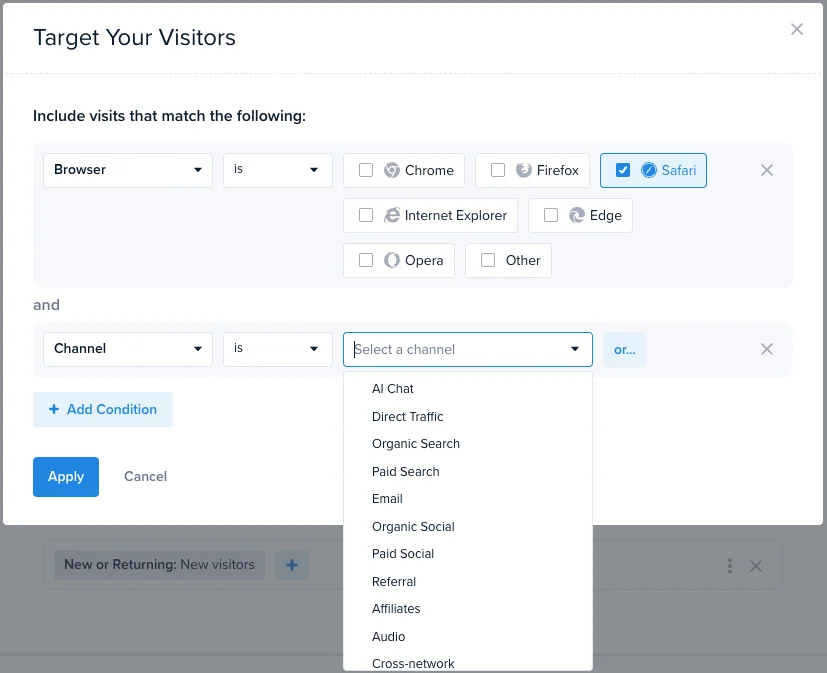
A core component of this update is the implementation of advanced Boolean logic within the Crazy Egg interface. Users are no longer restricted to single-variable tests; instead, they can utilize AND/OR logic to create multi-dimensional audience segments. For instance, a marketing team can now configure a test specifically for "new visitors originating from a paid social media campaign who have remained on the landing page for more than 30 seconds." This level of specificity ensures that experimental variations are shown only to the most relevant cohorts, reducing noise in the data and increasing the statistical significance of test results.
The platform’s interface has been updated to reflect these changes, featuring a streamlined "Audience Targeting" selector. This tool allows for the stacking of filters without a hard limit on the number of conditions applied. By leveraging these filters, businesses can move beyond "one-size-fits-all" web design, instead opting for a dynamic approach where content adapts in real-time to the user’s profile.
The Evolution of A/B Testing and Market Context
The move by Crazy Egg comes at a pivotal moment in the digital marketing industry. For over a decade, A/B testing was largely focused on finding a single "winning" version of a webpage that performed best for the average user. However, as consumer expectations for personalization have risen, the industry has shifted toward "segment-based optimization." According to industry reports, personalized web experiences can lead to an average increase of 19% in total sales.
The timing of this update is also notable following the sunsetting of Google Optimize in September 2023. Google’s departure from the free A/B testing market left a significant void, forcing many small-to-medium enterprises (SMEs) and enterprise-level organizations to seek alternative solutions. By enhancing its targeting filters, Crazy Egg is positioning itself as a comprehensive replacement for legacy tools, offering features that were previously only available in high-cost enterprise platforms like Optimizely or VWO.
Chronology of Development
Crazy Egg’s trajectory from a heatmapping tool to a full-service optimization suite has been marked by several key milestones:
- 2006-2015: Focus on visual analytics, specifically Heatmaps, Scrollmaps, and Confetti reports, which allowed users to see where visitors clicked.
- 2016-2019: The introduction of A/B testing and "Snapshots," allowing users to not only see behavior but also test changes directly within the platform.
- 2020-2022: Expansion into multi-page testing and deeper integrations with e-commerce platforms like Shopify and BigCommerce.
- 2023-Present: The focus has shifted toward "Audience Intelligence." The current update represents the most significant overhaul of the targeting engine in the company’s history, emphasizing the use of first-party data in a privacy-conscious digital environment.
Supporting Data and Industry Implications
The necessity for these filters is backed by data regarding user attention spans and conversion hurdles. Recent studies in digital psychology suggest that a visitor’s "intent" varies wildly depending on their referral source. A visitor coming from a "How-to" blog post (Organic Search) has a different mindset than one coming from a "Buy Now" advertisement (Paid Social).
By utilizing the new "Channel" and "Referral" filters, Crazy Egg users can align their messaging with that intent. Internal data from early adopters of these filters suggests that segment-specific testing can reduce bounce rates by as much as 15% compared to non-segmented tests. Furthermore, the ability to target based on "Time on Page" allows marketers to trigger "intent-to-exit" variations or engagement-boosting content only after a user has shown a baseline level of interest, thereby avoiding intrusive experiences for casual browsers.
Official Positioning and Personalization Strategy
While the primary use case for these filters is A/B testing—comparing Version A against Version B—Crazy Egg has also clarified that these tools are a gateway to permanent personalization. The platform allows users to route 100% of a specific segment’s traffic to a particular variant.
"Want to target personalization, instead of just A/B Testing?" the company stated in a technical briefing. "Send 100% of the segment’s traffic to your customized variant. Everyone in the target audience will then see the personalized page for as long as the test is live."
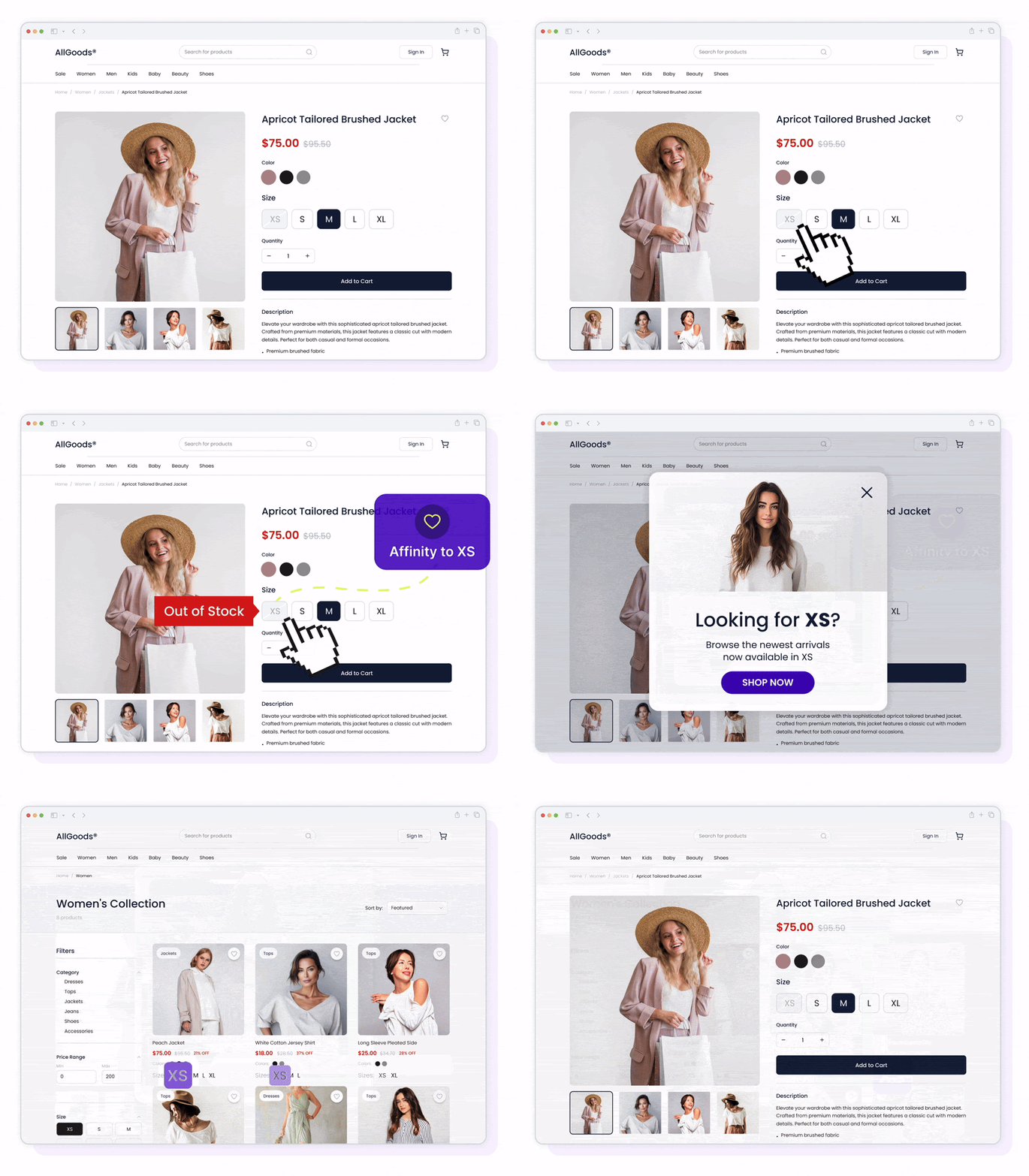
This functionality effectively turns the A/B testing tool into a lightweight Content Management System (CMS) for personalization. It allows brands to serve specific offers to "High-Value Customers" (using the Customer Value filter) or display language-specific content (using the Language filter) without requiring deep backend development or code changes.
Accessibility and Subscription Tiers
Crazy Egg has adopted a tiered rollout for these new features to accommodate its diverse user base. The distribution of the new filters is organized as follows:
- Enterprise Plans and Add-on Users: These customers receive full access to all 11 new filters, including advanced behavioral triggers and custom site data integration. This tier is aimed at high-traffic sites that require complex data modeling.
- Pro Plan: Customers on this plan have been granted access to a subset of the new features, specifically the Language filter and the A/B Test (Variant) filters. This allows Pro users to coordinate tests across different segments or synchronize multiple experiments.
- Standard and Basic Plans: While these tiers retain access to foundational filters like device and country, the more advanced behavioral filters remain exclusive to higher-tier subscriptions or as part of the "Audience Targeting" add-on.
Analysis of Broader Impacts
The introduction of these filters reflects a broader trend toward the "democratization of data science." Tools that were once the exclusive domain of data analysts are now being integrated into user-friendly interfaces that marketing generalists can operate. This shift reduces the "time-to-insight," allowing companies to react more quickly to market changes.
However, the move also highlights the increasing complexity of the modern web. As privacy regulations like GDPR and CCPA limit the use of third-party cookies, the ability to target users based on "on-site behavior" and "first-party data" (such as the data passed from the site’s own database into Crazy Egg) becomes more valuable. Crazy Egg’s update emphasizes this first-party approach, ensuring that targeting is based on the immediate context of the visit rather than cross-site tracking.
In the long term, this expansion of audience filters is expected to influence how agencies and in-house teams structure their optimization roadmaps. Rather than looking for a single high-impact change, the focus will likely shift toward a series of "micro-optimizations"—small, highly targeted changes that, when aggregated across different audience segments, result in a substantial cumulative lift in conversion rates.
As the digital landscape continues to evolve, the ability to discern not just what a visitor is doing, but who they are and how they arrived, will remain a cornerstone of competitive advantage in the e-commerce and SaaS sectors. Crazy Egg’s latest update provides the infrastructure for businesses to execute on this strategy at scale.