The concept of vibe coding emerged from the rapid advancements in generative AI and large language models (LLMs) that characterized the early 2020s. By February 2025, when computer scientist Andrej Karpathy introduced the term, AI’s capability to understand complex natural language prompts and translate them into functional code had reached a critical threshold. Karpathy, a prominent figure in the AI community with a background at OpenAI and Tesla, envisioned a future where software development would be less about mastering intricate syntax and more about articulating a vision. His memorable quote, "say stuff, run stuff, and copy-paste stuff, and it mostly works," perfectly encapsulated the nascent philosophy of vibe coding. This represented a significant evolution from earlier "low-code" and "no-code" platforms, which, while reducing the need for extensive coding, still often required users to understand visual interfaces and predefined components. Vibe coding promised a more fluid, conversational, and truly intuitive experience, leveraging AI’s ability to interpret nuanced intent.
At its core, vibe coding redefines the user’s role in the development process. Instead of acting as the traditional developer meticulously writing every line of HTML, CSS, or JavaScript, the user transforms into a "creative director." Their primary task is to describe their vision in plain language, review the AI-generated output, request specific changes, and continuously refine the results through an iterative dialogue. This fundamental shift means that attention moves away from the minutiae of programming languages, frameworks, or debugging, and firmly onto the broader strategic and creative aspects: what needs to be built, why, and how it should function and look. This conversational approach significantly lowers the barrier to entry for digital creation, enabling a diverse group of individuals—from entrepreneurs and freelancers to artists and small business owners—to bring their ideas online without needing a background in computer science.
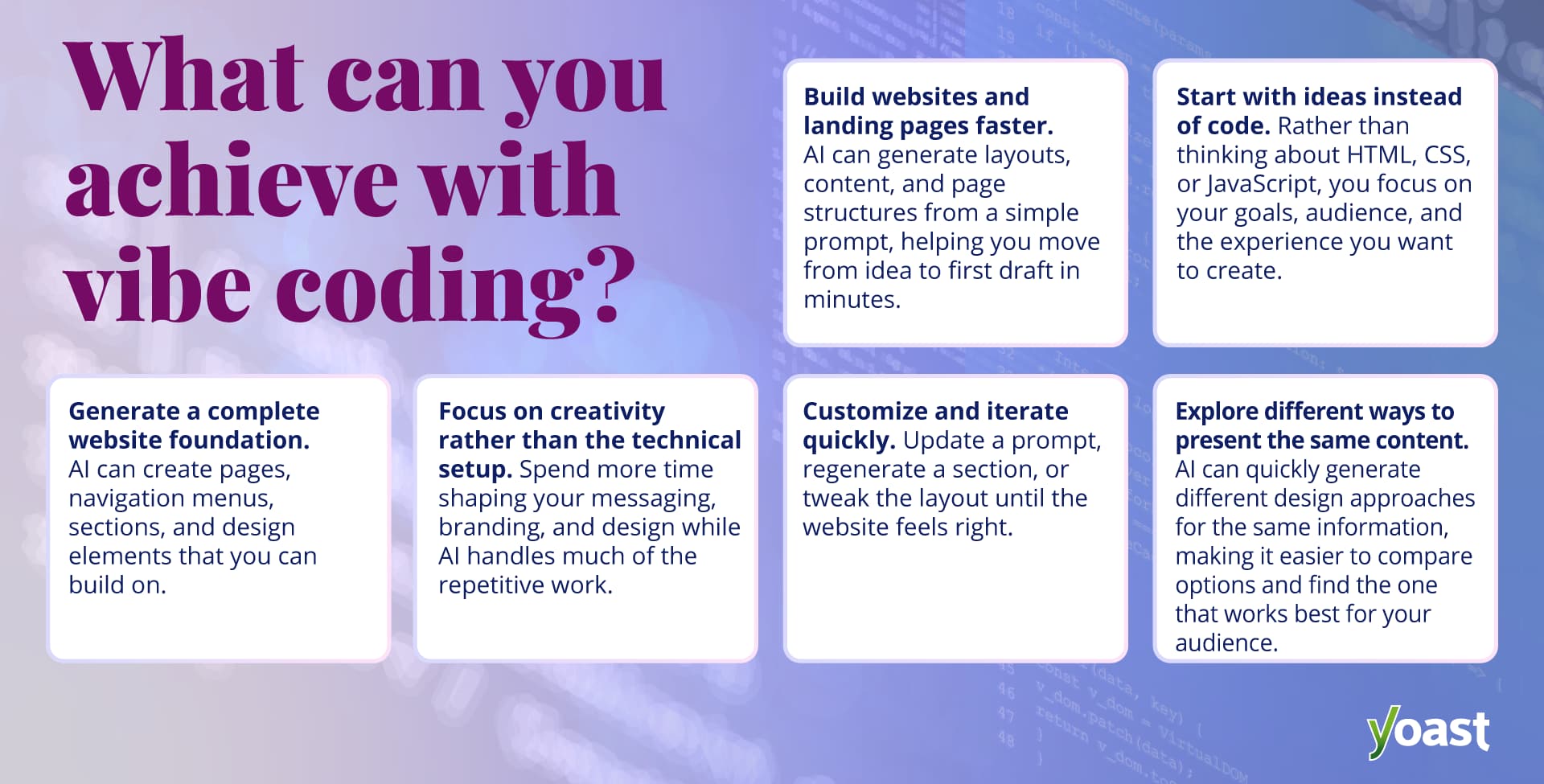
The capabilities of vibe coding extend far beyond simple code snippets. Modern AI-powered tools can facilitate the creation of a wide array of digital assets, including sophisticated landing pages, comprehensive multi-page websites, dynamic web applications, interactive dashboards, and even specialized internal business tools. For instance, a user might prompt an AI with a request such as: "Create a modern website for a boutique coffee roastery. Use warm earth tones, clean typography, and large product images. Include a homepage, About page, online shop, customer reviews, and a contact form. The overall style should feel welcoming, premium, and easy to navigate." The AI then interprets this descriptive input and generates a functional first draft, complete with design elements, content structure, and interactive features. This level of automation underscores the power of vibe coding to democratize website creation, particularly for those with compelling ideas but limited technical resources.
The transformative benefits of vibe coding are manifold, driving its rapid adoption across various sectors. One of the most compelling advantages is the unprecedented speed at which ideas can be launched. Traditionally, turning a website concept into a live, functional site could take weeks or even months, involving multiple design iterations, coding phases, and debugging cycles. Vibe coding drastically shortens this timeline, often generating a functional first draft within minutes or hours. This rapid turnaround allows entrepreneurs to validate business ideas faster, gather early user feedback, and establish an online presence much more quickly than ever before. Industry analysis supports this trend, with reports from firms like Grand View Research projecting the global AI in web development market to reach significant valuations, highlighting the growing demand for tools that offer such efficiency gains.
Furthermore, vibe coding significantly enhances rapid prototyping and experimentation. Developers and designers can quickly test different layouts, validate user flows, or explore various aesthetic directions without committing extensive time or resources to manual development. This iterative capability fosters a culture of agile development, where continuous refinement through conversational prompts becomes the norm. The ability to iterate through conversations is perhaps the most revolutionary aspect, transforming website building into an ongoing dialogue. Users can request specific changes, such as "redesign the navigation bar to be more prominent," "rewrite the homepage copy to emphasize sustainability," or "add a dynamic testimonials section," and watch the AI seamlessly integrate these modifications. Each prompt builds upon the previous one, allowing the website to evolve organically and precisely align with the user’s evolving vision.
Building a website with vibe coding typically follows a streamlined, five-step process designed to maximize efficiency and maintain user control. The initial step is crucial: defining the website’s purpose and style. Before interacting with any AI tool, users are encouraged to clarify their vision by answering key questions about their target audience, primary goals, desired functionality, aesthetic preferences, and brand personality. A detailed brief, like the coffee shop example provided earlier, gives the AI the necessary context to make informed design and content decisions.
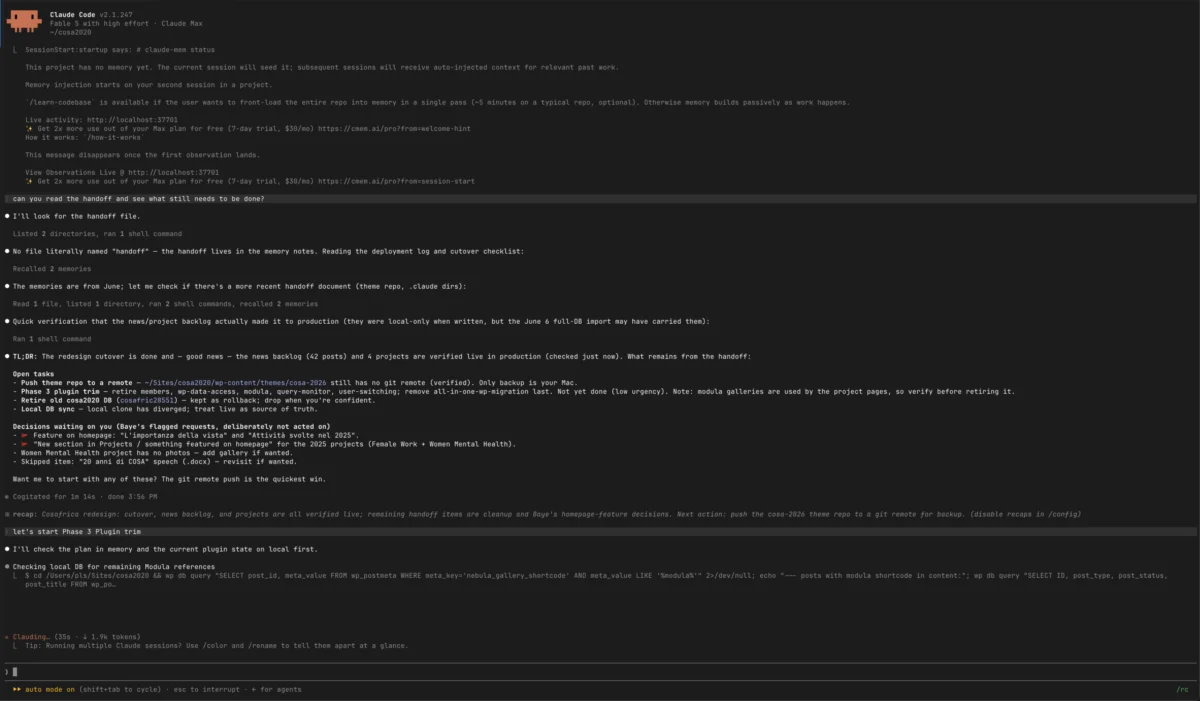
The second step involves choosing an appropriate AI website builder. While advanced coding agents like Claude Code offer specialized development capabilities, they often require familiarity with development environments. For general website creation, user-friendly AI website builders offer a more accessible alternative, providing a conversational interface coupled with integrated hosting. Platforms like the Bluehost AI Website Builder exemplify this, guiding users through a series of questions about their business and style preferences before generating a personalized, functional website. These integrated solutions simplify the entire process, from ideation to deployment, by consolidating various tools into a single workflow.
Step three focuses on writing the first vibe prompt. This foundational prompt should provide the AI with sufficient context, covering aspects such as the website’s purpose, target audience, brand identity, required pages, and desired user actions. The principle of "context engineering" is paramount here: rather than attempting to cram every instruction into a single, overly complex prompt, users should aim to provide the AI with the necessary background to make intelligent decisions. This initial prompt serves as the blueprint, setting the stage for subsequent refinements.
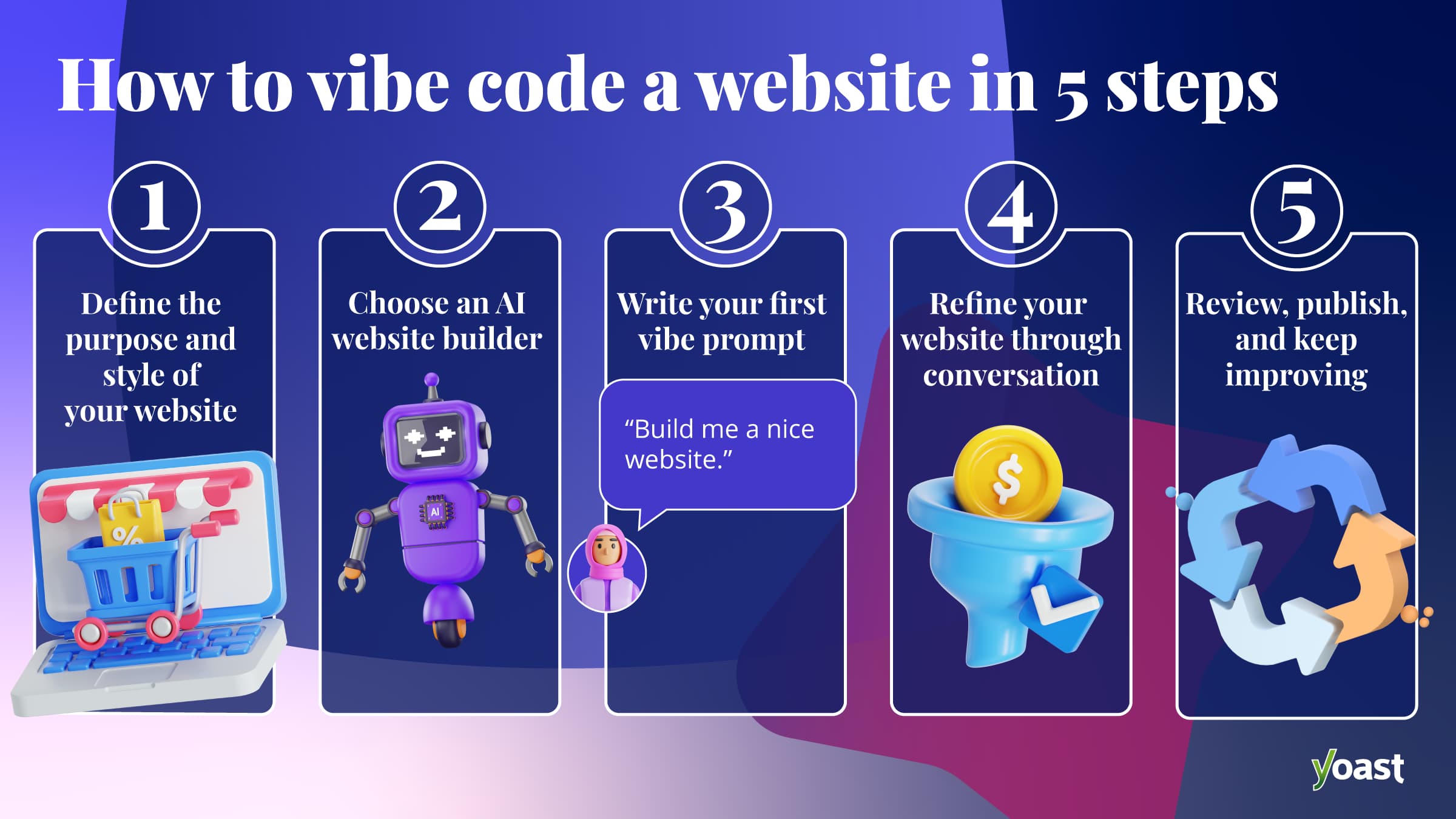
The fourth step, refining the website through conversation, is where the iterative power of vibe coding truly shines. Users should not expect perfection from the first draft. Instead, they engage in a continuous dialogue with the AI, making small, focused improvements with each prompt. This might involve asking the AI to "make the call-to-action button more prominent," "adjust the color palette to be slightly warmer," or "add an image gallery to the services page." This incremental approach, making one change at a time, generally yields more consistent and satisfactory results than attempting large-scale redesigns in a single command. Each interaction brings the website closer to the user’s original vision.
Finally, step five involves reviewing, publishing, and continuous improvement. Before going live, a thorough review is essential to ensure accuracy of content, functionality of links and forms, and responsiveness across devices. This is also the stage for replacing placeholder content with original text and images, ensuring the website authentically reflects the brand. Once satisfied, users connect their custom domain and publish. A significant advantage of vibe coding is that the development process doesn’t end at launch; the conversational interface allows for ongoing updates and expansions, making future modifications—such as adding new services or launching campaign landing pages—as simple as issuing a new prompt.
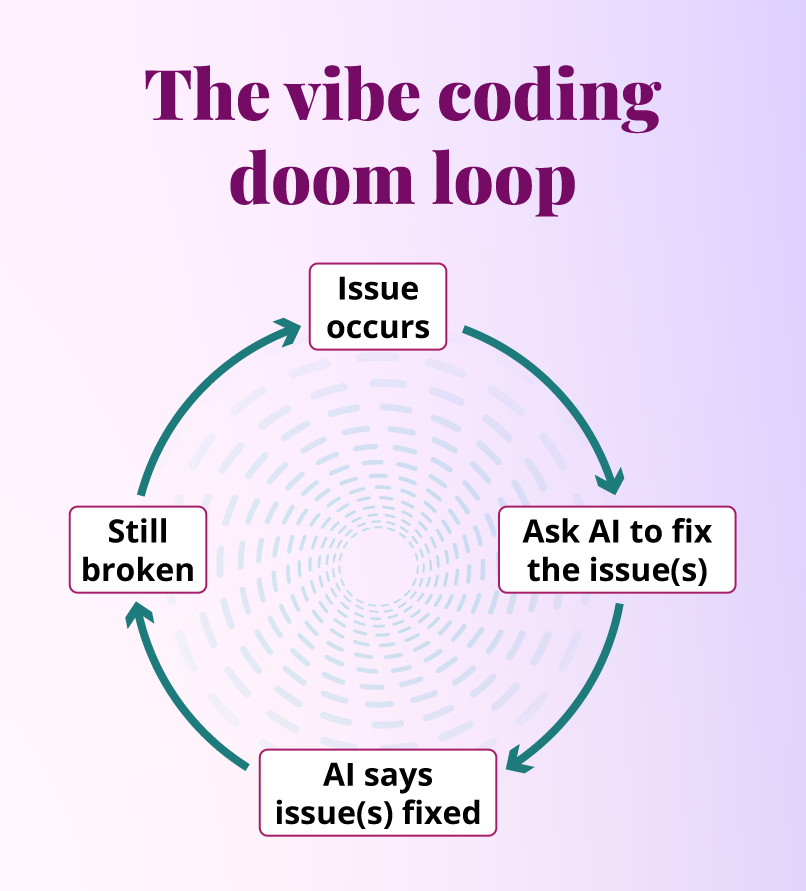
Despite its many advantages, vibe coding is not without its challenges. One commonly encountered issue is the "vibe coding doom loop," where the AI gets stuck in a repetitive cycle, offering similar "solutions" that fail to resolve the underlying problem or even introduce new ones. This often occurs when the AI loses sight of the broader context, typically due to vague initial prompts, frequent shifts in the website’s direction mid-process, or requests for too many unrelated changes simultaneously. As the conversational history grows, the AI may struggle to integrate all components cohesively, leading to inconsistent or circular results. Avoiding this requires disciplined context engineering, ensuring clarity in prompts, and managing AI suggestions as drafts rather than final answers. Users must actively oversee the AI’s output, making incremental changes and rephrasing prompts when necessary to steer the process effectively.
Comparing vibe coding with traditional coding reveals that they are not mutually exclusive but rather complementary approaches, each suited to different development needs. Traditional coding, relying on programming languages like HTML, CSS, JavaScript, and PHP, offers unlimited customization and granular control over every aspect of a codebase. It remains indispensable for highly complex, bespoke applications, or features demanding intricate logical structures and precise performance optimizations. The barrier to entry for traditional coding is higher, requiring specialized knowledge and skills, and the time to a first draft is generally longer.
Vibe coding, conversely, leverages natural language prompts, requiring clear communication skills over deep coding expertise. Its development process is AI-assisted generation and refinement, leading to significantly faster initial drafts. While customization is high, it is still dependent on the capabilities of the AI tool. Vibe coding excels in scenarios requiring rapid deployment, such as business websites, portfolios, landing pages, Minimum Viable Products (MVPs), and quick prototyping. The lower barrier to entry makes it an empowering tool for non-coders, democratizing access to digital creation. Ultimately, the choice between vibe coding and traditional coding depends on the project’s complexity, desired level of control, available resources, and timeline. Many modern development teams are exploring hybrid approaches, using AI for rapid prototyping and repetitive tasks, then bringing in traditional developers for custom integrations and performance tuning.
Beyond the creation of the website itself, the crucial aspect of discoverability remains. In an increasingly AI-driven search landscape, SEO is more vital than ever. Your website must communicate effectively not only with human visitors but also with AI assistants and intelligent systems that interpret content to answer queries, recommend businesses, and surface relevant information. This necessitates a sophisticated approach to SEO that considers how AI processes and understands information. For WordPress users, tools like Yoast SEO Premium play a critical role. They automatically generate structured data, which helps search engines and AI systems comprehend the context, content, and expertise behind your pages. Features such as schema aggregation create a unified, machine-readable view of your website’s data, while the Bot Blocker provides control over which AI systems can access your content for training, addressing evolving ethical concerns around data usage. Furthermore, Yoast SEO Premium assists in ongoing optimization, offering AI-powered suggestions for drafting SEO titles and meta descriptions, speeding up a traditionally time-consuming process while maintaining full editorial control.
In conclusion, vibe coding marks a significant inflection point in the evolution of digital creation. By leveraging the power of conversational AI, it is breaking down technical barriers and empowering a new generation of creators to bring their ideas to life online with unprecedented speed and ease. While it introduces new challenges, such as navigating the "doom loop," these are manageable with careful application and human oversight. The synergy between human ingenuity and AI capabilities is reshaping the development landscape, fostering innovation, and redefining what it means to build for the web. As AI continues to advance, the symbiotic relationship between human vision and machine execution will only deepen, making digital presence more accessible and dynamic than ever before, with robust SEO remaining the critical bridge between creation and discovery.