The landscape of digital visibility is undergoing a profound transformation, challenging long-held assumptions about how content achieves prominence in search results. For years, the aspiration of earning a coveted spot in Google’s top 10 search results represented the pinnacle of digital marketing success, a clear indicator of a page’s authority and relevance. This high ranking traditionally guaranteed significant organic traffic and visibility. However, recent developments, particularly the increasing prevalence of AI-powered search features like Google’s AI Overviews, are introducing a new dynamic where a top organic ranking no longer automatically translates to citation within these generative AI summaries. This shift is primarily driven by a sophisticated underlying mechanism known as “query fan-out,” which redefines how AI systems interpret and respond to user queries, fundamentally altering the pathway to content discovery and influence.
The Evolving Search Paradigm: From Ranking to Citation
Historically, the top positions on Google’s search engine results pages (SERPs) were the primary battleground for visibility. Content creators and SEO professionals meticulously optimized pages to rank highly for specific keywords, confident that such a position would yield the desired traffic and engagement. This model was straightforward: rank high, and you are seen. This conventional wisdom held sway for over two decades, making SEO an indispensable component of any digital strategy.
However, the advent of generative artificial intelligence has introduced a paradigm shift. Google, like other tech giants, has been progressively integrating AI into its core search experience, culminating in features like AI Overviews. These overviews aim to provide direct, synthesized answers to complex queries, often appearing at the very top of the SERP, above traditional organic listings. While these AI Overviews promise enhanced user experience through rapid information retrieval, they also present a new challenge for content creators: the objective has subtly shifted from merely ranking to actively being cited as a source within these AI-generated summaries. The critical implication is that a page can hold a top organic rank for a specific query yet remain conspicuously absent from the AI Overview generated for that very same query, signifying a disconnect that demands a recalibration of content strategy.
Understanding Query Fan-Out: The AI’s Deeper Dive
At the heart of this evolving search dynamic is the concept of "query fan-out." This sophisticated technique is employed by AI search systems to dissect and expand a single user query into a multitude of related sub-queries. Rather than treating a user’s initial input as a singular, immutable request, the AI model intelligently breaks it down into equivalent phrasings, potential follow-up questions, broader contextual framings, and narrower specifications. These numerous sub-queries are then processed simultaneously, casting a wider net across the vast expanse of the internet for relevant information. The AI then synthesizes its final response, such as an AI Overview, by aggregating information from pages that consistently surface as authoritative and relevant across this entire set of expanded queries.
Consider a complex query such as: "How do I measure the ROI of our B2B content marketing program to prove its value to executives?" A traditional search engine might primarily focus on keywords like "ROI B2B content marketing." However, with query fan-out, an advanced AI system would decompose this into a series of interconnected sub-queries, including:
- "Metrics for B2B content marketing success"
- "Calculating return on investment for marketing campaigns"
- "Demonstrating content value to C-suite"
- "Key performance indicators for B2B content"
- "Attribution models for content marketing"
- "Frameworks for B2B marketing effectiveness"
- "Financial impact of content strategy"
The AI Overview is subsequently constructed from content that reliably provides answers across this comprehensive range of sub-queries, not just the exact initial phrasing. This means a page might rank first for the headline query, but if its content lacks the depth and breadth to address the surrounding sub-questions effectively, it may not be cited in the AI Overview. This mechanism underscores the AI’s preference for holistic, deeply informative resources over narrowly focused, keyword-optimized pages.
Empirical Evidence of a Changing Landscape
The impact of query fan-out on content visibility is not merely theoretical; it is demonstrably altering the distribution of citations. Research indicates a significant shift in the correlation between high organic rankings and AI Overview citations over a relatively short period.
In July 2025, an estimated 76% of pages cited within Google’s AI Overviews also held a position within the top 10 for the corresponding query in traditional organic search results. This indicated a strong, albeit not absolute, overlap between traditional SEO success and AI visibility. However, a comprehensive study conducted by Ahrefs in March 2026, analyzing approximately 863,000 keywords and around 4 million AI Overview URLs, revealed a dramatic decline in this overlap. The figure had plummeted to approximately 38%.
This data signifies that more than half of the content cited by AI Overviews in March 2026 was not from pages ranked in the traditional top 10. The Ahrefs study further broke down the sources of these non-top-10 citations: roughly 31% originated from pages ranking between positions 11 and 100, while another 31% came from pages ranking beyond position 100 or, remarkably, not ranking for the specific query at all. This compelling evidence highlights that the traditional correlation between ranking and citation has significantly weakened, making it imperative for content strategists to adapt. McKinsey & Company further projects that the proportion of Google searches surfacing an AI summary, already around 50%, will exceed 75% by 2028. Their surveys indicate that half of U.S. consumers now actively seek out AI-powered search, establishing it as a leading digital source for buying decisions. This accelerating trend underscores the critical importance of being cited within AI Overviews, as these summaries are increasingly becoming the "new front door" to information and consumer journeys.
Why Traditional SEO Still Holds Value (But Isn’t Enough)
Despite the undeniable shift, it would be premature and strategically unsound to abandon traditional SEO efforts entirely. A 38% overlap, while a significant reduction, still represents a substantial minority of AI Overview citations originating from top-10 ranked pages. Pages that achieve strong organic positions continue to be the most reliable feeders into AI Overviews. A high organic ranking remains one of the clearest signals of authority and relevance that Google’s algorithms, including those underpinning AI, consider.
Think of the process as a two-stage gate. Traditional SEO, focused on achieving high organic rankings, gets your content through the first gate, placing it within the candidate pool that an AI system might consider. It establishes your page as a credible and visible entity. However, it is the "query fan-out" mechanism that acts as the second, more discerning gate, determining which specific pieces of content from that candidate pool are ultimately selected for citation within an AI Overview. A page that not only ranks well but also covers its topic with genuine depth and breadth, addressing the full spectrum of related sub-queries, is the one most likely to clear both gates. Conversely, a page optimized solely for a single keyword, lacking comprehensive coverage, may clear the first gate but falter at the second, failing to earn a coveted citation.
Introducing Answer Engine Optimization (AEO): The New Imperative
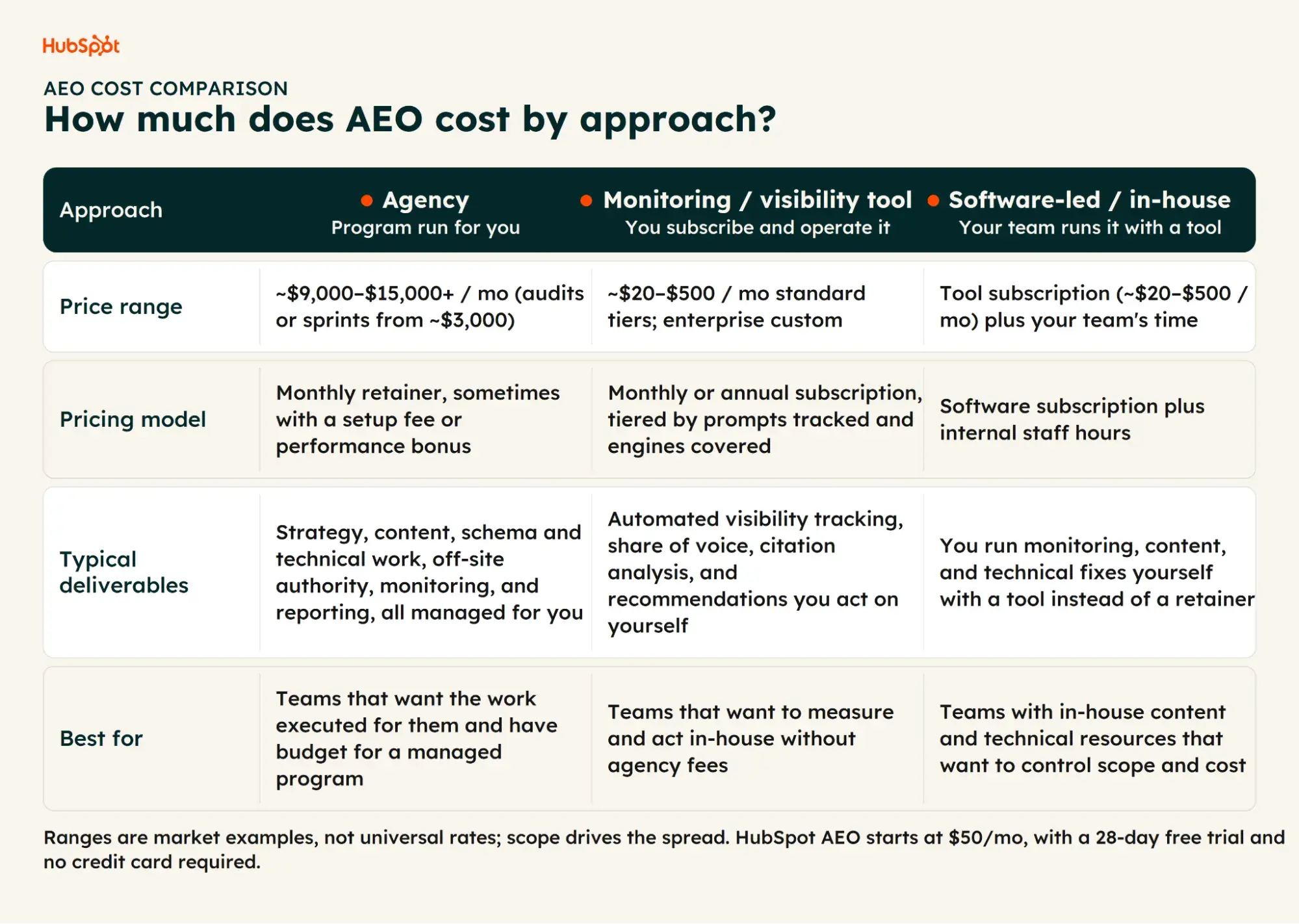
The evolving search landscape necessitates the emergence of a new optimization paradigm: Answer Engine Optimization (AEO). AEO is not a replacement for SEO but rather an evolution and enhancement, designed specifically to optimize content for direct citation by AI-powered search systems. While SEO aims for high rankings, AEO aims for high quotability.
The core principles of AEO revolve around making content not just discoverable by algorithms, but also interpretable, extractable, and consistently reliable for generative AI models. This demands a renewed focus on content structure, depth, and unwavering credibility.
The Pillars of Effective AEO: Depth, Structure, and Credibility
To succeed in an AEO-driven world, content must be crafted with an understanding of how AI models process information.
- Structure and Parsability: AI models thrive on well-organized, logically structured content. This means employing clear, descriptive headings (H2, H3, etc.), utilizing self-contained sections that address specific sub-topics, implementing structured data (schema markup) to explicitly define content elements, and ensuring that direct answers to anticipated questions are positioned prominently, ideally near the top of relevant sections. Such structural clarity makes it significantly easier for an AI to parse, understand, and extract specific claims or facts.
- Comprehensive Topic Coverage: Given the query fan-out mechanism, content can no longer afford to be narrowly focused on a single keyword. Instead, it must adopt a "topic cluster" approach, covering a subject with enough depth and breadth to anticipate and answer the myriad surrounding questions a user (and the AI’s sub-queries) might have. This implies creating evergreen, authoritative resources that resolve the primary user query and its natural follow-ups within a single, cohesive piece of content. The focus shifts from keyword breadth (optimizing for many disparate keywords) to topic depth (exhaustively covering one subject).
- Specificity and Extractability: For an AI model to confidently lift a "clean, citable claim" from your content, the information must be presented with sufficient specificity and clarity. Ambiguous language, vague statements, or unsubstantiated claims are unlikely to be quoted. Content should aim for precise, factual statements that can stand alone as quotable insights.
- E-E-A-T (Experience, Expertise, Authoritativeness, and Trustworthiness): The E-E-A-T framework, long a cornerstone of Google’s quality guidelines for traditional rankings, becomes even more critical for AEO. The same qualities that make a passage credible and authoritative to human evaluators are precisely what make it worth quoting to an AI model. Content authored by demonstrated experts, backed by real-world experience, and presented on authoritative and trustworthy domains, signals to the AI that the information is reliable. This includes clear author bios, citations of credible sources, and transparent methodologies. AEO essentially raises the stakes for good content, where every section, every paragraph, must be robust enough to stand on its own as a trustworthy source.
Strategic Imperatives for Content Creators
Navigating this new era requires a strategic shift in content creation and optimization. Brands and publishers must move beyond a purely keyword-driven approach and embrace a more editorial, user-centric philosophy.
- Audience-First Content Strategy: The ability to anticipate the full spectrum of questions a reader might have, including their natural follow-ups and underlying needs, is paramount. This requires deep audience research, empathy mapping, and a profound understanding of the user journey. It’s about answering the real question, not just the typed one.
- Investing in Subject Matter Expertise: The value of experienced editors and subject-matter experts has never been higher. These individuals possess the nuanced understanding to determine which sub-questions are most relevant, which framings are most accurate, where to provide granular detail, and where to summarize concisely. Their editorial judgment is crucial for crafting content that is both comprehensive and quotable.
- Prioritizing Quality Over Quantity: In an AEO environment, the sheer volume of output holds little sway. What matters is the depth, accuracy, and authoritativeness of each piece of content. Brands consistently cited by AI Overviews typically share a common trait: their content carries a clear, defensible point of view, backed by rigorous research and sufficient depth to support it across an entire topic.
- Content Audits and Refinement: Existing content should be audited through an AEO lens. Identify pages that rank well but lack the comprehensive depth or structural clarity to be cited. Prioritize updating and expanding these resources, ensuring they cover their topics exhaustively and present information in an AI-friendly format.
- Leveraging AI for Content Creation (Carefully): While AI is changing search, it can also be a tool for content creation. However, relying solely on generative AI for content risks producing generic, unoriginal material that lacks the unique E-E-A-T signals required for AEO. AI should be used as an assistant for research, outlining, and initial drafting, with human experts providing the critical depth, unique insights, and factual verification.
The Broader Impact on Digital Marketing and Content Strategy
The rise of AEO and query fan-out has profound implications across the digital marketing ecosystem. For businesses, it means re-evaluating content budgets and strategies, potentially shifting resources from pure keyword optimization to deep-dive, authoritative content development. For SEO agencies, it necessitates expanding service offerings to include AEO strategies, focusing on content architecture, E-E-A-T enhancement, and topic clustering. The role of a "content strategist" evolves further, becoming more akin to a journalist or academic researcher, tasked with identifying critical information gaps and commissioning expert-driven content that can withstand the scrutiny of both human readers and advanced AI models. Brands that embrace this shift early will likely gain a significant competitive advantage, becoming the go-to sources for AI-generated answers in their respective industries.
Looking Ahead: Navigating the Evolving AI Search Ecosystem
The integration of AI into search is not a static event but an ongoing evolution. Google and other search providers will continue to refine their AI models, leading to further shifts in how information is discovered and presented. Continuous monitoring of AI Overview citation patterns, staying abreast of Google’s algorithm updates, and a commitment to producing high-quality, expert-backed content will be crucial for long-term digital success. The future of search is conversational, contextual, and comprehensive, demanding that content creators adapt to speak the language of both users and advanced AI.
Frequently Asked Questions
What is a query fan-out in AI search?
Query fan-out is a technique where an AI search system breaks down a single user query into several related sub-queries—including equivalent phrasings, follow-ups, broader framings, and narrower specifications. It processes all these sub-queries simultaneously and then constructs its answer (e.g., an AI Overview) from content that consistently proves relevant and authoritative across the entire set, rather than relying solely on pages that rank for the exact initial query.
What is the difference between SEO and AEO?
SEO (Search Engine Optimization) focuses on earning high rankings on traditional search results pages, aiming to place your content within the pool of candidates an AI might consider. AEO (Answer Engine Optimization), on the other hand, aims to get your content directly cited and quoted within the AI-generated answer itself. AEO emphasizes deep topic coverage, clear structural elements, and strong E-E-A-T signals that enable an AI model to extract and present clean, reliable claims. SEO gets your content considered; AEO gets it cited.
Does ranking in Google’s top 10 still matter for AI search?
Yes, ranking in Google’s top 10 still matters significantly. While the direct overlap between top-10 rankings and AI Overview citations has decreased (to about 38% by March 2026), top-10 pages remain the single most reliable source for AI Overviews. A strong organic position serves as a powerful authority signal to Google’s algorithms. Therefore, ranking well gets your content into the candidate pool for AI citation; however, achieving actual citation requires additional depth, structural clarity, and demonstrated credibility.
How do I get my content cited in Google’s AI Overviews?
To increase your chances of being cited in Google’s AI Overviews, focus on covering a complete topic (rather than just a single keyword) with enough depth to answer the main query and its natural sub-questions. Structure your content with clear headings, self-contained sections, and potentially schema markup, ensuring direct answers are easily found. Crucially, write with sufficient specificity and demonstrated E-E-A-T (experience, expertise, authoritativeness, and trustworthiness) so that an AI model can confidently extract and quote clean, verifiable claims from your content.
What is E-E-A-T and why does it matter for AEO?
E-E-A-T stands for Experience, Expertise, Authoritativeness, and Trustworthiness. These are crucial quality signals that Google has long rewarded in its traditional ranking algorithms. For AEO, E-E-A-T is even more critical because the same qualities that make content credible and reliable to human evaluators also make it valuable and quotable to an AI model. Specific, well-sourced, and expertly written content with clear author credentials and a trustworthy domain is precisely the kind of information an AI model is most likely to cite as a definitive answer, as it minimizes the risk of generating inaccurate or misleading information.