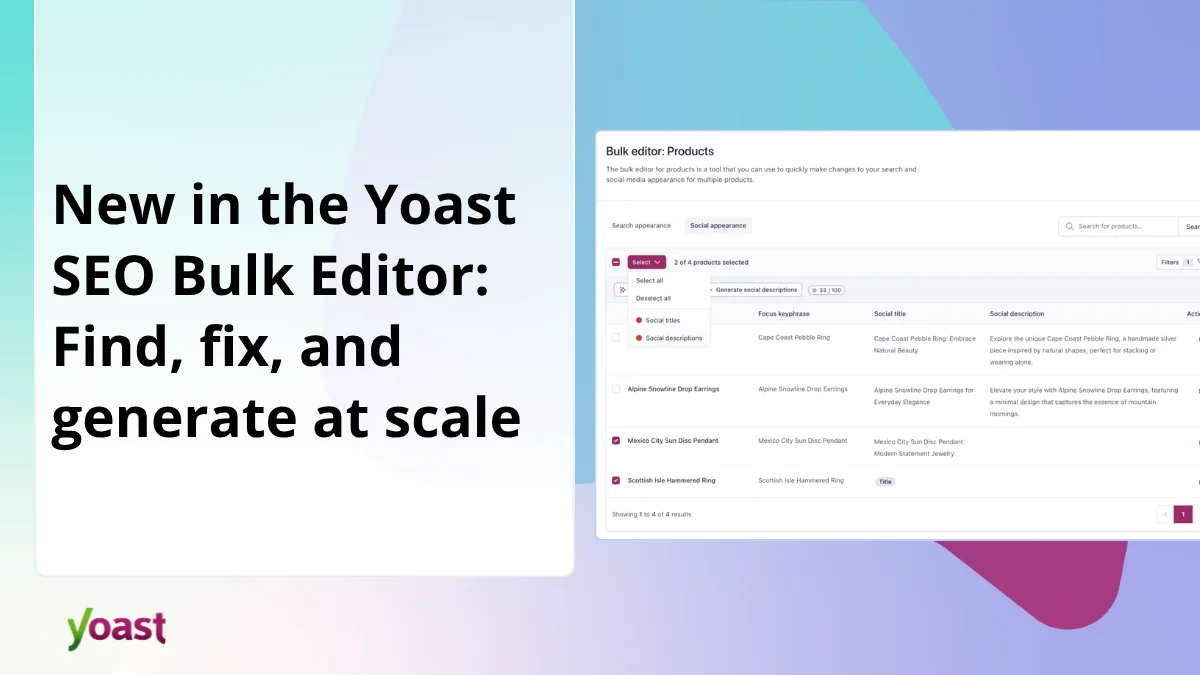
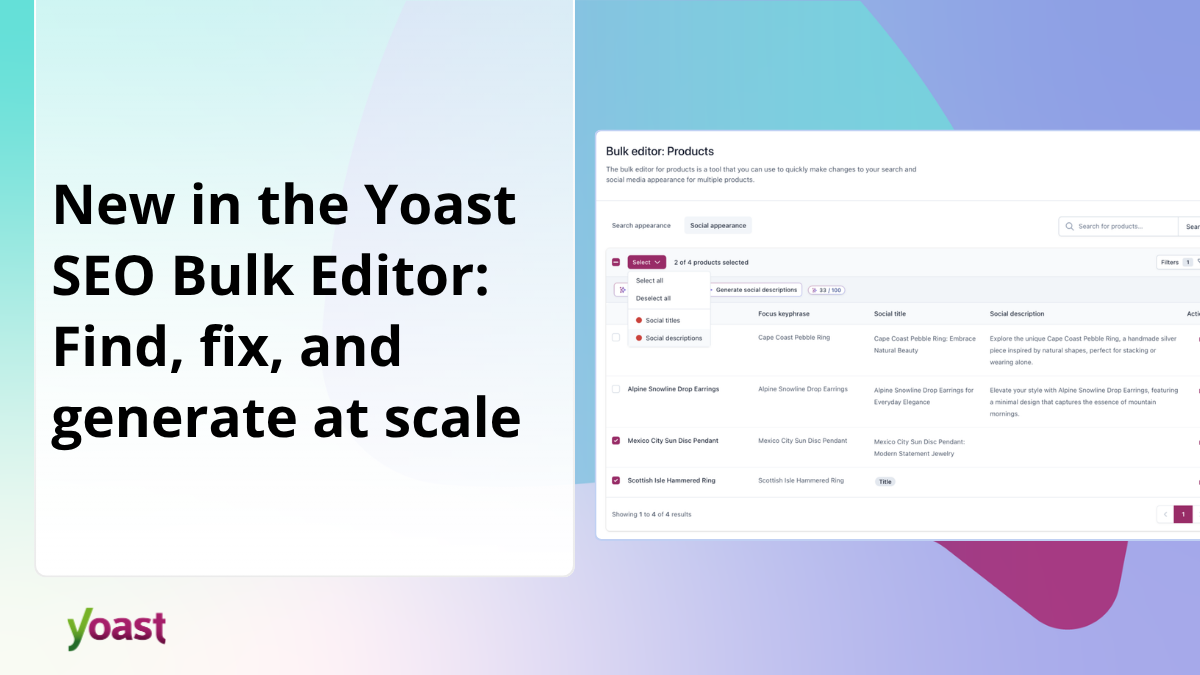
Yoast, a leading name in WordPress SEO, has rolled out a significant update to its SEO Bulk Editor, introducing a suite of features designed to dramatically improve efficiency, accuracy, and user experience for website administrators and content managers. This latest enhancement builds upon the existing capabilities of the Bulk Editor, which already facilitates the mass updating of titles, meta descriptions, and focus keyphrases, alongside content type filtering and AI-driven metadata drafting. The update focuses on making it easier for users to pinpoint content requiring attention, refine AI-generated suggestions, and integrate bulk editing seamlessly into their regular workflow, addressing critical pain points for managing large volumes of web content.
Enhanced Content Optimization Workflow: Pinpointing Weak Fields with Precision
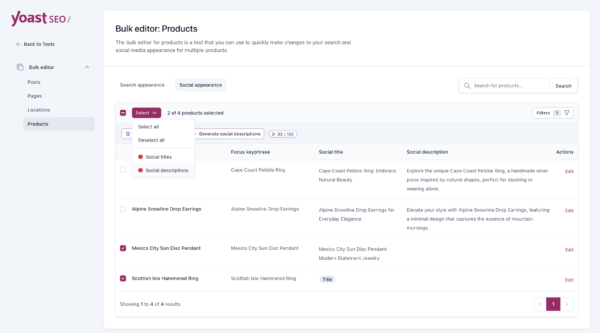
One of the most impactful additions is the expanded "Filters" dropdown, which now includes specific "needs improvement" options for SEO title, meta description, social title, and social description. This functionality allows users to quickly isolate posts where these crucial metadata fields are either absent or performing poorly according to Yoast’s established scoring system, which is also utilized within the individual post editor. For content managers overseeing extensive websites, this represents a monumental leap in efficiency, transforming what was once a laborious manual audit into a swift, automated process.
The importance of well-crafted metadata cannot be overstated in the current digital landscape. SEO titles and meta descriptions are often the first interaction a potential visitor has with a website in search engine results pages (SERPs). A compelling title and descriptive meta-description can significantly influence click-through rates (CTR), which search engines increasingly consider a ranking factor. Studies consistently show that optimized meta descriptions can boost CTR by upwards of 6-8%, directly translating to increased organic traffic. Similarly, optimized social titles and descriptions are vital for maximizing engagement and reach on platforms like Facebook, X (formerly Twitter), and LinkedIn, where they dictate how shared content appears, influencing shares, likes, and referral traffic.
Beyond merely filtering, the update introduces quality-based selection options within the "Select" menu. This allows users to select all posts on a given page that require improvement in a single click, ensuring that what is filtered is precisely what can be acted upon. This harmonious integration between filtering and selection ensures a coherent and efficient workflow. For those who prefer a more granular approach, the Bulk Editor now supports Shift+click functionality, enabling the selection of a range of rows at once, mirroring the intuitive behavior expected from standard table interfaces. This blend of automated identification and flexible selection caters to various user preferences and project scales, from small blogs to enterprise-level content platforms.
Intelligent AI Assistance with Guardrails: Ensuring Quality and Context
The integration of artificial intelligence (AI) into SEO tools has been a game-changer, offering unprecedented speed in generating metadata. However, a common challenge with AI-driven content generation is the potential for generic or unhelpful suggestions, especially when the input content is sparse. Recognizing this, Yoast has implemented a crucial "guardrail" feature within the Bulk Editor. Following a metadata generation run, the system now automatically flags posts for which AI suggestions were created from limited content.
This intelligent flagging system serves as a vital quality control mechanism. Previously, users might have unknowingly published AI-generated metadata that lacked depth or relevance due to insufficient source material, potentially harming their SEO efforts. The new guardrail empowers users to identify these instances, allowing them to add more substantive content to the flagged posts before regenerating the metadata, thereby ensuring higher quality and more contextually relevant output. This feature underscores Yoast’s commitment to not just automating tasks but also ensuring the efficacy and quality of the generated content, maintaining a critical balance between AI efficiency and human oversight.
The responsible deployment of AI in content creation is a growing concern across the industry. While AI can accelerate the production of draft content, human expertise remains indispensable for nuance, brand voice, and strategic alignment. Yoast’s approach with this guardrail reflects an understanding of this dynamic, positioning AI as an assistant that augments human capabilities rather than fully replacing them. This feature is particularly beneficial for large content teams who might be leveraging AI to kickstart SEO efforts across thousands of pages but require a reliable mechanism to ensure consistent quality.
Streamlined User Experience and Integration: Starting Bulk Edits from Anywhere
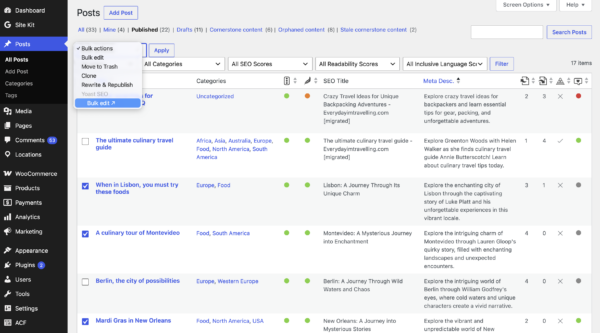
One of the most requested quality-of-life improvements comes in the form of a streamlined entry point to the Bulk Editor. Users no longer need to navigate to the Bulk Editor separately to initiate a task. Instead, they can now select posts, pages, or products directly from their respective WordPress overview screens (e.g., the standard "Posts" list). Once selected, choosing "Bulk edit" from the bulk actions dropdown will seamlessly carry their selection into the Yoast SEO Bulk Editor, ready for immediate action.
This seemingly minor change significantly reduces friction in the content management workflow. It eliminates unnecessary clicks and context switching, allowing content creators and SEO professionals to maintain focus within their primary administrative interfaces. For a WordPress user base that often manages hundreds or thousands of pieces of content, such an integration is invaluable. It transforms the Bulk Editor from a specialized tool requiring a dedicated entry point into an integral, accessible part of the everyday content management experience. This enhancement is a testament to Yoast’s continuous efforts to refine its user interface based on real-world user feedback and to foster a more intuitive and integrated experience within the WordPress ecosystem.
Ensuring AI Accessibility: Connecting Sites Through MyYoast
In a progressive move designed to broaden the accessibility of its AI features, Yoast is gradually rolling out an option to connect sites to MyYoast directly from error messages. This feature addresses a common challenge faced by users whose sites might be behind firewalls, offline, or have the REST API disabled, all of which can prevent Yoast AI from reaching the site and generating metadata. When such connectivity issues arise, users will now be presented with a clear option to connect their site to MyYoast, rather than encountering a dead-end error message.
Once connected via MyYoast, the Yoast AI can continue to function effectively, even under trickier hosting setups. This ensures that a wider range of users, including those with stringent security protocols or unique server configurations, can leverage the full power of Yoast’s AI-driven features. The gradual rollout strategy allows Yoast to monitor performance and gather feedback, ensuring a smooth transition for all users. This initiative highlights Yoast’s commitment to universal accessibility and robust performance across the diverse spectrum of WordPress environments. It’s a strategic step in ensuring that technical barriers do not impede users from utilizing advanced SEO tools, further solidifying Yoast’s position as a user-centric solution provider.
Background Context: The Evolution of Yoast SEO and AI in Content Management
Yoast SEO has been a cornerstone of WordPress optimization for over a decade, empowering millions of website owners to improve their search engine visibility. Its continuous evolution reflects the dynamic nature of SEO itself, which has moved from simple keyword stuffing to sophisticated algorithms that prioritize user experience, content quality, and technical performance. The Bulk Editor, in particular, was developed to address the scalability challenges faced by sites with extensive content archives, providing a centralized hub for critical metadata management.
The integration of AI into SEO tools marks a significant shift in the industry. As search engines like Google increasingly leverage AI for understanding content and user intent, SEO tools are mirroring this trend, employing machine learning to assist in tasks like content analysis, keyword research, and metadata generation. Yoast’s AI capabilities are a direct response to the growing demand for automation and intelligent assistance in an increasingly complex SEO landscape. However, Yoast has consistently emphasized that AI should augment human expertise, not replace it, a philosophy clearly demonstrated by the introduction of the AI guardrail feature.
Implications for Users and Businesses: Efficiency, Accuracy, and Competitive Advantage
These updates carry significant implications for various types of users and businesses. For small to medium-sized businesses, the ability to quickly identify and fix weak metadata across their entire site can free up valuable time and resources, allowing them to focus on content creation and business growth. SEO agencies can leverage these features to manage multiple client sites with greater efficiency, ensuring consistent quality and delivering measurable improvements in organic performance. Enterprise clients, often dealing with thousands or even tens of thousands of pages, will find the streamlined workflows and AI guardrails indispensable for maintaining SEO health at scale.
The enhanced Bulk Editor directly contributes to improved website performance by ensuring that critical on-page SEO elements are consistently optimized. This can lead to higher rankings, increased organic traffic, and ultimately, better conversion rates. By reducing the time spent on manual audits and repetitive tasks, content managers and SEO professionals can allocate more resources to strategic initiatives like in-depth keyword research, content strategy development, and technical SEO audits. This shift towards more strategic work, facilitated by automation, can provide a significant competitive advantage in crowded online markets.
Statements from Yoast Leadership
Beth Parker, Product Marketing Manager at Yoast, whose insights informed this update, commented on the strategic vision behind these enhancements. "Our goal at Yoast is to empower every website owner and content creator with the tools they need to succeed in search. This latest update to the Bulk Editor is a direct reflection of that commitment," Parker stated. "We understand the challenges of managing vast amounts of content, and these new features – from pinpointing weak fields in seconds to intelligent AI assistance with built-in guardrails – are designed to make the process more intuitive, efficient, and ultimately, more effective. We believe in providing powerful automation while ensuring users retain critical control and oversight, especially with AI-generated content."
A spokesperson for Yoast further elaborated, "The digital landscape is constantly evolving, and so are the demands on content managers. By integrating the Bulk Editor more deeply into the WordPress experience and enhancing its analytical capabilities, we are not just adding features; we are transforming the way users approach site-wide SEO optimization. The rollout of MyYoast connectivity for AI is also a crucial step in ensuring that our advanced tools are accessible to everyone, regardless of their hosting environment complexities."
Broader Industry Impact and Future Outlook
These updates by Yoast are indicative of broader trends within the SEO and content management industries. The increasing reliance on AI for content generation and optimization is undeniable, but there is also a growing emphasis on ethical AI use and the necessity of human intervention for quality assurance. Yoast’s guardrail feature sets a precedent for how AI tools can be responsibly integrated, fostering trust and ensuring better outcomes.
Furthermore, the focus on user experience and seamless integration within the WordPress environment highlights the importance of intuitive design in complex software. As websites grow in complexity and content volume, the demand for tools that simplify rather than complicate management tasks will only increase. Yoast’s continuous innovation in this area solidifies its leadership position and sets a benchmark for other SEO tool providers. The future of SEO tools will likely see even deeper AI integration, more sophisticated predictive analytics, and an even greater emphasis on workflow automation, all while maintaining a user-centric approach that keeps human expertise at the forefront of strategic decisions.
In conclusion, Yoast SEO’s latest Bulk Editor update is more than just a collection of new features; it represents a strategic evolution in how content is managed and optimized at scale. By focusing on efficiency, accuracy, and user experience, Yoast continues to equip its users with the cutting-edge tools necessary to thrive in the competitive digital arena, ensuring that effective SEO remains accessible and manageable for all.