Google has intensified its efforts to curb the pervasive issue of bot-initiated search sessions by rolling out a new system of "/goto" redirects, a move poised to significantly impact rank tracking tools, generative AI platforms, and the broader landscape of search engine data accessibility. This strategic update, which began testing in July and is slated for widespread deployment to most logged-out users within the next month, replaces the display of direct URLs in search results with an intermediate redirect mechanism. The underlying objective is to make it more computationally expensive and complex for automated agents to efficiently crawl and extract information from Google’s Search Engine Results Pages (SERPs).
The search giant’s ongoing battle against automated traffic is not a new phenomenon. For years, Google has grappled with the strain placed on its infrastructure by bots from various sources, including automated rank tracking tools that constantly query search results to monitor website positions, and increasingly, by agents from generative AI platforms. These AI systems, in their quest to answer user prompts, often rely on real-time information sourced directly from search engines like Google, creating a significant volume of artificial search queries.
Last year, Google took a preliminary step to address this challenge by discontinuing the &num=100 URL parameter. This parameter previously allowed users and bots to request up to 100 organic search listings on a single page. By removing it, Google forced bots to make more individual page requests to gather the same amount of data, thereby increasing their resource consumption and operational costs. While this measure had some effect, the current introduction of /goto redirects represents a more sophisticated and potentially more impactful strategy.
The Mechanics of the "/goto" Redirect
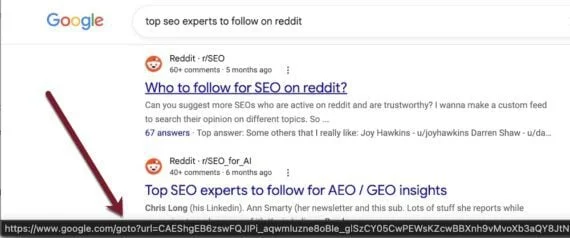
The core of this new initiative lies in how Google now presents outgoing links. Instead of displaying the direct URL of the destination website, users and bots will encounter URLs formatted as google.com/goto/[encoded_destination_url]. This redirection layer serves as an intermediary. For a human user, clicking on such a link will seamlessly transition them to the intended website. However, for automated bots, this introduces a crucial extra step: they must first process the /goto redirect to discover the actual destination URL. This added complexity is designed to deter automated scraping and data extraction.
Google’s decision to implement these redirects follows a period of extensive testing, beginning in July. The phased rollout indicates a strategic approach to monitoring the impact and refining the system before a full-scale deployment. The plan to extend this to "most logged-out users" suggests that logged-in users, who have a more personalized search experience and potentially a different set of engagement patterns, might be subject to different treatment or a delayed implementation.
Impact on Rank Tracking Tools
One of the most immediate and widely felt consequences of Google’s /goto redirects is anticipated to be on the accuracy and functionality of rank tracking tools. These services are indispensable for search engine optimization (SEO) professionals, digital marketers, and website owners who rely on precise data to gauge their online visibility and adjust their strategies accordingly.

The new redirect mechanism means that these tools can no longer directly parse the destination URL from the SERP. Instead, they would theoretically need to "click" through the /goto link to resolve the final URL, a process that is significantly more resource-intensive and time-consuming for automated systems. This could lead to a temporary period of inaccurate reporting, with many tools potentially showing dramatic, albeit artificial, ranking drops as they struggle to adapt.
However, leading SEO software providers have demonstrated a remarkable agility in responding to these changes. Companies like Ahrefs and Moz have publicly stated that they detected Google’s testing phase and have developed solutions to circumvent the new redirect system. Semrush, another prominent player in the SEO tool market, also appears to have adapted. While the author of the original article noted Semrush initially reporting /google.com/goto links as ranking in early August, subsequent observations indicated a significant reduction in such reports, suggesting that Semrush has also implemented a workaround. This competitive race to adapt highlights the ongoing arms race between search engines seeking to control data access and third-party tools striving to provide that data to their users. For trackers that are slower to adjust, users might experience a period of unreliable data, potentially leading to misguided strategic decisions.
Implications for Search Console and Data Integrity
Google Search Console (GSC) is a vital tool for website owners to monitor their site’s performance in Google Search. The "Performance" reports within GSC provide insights into impressions, clicks, click-through rates (CTR), and average keyword positions. The original article suggests that these reports have, thus far, appeared unaffected by the /goto redirects. This is likely because GSC data is derived directly from Google’s internal logs, which are not subject to the same parsing challenges as external scraping tools.
However, the underlying concern remains that the increased activity of bots, even if now slightly more hindered, could still subtly skew the data over time. The article points to two potential effects that are being closely monitored:
- AI platform citations: Generative AI platforms, while continuing to search Google, are now citing the
/gotoURLs. This practice may evolve, and if AI platforms begin to de-emphasize or alter their citation methods, it could indirectly affect how search performance data is interpreted. Third-party citation reports might show declines in the interim, reflecting changes in how AI sources its information rather than a genuine drop in organic visibility. - Resource strain: While the
/gotoredirects are designed to increase the resource burden on bots, if a significant number of sophisticated bots continue to operate, they could still contribute to overall strain on Google’s infrastructure, potentially leading to subtle, hard-to-diagnose performance anomalies.
Despite these potential long-term considerations, the advice for website owners is to remain calm and avoid panic if Search Console numbers experience temporary fluctuations. The /goto redirects are primarily aimed at making the process of data extraction more difficult, not necessarily at altering the fundamental ranking of websites or the core functionality of GSC.
The Broader Context: A Battle for Data Control
Google’s ongoing actions, including the implementation of /goto redirects, are part of a larger strategic battle for control over search data. This conflict has seen legal challenges and technological advancements on both sides.
A significant event in this ongoing saga occurred in December 2025, when Google filed a lawsuit against SerpAPI, a company known for providing API access to search results, which was reportedly used by platforms like ChatGPT. Google alleged that SerpAPI’s scraping practices violated the Digital Millennium Copyright Act (DMCA) of 1998. While a U.S. District Court initially dismissed the lawsuit, Google has since filed an amended version, indicating its persistent determination to litigate against entities it perceives as unfairly exploiting its search data.
This legal and technological pushback suggests a clear trend: Google is increasingly focused on restricting direct, automated access to its search results. The expectation is that this will lead to a future where less raw data is readily available, and the reports generated from whatever data remains might be less precise or "fuzzier." This has profound implications for the SEO industry, market research, and anyone relying on third-party analytics tools that depend on scraping search engine results.
Analysis of Implications
The introduction of /goto redirects by Google signifies a pivotal moment in the evolving relationship between search engines, content creators, and data analytics. The primary beneficiaries of this move are likely to be Google itself, which can better manage its infrastructure, protect its intellectual property, and potentially steer traffic more directly, and legitimate users who experience a more refined and less bot-infested search environment.
For SEO professionals and businesses, the immediate challenge is adaptation. While major players are already finding workarounds, smaller tools or less agile operations might struggle, leading to a potential disparity in data accuracy. This could force a greater reliance on Google’s own tools, like Search Console, and encourage more sophisticated, less resource-intensive methods of SEO analysis.
The long-term implications are more complex. If Google continues to tighten its grip on data access, it could lead to a more opaque digital ecosystem. The ability to independently audit search engine performance and competitive landscapes might diminish. This could foster an environment where the "black box" nature of search algorithms becomes even more pronounced, making it harder for businesses to understand and influence their online visibility. Furthermore, the legal battles, like the one with SerpAPI, highlight the ongoing debate about data ownership and fair use in the digital age. The outcome of these cases could set important precedents for how search engine data is accessed and utilized in the future.
Ultimately, Google’s /goto redirects are not just a technical tweak; they represent a strategic decision to reassert control over its search ecosystem. As AI continues to integrate more deeply into our information consumption habits, search engines are likely to become even more protective of their core functionality and the data they generate. The coming months will be crucial in observing how the industry adapts to this new reality and what the long-term consequences will be for transparency and accessibility in online search.