In the early months of 2025, a wave of industry analysis suggested that the era of inbound marketing had reached a definitive end. The catalyst for this assessment was a staggering decline in organic traffic for HubSpot, the company that pioneered the "content is king" philosophy nearly two decades ago. According to data from SEMRush and various third-party audits, HubSpot’s blog—a cornerstone of the B2B marketing world—experienced a year-over-year traffic drop estimated between 75% and 81%. By mid-2025, monthly visits had plummeted from a peak of 13.5 million to approximately 8.6 million, with AI-driven search engines and answer engines such as ChatGPT and Google’s AI Overviews absorbing the informational queries that once fueled HubSpot’s growth.
Despite these dire metrics, HubSpot’s year-end financial report for 2025 presented a sharp contrast to the "death of content" narrative. The company reported total annual revenue of $3.13 billion, representing a 19% increase over the previous year. Furthermore, its customer base expanded to 288,706, a 16% rise. This discrepancy between traditional SEO performance and actual business health has prompted a significant re-evaluation of what constitutes a "moat" in the age of artificial intelligence. Analysts now suggest that while AI "repossessed" the informational traffic HubSpot had borrowed from search engines, the company’s underlying infrastructure of authority and community remained not only intact but increasingly profitable.
The Chronology of a Paradigm Shift
The decline of HubSpot’s organic traffic was not an isolated incident but the result of a multi-year shift in how users consume information online. For nearly 20 years, HubSpot’s strategy involved publishing exhaustive guides on foundational marketing topics—ranging from "how to write a news release" to "what is a KPI?" This strategy allowed the company to become the default answer for almost any marketing-related query on the internet.
However, the introduction of Generative AI changed the mechanics of the search engine results page (SERP). By 2024, AI Overviews began providing direct answers to these foundational questions, eliminating the need for users to click through to a blog post. By early 2025, the impact was undeniable. The "information" layer of HubSpot’s content—templated blog posts and shorthand explainers—saw its utility transferred to the AI models themselves.
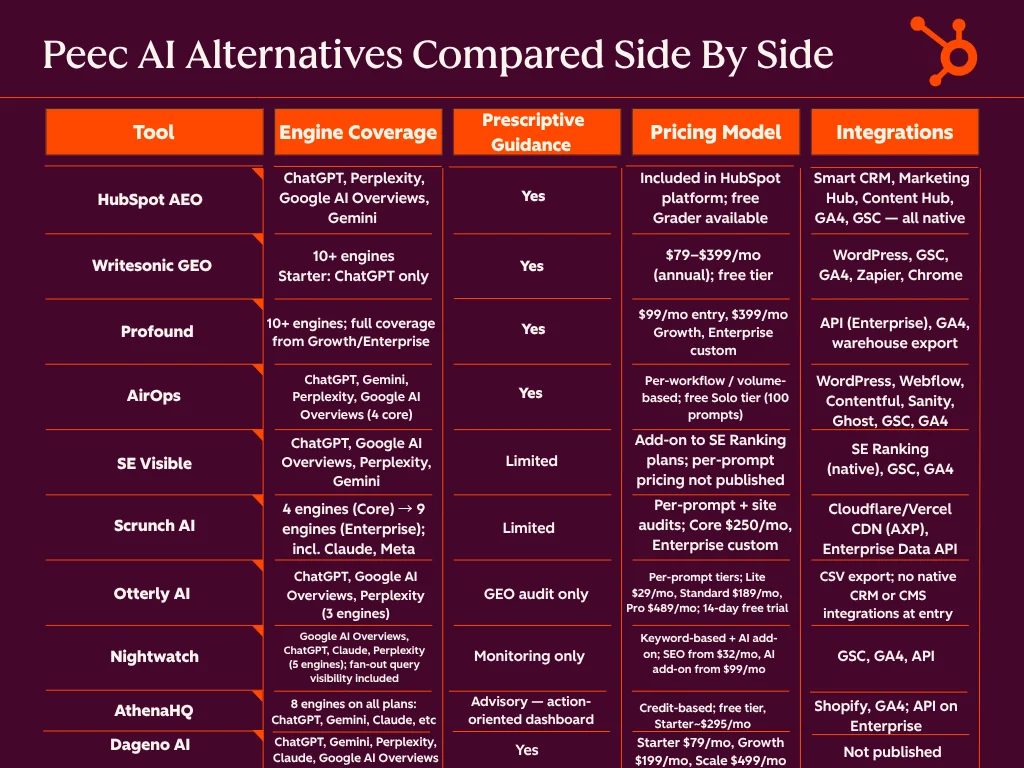
Recognizing this shift, HubSpot’s leadership, including Chief Marketing Officer Kipp Bodnar, reportedly began a strategic pivot as early as 2020. The company shifted its investment from high-volume, low-intent written content toward "influence-based" media, including YouTube, podcasts, and creator partnerships. By April 2026, HubSpot had integrated this defense into its product line, launching "Answer Engine Optimization" (AEO) tools designed to help other brands track their visibility within AI-generated responses.
Deconstructing the HubSpot "Moat"
The resilience of HubSpot’s revenue in the face of a traffic collapse highlights a sophisticated "owned media" economy that extends far beyond a simple blog. To understand why the business grew while its traffic shrank, it is necessary to examine the diverse components of its marketing ecosystem.
Professional Certification and Identity
One of the most significant pillars of HubSpot’s authority is the HubSpot Academy. By 2025, the platform had certified more than 200,000 professionals. Unlike a blog post, which provides transient information, the Academy provides a credential that professionals display on resumes and LinkedIn profiles. This transforms HubSpot’s owned media into a component of its users’ professional identities, creating a level of brand loyalty that search engine algorithms cannot disrupt.
Event-Driven Community
The company’s annual conference, INBOUND, serves as a physical manifestation of its community. In 2025, the event drew over 11,250 attendees to San Francisco. The announcement that the conference would be rebranded as "UNBOUND" for 2026 and return to its roots in Boston signifies a brand comfortable with reinvention. These events function as industry institutions, ensuring that the brand remains a central hub for networking and thought leadership regardless of Google’s search rankings.
Proprietary Data and Research
HubSpot has maintained its status as a primary source for journalists and consultants through its "State of Marketing" reports and steady stream of original research. By producing data that others must cite, HubSpot ensures its brand remains embedded in the industry’s broader discourse. A study of 17,000 AI-engine citations revealed that HubSpot was the most-cited vendor blog in its category, frequently appearing alongside high-authority sites like Wikipedia and Reddit. This suggests that while AI may take the traffic, it still relies on HubSpot as a foundational source of truth.
The PESO Model Diagnostic: A Fact-Based Analysis
The success of HubSpot provides a case study for the PESO Model (Paid, Earned, Shared, Owned), illustrating how an integrated marketing system can survive the failure of a single channel.
Owned Media: From Information to Authority
The 75% traffic drop was largely concentrated in "barnacle" content—articles that chased search volume rather than showcasing unique expertise. Content regarding resignation letter templates or abbreviation explainers was easily replaced by AI. However, content rooted in deep CRM expertise and sales strategy held its value. The lesson for the broader industry is that "rented" authority, built on SEO hacks, is temporary, while "owned" authority, built on unique insight, is durable.
Earned Media: The Citation Engine
In the AI era, the definition of earned media has expanded to include "machine-earned" media. Because HubSpot spent decades publishing high-quality, original research, it became a preferred source for the large language models (LLMs) that power search today. By being the source that the "answer engines" trust, HubSpot has maintained a presence in the user journey, even if that presence no longer results in a direct click to its website.
Shared and Paid Media: Community and Amplification
HubSpot’s shared media strategy focuses on community-building through its podcast network and its acquisition of The Hustle, a popular business newsletter. These channels provide direct access to audiences, bypassing the need for an intermediary search engine. Meanwhile, HubSpot’s paid media efforts have evolved to amplify "proof" rather than just "awareness," focusing on promoting certifications and research reports that further cement its authority.
Official Responses and Strategic Pivot
HubSpot’s executive leadership has remained composed throughout the transition. CMO Kipp Bodnar has noted that traffic was never the primary metric for the business’s success. Instead, the company has focused on its "loop marketing" playbook—a post-funnel strategy designed for a world where AI sits between the brand and the buyer.
In April 2026, the company doubled down on this approach by launching a suite of AEO tools and a "State of AEO" research report. By studying the mechanics of how it lost its traffic, HubSpot successfully productized the solution, selling the "defense" to other companies facing similar challenges. This move effectively metabolized a corporate crisis into a new revenue stream.
Broader Impact and Implications for B2B Marketing
The HubSpot case study offers several critical takeaways for the global marketing industry:
- The Fallacy of Vanity Metrics: High organic traffic is often mistaken for brand strength. HubSpot proved that a business can lose the majority of its traffic and still grow its customer base if its "conversion infrastructure" (Academy, tools, and community) is robust.
- Diversification is Essential: Brands that rely on a single distribution channel—whether it be Google, LinkedIn, or a specific social platform—are vulnerable to algorithmic shifts. HubSpot’s investment in newsletters, podcasts, and physical events provided a necessary safety net.
- The Premium on Original Data: As AI models continue to scrape the web, the value of original, proprietary data increases. Brands that invest in research and "citability" will maintain their influence even as traditional SEO declines.
- AEO as the New SEO: The emergence of Answer Engine Optimization suggests that marketing departments must shift their focus from "ranking" to "being the source." This requires a move away from generic content toward high-conviction, expert-led perspectives.
Conclusion
HubSpot’s performance in 2025 and 2026 serves as a definitive rebuttal to the idea that AI has killed content marketing. Instead, AI has raised the bar for what constitutes valuable content. By repossessing the "borrowed" parts of the internet—the generic, informational queries—AI has forced brands to double down on what makes them unique. HubSpot’s $3.13 billion revenue is a testament to the fact that while a search engine can take away your traffic, it cannot take away your authority, provided that authority is built on a foundation of genuine expertise and community. The "inbound" era has not ended; it has simply evolved from a game of volume into a game of institutional influence.