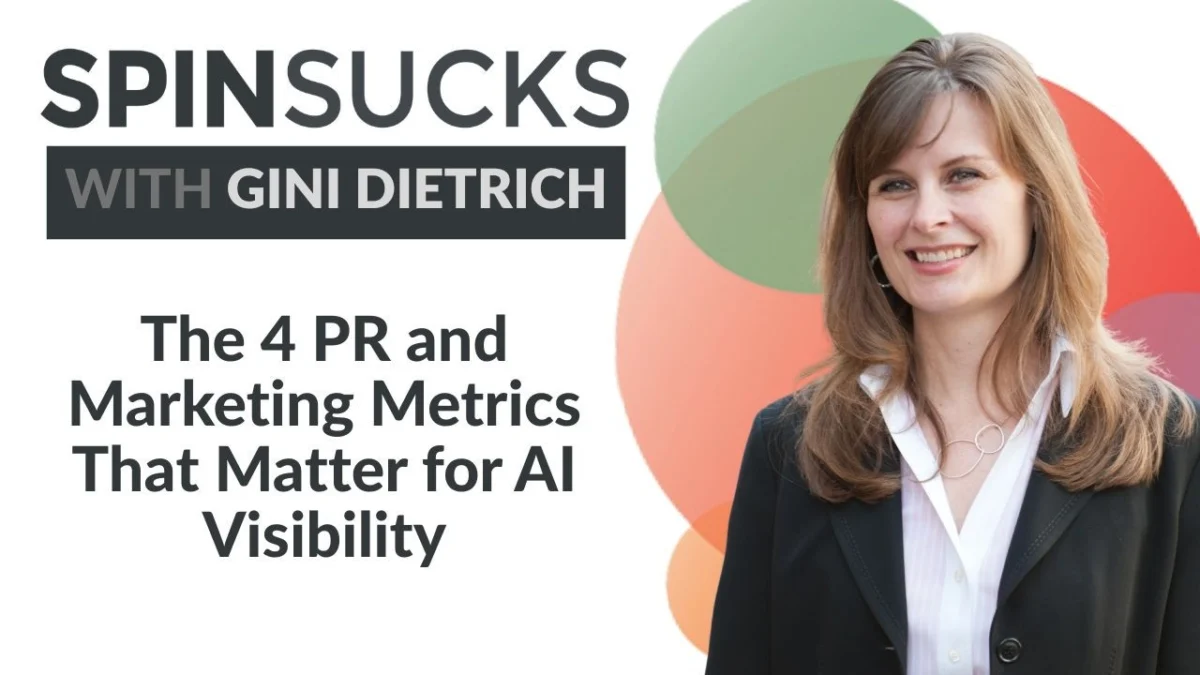
The landscape of public relations and strategic communications is undergoing a fundamental shift as traditional measurement frameworks fail to align with the evolving digital economy and the rise of generative artificial intelligence. For decades, communications professionals have relied on "vanity metrics"—such as impressions, reach, and social media followers—to justify marketing expenditures. However, as organizations move toward the year 2026, a growing disconnect has emerged between high-performing digital dashboards and actual business outcomes. Recent data from the PESO Model Diagnostic indicates that while many organizations report positive growth across various digital channels, few can definitively answer whether these activities contribute to the bottom line. This crisis of relevance has prompted a reevaluation of how influence, authority, and conversion are measured in an era dominated by Large Language Models (LLMs) and synthesized search results.
The Historical Context of PR Measurement and the Decline of Traditional Metrics
The history of public relations measurement has long been fraught with inaccuracies. In the mid-20th century, the primary metric was the "press clipping," a physical record of a brand’s appearance in print media. This evolved into Advertising Value Equivalents (AVEs), a controversial practice that attempted to assign a dollar value to earned media based on what a corresponding advertisement would cost in the same space. Despite being widely discredited by industry bodies like the International Association for the Measurement and Evaluation of Communication (AMEC), AVEs persisted due to their simplicity and their ability to provide a "dollar figure" to executives.
With the advent of the internet, metrics shifted toward digital impressions and "reach." These numbers assumed that if a piece of content was served on a webpage, a human being had engaged with it. As social media matured, the focus turned to "engagement rates"—likes, shares, and comments. However, as the digital ecosystem became saturated with automated traffic and bot activity, these metrics began to lose their luster. The fundamental flaw in these traditional instruments is that they measure distribution rather than impact. In the current market, an organization can generate billions of impressions without moving the needle on revenue, reputation, or recruitment.
The Generative AI Paradigm Shift and the Visibility Gap
The most significant disruption to communications measurement in recent years has been the transition from traditional search engines to generative AI interfaces. For over two decades, search engine optimization (SEO) focused on the "ten blue links" provided by Google. Success was defined by ranking on the first page of results. Today, however, consumer behavior is shifting toward LLMs such as ChatGPT, Gemini, Perplexity, and Claude. These models do not provide a list of links; they provide a single, synthesized answer.
This shift has created what industry analysts call the "Visibility Gap." If an organization ranks first on Google but is not cited or included in an LLM’s synthesized response, it effectively becomes invisible to the modern buyer. Consequently, measuring visibility based on traditional search engine results pages (SERPs) is increasingly viewed as an obsolete practice. Communications professionals are now tasked with ensuring their brands are integrated into the training data and real-time retrieval systems of these AI models.
The Four Essential Metrics for 2026
To bridge the gap between communication activities and business results, the PESO Model—an integrated framework comprising Paid, Earned, Shared, and Owned media—has introduced four new metrics designed for the 2026 landscape. These metrics focus on authority and attribution rather than mere volume.
1. LLM Visibility
LLM Visibility measures the frequency and accuracy with which a brand appears in the responses generated by AI models. Unlike traditional SEO, which tracks keywords, LLM Visibility tracks the brand’s presence within the "answer engine" ecosystem. This metric requires a rigorous cadence of testing—manually or via automated tools like Brandi—to determine if the AI identifies the organization as a leader in its specific category. Organizations must track whether the AI’s description of their services is accurate or "hallucinated," as incorrect AI associations can pose a significant reputational risk.
2. Citation Frequency
As AI models move toward citing their sources (a process known as Retrieval-Augmented Generation or RAG), Citation Frequency has emerged as the new gold standard for authority. While a "mention" indicates that a brand was seen, a "citation" indicates that the brand was the primary source of information. This metric tracks how often journalists, AI models, and industry creators reference an organization’s original research, thought leadership, or proprietary data. High citation frequency is a leading indicator of trust and intellectual dominance within a sector.
3. Narrative Share of Voice
Traditional Share of Voice (SoV) measured the volume of mentions a brand received compared to its competitors. Narrative Share of Voice, however, measures the adoption of a brand’s specific language, framing, and problem-definition by the wider market. This is a qualitative-turned-quantitative metric that identifies when competitors, analysts, and customers begin using a brand’s unique terminology or conceptual frameworks. Achieving a high Narrative Share of Voice suggests that the organization is not just participating in a conversation but is setting the terms of the debate.
4. Credibility Loop Close Rate
The most critical metric for alignment with Chief Financial Officers (CFOs) is the Credibility Loop Close Rate. This metric tracks the journey from initial visibility to final action. It moves beyond simple lead generation by attributing conversions to the entire PESO system. For example, it tracks a prospect who discovers a brand through an AI citation (Earned/Owned), engages with a shared social post (Shared), and eventually converts via an optimized landing page (Owned). The "close rate" measures how reliably this multi-touch journey completes, providing a direct link between communications and revenue.
Empirical Data: The PESO Model Diagnostic Findings
Recent research conducted through the PESO Model Diagnostic has revealed a significant maturity gap in the industry. After assessing nearly one hundred organizations, the data shows that the majority of companies are failing to treat their communications as a cohesive system.
The diagnostic results identified two dimensions that correlate most tightly with overall organizational maturity: Integration and Measurement. Integration showed a 0.83 correlation coefficient with high-performing teams, while Measurement showed a 0.68 correlation. These figures suggest that the ability to measure a system is a prerequisite for reaching the "Systemize" stage of the PESO Maturity Ladder.
However, the data also highlights a stark reality:
- Only 7% of assessed organizations have reached the "Systemize" stage of maturity.
- 56% of organizations remain in the "Foundation" or "Pilot" stages, where activities are siloed and metrics are inconsistently applied.
- Measurement scores typically quadruple as organizations move up the ladder, rising from an average score of 19 at the Foundation stage to 77 at the Systemize stage.
These findings indicate that for the vast majority of businesses, measurement is not just a reporting problem; it is a structural problem. Organizations cannot accurately measure a system that is not integrated.
Broader Impact and Implications for the Industry
The shift toward these advanced metrics has profound implications for how PR agencies and in-house teams operate. First, it necessitates a closer relationship between communications and data science. To track LLM visibility and citation frequency, teams must move beyond manual clip-counting and adopt sophisticated monitoring tools that can parse AI-generated text.
Second, the rise of Narrative Share of Voice places a premium on original, high-quality "Owned" content. In an AI-driven world, generic content is commoditized. Only organizations that produce truly original insights and proprietary data will earn the citations necessary to maintain authority. This effectively ends the era of high-volume, low-value content production.
Finally, the focus on the Credibility Loop Close Rate forces a reconciliation between PR and Sales. By demonstrating how earned media and authority-building activities shorten the sales cycle and improve conversion rates, communications professionals can secure a permanent seat at the table during budget deliberations. The CFO’s perennial question—"Did this move the business?"—finally has a data-driven answer.
In conclusion, the transition to 2026 requires a departure from the "wall of green" dashboards that provide a false sense of security. As the digital environment becomes increasingly mediated by artificial intelligence, the metrics of visibility, citation, narrative, and credibility will define the leaders of the next decade. For the 93% of organizations currently operating below the "Systemize" level, the path forward involves integrating the PESO channels and adopting measurement frameworks that prioritize business impact over vanity. Those who successfully navigate this transition will not only survive the shift in search behavior but will thrive as the primary authorities in their respective fields.