As the digital marketing landscape continues its rapid evolution, driven by heightened privacy concerns, sophisticated algorithms, and evolving subscriber expectations, the role of the email preference center has ascended from a mere footnote to a pivotal element of strategic communication. Industry predictions for 2026, including those from Validity, underscore a significant shift towards brands proactively promoting these centers, recognizing them as essential tools for fostering subscriber control and, consequently, enhancing engagement and retention.
Subscribers today demand a granular level of control over their inbox experience – dictating not only the frequency of communications but also the specific types of content they wish to receive. This desire for relevance is not merely a preference but a critical driver of engagement; messages perceived as tailored and timely are significantly more likely to be opened, read, and acted upon. Conversely, a deluge of irrelevant emails is a fast track to disengagement.
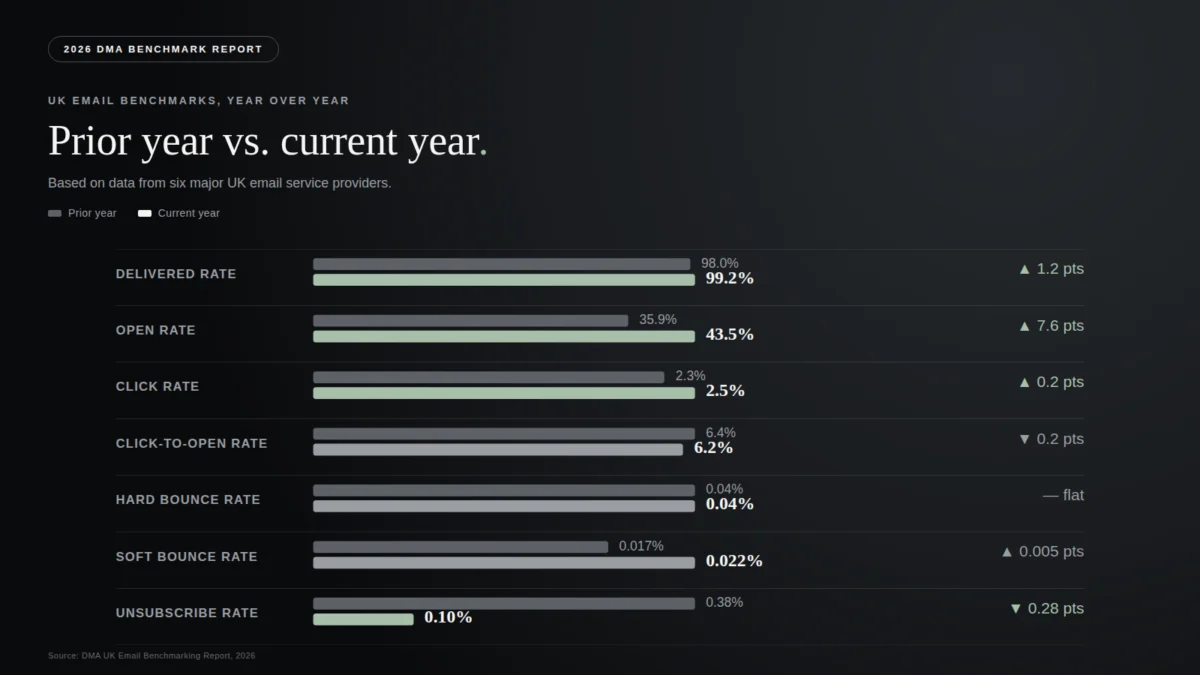
The urgency of this strategic pivot is underscored by recent data. Research from Mailerlite reveals a concerning trend: year-on-year unsubscribe rates more than doubled from 2024 to 2025. This dramatic increase is largely attributed to recent changes implemented by major mailbox providers (MBPs), most notably Gmail, which have made the process of unsubscribing significantly easier. The primary culprits cited by opting-out subscribers are consistently "too many emails" and "messages not relevant." This presents a paradox: while subscribers are increasingly prone to opting out, a significant portion of them would prefer to simply adjust their email frequency or content preferences rather than severing ties entirely – if only they were aware of such options.
The Historical Context and Evolving Landscape
For many years, email marketing strategies largely focused on maximizing list growth and broad segmentation. The typical email footer, often an afterthought, housed a tiny unsubscribe link and, if present, an equally inconspicuous link to a preference center. The prevailing industry consensus among practitioners was that the low usage of these centers was not due to a lack of subscriber interest in personalization, but rather a profound lack of awareness regarding their existence and functionality. This passive approach is no longer sustainable.
The journey towards the current emphasis on preference centers can be traced through several key developments. Prior to 2021, while email marketers valued personalization, the technical infrastructure and consumer awareness around data control were less mature. The advent of Apple’s Mail Privacy Protection (MPP) in late 2021 marked a significant turning point. MPP fundamentally altered how email open rates were measured by pre-loading images, thereby obfuscating a key metric for engagement. This move compelled email marketers to pivot towards sourcing "zero-party data" – information willingly and proactively shared by subscribers about their preferences, intentions, and interests. Preference centers became a crucial conduit for this invaluable data, as other traditional tracking methods became less reliable.
The period between 2024 and 2025 witnessed another seismic shift, primarily driven by major mailbox providers. Gmail, a dominant player, introduced features such as prominent one-click unsubscribe headers, streamlining the opt-out process. While this was a boon for user experience and privacy, it simultaneously presented a significant challenge for marketers, contributing directly to the observed doubling of unsubscribe rates. This confluence of privacy-driven changes and user-centric features from MBPs has elevated the importance of explicit subscriber consent and preference management. Furthermore, ongoing AI-fueled developments across MBPs are making inbox engagement metrics more critical than ever for deliverability and sender reputation, reinforcing the need for highly relevant and desired content.
The Tangible Payoff: Data-Backed Success
The benefits of robust preference center utilization are not merely theoretical; they are demonstrably proven through compelling industry research. Single Grain, for instance, published a case study detailing an e-commerce client who implemented a tiered preference center. The results were striking: a 189% increase in email engagement and a remarkable 76% decrease in unsubscribes. These figures unequivocally illustrate the power of giving subscribers control.
Similarly, research conducted by Oracle highlighted the effectiveness of incorporating a "snooze" option within email preference centers. Senders who offered subscribers the ability to temporarily pause communications saw an average drop of 82% in unsubscribes. This mechanism provides a crucial alternative to permanent opt-outs, allowing brands to retain subscribers who might otherwise leave due to temporary content fatigue, such as during intense holiday sales periods.
These statistics paint a clear picture: investing in and actively promoting preference centers is not just about compliance or good practice; it’s a strategic imperative that directly impacts key performance indicators like engagement, retention, and ultimately, customer lifetime value. Email senders must transition from passively offering preference centers to intentionally promoting them and actively encouraging subscriber interaction.
Strategic Approaches to Elevating Preference Center Awareness and Usage
To effectively leverage preference centers, brands need a multi-faceted approach that integrates promotion across various touchpoints of the subscriber journey.
1. General Promotion: The Foundational Step
The simplest yet often overlooked strategy is consistent, general promotion. Even a basic message within an email that highlights the existence of your preference center and explains its benefits can significantly outperform doing nothing. Brands like Chanel keep this straightforward, explaining how subscribers can use the tool to tailor marketing communications to align with their specific interests. This sets a baseline expectation that personalization is available.
2. Welcome Email and Onboarding Series: Capitalizing on Peak Engagement
Welcome emails represent prime real estate for introducing and promoting preference centers. New subscribers are at their highest point of engagement and are most open to defining the terms of their relationship with a brand. Mizuno masterfully integrates this with a clever, sports-themed subject line, inviting new subscribers to "be part of the first team," encouraging them to actively shape their communication experience rather than being passive "reserves."
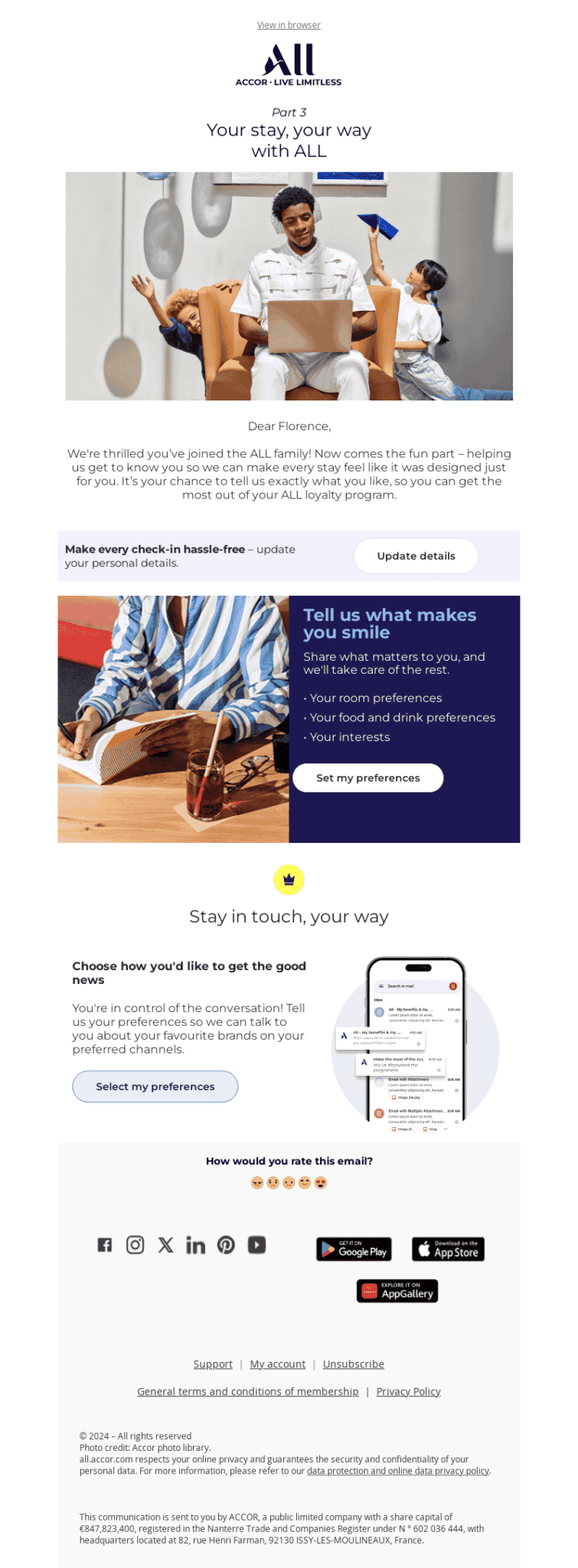
For brands with a more extensive onboarding series, there’s even greater scope. Accor Hotels, for example, sends dedicated messages to new loyalty members, framing preference settings as a pathway to "better check-ins, perfect rooms, and preferred communication channels," directly linking personalization to an enhanced customer experience. This reinforces the value proposition from the outset.
3. Progressive Profiling: Building Richer Data Over Time
The concept of progressive profiling is to gather subscriber data gradually rather than overwhelming them with a lengthy form at the initial signup. This reduces friction and improves completion rates. Brands can start with essential information and then periodically request additional, richer data points through targeted check-ins. The key is to prioritize data that offers the most immediate relevance. For a travel company like Skyscanner, knowing a customer’s preferred departure airport is a critical first step towards delivering highly relevant flight deals, making it an ideal initial data point for profiling.
Another highly effective progressive profiling target is the date of birth. Almost universally, people appreciate a surprise or special offer on their birthday. For brands, this provides a natural, non-intrusive way to strengthen the customer relationship while simultaneously gathering valuable demographic signals related to age, life stage, and potential buying power, which can further refine segmentation.
4. Making it Interactive: Gamification for Engagement
Gamification is a powerful tool for driving engagement, and it translates effectively to preference capture. Oceania Cruises, for instance, engages subscribers by asking them to "Choose which destination interests you most," complete with a running counter showing the popularity of each option. This interactive approach not only makes the process enjoyable but also builds a rich, self-declared body of customer insight with every poll response. Interactive elements like quizzes, polls, and even drag-and-drop interfaces for content selection can transform a mundane task into an engaging experience.
5. Explaining the Benefits: The "What’s In It For Them" Factor
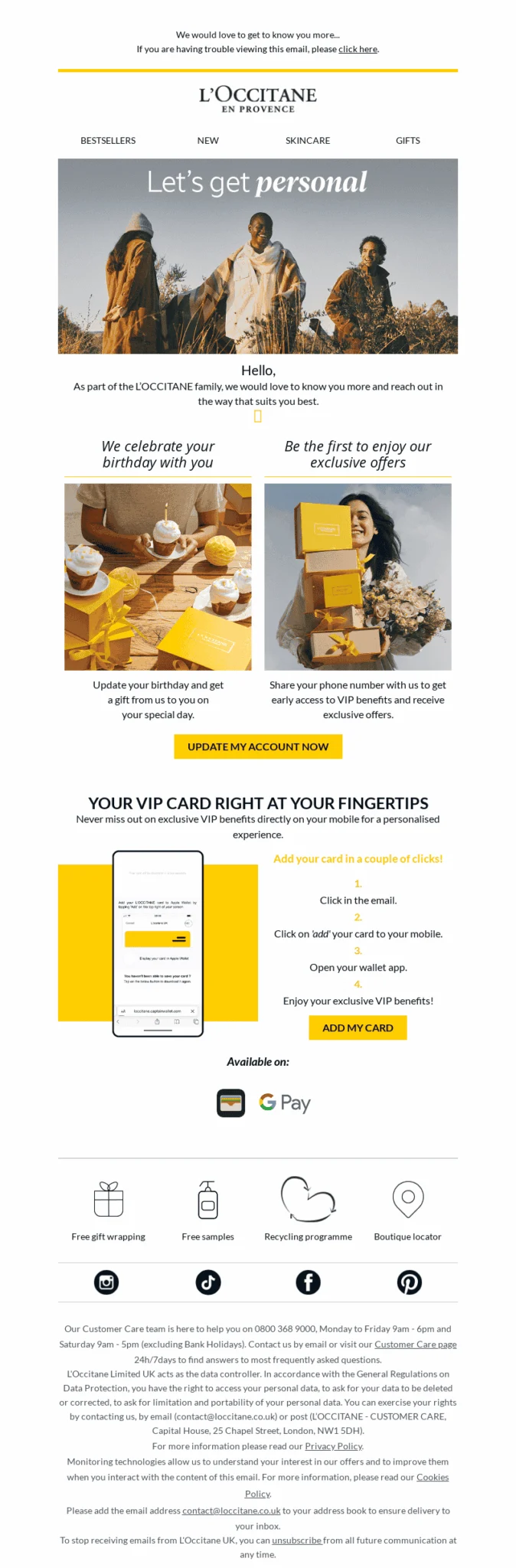
Subscribers are more likely to engage with preference centers when they clearly understand the tangible benefits. L’Occitane excels at this, explicitly spelling out advantages such as early access to exclusive offers and a birthday gift for those who update their preferences. They also offer options to switch communication channels to text, post, or WhatsApp, catering to diverse preferences and emphasizing a holistic approach to customer communication. Articulating the "what’s in it for them" (WIIFT) transforms the act of setting preferences from a chore into a valued opportunity.
6. Providing an Incentive: Hard Proof of Value
While "soft" benefits like early access are appealing, some subscribers require a more direct incentive. Recognizing the inherent value of their personal data, they expect something in return. A discount or promotional offer works exceptionally well in this context, as it not only incentivizes data submission but also often leads to a purchase, creating a win-win scenario for the sender. Other effective incentives can include exclusive content, loyalty points, or free shipping on a subsequent order.
7. Opt-Out from Special Events: Demonstrating Empathy
The rising trend of emails inviting subscribers to opt out of emotionally sensitive dates (e.g., Valentine’s Day, Mother’s Day) is a testament to brands’ growing empathy. However, the proliferation of these standalone emails risks inadvertently amplifying the very sensitivity they aim to mitigate. A more integrated and less intrusive approach is to build these as permanent, one-time preference center options.
Brands are increasingly adopting more specific controls. Interflora offers an anniversary opt-out, Bloom & Wild allows subscribers to mute Grandparent’s Day communications, and Hotel Chocolat enables customers to suppress alcohol-related promotions. This level of granular control showcases a deep understanding of customer needs and fosters immense goodwill.
8. Holiday Season: The Power of the Temporary Snooze
Revenue-critical periods like Black Friday and Cyber Monday often lead to an increased volume of emails. Many subscribers, while still interested in the brand, might prefer a temporary respite rather than an overwhelming inbox. As Oracle’s research profoundly demonstrated, a short-term "snooze" option is invariably superior to a permanent "unsubscribe from all." Bvlgari effectively implements this strategy, allowing subscribers to manage holiday communication fatigue. Spoonflower takes a proactive approach during the run-up to sales, using a relatable message – "no one likes a cluttered inbox!" – with a smart call-to-action: "Curate My Content." This frames the preference center as a solution to a common problem.
9. Increased Visibility: Pre-headers and Dedicated Content Blocks
Beyond dedicated campaigns, every email should work harder to promote the preference center. Two tactical placements stand out:
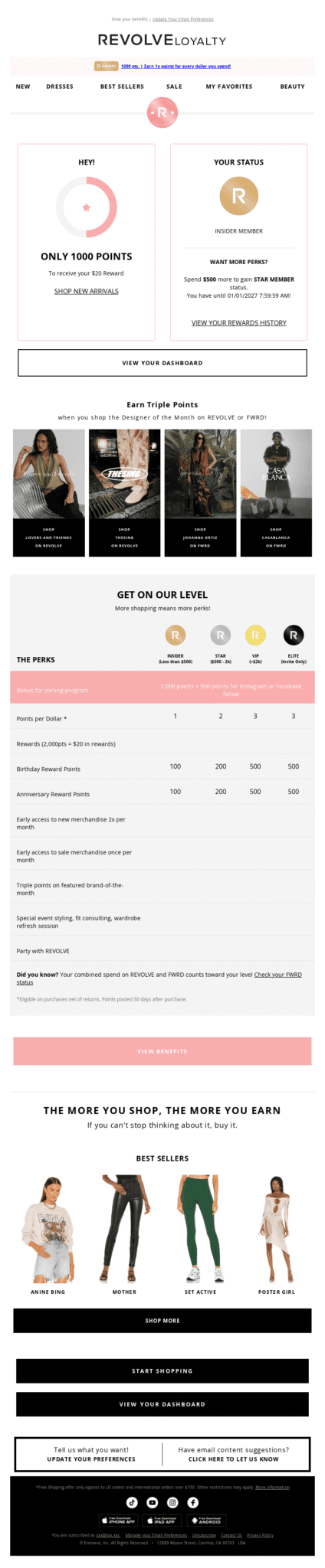
First, the pre-header: This valuable, often underutilized space, visible before the email is even opened, can prominently feature a link to the preference center. Just as transparent placement of unsubscribe links builds trust and reduces spam complaints, so too does a visible preference center link. REVOLVE effectively uses this space to link to loyalty status updates, subtly encouraging preference management.
Second, a dedicated content block: Integrating a specific content block within regular emails, as Bloom & Wild does, ensures that the message of preference management is consistently reinforced. This allows subscribers to opt out of multiple events or adjust settings without having to search or wait for a specific campaign email.
10. Re-engagement Campaigns: A Last Opportunity for Connection
Preference centers play a crucial role in re-engagement or win-back campaigns. When subscribers become inactive, promoting the preference center serves as a last-ditch effort to salvage the relationship, offering an alternative to an outright unsubscribe. CVS Pharmacy exemplifies this by restating the benefits of staying subscribed, soliciting feedback, and concluding with a powerful, commitment-oriented call-to-action: "Yes, I still want emails." This approach provides a clear path for subscribers to re-define their relationship on their terms.
Getting Started and Measuring Success

The most effective preference centers function as sophisticated personalization engines, serving as dynamic conversation starters for collecting invaluable zero-party data. Implementing these strategies requires a commitment to understanding subscriber needs and leveraging the right technology. Platforms like Validity Engage, which offers AI-powered email intelligence built on extensive data networks, can remove risk and boost performance by enabling brands to create highly engaging, dynamic emails that drive results.
The ultimate test of a preference center’s efficacy lies in its measurable impact. Brands must rigorously track the link between preference center usage and key email marketing engagement metrics. If subscribers who actively utilize the preference center exhibit higher open rates, click-through rates, conversions, and lower unsubscribe rates, it provides a compelling, data-driven justification for continued investment in the email program. This demonstrates that fostering subscriber control is not just a customer-centric ideal but a powerful driver of business growth and a cornerstone of a future-proof email strategy.