Establishing an online presence, whether for a burgeoning blog, an e-commerce store, or a corporate portal, necessitates more than just a well-designed website; it critically depends on web hosting. This fundamental service ensures a website is accessible to users across the globe, acting as the digital real estate where all website files reside. Understanding the intricacies of web hosting, from selecting an appropriate provider to discerning between various hosting types, is paramount for any individual or entity aiming to succeed in the digital sphere. This guide delves into the core aspects of web hosting, offering a structured approach to making informed decisions that underpin a robust and effective online presence.
The Digital Backbone: Understanding Web Hosting
At its core, web hosting is the service that stores your website’s data—its pages, images, videos, code, and databases—on powerful computers known as servers. These servers are maintained by web hosting companies within specialized facilities called data centers. When a user enters a website’s domain name into their browser, the browser sends a request to the server hosting that website. The server then transmits the necessary files back to the user’s browser, rendering the website visible. Without web hosting, a website, no matter how meticulously crafted, would remain inaccessible to the public internet, akin to a house built without a foundation or land to stand upon.
The web hosting industry has grown exponentially since the early days of the internet. Initially, hosting was often managed internally by organizations or individuals with the technical expertise and infrastructure. However, as the internet expanded, specialized web hosting providers emerged, offering scalable and reliable services. Today, the global web hosting services market was valued at approximately $74.6 billion in 2023 and is projected to grow to over $150 billion by 2030, reflecting the continuous surge in online activities and digital transformation initiatives worldwide. This growth underscores the essential role hosting plays in the modern digital economy.
The Critical Link: How Hosting Impacts SEO and User Experience
The choice of web host extends beyond mere accessibility; it significantly influences a website’s performance, which, in turn, has direct implications for search engine optimization (SEO) and user experience (UX). Search engines like Google prioritize websites that are fast, secure, and consistently available. Therefore, reliable hosting is a non-negotiable component of a successful SEO strategy.
- Website Speed: Server response time is a crucial factor in page load speed. A slow server can drastically increase loading times, leading to higher bounce rates and diminished user satisfaction. Studies consistently show that users expect websites to load within a few seconds, with many abandoning pages that take longer. Google’s Core Web Vitals, a set of metrics measuring real-world user experience, heavily emphasize loading performance. A high-quality host provides optimized servers, sufficient bandwidth, and modern infrastructure (like SSD storage) to ensure swift data delivery.
- Uptime and Reliability: Uptime refers to the percentage of time a website is operational and accessible. Reputable hosting providers guarantee high uptime percentages, often 99.9% or higher. Frequent downtime not only frustrates users but also signals to search engines that a website is unreliable, potentially leading to lower rankings. A stable hosting environment ensures continuous availability, which is vital for maintaining traffic and authority.
- Security: Web hosts play a critical role in website security. Robust hosting includes features like DDoS protection, firewalls, regular security audits, and malware scanning. A secure website protects sensitive user data, prevents malicious attacks, and builds trust. Search engines penalize insecure websites, especially those without SSL certificates, which encrypt data transmitted between the user’s browser and the server. Many hosting plans now bundle free SSL certificates, recognizing their importance for both security and SEO.
Upgrading a hosting plan or switching to a more reliable provider can therefore yield tangible improvements in site performance, directly contributing to better SEO rankings and an enhanced user experience. The emphasis should always be on reliability, scalability, and security, rather than solely on the lowest price point.

Architecting Your Online Presence: Fully-Hosted vs. Self-Hosted Solutions
One of the initial decisions in establishing an online presence involves choosing between a fully-hosted and a self-hosted platform. Each approach offers distinct advantages and disadvantages concerning control, convenience, and technical demands.
- Fully-Hosted Platforms: These are all-in-one solutions where the platform provider manages all aspects of hosting. Examples include e-commerce giants like Shopify and content management systems such as WordPress.com. In this model, users primarily focus on content creation and design, while the provider handles server maintenance, security updates, backups, and scalability. The convenience is a significant draw for beginners or businesses that prefer to minimize technical overhead. However, this convenience often comes with limitations on customization, access to the underlying code, and sometimes, restrictions on third-party integrations. Users effectively rent space and functionality within a predefined ecosystem.
- Self-Hosted Platforms: This approach, exemplified by WordPress.org, requires users to independently arrange and manage their hosting. While it demands a greater degree of technical involvement, self-hosting offers unparalleled control and flexibility. Users gain full access to their website’s codebase, allowing for extensive customization, the integration of any plugin or theme, and the freedom to choose a hosting provider that perfectly aligns with their specific needs. Furthermore, self-hosting typically means complete ownership of all website data, a crucial consideration for data privacy and long-term digital asset management. This option is often favored by developers, larger businesses, or those requiring bespoke functionalities.
The decision between these two models hinges on an individual’s or organization’s technical proficiency, budget, desired level of control, and future scalability requirements.
Key Pillars for Selecting a Web Host
With thousands of hosting companies vying for attention, each offering a myriad of plans, selecting the right one can be daunting. Several critical factors should guide this decision-making process:
- Geographic Proximity and Server Location: The physical location of a hosting provider’s servers relative to the primary audience is a significant determinant of website speed. Data transmission speed, or latency, increases with distance. If a website’s target audience is predominantly in North America, hosting on servers located in Europe or Asia could introduce noticeable delays. Opting for a host with data centers geographically closer to the majority of your users minimizes latency, ensuring faster load times and a smoother user experience. Content Delivery Networks (CDNs) can mitigate this to some extent by caching website content on servers globally, but the primary server location remains important for initial load times and dynamic content.
- Storage and Resource Allocation: The type and quantity of resources provided by a hosting plan are crucial.
- Storage Space: This dictates how much data (website files, databases, emails) your server can hold. A small personal blog might require only a few gigabytes, whereas a large e-commerce site with thousands of product images, videos, and a complex database could demand hundreds of gigabytes or even terabytes. Modern hosting typically offers Solid State Drive (SSD) storage, which is significantly faster than traditional Hard Disk Drives (HDDs), improving data retrieval speeds.
- RAM and CPU: These resources are vital for processing website requests. More RAM (Random Access Memory) and CPU (Central Processing Unit) power allow a server to handle more concurrent users and complex operations efficiently. Shared hosting plans have strict limits, while VPS and dedicated plans offer more generous or fully allocated resources.
- Bandwidth and Scalability: Bandwidth refers to the amount of data that can be transferred from your server to users over a given period. Every time a visitor accesses a page, images, texts, and other assets are downloaded, consuming bandwidth.
- Audience Size: An accurate estimation of expected website traffic is essential. A new website might start with minimal traffic, but successful growth will inevitably increase bandwidth consumption. Many hosts offer "unlimited" bandwidth, but this often comes with a "fair usage" policy, meaning if traffic becomes excessive, they might request an upgrade.
- Scalability: The ability to easily upgrade hosting resources as website traffic and content grow is critical. A flexible hosting provider allows seamless transitions between plans (e.g., from shared to VPS) without significant downtime or migration complexities.
- Beyond the Basics: Essential Ancillary Services: Modern hosting companies frequently bundle additional services that enhance website functionality, security, and ease of management.
- SSL Certificates: Essential for security and SEO, many hosts now include free SSL certificates (e.g., Let’s Encrypt).
- Automated Backups: Regular, automated backups are invaluable for disaster recovery, allowing quick restoration of a website in case of data loss or security breaches.
- Email Hosting: Many plans offer custom email addresses (e.g., [email protected]), enhancing professionalism.
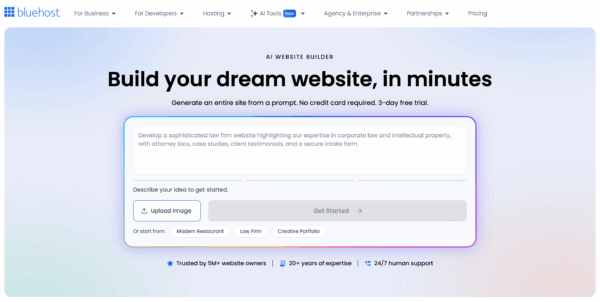
- Website Builders: Integrated drag-and-drop website builders can significantly simplify the initial site creation process for non-technical users. Bluehost, for example, has launched an AI Website Builder that generates a site based on user prompts, ideal for small businesses seeking rapid deployment without coding or design expertise.
- CDN Integration: While not always included, easy integration with CDNs is a strong plus for global reach and performance.
- Customer Support: Responsive, knowledgeable 24/7 customer support via multiple channels (live chat, phone, email) is invaluable, especially when encountering technical issues.
Demystifying Hosting Types: A Spectrum of Solutions
The hosting industry offers a variety of server configurations, each designed to cater to different needs in terms of performance, control, and cost. The three most common types are shared, dedicated, and VPS hosting, with cloud hosting emerging as a prominent fourth option.
- Shared Hosting: This is the most economical and popular option for beginners and small websites. In shared hosting, multiple websites reside on a single physical server, sharing its resources (CPU, RAM, disk space, bandwidth). While cost-effective, the "neighbor effect" is a potential drawback; a surge in traffic or resource consumption by one website on the server can negatively impact the performance of others. Security can also be a greater concern due to the shared environment. It’s ideal for personal blogs, small business websites, and portfolios with moderate traffic.
- Virtual Private Server (VPS) Hosting: VPS hosting represents a significant step up from shared hosting. While still residing on a single physical server, a VPS uses virtualization technology to create isolated virtual machines. Each VPS operates independently with its own dedicated allocation of CPU, RAM, and disk space, meaning resources are not shared with other users on the same physical server. This isolation provides better performance, enhanced security, and greater control (including root access) compared to shared hosting. VPS is suitable for growing businesses, e-commerce sites, and applications requiring more resources and customization without the high cost of a dedicated server.
- Dedicated Hosting: As its name suggests, dedicated hosting provides an entire physical server exclusively for a single client. This offers maximum performance, security, and control. Clients have complete administrative access to the server, allowing them to install any operating system or software and configure it precisely to their specifications. Dedicated hosting eliminates the "neighbor effect" entirely. However, it is the most expensive option and requires significant technical expertise for server management. It is typically chosen by large enterprises, high-traffic e-commerce stores, or applications with stringent performance and security requirements.
- Cloud Hosting: Cloud hosting leverages a network of interconnected servers (a "cloud") to host websites. Instead of relying on a single physical server, a website’s resources are drawn from this vast network. This offers unparalleled scalability and reliability. If one server fails, another in the network seamlessly takes over, ensuring minimal downtime. Resources can be scaled up or down on demand, allowing users to pay only for what they consume (pay-as-you-go model). Cloud hosting is highly flexible and resilient, making it an excellent choice for websites experiencing fluctuating traffic, large-scale applications, or those prioritizing high availability and disaster recovery.
Optimizing for Platforms: The Rise of Managed WordPress Hosting
For the millions of websites powered by WordPress.org, specialized WordPress hosting plans have become increasingly popular. These plans are meticulously optimized for the WordPress environment, offering a range of benefits tailored to this ubiquitous content management system.
- Pre-installed WordPress: Many providers offer one-click installation or even come with WordPress pre-installed, simplifying the initial setup process.
- Performance Optimization: Servers are configured with caching mechanisms, specific PHP versions, and database optimizations to ensure WordPress sites run at peak performance.
- Enhanced Security: Managed WordPress hosting often includes specialized security features like WordPress-specific firewalls, malware scanning, and vulnerability patching, addressing common threats to the platform.
- Automatic Updates and Backups: Hosts frequently manage core WordPress updates, theme, and plugin updates, and provide regular automated backups, freeing users from routine maintenance tasks.
- Expert Support: Support teams are often highly knowledgeable about WordPress, offering specialized assistance for platform-specific issues.
Companies like WP Engine, Kinsta, and SiteGround are well-known for their managed WordPress offerings, providing a premium experience that prioritizes speed, security, and ease of management for WordPress users.
Strategic Considerations and Future Outlook
Beyond the initial choice, long-term strategic considerations are crucial. The ability to switch hosts, for instance, is a common necessity as websites evolve. Most reputable hosts offer migration assistance, guiding users through transferring files, databases, and configuration settings, though the complexity depends on the existing setup and the new provider. It is always advisable to inquire about migration services during the selection process.
Furthermore, the environmental impact of web hosting is gaining traction. "Green hosting" providers utilize renewable energy sources for their data centers or invest in carbon offsetting programs. As sustainability becomes a growing concern, businesses may increasingly favor hosts with strong environmental credentials.
The integration of artificial intelligence into hosting management and website building, as exemplified by Bluehost’s AI Website Builder, points towards a future where website creation and maintenance become even more accessible and streamlined. These tools are democratizing web presence, allowing individuals and small businesses to establish an online footprint quickly and efficiently without deep technical knowledge. However, for complex functionalities or bespoke requirements, traditional hosting with full customization remains indispensable.
Conclusion
Web hosting is the bedrock of any successful online endeavor. From understanding its fundamental role in making a website accessible to meticulously evaluating the myriad of hosting companies and types, informed decision-making is paramount. Factors such as server location, storage capacity, bandwidth, ancillary services, and robust customer support collectively determine the quality of a hosting environment. The right host not only ensures a website’s continuous availability and performance but also significantly contributes to its SEO efficacy and user experience. As the digital landscape continues to evolve, staying abreast of hosting innovations and prioritizing reliability, security, and scalability will remain critical for cultivating a thriving online presence. For those seeking to deepen their understanding of how hosting integrates into broader digital strategies, comprehensive resources like technical SEO courses offer invaluable insights into optimizing a site for both users and search engines.