Tech stack consolidation, at its core, represents the strategic process of streamlining an organization’s software landscape by reducing the number of disparate tools and standardizing operations on a smaller, more integrated suite of systems. This move is increasingly recognized as a critical strategic imperative, transcending mere cost-cutting to deliver profound operational efficiencies, enhance data integrity, and significantly improve customer experiences.
The Root of the Problem: Unchecked Tool Sprawl
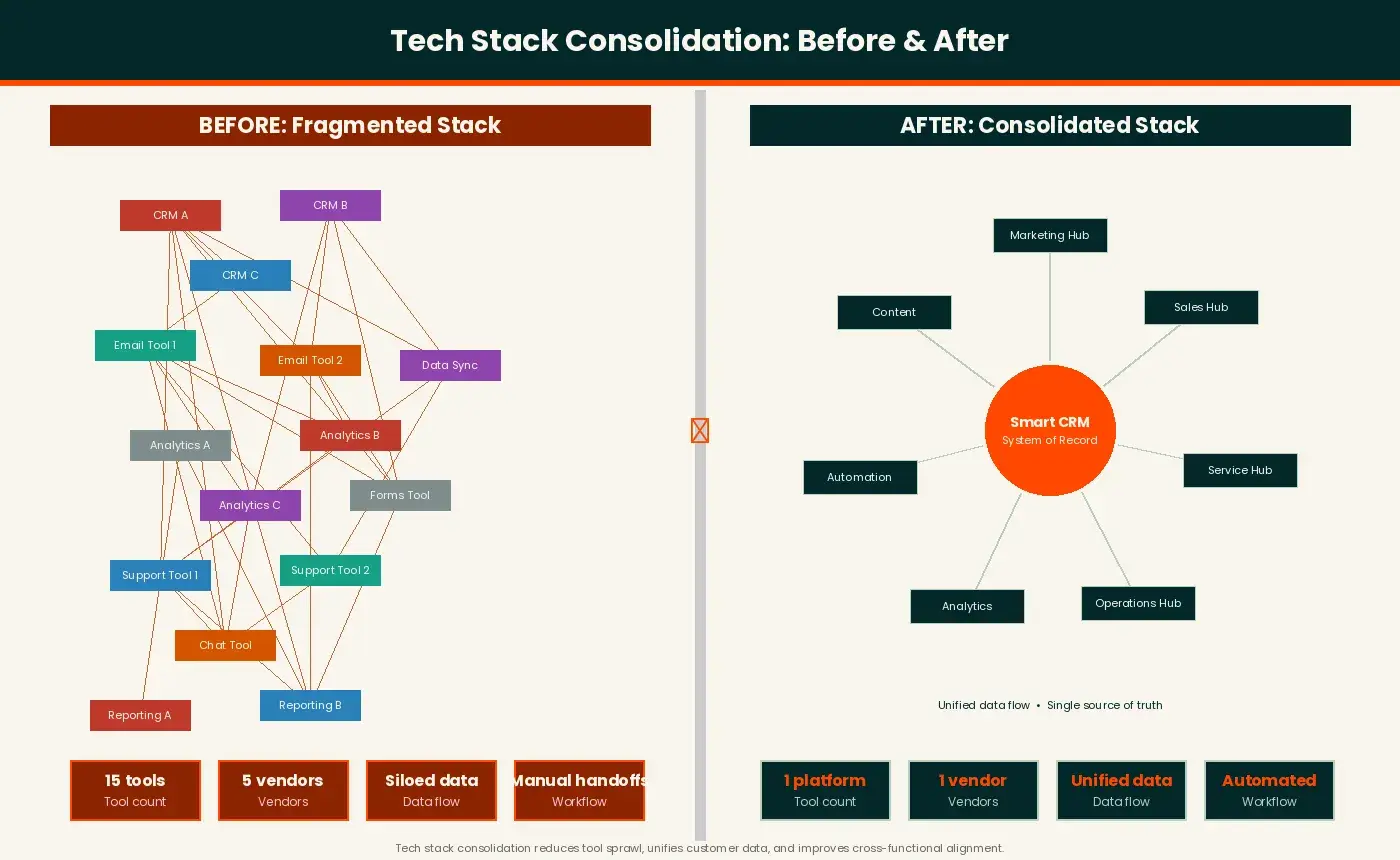
For years, businesses have embraced the flexibility and specialized functionalities offered by Software-as-a-Service (SaaS) solutions. This proliferation, while initially empowering individual departments, has inadvertently led to "tool sprawl" – a chaotic ecosystem where numerous applications perform overlapping functions, struggle to integrate, and generate fragmented data. A recent report by Statista indicated that the average company uses over 110 SaaS applications, a number that continues to grow, often without centralized oversight. This unchecked expansion results in significant operational friction, as data becomes siloed, workflows are fragmented, and teams are forced into manual reconciliation or context-switching across multiple platforms. Shadow IT, where departments independently procure software, further exacerbates this challenge, creating security vulnerabilities and escalating hidden costs.
Beyond Cost Savings: Unlocking Tangible Business Value
While the allure of reduced subscription fees is a common initial driver for consolidation, the true business case extends far beyond financial optimization. The primary benefit lies in the creation of a unified data environment, typically anchored by a robust Customer Relationship Management (CRM) system serving as the definitive "system of record." When all customer interactions, from initial marketing engagement to sales conversions and ongoing service, reside within a single, integrated platform, the organization gains an unparalleled 360-degree view of its customers.
Industry analysts, including those at Gartner, consistently highlight that while overall IT spending, particularly on software, continues its upward trajectory, the returns on these investments are often hindered by inefficient, fragmented tech stacks. The biggest dividends from consolidation stem from reinvesting operational gains – such as cleaner data, faster workflows, and fewer integration failures – directly into enhanced execution and strategic initiatives. This allows customer-facing teams to operate from consistent metrics, automate processes across the entire customer journey, and eliminate the need to constantly rebuild context as customers move through different touchpoints. This unified approach not only improves internal efficiency but fundamentally transforms the customer experience, making interactions smoother and more personalized.
A Phased Approach to Transformation: From Audit to Governance
Successful tech stack consolidation is not a one-time event but a structured, multi-phase transformation requiring meticulous planning and execution. It’s a strategic undertaking that demands a holistic view of technology, processes, and people.
Phase 1: Comprehensive Audit and Discovery
The initial and arguably most critical step is a thorough audit of the existing tech stack. This involves compiling a complete inventory of every software tool utilized across the organization, irrespective of its origin (central procurement, departmental purchase, or even free trials). For each tool, key attributes must be documented:

- Ownership: Who is responsible for the tool?
- Cost: Subscription fees, maintenance, and associated operational expenses.
- Renewal Dates: Critical for strategic timing of cancellations or renegotiations.
- Utilization: Actual usage rates versus licensed capacity.
- Data Flows: How data enters, leaves, and is processed by the tool, and its dependencies on other systems.
- Business Purpose: The specific problem the tool solves or the function it supports.
This comprehensive inventory, often compiled by a dedicated RevOps or IT team, serves as the foundational artifact, providing an objective overview of the current state. During this phase, it is also crucial to engage stakeholders across all departments to understand their workflows, pain points, and perceived value of each tool.
Phase 2: Defining the System of Record and Data Standards
With a clear understanding of the existing landscape, the next step is to make a pivotal strategic decision: identifying the core "system of record." For most customer-centric organizations, this role is best filled by a robust CRM platform. Designating a CRM as the system of record means:
- It becomes the primary repository for all customer-related data.
- It dictates the lifecycle stages and definitions for customers and prospects.
- It serves as the central hub that other tools integrate with and draw data from.
Concurrently, establishing clear data standards is paramount. This includes defining field naming conventions, standardizing lifecycle stage definitions (e.g., Lead, MQL, SQL, Customer), and implementing robust deduplication rules. These standards are vital for maintaining data quality during migration and ensuring consistent, reliable reporting post-consolidation. Without these foundational data governance principles, even a consolidated stack can suffer from "dirty data," undermining the very benefits consolidation seeks to achieve.
Phase 3: Strategic Selection and Seamless Migration
Once the system of record and data standards are established, organizations can systematically evaluate each tool in the audited inventory against consistent criteria:
- Value Proposition: Does the tool genuinely solve a critical business problem or provide unique capabilities not covered by the core platform?
- Integration Capabilities: How well does it integrate with the chosen system of record and other essential tools?
- Security & Compliance: Does it meet the organization’s security protocols and regulatory requirements?
- Cost vs. Benefit: Is the total cost of ownership justified by its unique value and utilization?
Tools that fail to meet these criteria, especially those with low utilization or redundant functionality, are targeted for retirement. Migration planning is then initiated, focusing on minimizing disruption. This involves backing up all critical data, cleansing and preparing data for transfer to the new system, and designing a phased rollout strategy, perhaps by department or specific use case. Phased migrations allow for early identification and resolution of issues, reducing overall risk.
Phase 4: Driving Adoption and Embedding Governance
Technology implementation is only half the battle; user adoption is crucial for realizing the full benefits of consolidation. Comprehensive training programs, tailored to different user roles and workflows, are essential. This goes beyond simply demonstrating new features; it involves explaining the "why" behind the change, showcasing how the new system simplifies tasks, and providing ongoing support channels. Tracking adoption metrics, such as active users, feature utilization, and workflow completion rates, provides insights into the success of the transition.
Crucially, consolidation efforts must be accompanied by robust governance frameworks to prevent future tool sprawl. This includes:
- A Standardized Intake Process: All new software requests, including free trials, must pass through a formal review process to assess business need, cost, integration requirements, and redundancy.
- Category Ownership: Assigning dedicated owners to specific tool categories (e.g., marketing automation, sales enablement) who are responsible for renewals, utilization reviews, and new requests.
- Regular Review Cadence: Quarterly or bi-annual reviews tied to contract renewal windows to assess tool performance, utilization, and continued strategic fit.
- Documented Standards: Centralizing and regularly updating data standards, integration requirements, and an approved vendor list, ensuring these are integrated into onboarding processes for new hires.
- Living Tool Inventory: Maintaining and continuously updating the master tool inventory to reflect the current state of the tech stack.
Cross-Functional Benefits: A Unified Business Ecosystem
The impact of a consolidated tech stack resonates across every facet of a business, fostering a more cohesive and efficient operational environment.
Marketing Agility and Precision: A unified marketing tech stack, integrated with the central CRM, means marketers spend less time battling data discrepancies and more time crafting impactful campaigns. Improved attribution becomes possible as all customer touchpoints feed into one platform, offering a holistic view of campaign effectiveness. Automation, from lead nurturing to scoring and lifecycle changes, operates seamlessly across the entire funnel, enhancing lead quality and conversion rates.

Empowering Sales Teams: Sales representatives, working from a single, comprehensive CRM, no longer need to toggle between multiple tools to understand a prospect’s history. Pipelines, activity logs, communication sequences, and internal notes are all housed in one accessible location. This complete and accurate data empowers reps with the context needed to personalize interactions, accelerate deal velocity, and provide more accurate sales forecasts.
Elevating Customer Service: Support teams gain immediate access to the full customer record—including purchase history, past conversations, open deals, and marketing interactions—without ever leaving their helpdesk interface. This contextual richness enables faster issue resolution, reduces customer frustration by eliminating the need to repeat information, and fosters a more proactive and personalized service experience.
Streamlining Operations, Finance, and IT: Beyond customer-facing teams, the benefits extend deeply into core business functions. Vendor consolidation simplifies procurement processes, reduces the overall attack surface for security threats, and allows finance departments to reconcile software spend against actual utilization more effectively. Operations teams, freed from the burden of maintaining numerous custom integrations, can pivot to higher-value strategic work, while IT gains better visibility and control over the technology landscape.
Navigating Common Pitfalls and Ensuring Long-Term Success
Despite the clear advantages, tech stack consolidation is not without its challenges. Proactive strategies are essential to mitigate risks.
Overcoming Stakeholder Resistance: One of the most significant hurdles is organizational inertia and resistance from teams accustomed to their existing tools. To counter this, leaders must articulate a clear vision for consolidation, emphasizing the benefits to individual teams rather than just cost savings. Involving key stakeholders in the planning process, demonstrating potential improvements to their daily workflows, and appointing internal champions can significantly ease the transition. Addressing specific concerns, such as the unique functionalities of certain "legacy edge cases," may require finding equivalent capabilities within the new core platform or carefully justifying their retention as deliberate, well-integrated exceptions.
Addressing Data Quality and Integration Complexities: Migrating years of data from various sources can be fraught with peril. Attempting to transfer "dirty data" (incomplete, inconsistent, or duplicate records) into a new, clean system merely perpetuates the problem. A rigorous data cleansing and standardization process must precede any migration. Furthermore, while the goal is integration, some legacy or niche systems might require custom integration work, which can be time-consuming and expensive. Prioritizing platforms with open APIs and a robust partner ecosystem can significantly reduce this burden and prevent vendor lock-in. Negotiating data portability clauses into enterprise contracts also provides a safeguard.
The Critical Role of Ongoing Governance: Without sustained governance, tool sprawl will inevitably resurface within 12-18 months. The established intake processes, category ownership, and regular review cadences must be rigorously enforced. This requires strong leadership commitment, clear policies, and continuous communication to ensure that every new software acquisition aligns with the consolidated strategy.
The Future Landscape: Agility, Innovation, and Competitive Edge
Ultimately, tech stack consolidation is a strategic investment in an organization’s future agility and competitive edge. In a rapidly evolving digital landscape, businesses need the flexibility to innovate quickly, respond to market shifts, and deliver exceptional customer experiences. A fragmented tech stack hinders these capabilities, creating drag and limiting potential. By building a streamlined, integrated foundation, companies can unlock faster data-driven decision-making, empower their teams with efficient workflows, and position themselves for sustainable growth. The journey of consolidation, while complex, is a necessary evolution for modern enterprises seeking to thrive in the digital economy.