

The prevailing misconception that cross-selling and upselling are merely aggressive marketing ploys designed to extract more money from unsuspecting customers often overshadows their true potential. When strategically implemented with a genuine focus on customer benefit, these approaches transcend simple sales tactics, evolving into powerful tools for enhancing the customer experience, fostering enduring relationships, and organically driving business growth. The fundamental principle underpinning successful cross-selling and upselling lies in understanding and serving the customer’s interests, thereby creating intrinsic value that enriches their interaction with a brand. When value is consistently delivered, increased revenue naturally follows as a consequence of elevated customer satisfaction and loyalty. This comprehensive analysis delves into the distinct methodologies of upselling and cross-selling, dissecting their core differences, outlining best practices, and detailing practical implementation strategies within contemporary business models.
Demystifying Cross-Selling: Expanding the Customer’s Horizon
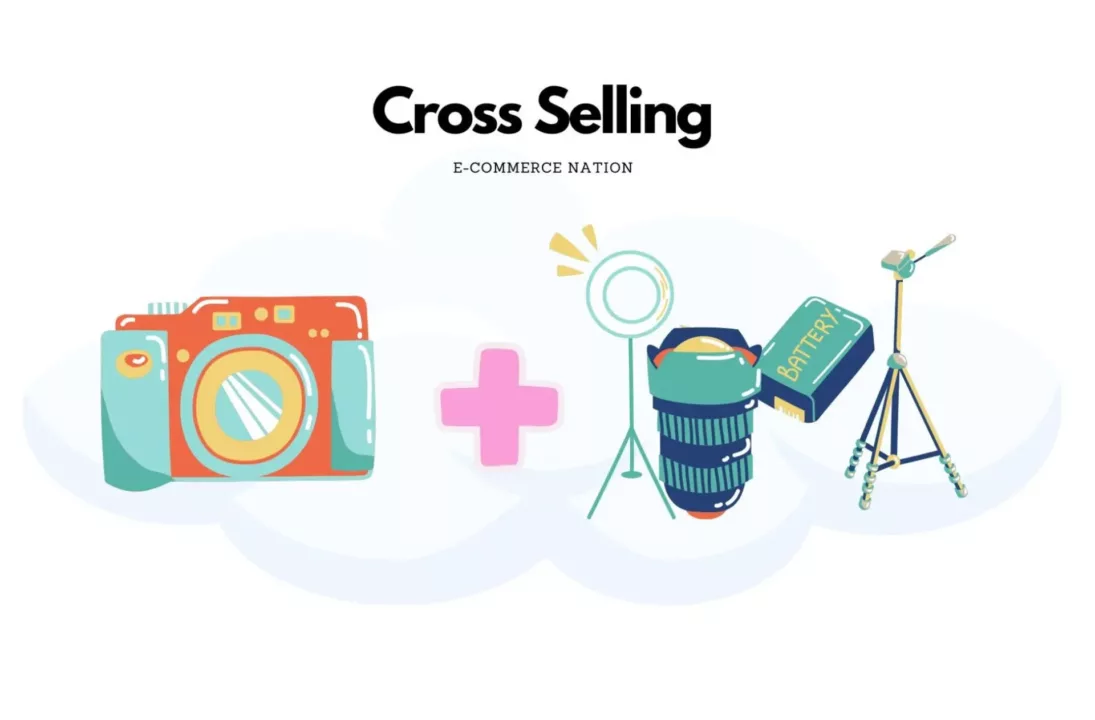
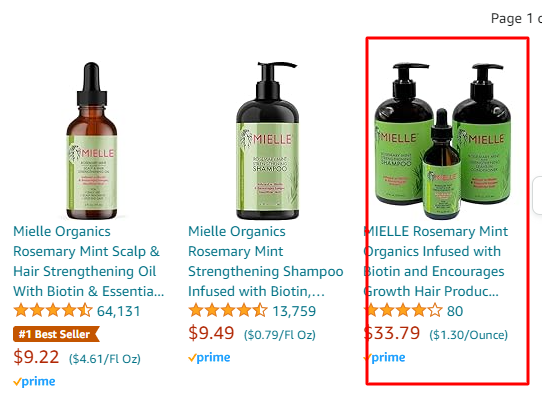
Cross-selling is the strategic practice of recommending complementary items that are directly related to a product a customer has recently purchased or is in the process of purchasing. These recommendations are designed to add utility, convenience, or enjoyment to the original purchase, thereby increasing its overall value to the customer while simultaneously boosting business revenue. For instance, a technology retailer selling a new laptop might cross-sell essential accessories such as a protective laptop bag, an ergonomic wireless mouse, or a subscription to cloud storage. Similarly, a clothing boutique might suggest a matching pair of gloves or a stylish hat when a customer buys a scarf, completing an ensemble. In the digital commerce landscape, cross-selling manifests through "customers also bought" sections, bundled product offers, or personalized recommendations presented during the checkout process or in post-purchase communications.
The imperative for a robust cross-selling strategy is multifaceted. Firstly, it significantly increases the average order value (AOV), directly contributing to higher revenue per transaction. Secondly, by offering relevant supplementary products, businesses enhance the perceived value of the initial purchase, improving customer satisfaction. A customer who finds all necessary accessories conveniently suggested alongside their primary item experiences a more seamless and thoughtful shopping journey. Thirdly, cross-selling is a highly cost-effective method of revenue generation, as it leverages the existing customer base, which is generally easier and less expensive to sell to than acquiring new customers. Industry data consistently shows that the probability of selling to an existing customer can be as high as 60-70%, compared to 5-20% for a new prospect. This efficiency translates directly into improved return on investment (ROI) for marketing and sales efforts. Lastly, by anticipating customer needs and providing integrated solutions, businesses can cultivate stronger relationships and foster greater customer loyalty, encouraging repeat purchases and positive word-of-mouth referrals.
Unpacking Upselling: Elevating the Core Purchase

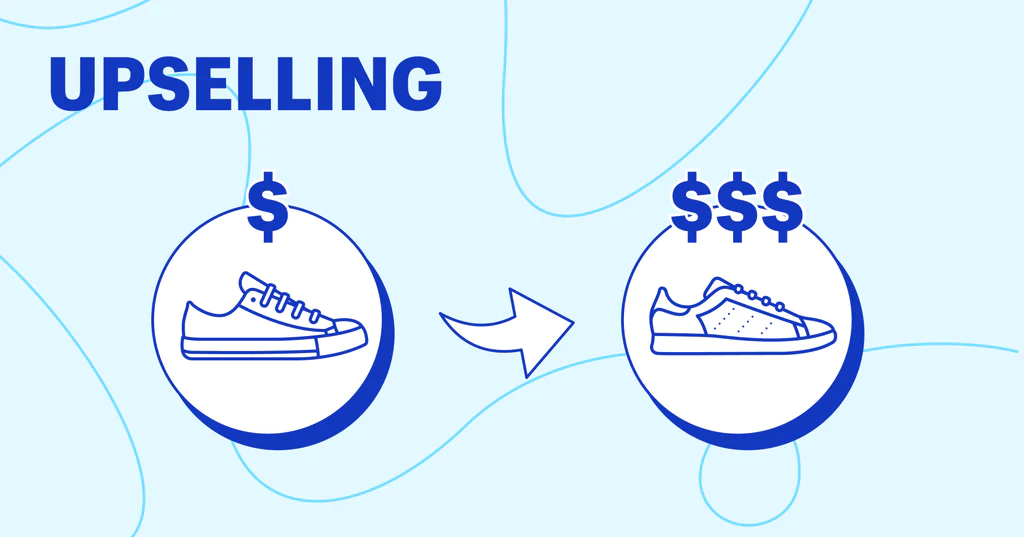
In contrast to cross-selling, upselling focuses on encouraging customers to invest in a higher-value version of the product they are already considering or have recently purchased. This could involve promoting a more advanced model with enhanced features, a larger quantity, or an upgraded service tier. The primary objective of upselling is to provide superior value to the customer by introducing them to better alternatives, while simultaneously increasing the sales revenue for the business. Upselling is not merely about pushing a more expensive item; it’s about educating the customer on the benefits of an upgrade that might better meet their needs, offer greater longevity, or provide a richer experience.
Consider the example of a customer browsing for a basic smartphone. An effective upsell strategy might involve highlighting a premium model with a superior camera, extended battery life, or more storage capacity, demonstrating how these advanced features would address potential future needs or enhance their daily usage. In the software-as-a-service (SaaS) sector, this often translates to offering tiered subscription plans, where higher tiers unlock additional features, greater user limits, or dedicated support, appealing to customers seeking more robust solutions. The power of upselling lies in its ability to leverage a customer’s existing purchase intent. Since the customer has already shown interest in a product category, guiding them towards a more suitable, albeit pricier, option often feels like a helpful recommendation rather than an aggressive sales pitch, especially when the value proposition is clearly articulated.
Distinguishing the Strategies: A Nuanced Approach
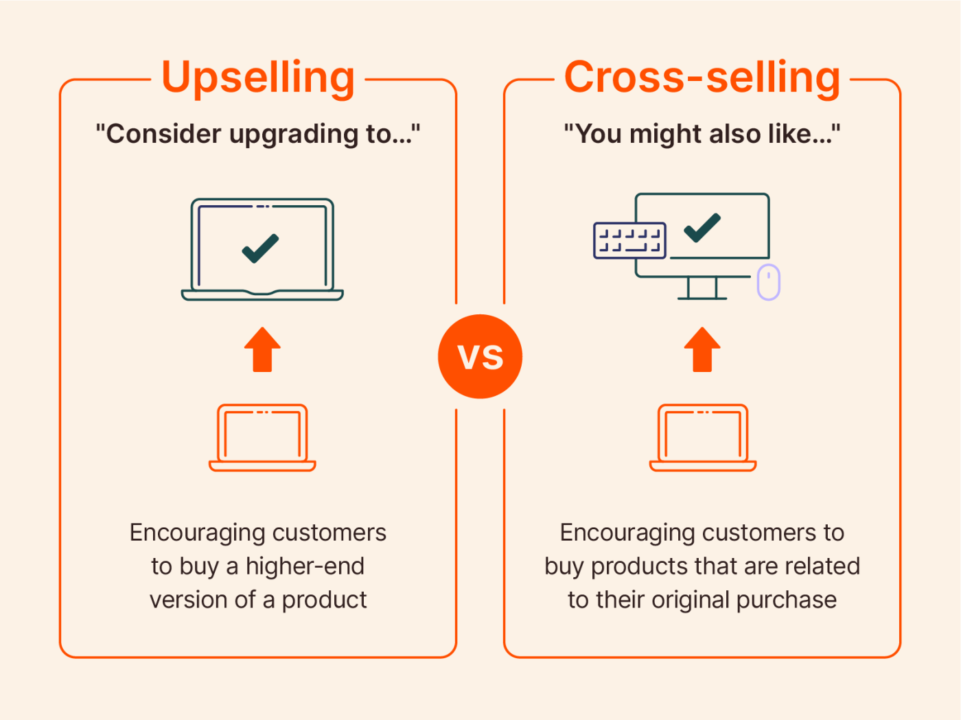
While both upselling and cross-selling aim to increase order value and improve ROI, their fundamental mechanisms and points of application differ significantly. Cross-selling expands the breadth of a customer’s purchase by adding complementary products, while upselling deepens the value of a single purchase by offering an enhanced version of the chosen item.
| Attribute | Cross-selling | Upselling |
|---|---|---|
| Definition | Recommending items related to the product the customer is buying or recently bought. | Encouraging the customer to spend more on the purchase they’re already making. |
| Core Concept | Customer adds products that complement the original order. | Customer swaps up to a better or more expensive option. |
| What it Increases | Value of the entire order (more items). | Value of a single purchase (one product). |
| Product Focus | Multiple products. | One product. |
| Customer Intent | Introduces products they didn’t intend to buy but that make the order more satisfying. | Works with the product they already intended to buy. |
| Difficulty | Harder – requires knowing what else genuinely benefits the customer. | Easier – the customer has already shown interest. |
| Example | Laptop → laptop bag or wireless mouse; Scarf → gloves. | Laptop → more advanced model with better specs. |
| Where it Runs | Checkout, product page recommendations, post-purchase emails. | Product selection, cart abandonment, upsell email series. |
Despite these distinctions, both strategies share crucial similarities. They are intrinsically focused on delivering additional value to the customer, thereby enhancing their overall satisfaction. Both are also among the most cost-effective methods for driving sales growth, as they capitalize on the lower cost of selling to existing customers compared to new customer acquisition. A HubSpot report from 2025, based on a survey of 1,000 global sales professionals, underscored the importance of customer trust and value. Forty percent identified establishing trust and rapport as the most effective upsell and cross-sell strategy, while 39% highlighted providing consistent value. Significantly, 37% noted that the optimal moment for an upsell is immediately after value has been successfully delivered. These findings reinforce the notion that both strategies, when executed thoughtfully, are powerful drivers of customer loyalty, encouraging repeat business and strengthening brand affinity.
Implementing Customer-Centric Strategies in Business Operations
The successful integration of cross-selling and upselling into a business model hinges on a deeply customer-centric approach, where value provision remains paramount.
-
Deep Customer Understanding: A prerequisite for effective cross-selling and upselling is an intimate knowledge of the customer base. This involves moving beyond basic demographics to understand purchasing behaviors, product usage patterns, pain points, aspirations, and overall brand interactions. Leveraging customer data, such as purchase history, browsing behavior, survey responses, and feedback, allows businesses to segment their audience effectively. This segmentation enables the personalization of recommendations, ensuring that suggested products or upgrades genuinely resonate with individual customer needs and preferences. For example, a customer who frequently buys organic food might be cross-sold eco-friendly kitchenware, or a customer who purchases entry-level electronics might be targeted with upsells for extended warranties or premium support.
-
Mapping the Customer Journey: Tracing the customer’s interaction lifecycle with a brand—from initial awareness and interest to purchase and post-purchase engagement—provides critical insights. A detailed customer journey map helps identify key touchpoints where cross-selling and upselling opportunities naturally arise. This data can reveal moments of high purchase intent (e.g., product page views, items added to cart), moments of post-purchase satisfaction (e.g., order confirmation, delivery notifications), and moments when a customer might be receptive to further engagement (e.g., subscription renewal, product anniversary). By understanding these touchpoints, businesses can deliver timely and contextually relevant recommendations, significantly increasing the likelihood of conversion and improving the overall shopping experience.
-
Identifying Problem-Solving Products: The core of value-driven selling lies in offering solutions, not just products. Every cross-sell or upsell recommendation should genuinely address a customer’s need, enhance their experience, or solve a potential problem. For instance, suggesting a sturdy, waterproof case when a customer buys a new smartphone addresses a potential concern about damage. Offering a premium software suite with advanced analytics to a business customer buying a basic accounting tool solves their potential need for deeper insights. It is crucial to maintain transparency and avoid recommendations that appear self-serving or irrelevant, as this can erode trust. Recommendations should also be mindful of the customer’s implied budget and stated needs, ensuring upgrades are reasonable and accessible.
-
Establishing Tailored Techniques: Businesses must develop and refine their specific cross-selling and upselling techniques, considering when and how to deploy them. This includes determining whether to present offers together or separately, the optimal frequency of product bundling, and the channels through which recommendations are delivered (e.g., website, email, in-store). A/B testing different approaches—such as varying the number of recommendations, the language used, or the timing of the offer—is essential for identifying the most effective strategies that align with the brand’s customer base and product catalog.
Pros and Cons: Navigating the Landscape
Like any business strategy, cross-selling and upselling present both significant advantages and potential pitfalls.
Benefits:
- Increased Revenue and Profitability: Directly boosts average order value and customer lifetime value (CLTV).
- Enhanced Customer Loyalty: By providing relevant value, customers feel understood and appreciated, fostering long-term relationships.
- Cost Efficiency: Selling to existing customers is significantly cheaper than acquiring new ones, improving marketing ROI.
- Improved Inventory Management: Can help move related stock and optimize product visibility.
- Stronger Brand Perception: Positioning a brand as a helpful solution provider rather than just a product seller.
- Competitive Advantage: Businesses that effectively cross-sell and upsell often outcompete those focused solely on initial transactions.
Potential Drawbacks and Mitigation:
- Perceived Pushiness: Overly aggressive or irrelevant recommendations can alienate customers, leading to negative brand perception and cart abandonment.
- Mitigation: Focus on genuine value, limit recommendations, and ensure relevance through deep customer understanding.
- Decision Paralysis: Presenting too many options can overwhelm customers, making it harder for them to make a choice, potentially leading them to abandon their purchase altogether.
- Mitigation: Narrow choices to a highly curated selection of the most relevant items or upgrades.
- Erosion of Trust: If recommendations consistently fail to align with customer needs or appear purely profit-driven, trust can be severely damaged.
- Mitigation: Prioritize customer needs over immediate sales, gather feedback, and be transparent about the benefits of any offer.
- Increased Returns: If customers feel pressured into buying items they don’t truly need or want, it can lead to higher return rates, incurring additional costs for the business.
- Mitigation: Emphasize the problem-solving aspect of recommendations and ensure clear product descriptions.
Mastering the Art: Proven Strategies for Success
To truly master cross-selling and upselling, businesses must employ sophisticated tactics that blend psychological insights with practical application.
-
Narrowing the Choices: While choice can be empowering, an excessive number of options can lead to decision fatigue or paralysis. Effective cross-selling and upselling involve curating a limited, highly relevant selection of products or upgrades. Behavioral economics suggests that offering 2-4 carefully chosen options is often more effective than a sprawling list, as it simplifies the decision-making process for the customer. If a customer ignores a suggestion, it’s crucial to respect their decision and avoid repetitive, forceful pushing.
-
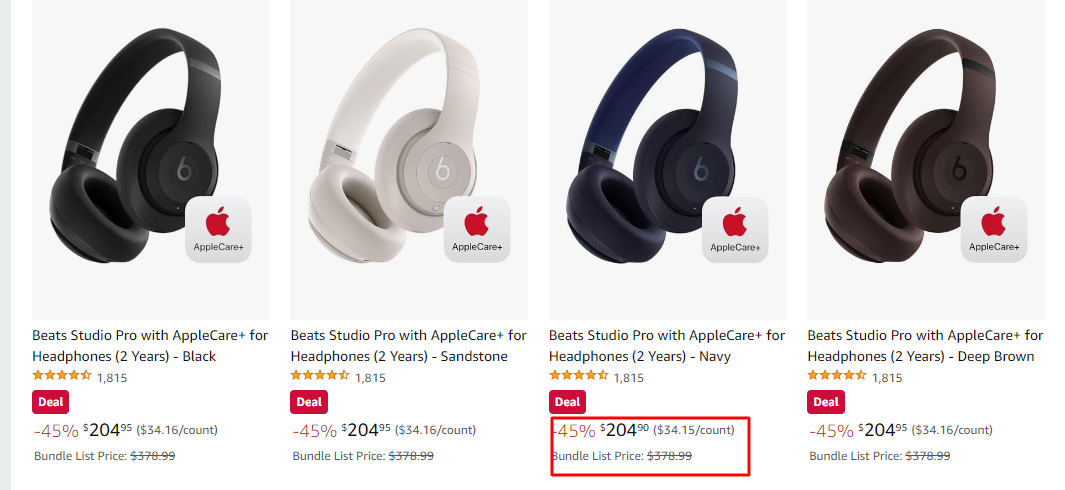
Reducing Decision Complexity Through Bundling: Product bundling is a highly effective tactic that simplifies decision-making by offering a curated package of related items, often at a slightly discounted price compared to purchasing each item individually. This strategy is particularly powerful for cross-selling, as it presents a convenient, ready-made solution that addresses multiple potential needs simultaneously. For example, a gaming console might be bundled with two popular games and an extra controller, offering a complete entertainment package. Bundles provide perceived added value and convenience, encouraging customers to commit to a larger purchase without the cognitive load of selecting each item separately.
-
Leveraging Price-Anchoring and Value-Adding Strategies: Price anchoring is a psychological phenomenon where an individual’s perception of value is heavily influenced by the first piece of information they receive (the "anchor"). In marketing, this means strategically presenting a higher initial price (the anchor) before revealing a more appealing offer. For upselling, this can involve showing the price of a premium product alongside a slightly less expensive, but still upgraded, option. For cross-selling, it might involve displaying the full retail price of a bundle with individual items crossed out, next to the discounted bundle price. This technique highlights the savings and makes the current offer appear more attractive and valuable. Emphasizing the value—the benefits, features, and solutions—rather than just the price, further strengthens the appeal of the upsell or cross-sell.
-
Cross-Selling and Upselling Dos and Don’ts: Adherence to established best practices is paramount for success.
- Do limit options to a small, highly relevant set; Don’t overwhelm with long, irrelevant recommendation lists.
- Do recommend products that genuinely enhance the original purchase; Don’t suggest upgrades outside the customer’s budget or stated needs.
- Do time offers strategically, such as at checkout or in post-purchase communications; Don’t lead with an upsell before value has been established.
- Do respect a customer’s "no" and move on; Don’t repeatedly push declined offers.
- Do offer bundles as convenient shortcuts; Don’t make customers piece together combinations from scattered recommendations.
- Do show the original price alongside a discounted offer to highlight savings; Don’t present prices without a reference point.
- Do personalize recommendations based on browsing and purchase behavior; Don’t send generic recommendations to your entire customer base.
The Crucial Role of Email Marketing
Beyond product pages and checkout flows, email marketing stands as a highly effective channel for delivering personalized cross-sell and upsell recommendations throughout the customer lifecycle. Its ability to automate personalized communication makes it an indispensable tool for maximizing impact.
-
Welcome and Thank-You Series (Cross-sell): For new subscribers or first-time buyers, these emails are ideal for gently introducing related products from the same category. A welcome email, for instance, can showcase popular complementary items, helping new customers explore the brand’s wider catalog and discover products they might not yet know about.
-
Order Confirmation Emails (Cross-sell): These emails boast exceptionally high open rates as customers eagerly await details of their recent purchase. This makes them a prime location for cross-selling accessories or complementary items directly related to the purchased product. Purchase intent is at its peak, and the customer is receptive to suggestions that enhance their new acquisition.
-
Cart Abandonment Emails (Both): A powerful recovery tool, these emails can also serve as a dual-purpose strategy. Alongside reminding customers about their abandoned items, businesses can offer a bundle that includes those items plus a complementary product, or even an upsell for a slightly upgraded version with an added incentive like free shipping. This not only aims to recover the sale but also to increase its value.
-
Post-Purchase "Recently Purchased" Emails (Cross-sell): Sent after a customer has received and potentially started using their product, these emails can suggest items that complement the original purchase. For example, a coffee machine purchase could be followed by recommendations for specialty coffee beans, cleaning kits, or elegant mugs. This timing is effective because the customer has experienced the product firsthand and can better understand what might be "missing" from their setup.
-
Promotional Campaigns (Upsell): Dedicated promotional emails are excellent for showcasing premium tiers, advanced models, or upgraded services. These campaigns can leverage testimonials from existing customers who have benefited from upgrading, using social proof to bolster the argument for the higher-value option. Incentives, such as a limited-time discount or exclusive access, can further drive conversion.
For each of these email types, a clear Call-to-Action (CTA) is essential to make the recommendation actionable. Offering incentives like free shipping can be particularly effective for upsells, as it offsets the higher price without devaluing the product itself through direct discounting.
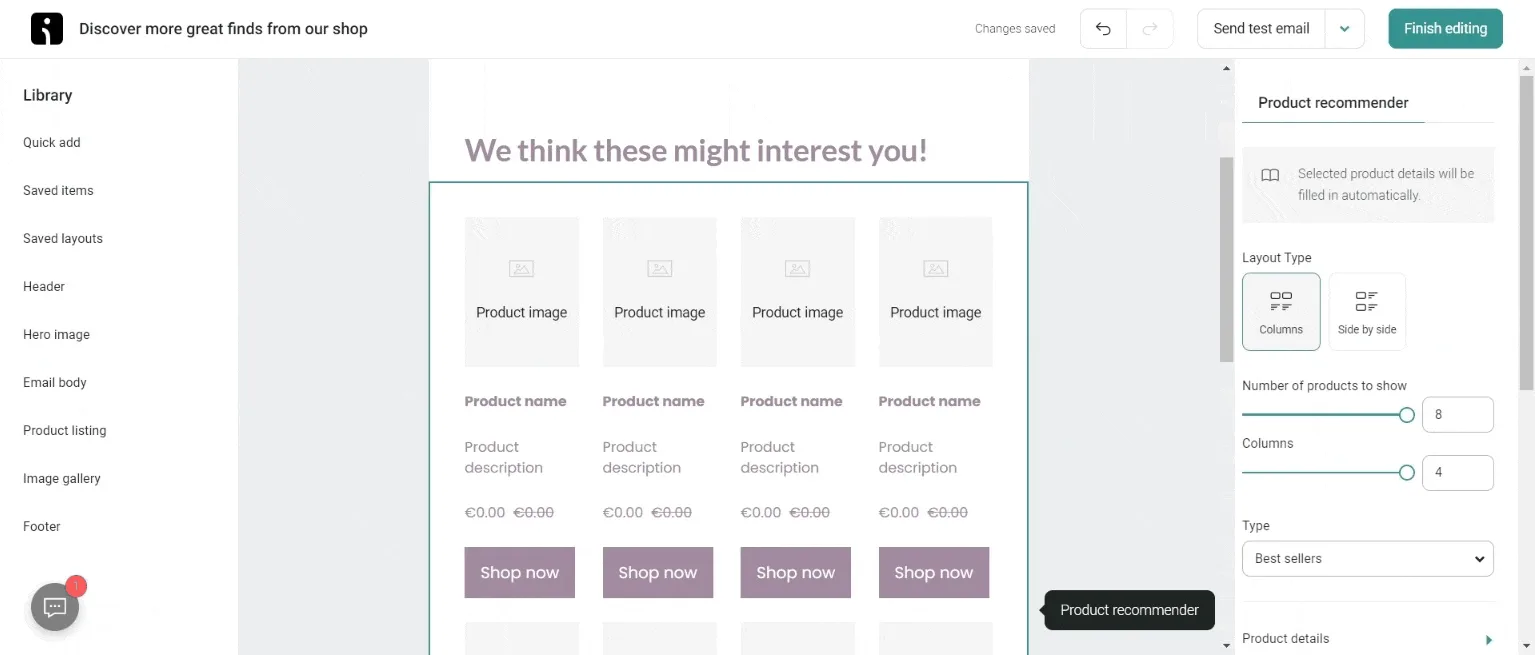
Modern email marketing platforms, such as Omnisend, provide sophisticated automation capabilities that streamline these processes. They allow businesses to segment audiences based on deep behavioral data, deploy dynamic content that populates product recommendations automatically, and conduct A/B tests to optimize campaign performance. Crucially, advanced features like Omnisend’s Product Recommender leverage AI to automatically select the most relevant items for each shopper, matching recommendations to their individual browsing and purchase behavior. This ensures that cross-sell and upsell blocks remain highly personalized and effective without requiring manual curation, making sales generation efficient and largely automated.
Conclusion: The Future of Customer-Centric Growth
Ultimately, upselling and cross-selling are far more than mere sales tactics; they are integral components of a customer-centric growth strategy. When executed thoughtfully and ethically, they serve to enrich the customer experience, build trust, and foster long-term loyalty. The key to their effectiveness lies in deep customer understanding, timely and relevant recommendations, and a consistent focus on delivering genuine value. By embracing strategies like narrowing choices, intelligent bundling, and psychological pricing, businesses can unlock significant revenue potential from their existing customer base. Furthermore, leveraging the power of automated email marketing, with its capacity for personalized, data-driven communication, ensures that these strategies are implemented efficiently and at scale. In an increasingly competitive market, mastering the art of value-driven upselling and cross-selling is not just an advantage—it is a strategic imperative for sustainable growth and enduring customer relationships.








