In the ever-evolving digital landscape, where content reigns supreme, the persistent challenge of writer’s block or a simple dearth of fresh ideas can be a significant hurdle for bloggers, marketers, and digital strategists alike. The imperative to publish regularly, maintaining audience engagement and search engine visibility, necessitates a robust and diversified approach to content ideation. Fortunately, a spectrum of methodologies, ranging from leveraging audience feedback and advanced SEO tools to harnessing artificial intelligence and real-world experiences, stands ready to transform creative stagnation into a wellspring of innovative content.
The digital realm thrives on fresh, relevant content. Studies consistently show that companies that blog regularly generate significantly more leads than those that do not. For instance, HubSpot’s research indicates that marketers who prioritize blogging are 13 times more likely to see a positive ROI. Yet, the pressure to consistently produce high-quality material often leads to creative fatigue. This article delves into a comprehensive set of strategies designed to combat this challenge, ensuring a continuous flow of compelling blog post ideas.
Leveraging Internal Data and Audience Insights
One of the most potent, yet often underutilized, reservoirs of content ideas lies within a blog’s existing ecosystem and its direct interaction with the audience.
Harnessing Audience Feedback for Direct Inspiration
Engaging directly with one’s readership provides an invaluable feedback loop. Comment sections on blog posts, social media interactions, and dedicated contact forms frequently yield questions, concerns, and topics that resonate deeply with the audience. While many responses might be simple affirmations or critiques, specific questions requiring detailed answers or clarifications often emerge. These queries, which might be too complex for a brief reply or tangential to the original post, are prime candidates for dedicated blog articles. Furthermore, proactive measures like distributing questionnaires or conducting polls among subscribers can systematically gather input, pinpointing areas of interest or confusion that the content has not yet adequately addressed. Maintaining a centralized log of these audience-generated questions ensures a ready reference point when inspiration wanes, providing a direct pipeline to reader needs.
Unlocking Content Gaps with Google Search Console
Google Search Console (GSC) remains an indispensable tool for content creators seeking to understand how users discover their site and what information they are seeking. Its Performance Report meticulously lists the exact search queries that lead visitors to a site, along with critical metrics such as clicks, impressions, and average rankings. By analyzing these queries, content strategists can identify topics that their audience is actively searching for but which their existing content may not fully cover. For example, if a parenting blog consistently ranks for queries like "how to keep toddlers busy without screens" but lacks a comprehensive guide on the subject, it signals a clear content gap and a significant opportunity to create highly relevant material. The integration of GSC data, often accessible directly within WordPress dashboards via plugins like Yoast SEO with Google Site Kit, streamlines this analysis, allowing for quick identification of keyword opportunities without toggling between platforms. While advanced SEO platforms like Ahrefs or Semrush offer deeper competitive intelligence and keyword research functionalities, GSC provides direct, authoritative data from Google, making it a foundational tool for understanding audience search behavior and informing content strategy.
Streamlining Ideation with AI: The Yoast AI Content Planner
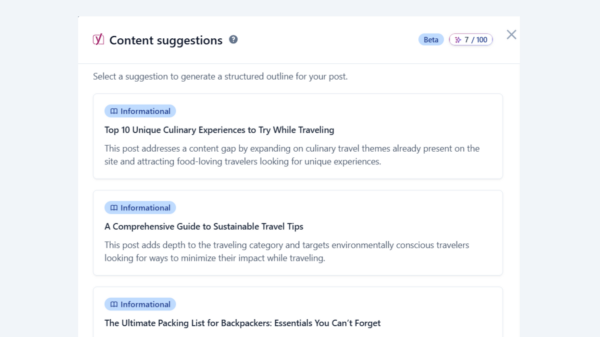
The advent of artificial intelligence has introduced powerful new tools to combat writer’s block. The Yoast AI Content Planner exemplifies this integration, offering a sophisticated solution for generating relevant blog ideas. This tool operates by analyzing a site’s existing content, identifying thematic gaps, and then suggesting five tailored blog ideas. Unlike generic AI prompts, the Yoast AI Content Planner’s suggestions are rooted in the specific context of a blog’s established content and audience interests. For instance, a food blog that has extensively covered meal preparation but has yet to explore "quick vegetarian lunches" might receive a prompt for that specific topic, ensuring relevance and strategic alignment. Upon selection of an idea, the planner can further assist by generating a structured draft, complete with a suggested title, headings, and meta description, thereby providing a clear framework to commence writing. This capability, included in Yoast SEO Premium products, significantly reduces the time spent on ideation and structuring, allowing content creators to focus on crafting high-quality prose.
Deepening Keyword Research for Topical Authority
Beyond simply identifying keywords, a profound understanding of search intent is paramount for generating impactful blog ideas. A comprehensive keyword research document is a treasure trove of potential topics, but the key lies in discerning the underlying user need. Tools like Yoast SEO’s Semrush integration, Google’s autocomplete suggestions, and the "People Also Ask" sections within search engine results pages (SERPs) are invaluable for this purpose. Furthermore, analyzing Google’s AI Overviews or AI Mode answers for specific keywords can reveal the types of information users expect.
Consider the keyword "best running shoes for flat feet." A superficial approach might yield a generic list. However, by probing deeper, one can uncover a multitude of related questions and sub-topics:
- What are the specific features of running shoes beneficial for flat feet?
- Are there different types of flat feet, and do they require different shoe types?
- How do brand X’s shoes compare to brand Y’s for flat feet?
- What are common mistakes people with flat feet make when buying running shoes?
Each of these questions can form the basis of a distinct, highly targeted blog post:

- "The Ultimate Guide to Running Shoe Features for Flat Feet"
- "Understanding Your Arch: Tailoring Running Shoe Choices for Different Flat Foot Types"
- "Brand Battle: A Comparative Review of Running Shoes for Flat Feet"
- "Avoiding Pitfalls: Common Mistakes When Buying Running Shoes for Flat Feet"
This meticulous approach ensures that content directly addresses user queries, enhances topical authority, and improves search engine ranking. Tools like Wincher, integrated with Yoast SEO, can then track the performance of these keyword-targeted posts over time, providing data-driven insights for future content optimization.
Harnessing External Digital Avenues for Creative Prompts
Beyond internal data, the vastness of the internet offers numerous external platforms for content inspiration.
Pinterest: A Visual Trend Spotter
Pinterest, often perceived primarily as a visual discovery engine, is a powerful tool for identifying trends and content gaps, particularly for visually oriented niches such such as food, DIY, fashion, travel, and home decor. By searching for broad terms like "[blog post ideas]" or "[what to blog about]" and then refining with niche-specific keywords (e.g., "[blog post ideas for parents]" or "[lifestyle blog ideas]"), creators can uncover popular themes and visual trends. Analyzing top-pinned posts and boards within these categories can reveal what content resonates most with a target audience. However, a word of caution is warranted: Pinterest can be a "clickbait" haven, and it’s easy to prioritize quantity or superficial appeal over genuine value. The focus should remain on identifying substantive topics that can be developed into high-quality, in-depth articles.
Content Idea Generators: Sparking Serendipity
Tools like Portent’s Content Idea Generator, while not designed to deliver ready-made article outlines, serve as excellent creative prompts. By inputting a core keyword (e.g., "house plant," "wine," "baby"), these generators produce quirky or unexpected title suggestions, such as "The 15 Biggest House Plant Blunders" or "17 Unexpected Uses for Wine." While these suggestions often require significant refinement, they are invaluable for breaking mental blocks and encouraging unconventional thinking. A seemingly whimsical suggestion like "20 Ideas You Can Steal From Babies" can be transformed into a practical post on life lessons, productivity hacks, or parenting insights, demonstrating how a creative leap can turn an abstract idea into actionable content.
AI and Chatbots: The Intelligent Brainstorming Partner
The new generation of AI chatbots, including ChatGPT, Claude, and Gemini, has revolutionized brainstorming. To maximize their utility, specificity and context are crucial. Instead of generic prompts like "Give me blog ideas about parenting," a more effective approach involves providing detailed parameters:
- "As a parenting blogger specializing in conscious parenting for children aged 3-6, generate five unique blog post ideas focusing on emotional regulation strategies."
- "Given a broad topic like ‘sustainable living,’ help me narrow it down to five specific, actionable blog post ideas for urban dwellers with limited space and budget."
- "Analyze the top five blog posts from [Competitor’s Blog URL] and suggest three content gaps or alternative angles my blog could cover that they haven’t."
It is vital to avoid producing "commodity content"—generic, easily replicated ideas that lack unique value. AI’s strength lies in generating foundational ideas; the content creator’s role is to infuse these with unique perspectives, personal experiences, original data, or specialized insights. For example, transforming a generic "10 tips for better sleep" into "My Journey to Better Sleep: How I Hacked My Routine Using These 5 Science-Backed Methods" adds authenticity and a unique narrative voice.
Days Of The Year: Tapping into Cultural Relevance
Websites like "Days Of The Year" offer a surprisingly rich source of topical inspiration by cataloging an array of fun, bizarre, and significant holidays. This resource allows bloggers to connect their niche to broader cultural events, often with a humorous or unexpected twist. For example, "Unicorn Day" (April 9th) could inspire posts for fantasy-themed blogs or even a marketing blog on branding magic. "Towel Day" (May 25th) presents opportunities for travel bloggers (e.g., "The Essential Travel Towel Guide") or lifestyle bloggers ("How to Keep Your Towels Luxuriously Soft"). By aligning content with these specific days, bloggers can tap into trending discussions and inject novelty into their publishing calendar.
Learning from Other Blogs and Fellow Bloggers
The digital ecosystem is inherently collaborative. Following influential bloggers within one’s niche or exploring diverse blog feeds can spark new ideas. Engaging in professional Facebook groups or online forums dedicated to blogging or specific industries fosters a sense of community and provides platforms for discussing ideas. While inspiration is encouraged, plagiarism is not. The objective is to identify successful content approaches, thematic trends, or unanswered questions within the broader blogging community and then craft unique, original content that offers a distinct perspective, always giving credit where due.
Drawing Inspiration from Life and Experience
Some of the most authentic and resonant content originates from personal experiences and observations of the world.
Connecting Current Events to Niche Topics
Current events offer a dynamic source of content ideas, provided they can be meaningfully linked to a blog’s niche and audience interests. The strategy, often termed "newsjacking," involves contextualizing breaking news or ongoing discussions within one’s area of expertise. For instance, a parenting blog could address a new study on screen time with a post titled "Beyond the Headlines: What the Latest Screen Time Research Means for Your Family." A personal finance blog could analyze changes in tax legislation, advising readers on "Navigating New Tax Rules: Three Strategies to Protect Your Savings." Setting up Google Alerts for industry-specific keywords ensures timely awareness of relevant developments. When addressing sensitive topics, it is crucial to maintain an objective, informative tone, focusing on providing value and actionable advice rather than merely exploiting a trend.
Mining Daily Life for Authentic Stories
Everyday experiences, professional challenges, and personal anecdotes can form the bedrock of relatable and engaging blog posts. Documenting solutions to common problems encountered in one’s work or personal life, or even discussing challenges faced by clients or colleagues, can resonate with readers facing similar predicaments. Authenticity is a powerful draw. However, when incorporating real-life situations, particularly those involving others, ethical considerations regarding privacy and confidentiality are paramount. For example, a therapist writing about mental health tips must rigorously anonymize client cases, altering names and specific details to protect privacy and maintain professional integrity. Transparency and respect for privacy are non-negotiable.
Clearing the Head for Fresh Perspectives
Persistent creative blocks often stem from mental fatigue and overthinking. Stepping away from the screen and engaging in unrelated activities—a short walk, household chores, or a brief exercise—can effectively reset the mind, allowing ideas to emerge organically without forced effort. A structured "brainstorming sprint" can also be highly effective: setting a timer for ten minutes and rapidly jotting down twenty ideas related to a topic, categorizing them (e.g., five weird, five practical, ten in-between), encourages divergent thinking. Following this, a five-minute freewriting session on the most compelling idea can quickly generate initial content, breaking the cycle of procrastination.
The Indispensable Idea List
The simplest yet most effective defense against writer’s block is a continuously updated list of ideas. Creative inspiration is often sporadic; brilliant ideas can strike at inconvenient moments. Whether maintained digitally on a mobile device or as a physical notebook, this list serves as a repository for every fleeting thought, observation, or potential topic. On days when creativity feels absent, this pre-curated list provides an immediate starting point, transforming moments of uninspiration into productive writing sessions.
Strategic Implications and Future Outlook
The consistent application of these diverse content ideation strategies holds significant implications for a blog’s overall success. A steady stream of high-quality, relevant content not only keeps existing audiences engaged but also serves as a powerful engine for organic traffic acquisition through improved search engine rankings. By addressing specific user queries, leveraging AI for efficiency, and infusing content with unique perspectives and real-world relevance, blogs can build topical authority and establish themselves as trusted resources within their niches.
The evolving role of AI in content creation signifies a shift from mere idea generation to intelligent content planning and drafting. As AI tools become more sophisticated, they will continue to empower content creators, reducing the administrative burden and allowing more focus on creative refinement and strategic differentiation. The future of content creation will likely involve a symbiotic relationship between human creativity and artificial intelligence, where AI provides the framework and efficiency, and human insight injects the unique voice, empathy, and critical analysis that truly resonates with an audience.
Conclusion
Overcoming writer’s block and maintaining a dynamic content calendar is a multi-faceted challenge requiring a blend of analytical tools, creative techniques, and a proactive mindset. From the direct insights gleaned from audience feedback and the analytical power of Google Search Console, to the innovative suggestions from AI-driven planners and the serendipitous prompts from external digital avenues, a wealth of resources exists. By integrating these strategies, content creators can ensure a continuous flow of fresh, engaging, and SEO-optimized blog posts, transforming creative plateaus into launchpads for sustained digital growth and audience connection. The key lies in adopting a flexible, experimental approach, consistently seeking new sources of inspiration, and never underestimating the power of a well-maintained idea list.