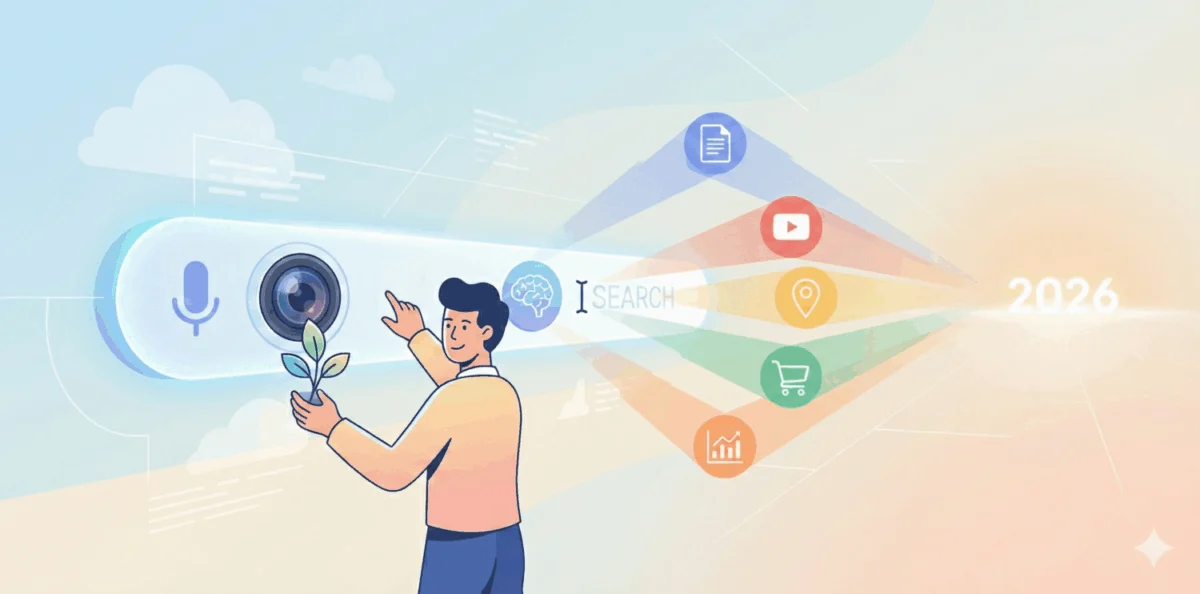
The landscape of online information discovery is undergoing a profound and rapid transformation, moving far beyond incremental optimization cycles or new ranking factors. Artificial Intelligence (AI) systems are fundamentally altering how individuals find answers, engaging directly with user queries and maintaining contextual memory across interactions. This seismic shift heralds the obsolescence of traditional SEO playbooks, ushering in an entirely new paradigm for marketing teams. By 2026, as AI-driven discovery becomes deeply embedded in everyday search behavior, marketing strategies will necessitate a radical re-evaluation.
The Evolution of Search: A Chronology of Disruption
For decades, online search was synonymous with the "ten blue links" – a ranked list of web pages responding to explicit keyword queries. Google’s dominance, established through sophisticated algorithms like PageRank, shaped an entire industry around optimizing for these results. However, the seeds of change were sown years ago with advancements in semantic search, natural language processing (NLP), and machine learning.
The timeline of this disruption can be traced through several key developments:
- Early 2010s: Google’s Hummingbird update (2013) marked a significant move towards understanding conversational queries and the meaning behind searches, rather than just keywords.
- Mid-2010s: The rise of voice assistants like Siri, Alexa, and Google Assistant introduced conversational interfaces, prompting search engines to deliver direct answers more frequently.
- Late 2010s: Google’s BERT (Bidirectional Encoder Representations from Transformers, 2019) and later MUM (Multitask Unified Model, 2021) dramatically enhanced the ability to understand complex, nuanced queries and synthesize information across modalities (text, image, video). These models laid the groundwork for generative AI applications.
- 2022-Present: The public release of large language models (LLMs) like OpenAI’s ChatGPT (November 2022) catalyzed a widespread understanding of generative AI’s capabilities. This was swiftly followed by integrations into major search platforms: Microsoft’s Copilot (formerly Bing Chat) powered by OpenAI, and Google’s Gemini and its "AI Overviews" (initially Search Generative Experience, SGE). These systems moved beyond merely indexing web pages to actively generating answers, summarizing information, and engaging in multi-turn conversations.
This rapid evolution signifies a departure from a single gateway controlled by one dominant engine towards a more complex "search ecosystem." While Google continues to set the tone, the influence of platforms like ChatGPT, Gemini, and Perplexity as primary information discovery tools is undeniable. Reports from industry analysts indicate a growing preference among users for conversational AI for tasks ranging from quick facts to complex research, with adoption rates for AI tools surging globally. This shift mandates a strategic pivot for marketers, moving from optimizing for clicks to ensuring content is discoverable and trustworthy within these evolving AI frameworks.
Prediction 1: AI Answer Engines Will Become the Default Search Experience
By 2026, the traditional "ten blue links" will recede into a secondary role. AI Answer Engines, exemplified by Google’s AI Overviews, ChatGPT, Gemini, and Perplexity, will increasingly handle the initial pass at information discovery. These systems assemble answers from diverse sources – publisher content, brand-owned assets, and third-party reference materials – weighing their credibility and synthesizing coherent responses. This means content can influence outcomes without generating a direct click.
The fundamental redefinition of SEO and content marketing lies in this shift from "ranking first" to "being retrievable and trusted as input." Visibility is no longer solely about page position; it’s about content quality that AI systems deem worthy of citation. Consequently, structured data (e.g., Schema markup), clear sourcing, and explicit signals of expertise (E-E-A-T: Experience, Expertise, Authoritativeness, Trustworthiness) transition from best practices to absolute necessities. The breadth of a brand’s presence – how consistently it is published and recognized as an authority across various channels – will significantly impact its likelihood of being cited. Content not explicitly designed for citation will struggle to appear where decisions are being made. This necessitates a proactive strategy where content is crafted not just for human readers, but for AI comprehension and synthesis, ensuring accuracy, conciseness, and verifiable claims.
Prediction 2: Search and Recommendation Will Collapse Into a Single Discovery System
The academic distinction between "search" and "recommendation" is rapidly dissolving. AI systems are becoming adept at inferring user needs before they are explicitly articulated. This convergence is already evident across platforms: YouTube proactively queues relevant explainers, LinkedIn surfaces posts aligned with professional roles, TikTok predicts engaging content within seconds, and Amazon anticipates purchasing needs.
For marketers, this presents both opportunities and risks. High-quality content – a sharp industry analysis or a meticulously designed explainer – can now reach its intended audience without a single keyword being typed into a search bar, traveling far beyond traditional search results. However, content that is not "legible" to these AI-driven recommendation systems or fails to align with platform-native signals will effectively become invisible. Data suggests that a significant portion of online content consumption is now driven by algorithmic recommendations rather than direct searches. This mandates a strategic shift towards designing content for "inferred need," requiring a deep understanding of how different platforms evaluate relevance, creating content in native formats (e.g., short-form video for TikTok, detailed articles for professional networks), and accepting that discovery is increasingly mediated by systems deciding for users. Marketing teams must broaden their understanding of discovery beyond search engines to encompass the entire digital ecosystem where AI-powered recommendations prevail.
Prediction 3: Personalization Will Get a Memory
A significant advancement in AI platforms is the integration of persistent conversational history and user-level memory. ChatGPT, Gemini, and Perplexity now recall past interactions, saved preferences, and accumulated context, profoundly shaping the content recommended to users. This means an individual who has previously explored a topic at an advanced level will receive different results than a novice. Past clicks, conversational patterns, and expressed interests all influence the AI’s output, leading to unprecedented audience fragmentation.
This level of personalization means the same query from two different users could surface entirely distinct content based on their individual "memory profiles." Repeat searchers will encounter increasingly tailored results reflecting their established preferences and expertise. To navigate this fragmented landscape, marketers must adopt modular content strategies. This involves creating content designed for various knowledge levels (e.g., beginner, intermediate, expert) and structuring it as a logical progression with clear entry points and deeper follow-ons. Importantly, content must contain explicit signals that help AI systems understand its intended audience and complexity level, ensuring the right material is surfaced to the right user at the right stage of their discovery journey. This demands a move away from one-size-fits-all content towards an adaptive, user-centric content architecture.
Prediction 4: Attribution Models Will Break, but New KPIs Will Emerge
The rise of AI search is severing the traditional, click-based path from search to conversion, making it increasingly difficult for brands to ascertain how their content influences purchasing decisions. This breakdown necessitates a radical rethinking of measurement, as clickthrough rates (CTRs), long a foundational metric for search performance, become less reliable primary KPIs. Many conversions will occur via pathways that bypass traditional tracking mechanisms.
In response, a new suite of metrics is emerging to fill this void. "Citation frequency" – how often AI systems reference a brand’s content – is gaining prominence as a meaningful signal of influence. "Model recall rates," "excerpt usage patterns," "structured data adoption," and "dwell time within AI-generated summaries" offer valuable insights into content performance in this new environment. Perhaps the most critical competitive benchmark will be "share of answers," analogous to "share of voice" in PR. This metric will quantify how frequently a brand appears in AI-generated responses relative to its competitors. Performance teams and forecasting models must integrate these novel signals, developing frameworks that capture influence and brand presence even when direct, last-click attribution proves impossible. This shift requires sophisticated analytics capabilities and a strategic move towards measuring engagement and authority at a systemic level rather than purely transactional ones.
Prediction 5: Authority Signals Will Become the New Ranking Factors
As LLMs become more discerning about sourcing and citation quality, traditional SEO factors are being supplanted by authority signals as the primary determinants of visibility. Trust, verifiable accuracy, and demonstrable expertise are now the currency that dictates whether a brand’s content is surfaced at all. This shift directly reflects AI systems’ increasing emphasis on verifiable claims, named experts, publication transparency, and clear information provenance.
"High-signal pages" – those rich in facts, specificity, structure, and consensus alignment – will receive preference over high-volume content lacking depth or originality. Model training updates, retrieval layers, and safety guardrails are all pushing AI systems towards "safe precision," rewarding brands that substantiate their claims with robust evidence and penalizing those that do not. The era of thin aggregation, keyword stuffing, and generic SEO filler content is rapidly drawing to a close.
For marketers, this means substance will consistently outweigh scale. Original research, direct quotes from subject matter experts, and proprietary first-party insights are already gaining substantial value. Brands must invest in credentials such as detailed author bios, proper citations, transparent disclosure statements, and rigorous expert review processes. The emphasis on human expertise, credibility, and thoughtful storytelling is becoming a significant competitive advantage, a sentiment echoed by recent discussions in leading publications about the increasing demand for "storytellers" in corporate environments. Investing in genuine thought leadership and verifiable quality is no longer optional; it is foundational for AI-driven visibility.
Preparing for the Search Landscape Ahead
The ongoing transformation of search presents both an immense challenge and an unparalleled opportunity. Marketing teams that cling to outdated legacy approaches will find their strategies increasingly ineffective as AI reshapes information discovery. Conversely, those who adapt swiftly and strategically will position their brands for sustained organic growth and enhanced influence in the coming years.
The imperative to prepare is immediate. Organizations must audit their existing content for "answer-readiness," ensuring clarity, specificity, and factual defensibility. Investing in structured data implementation and strengthening expertise signals across all content assets is paramount. Furthermore, it is crucial to build new measurement frameworks that capture influence and brand presence beyond traditional clicks, embracing metrics like citation frequency and share of answers. The search landscape of 2026 is actively being shaped today, and the strategic foundations laid now will unequivocally determine a brand’s visibility and impact in the impending AI-driven discovery era. This is not merely an update; it is a paradigm shift demanding fundamental strategic and operational adjustments across the entire marketing function.