The FIFA World Cup 2026 has emerged not only as a pinnacle of global athletic competition but also as a profound case study in strategic management, resilience, and the unpredictable nature of high-stakes environments. As the tournament unfolds across North America, the event’s narrative—marked by the expansion to a 48-team format and a series of high-profile upsets—offers critical insights that extend far beyond the pitch. For professionals in the digital economy, particularly within the affiliate marketing sector, the parallels between world-class soccer and performance-based advertising are striking. Both fields demand a blend of individual excellence and systemic cohesion, a respect for emerging competitors, and a commitment to continuous evolution in the face of a rapidly shifting landscape.
The 2026 World Cup: A Landmark Event in Global Sports
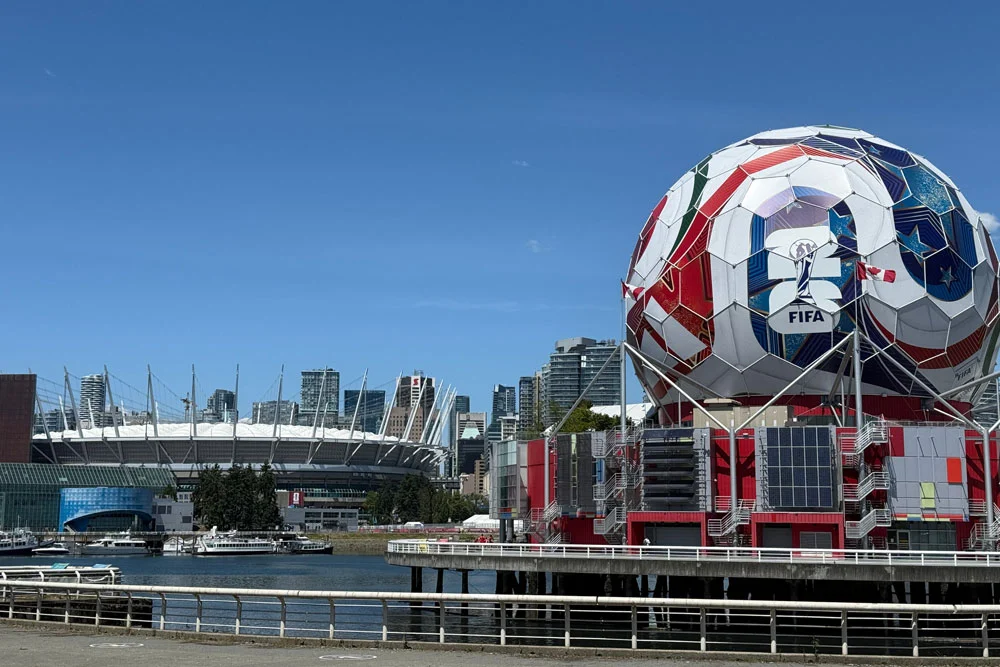
The 2026 iteration of the FIFA World Cup represents a historic milestone, being the first tournament hosted by three nations: the United States, Canada, and Mexico. This expansion to 48 teams, up from the traditional 32, has fundamentally altered the tournament’s dynamics, increasing the total number of matches to 104 and extending the duration to 39 days. This structural shift was designed to broaden global participation, but it has also introduced a higher degree of volatility and opportunity for smaller nations to challenge the established footballing elite.
The economic impact of the tournament is projected to exceed $5 billion, with viewership expected to shatter previous records as digital streaming platforms integrate more deeply with traditional broadcasting. For marketing professionals, the tournament serves as a microcosm of the global marketplace, where visibility is hard-won and brand loyalty is tested at every stage of the competition.
Chronology of a Tournament Defined by Disruption
The road to the 2026 finals was paved with significant shifts in the international football hierarchy. The qualification rounds saw the shocking exclusion of Italy, a four-time champion whose failure to qualify for a second consecutive tournament sent ripples through the sporting world. This set the stage for a tournament defined by the fall of giants and the rise of the "underdog."
In the Group Stage, the debutant side from Curaçao delivered one of the tournament’s most discussed results, a 0-0 draw against a seasoned Ecuador team. As the competition progressed into the knockout phases, the Round of 32 witnessed the exit of the Netherlands at the hands of Morocco, continuing the North African side’s reputation as a "giant-killer." Perhaps the most significant upset occurred in the Round of 16, where Norway, returning to the World Cup stage after a nearly 30-year hiatus, eliminated Brazil. Concurrently, Egypt demonstrated tactical brilliance by leading 2-0 against the defending champions, Argentina, for the majority of their encounter, further proving that historical prestige does not guarantee contemporary success.
The Power of Collective Effort: Why Individual Talent Falls Short
One of the most enduring lessons from the 2026 World Cup is that individual genius, while necessary, is insufficient to secure victory in a highly competitive system. This was exemplified by the exits of legendary figures such as Croatia’s Luka Modrić and Portugal’s Cristiano Ronaldo. Despite their storied careers and undeniable skill, they were unable to carry their respective teams past more cohesive units like Portugal and Spain in the later rounds.
In the realm of affiliate marketing, this principle manifests in the structure of successful agencies and programs. A high-performing affiliate management agency is not defined by a single "star" account manager but by the collective strength and diverse skill sets of its entire team. The synergy between technical specialists, creative content strategists, and relationship managers mirrors the tactical coordination required on a soccer field.
Furthermore, the "team" in affiliate marketing extends to the base of affiliates themselves. Relying on a single "super-affiliate" or a lone marketing channel creates a single point of failure. Just as a soccer team needs a balance of defenders, midfielders, and strikers, an affiliate program must diversify its base. A robust program integrates various affiliate types, including:
- Content Creators and Influencers: Driving brand awareness and top-of-funnel engagement.
- Loyalty and Reward Portals: Ensuring customer retention and high conversion rates.
- Niche Review Sites: Providing the social proof necessary for high-consideration purchases.
- Coupon and Deal Aggregators: Capturing price-sensitive segments and closing the sale.
Data suggests that programs with a diversified affiliate base are 40% more resilient to market fluctuations and algorithm changes than those relying on a single traffic source.
Case Study in Disruption: The Rise of the Underdog
The 2026 World Cup has been a testament to the fact that "underdog" status is often a temporary label that can be shed through strategic execution. The performances of Egypt and Norway highlight a shift in the global game where access to data, improved coaching, and tactical discipline have narrowed the gap between traditional powerhouses and emerging nations.
This phenomenon is mirrored in the history of digital marketing, specifically within the "mattress-in-a-box" industry. In early 2017, when the affiliate program for Nectar Sleep was launched by AM Navigator, the market was dominated by established giants like Casper, Saatva, and Purple. These brands held significant market share and possessed deep-seated relationships with major affiliate partners.
However, through aggressive optimization and a focus on high-value affiliate partnerships, Nectar Sleep’s program underwent a meteoric rise. Within approximately one year of its launch, it ascended to the number one position on its affiliate network, surpassing over 5,000 other brands, including household names like Wayfair, Reebok, and the NFL.
This case study serves as a critical reminder for both incumbents and newcomers:
- For Leaders: Complacency is the precursor to decline. Being a market leader does not insulate a brand from agile competitors who leverage performance marketing more effectively.
- For Underdogs: Market entry barriers are frequently lower than they appear when a brand utilizes a highly targeted, data-driven affiliate strategy. Being an underdog is a starting position, not a permanent destiny.
Stagnation as the Ultimate Risk: Lessons from Football Giants
The absence of Italy from the 2026 World Cup and the early exits of Brazil and the Netherlands underscore the danger of resting on past laurels. In international soccer, teams that fail to adapt their tactical approaches to the modern, high-press, data-centric game often find themselves overtaken by more innovative squads.
The affiliate marketing landscape is similarly characterized by a "dynamic" nature. The industry is in a constant state of flux, driven by:
- Regulatory Changes: Evolving data privacy laws (such as GDPR and CCPA) that impact tracking and attribution.
- Technological Shifts: The deprecation of third-party cookies and the rise of AI-driven content generation.
- Consumer Behavior: The shift toward mobile-first commerce and the increasing importance of video content on platforms like TikTok and YouTube.
In this environment, what was profitable five years ago—or even one year ago—may no longer be viable. Success in affiliate marketing requires a commitment to continuous education and professional development. Industry observers note that the most successful program managers are those who frequently attend major industry conferences, such as the Affiliate Summit, to stay abreast of emerging trends and forge new partnerships.
Analytical Implications for the Future of Performance Marketing
The intersection of global sports and digital marketing reveals a broader truth about the modern economy: we are operating in an "Attention Economy" where the competition for consumer engagement is fierce and unrelenting. The 2026 World Cup has shown that viewers are increasingly drawn to narratives of disruption and excellence, regardless of the brand or country’s historical standing.
For businesses, the implications are clear. To thrive in the coming years, they must:
- Invest in Resilience: Build marketing ecosystems that can withstand the loss of a single partner or a shift in a single platform’s algorithm.
- Embrace Agility: Maintain the ability to pivot strategies quickly when an "underdog" competitor enters the space or when consumer trends shift.
- Prioritize Expertise: Recognize that performance marketing is a sophisticated discipline that requires specialized knowledge and a collaborative team approach.
As the FIFA World Cup 2026 moves toward its final matches in iconic venues like MetLife Stadium and the Azteca, the lessons of the tournament remain clear. Whether on the grass of a stadium or the interface of a digital platform, success is reserved for those who understand that teamwork, respect for the competition, and an unwavering commitment to evolution are the only true paths to victory. The "beautiful game" and the "dynamic industry" of affiliate marketing are both governed by the same fundamental laws: the moment you believe you have won is the moment you become most vulnerable to defeat.