The traditional model of product development—designing a solution in a vacuum and then spending millions on marketing to convince the public of its necessity—is undergoing a fundamental shift. At the forefront of this evolution is Yeet, a burgeoning dating startup that has bypassed conventional market research in favor of a decentralized, community-first approach. By establishing a presence on Discord well before its application was functional, Yeet successfully tapped into the collective frustrations of Generation Z, using real-time feedback to construct a product that addresses the specific psychological burdens of modern digital dating.
The Genesis of a Community-First Development Strategy
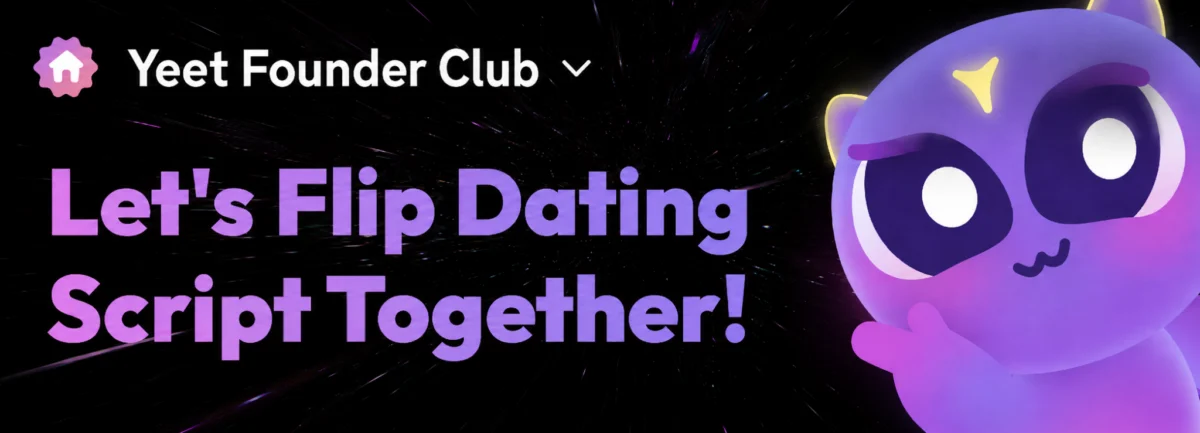
Before the first line of code for the Yeet dating app was finalized, the company launched its "Founder Club" on Discord. This move was a strategic departure from the standard "stealth mode" many startups adopt. Instead of keeping their intellectual property under wraps, the founders invited their target demographic—primarily Gen Z users—to a digital roundtable. The objective was not to pitch a finished product, but to identify the systemic failures of the current dating app landscape.
Penny Chen, Yeet’s co-founder and marketing lead, noted that the team intentionally avoided promoting their own preconceived notions of what the app should be. "We really built the app alongside our Discord community and received lots of feedback," Chen stated. This collaborative environment allowed the startup to operate as a listener rather than a broadcaster, a tactic that fostered a sense of ownership among the community members.
The recruitment process for this community was driven by organic outreach on platforms where Gen Z is most active. Utilizing short-form video content on TikTok and Instagram, Yeet highlighted the common "pain points" of online dating. Rather than showcasing flashy interface features, the content focused on the emotional and social friction points of the user experience. This resonated with an audience that has grown increasingly cynical of highly polished corporate branding.
Identifying the Core Problem: The Crisis of Swipe Fatigue
Through the Discord "Founder Club," one specific grievance emerged as a dominant theme: swipe fatigue. For nearly a decade, the "swipe" mechanic—pioneered by Tinder and adopted by dozens of competitors—has been the industry standard. However, data suggests that this gamified approach to human connection has reached a point of diminishing returns.
Market research indicates that nearly 80% of Gen Z dating app users report feeling emotionally exhausted or "burnt out" by the repetitive nature of swiping through endless profiles. The community on Yeet’s Discord server echoed these sentiments, describing the process as dehumanizing and inefficient. The feedback revealed a significant gap in the market for an experience that favored quality of interaction over the quantity of potential matches.

Responding to this data, Yeet’s developers pivoted away from the swipe-based model. Guided by the community’s input, they designed an architecture that utilizes an Artificial Intelligence (AI) agent to facilitate live, real-time conversations. Instead of a user spending hours judging photos, the AI identifies compatibility and connects two individuals for an immediate dialogue. This "zero-swipe" philosophy became the cornerstone of the Yeet value proposition.
A Chronology of Community Integration and Product Evolution
The development of Yeet can be mapped through a series of community-led milestones that transformed the startup from a conceptual framework into a functioning ecosystem:
- Phase I: The Listening Tour (Early 2023): The Discord server was established with a focus on open-ended channels. Users were encouraged to share their "dating horror stories" and critique existing platforms.
- Phase II: Quantitative Validation (Mid 2023): The team conducted internal surveys within the Discord community. One pivotal finding showed that 84% of the 1,600 members preferred real-time, synchronous connections over the asynchronous "match and wait" model of traditional apps.
- Phase III: Feature Stress-Testing (Late 2023): As the AI agent was being developed, the community expressed significant concerns regarding the role of AI. Users were wary of "dead bots" or AI that felt too intrusive. In response, Yeet limited the AI’s role to that of a facilitator—helping to break the ice and maintain conversation flow rather than making executive decisions for the users.
- Phase IV: Recognition and Incentivization: To maintain engagement, Yeet implemented a "badge" system. Users whose feedback led to direct changes in the app’s code or interface were awarded digital badges within the Discord forum, publicly acknowledging their contribution to the product’s DNA.
The Role of Authentic Moderation and Voice
A critical component of Yeet’s success on Discord was the rejection of traditional corporate communication. Large organizations often struggle with Discord because they attempt to apply the formal tone of a press release or a LinkedIn post to a platform that thrives on informality and "insider" culture.
Yeet addressed this by deploying Gen Z employees to act as the primary interface between the company and the community. These moderators did not function as customer service representatives in the traditional sense; they participated as peers. Chen emphasized that the moderators interacted "more like friends or college students."
This strategy eliminated the barrier between "the brand" and "the consumer." When a brand representative speaks the same vernacular and shares the same cultural touchstones as the audience, the feedback loop becomes more honest. Users are more likely to provide blunt, constructive criticism to a peer than they are to a faceless corporate entity.
Market Implications: The Shift Toward Co-Creation
The Yeet model offers a blueprint for how modern brands can navigate the complexities of Gen Z consumerism. Market analysts suggest that this "co-creation" model is becoming essential for brands targeting younger demographics who value transparency and participation.
According to industry data, Gen Z is 1.5 times more likely than older generations to want to participate in the development of the products they use. By inviting the audience into the "kitchen" during the development phase, brands can build a built-in user base of advocates who feel personally invested in the product’s success. This significantly reduces the cost of customer acquisition (CAC) because the community acts as a primary marketing engine through word-of-mouth and social sharing.

Furthermore, this approach serves as a form of "de-risking." By validating features with a dedicated group of 1,600 active users before a wide release, Yeet avoided the costly mistake of building features that the market did not want.
Broader Impact and Future Outlook
While Yeet’s immediate focus remains the dating market, the implications of its Discord-centric strategy extend to various sectors, including gaming, fintech, and education. The core lesson is universal: community is not just a marketing channel; it is a research and development asset.
Yeet has indicated that it intends to keep its Discord community relatively intimate, capping it at around 1,000 to 2,000 members to maintain the quality of the dialogue. The company is now looking toward Reddit as its next frontier for community engagement. However, the approach remains cautious. Chen noted that they do not plan to enter subreddits with aggressive self-promotion. Instead, the strategy is to "join the conversation first," build a reputation for being a helpful participant, and allow curiosity to drive users toward the app.
As AI continues to reshape the social landscape, the balance between technological automation and human-led community will be the defining challenge for startups. Yeet’s decision to limit its AI’s control based on community feedback suggests that the future of tech may not be about replacing human interaction, but about using technology to remove the obstacles that prevent it.
In an era of digital saturation, the most valuable currency for a brand is trust. By giving Gen Z a direct line to the "Founders Club" and actually building around what they heard, Yeet has secured more than just a user base; it has secured a partnership with its audience. This model of radical inclusion and active listening represents a significant departure from the "top-down" corporate structures of the past, signaling a more democratic future for product development in the digital age.