In the dynamic and rapidly evolving landscape of online commerce, e-commerce communities have emerged as indispensable hubs for knowledge exchange, strategic collaboration, and peer support. These platforms, ranging from free public forums to exclusive, application-only masterminds, offer a critical lifeline for entrepreneurs seeking to scale their ventures, overcome challenges, and stay abreast of industry trends. This comprehensive review delves into 15 of the most prominent and active e-commerce groups, offering insights into their unique value propositions and target audiences, as of August 2026.
The Rise of Collaborative E-commerce: A Background

The journey of e-commerce has transformed significantly since its nascent stages. Initially, online retail was often a solitary endeavor, with entrepreneurs navigating complex technical, marketing, and logistical hurdles in isolation. However, as the digital economy matured and competition intensified, the need for shared experiences and collective intelligence became paramount. The proliferation of digital communication tools—from early internet forums to modern Slack, Discord, and Facebook groups—catalyzed the formation of these communities. They serve as a crucial antidote to the isolation often experienced by founders, providing a space for real-world advice that theoretical guides cannot always offer.
Industry analysts frequently highlight the direct correlation between active community engagement and entrepreneurial success. A 2024 report by the Global E-commerce Foundation, for instance, indicated that small and medium-sized e-commerce businesses actively participating in peer communities reported a 15% higher growth rate and a 10% lower failure rate compared to their non-participating counterparts. This underscores the transformative power of collective wisdom in mitigating risks and accelerating progress within the competitive digital marketplace.
Why Community Matters: Addressing Key Entrepreneurial Challenges
E-commerce communities are designed to address three fundamental challenges faced by online store owners, marketers, and founders. Firstly, they provide access to real, hands-on knowledge and practice-based stories, enabling members to learn from the successes and failures of others. This practical insight is invaluable for navigating the complexities of building an excellent customer experience across the entire e-commerce customer lifecycle and avoiding common marketing mistakes. Secondly, these groups offer a platform for sharing and validating digital marketing statistics and strategies, moving beyond vague guesswork to data-driven decision-making. Members can discuss campaign performance, tool effectiveness, and market shifts with peers who understand the nuances of their business. Finally, and perhaps most importantly, e-commerce communities foster the opportunity to build genuine connections, mentorship relationships, and strategic partnerships. These networks can lead to invaluable advice, emotional support, and even collaborative business opportunities.
The formats of these communities are as diverse as the e-commerce landscape itself, including:
- Slack and Discord channels for real-time communication.
- Reddit forums for broad public discussion.
- Facebook groups for moderated, social interaction.
- Paid membership platforms offering exclusive content and networking.
- Application-only masterminds for high-level strategic exchange.
- In-person events and retreats for deeper personal connections.
Each format caters to different preferences and stages of entrepreneurial growth, ensuring that virtually every e-commerce professional can find a suitable environment for learning and growth.
Diverse Ecosystems: A Look at the Top 15 E-commerce Communities
The following communities represent a cross-section of the most popular and active groups for e-commerce professionals, categorized by their primary use case and target audience. All information presented is accurate as of August 2026, providing a current snapshot of these influential networks.
1. Ecommerce Equation: Coaching for Scaling Store Owners
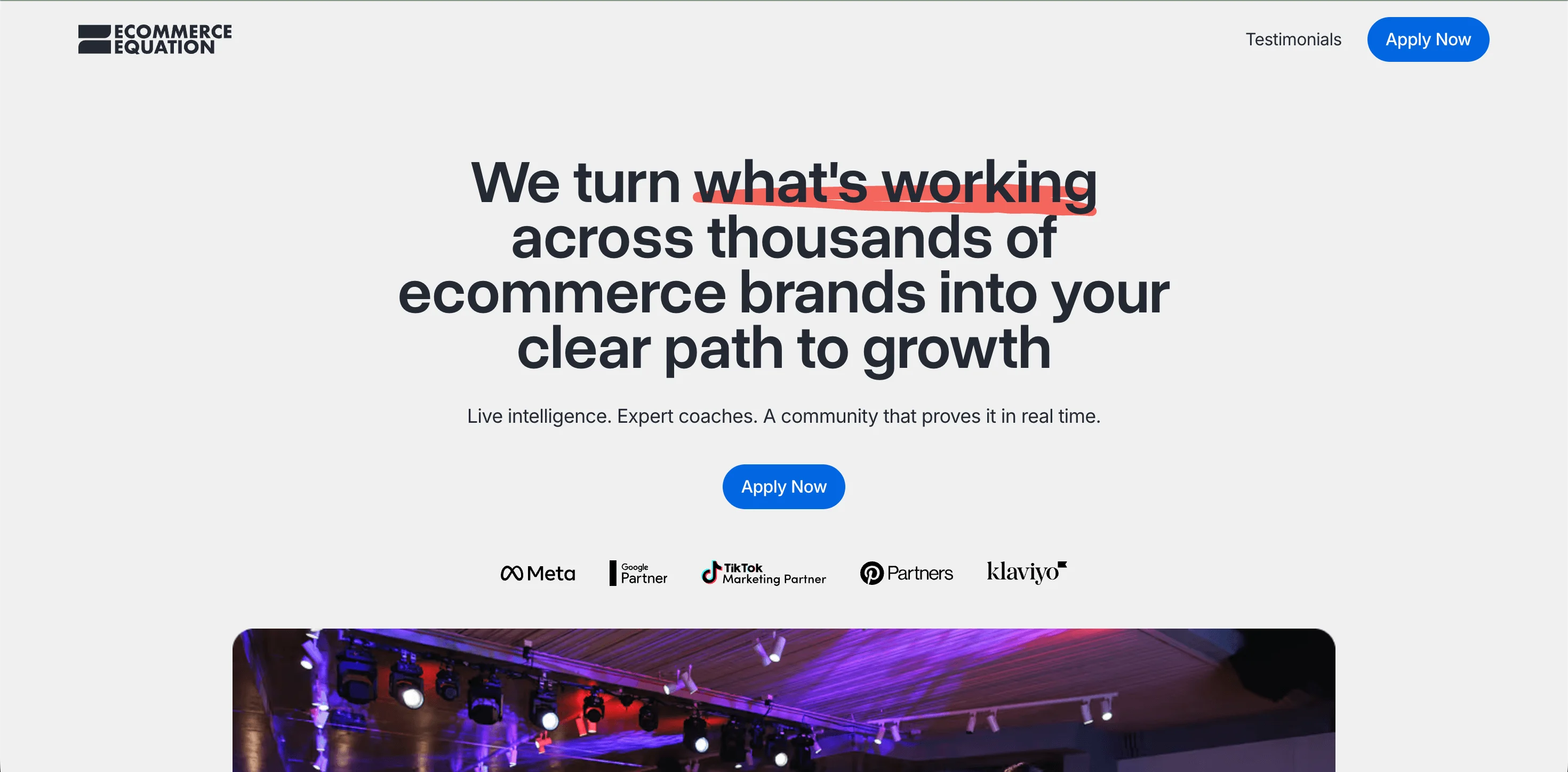
- Overview: Founded in 2019 by Jay Wright in Australia, Ecommerce Equation has rapidly expanded to serve over 4,000 international founders. It’s a growth program blending a private founder community with structured coaching focused on the pillars of e-commerce: traffic, conversion, margins, and scale.
- Target Members: Primarily designed for existing e-commerce businesses looking to scale.
- Format: Coach-led structure with weekly group meetings, one-on-one support, expert discussions, business templates, and a live revenue dashboard.
- Joining: Paid access, pricing available on request. Open globally.
- Benefits: Extensive network, reliable coaching, practical tools for growth. The emphasis on tangible metrics like COGS and contribution margin provides a data-driven approach often sought by scaling businesses.
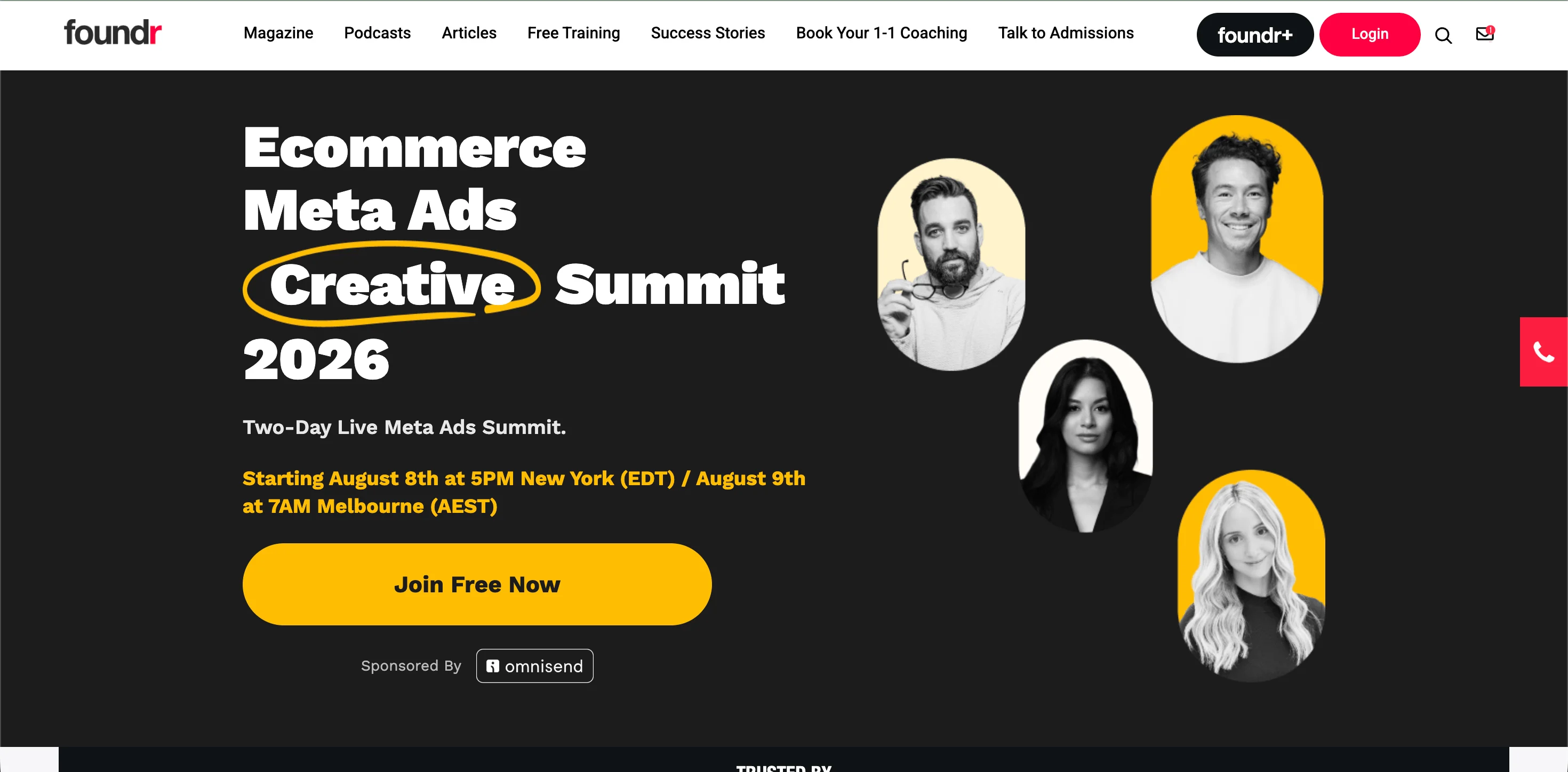
2. Foundr: Education and Community Ecosystem for Entrepreneurs
- Overview: Originating as an Australian magazine in 2013, Foundr has evolved into a comprehensive education platform featuring expert-prepared courses and an exclusive members-only community. It’s known for interviewing prominent founders like Richard Branson and Arianna Huffington.
- Target Members: Ideal for early- to mid-stage founders seeking structured lessons and peer advice.
- Format: Online membership site and mobile app for course access and member connection.
- Joining: Foundr+ membership is $99/month after a paid 14-day trial, with options to purchase individual courses.
- Benefits: Over 30 courses, direct community access, and mentorship from experienced practitioners. Foundr acts as a vital resource for foundational and advanced learning.
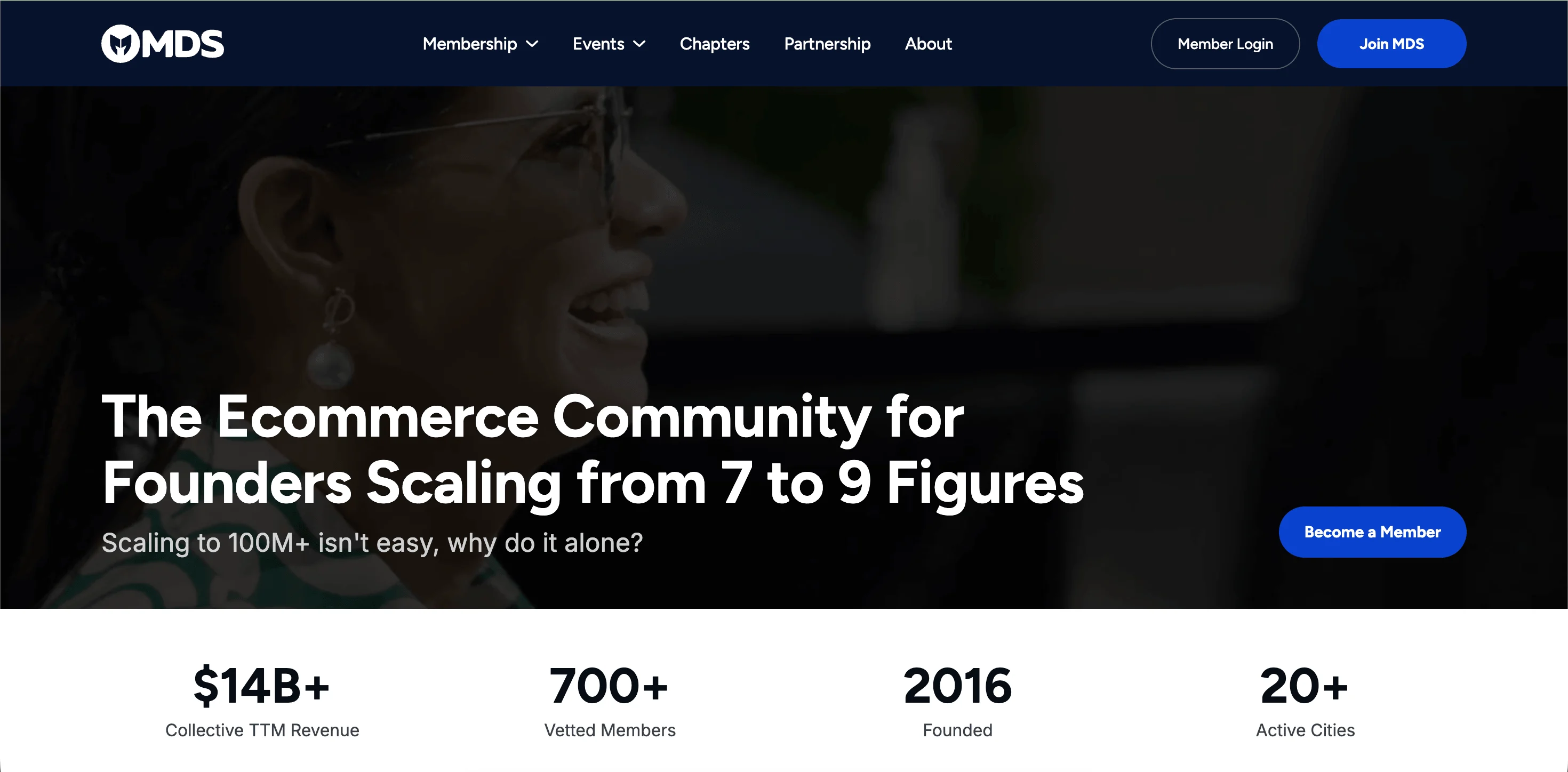
3. Million Dollar Sellers (MDS): Application-Only for 7-Figure+ Founders
- Overview: Co-founded by Ian Sells and Eugene Khayman between 2016-2017, MDS is an exclusive, application-only group for e-commerce businesses generating at least $1,000,000 in annual revenue. It boasts over 700 members from diverse e-commerce sectors (DTC, Amazon, retail, TikTok Shop) with collective revenues exceeding $14 billion annually.
- Target Members: Established founders and CEOs aiming to further scale revenue.
- Format: Global network primarily on Facebook, mobile app, and local in-person events.
- Joining: Requires a founder-led interview and proof of P&L ownership. Membership is $1,995 quarterly or $7,497 annually.
- Benefits: Access to a high-caliber network, private Facebook and WhatsApp groups, weekly live calls, and exclusive event invitations. The stringent entry requirements ensure a high level of peer quality and relevant discussion.
4. SHE-com: Community for Women in E-commerce
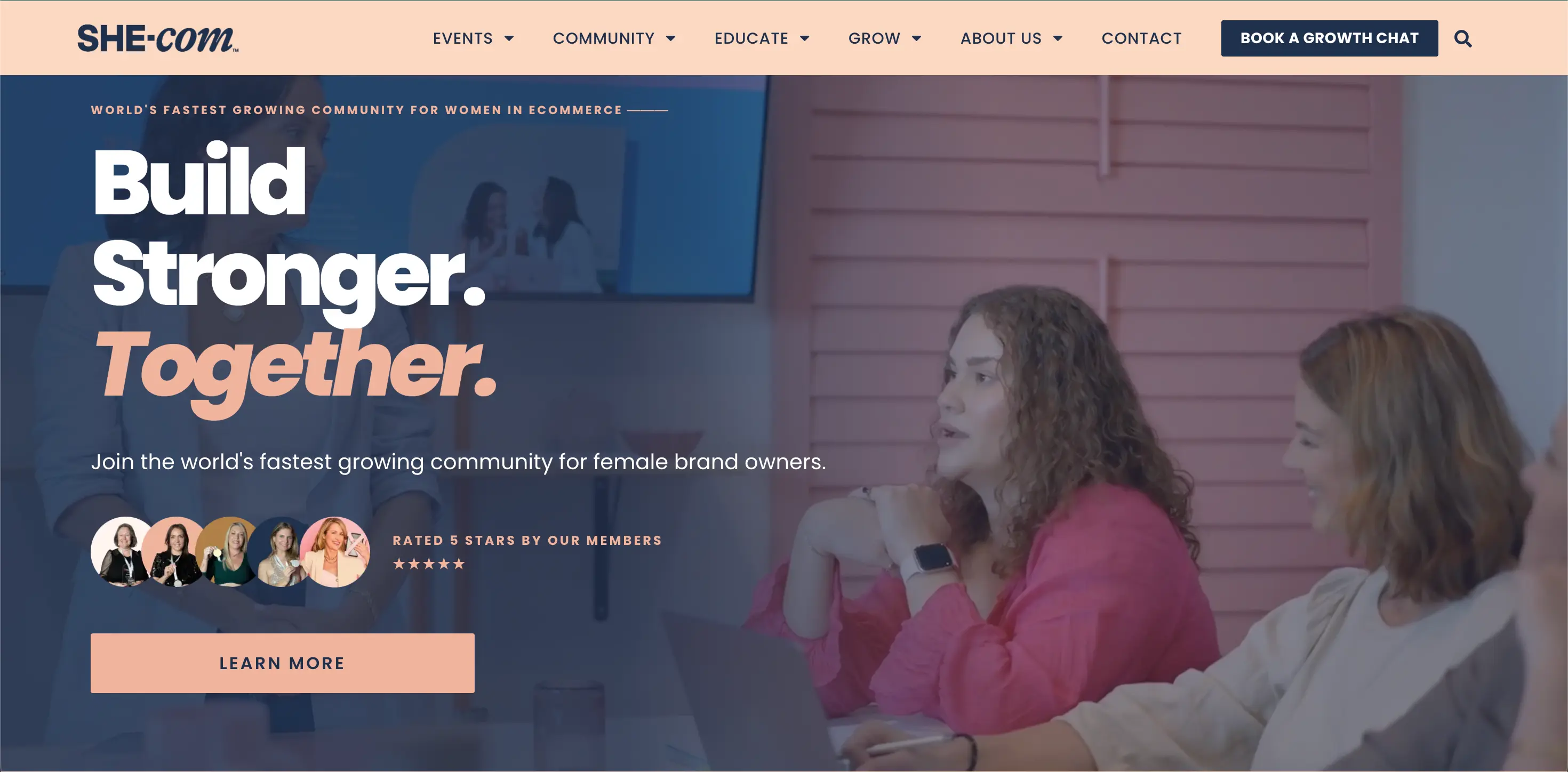
- Overview: Started in 2021 by Lisa Jones, SHE-com is an Australian-founded community for women running online product brands, now expanding internationally. It evolved from coaching services into a large community with extensive programs and live events across Australia.
- Target Members: Female founders and business owners at any stage, from nascent sellers to multi-million-dollar brands.
- Format: Coaching programs, private Facebook group, live events (SHE-com LIVE), and dinner meetups.
- Joining: Paid access through coaching program enrollment.
- Benefits: Dedicated support network for women, one-on-one coaching, retreats, and awards recognition, fostering a strong sense of camaraderie and shared experience.
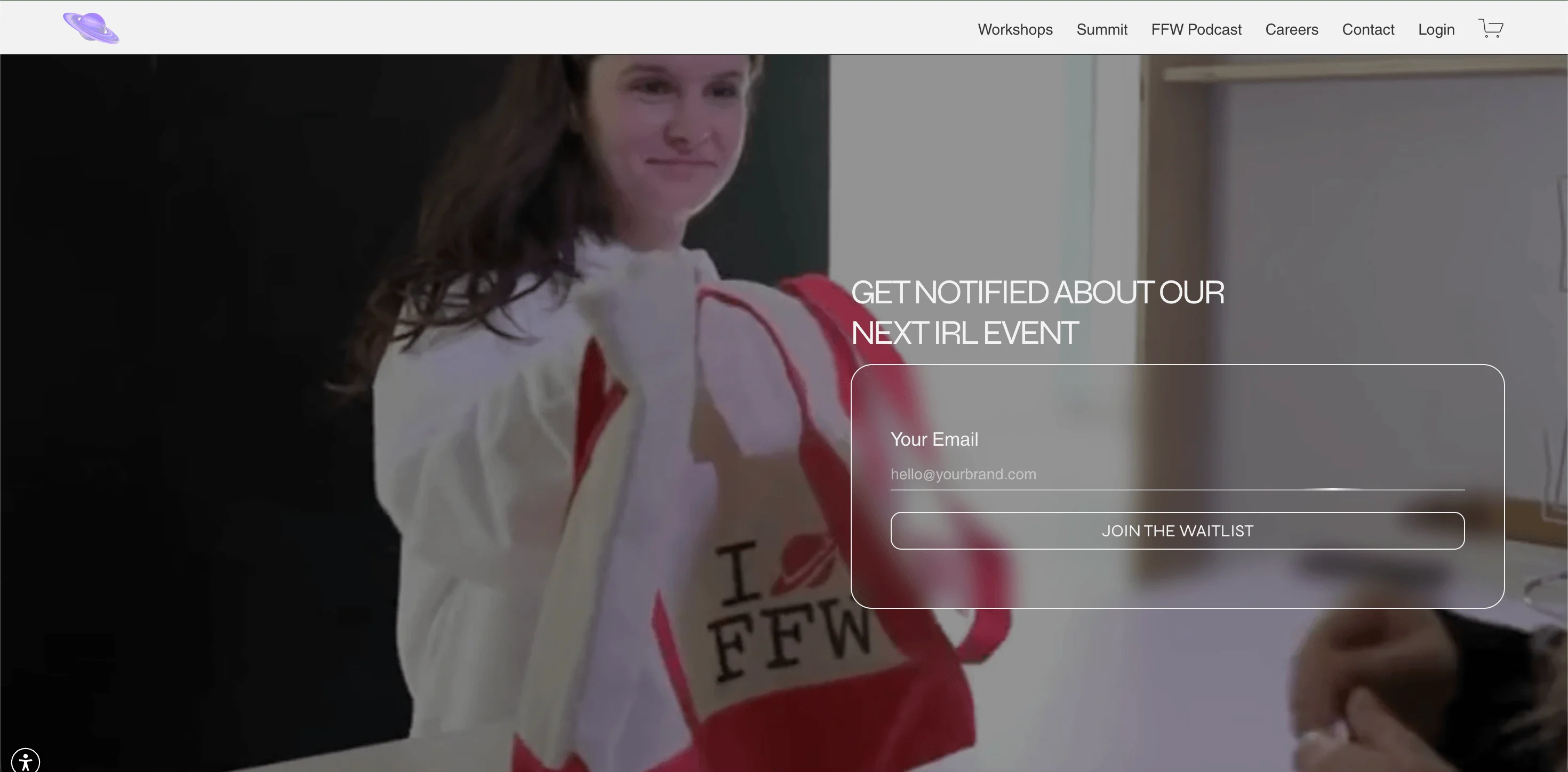
5. Female Founder World: Media Brand and Community for Women Building Consumer Brands
- Overview: Launched in 2021 by Jasmine Garnsworthy, Female Founder World is a media brand, iOS mobile app, and private platform designed to help women launch and scale businesses. It has over 4,000 members, a podcast, video workshops, and a paid membership community with regular live meetups.
- Target Members: Women building product-based or consumer brands seeking peer support.
- Format: Newsletter, iOS app, private platform with group chats, podcast, video workshops, and in-person meetups (US, UK, Australia).
- Joining: Free newsletter; paid "Business Bestie" tier for community access at $9/month.
- Benefits: A tight-knit community balancing business growth with genuine peer support, emphasizing connections over traditional networking.
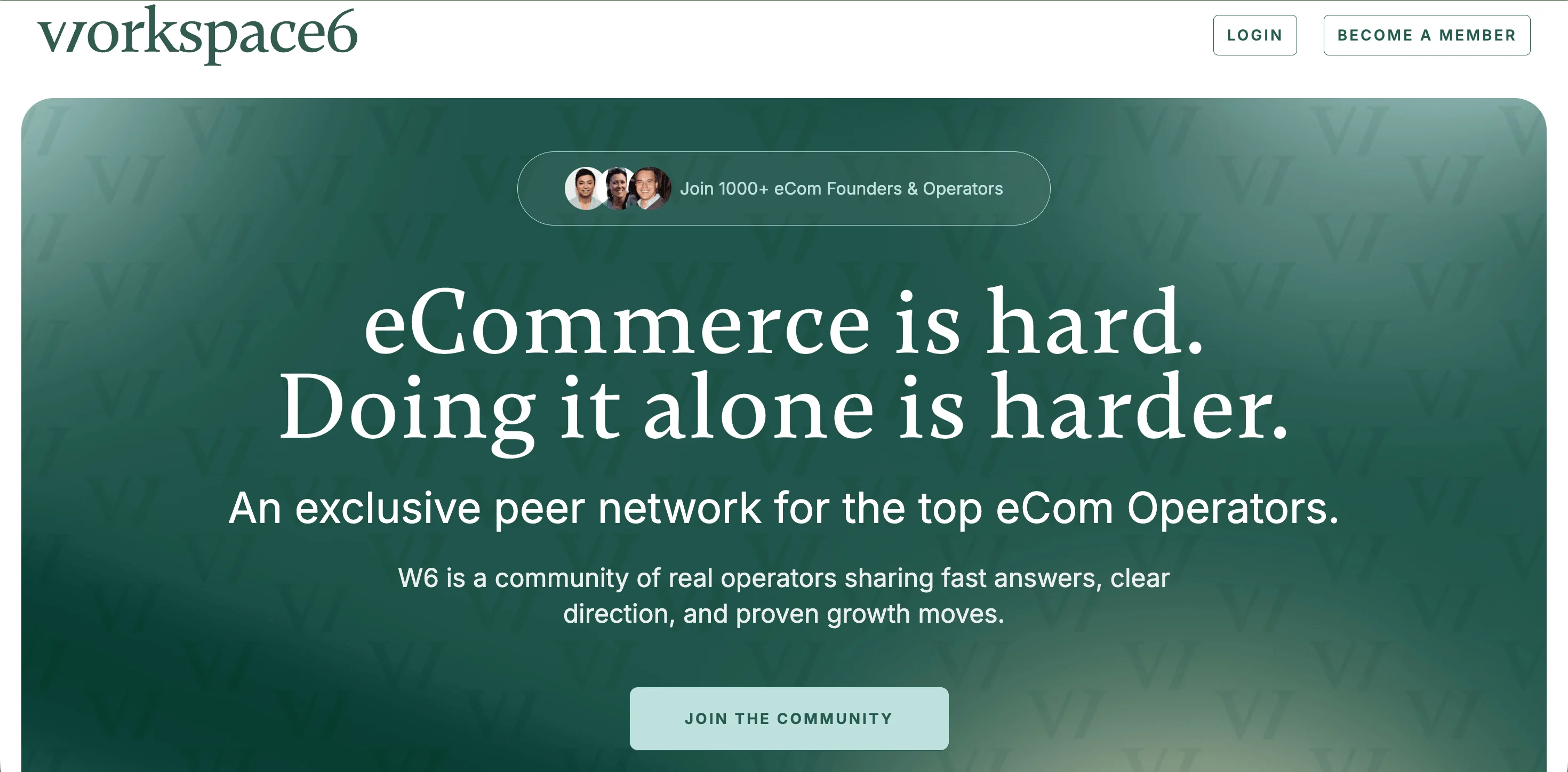
6. Workspace6 (W6): Private Community for Established E-commerce Operators
- Overview: Launched in 2022, Workspace6 is an invite-only, dedicated community for e-commerce brands generating seven-, eight-, or nine-figure revenues. With approximately 1,000 members, their combined annual revenue is $13 billion.
- Target Members: High-revenue e-commerce operators seeking an exclusive peer network.
- Format: Online via Slack and a mobile app, with in-person meetups globally.
- Joining: $1 for a 30-day trial, followed by a selective application process requiring seven-figure annual revenue.
- Benefits: Software discounts, a vetted contractor list, and access to a highly curated private Slack community, ensuring discussions are relevant to large-scale operations.
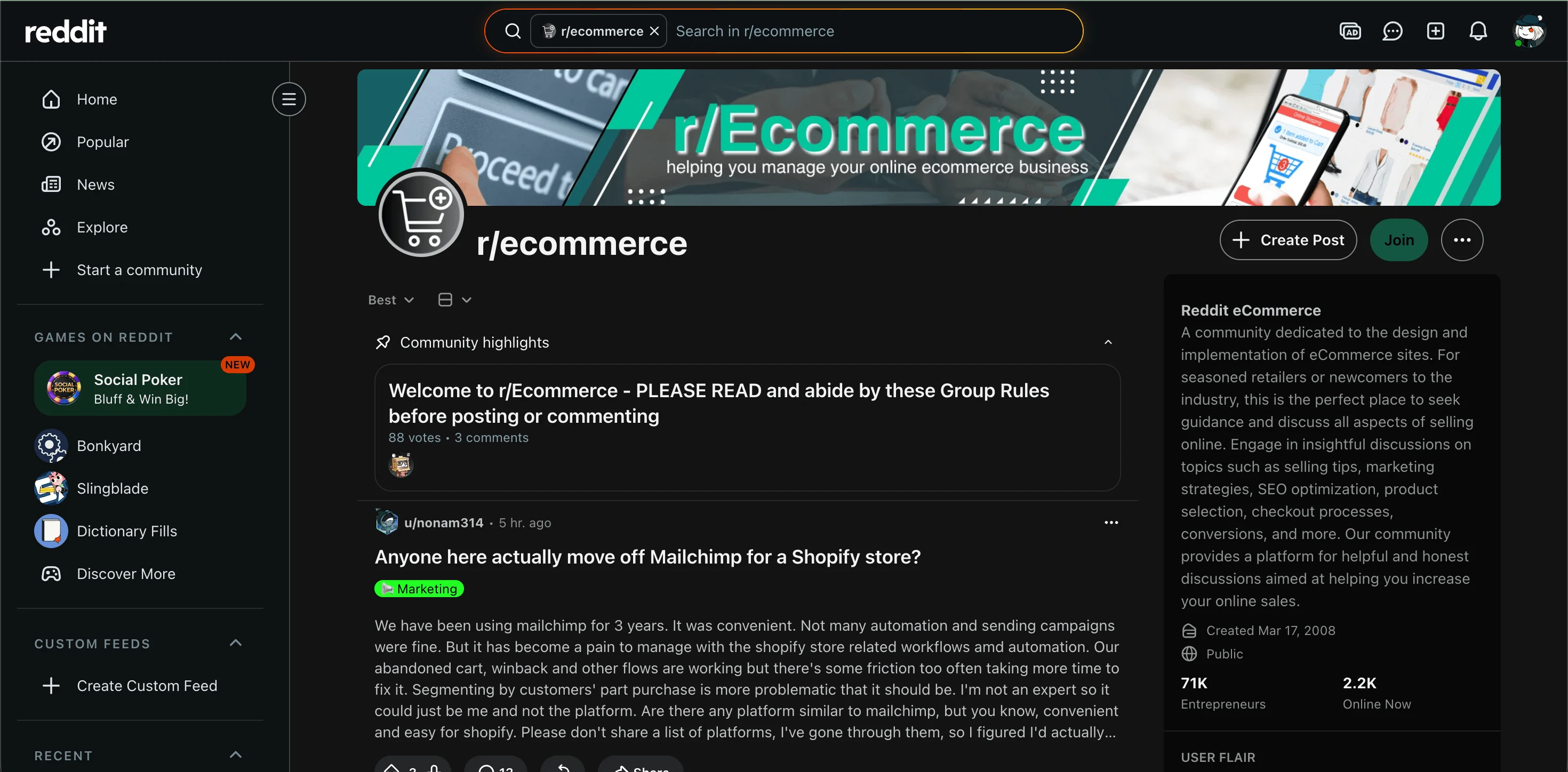
7. r/ecommerce: Large Free Reddit Community for Online Sellers
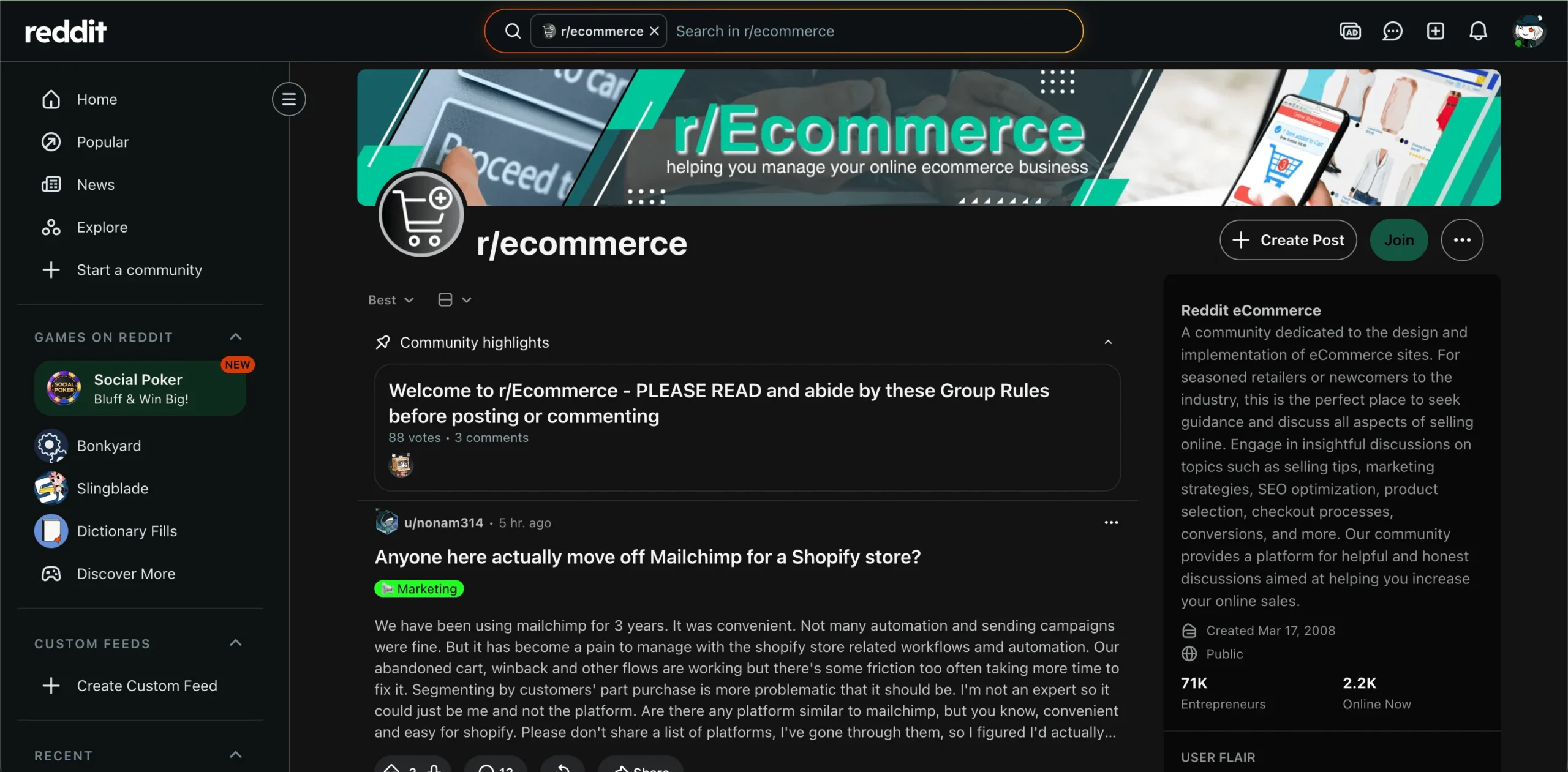
- Overview: Created in 2008, r/ecommerce is Reddit’s largest general e-commerce hub, boasting over 71,000 entrepreneurs. It’s a free, public forum for discussions on store operations, traffic, fulfillment, and conversion.
- Target Members: Sellers at any stage seeking quick, candid answers without formal application.
- Format: Reddit forum.
- Joining: Free, requires a Reddit account.
- Benefits: Unrestricted access to honest discussions, detailed troubleshooting threads, platform comparisons, and genuine takes on tools and tactics. It democratizes access to information for all.
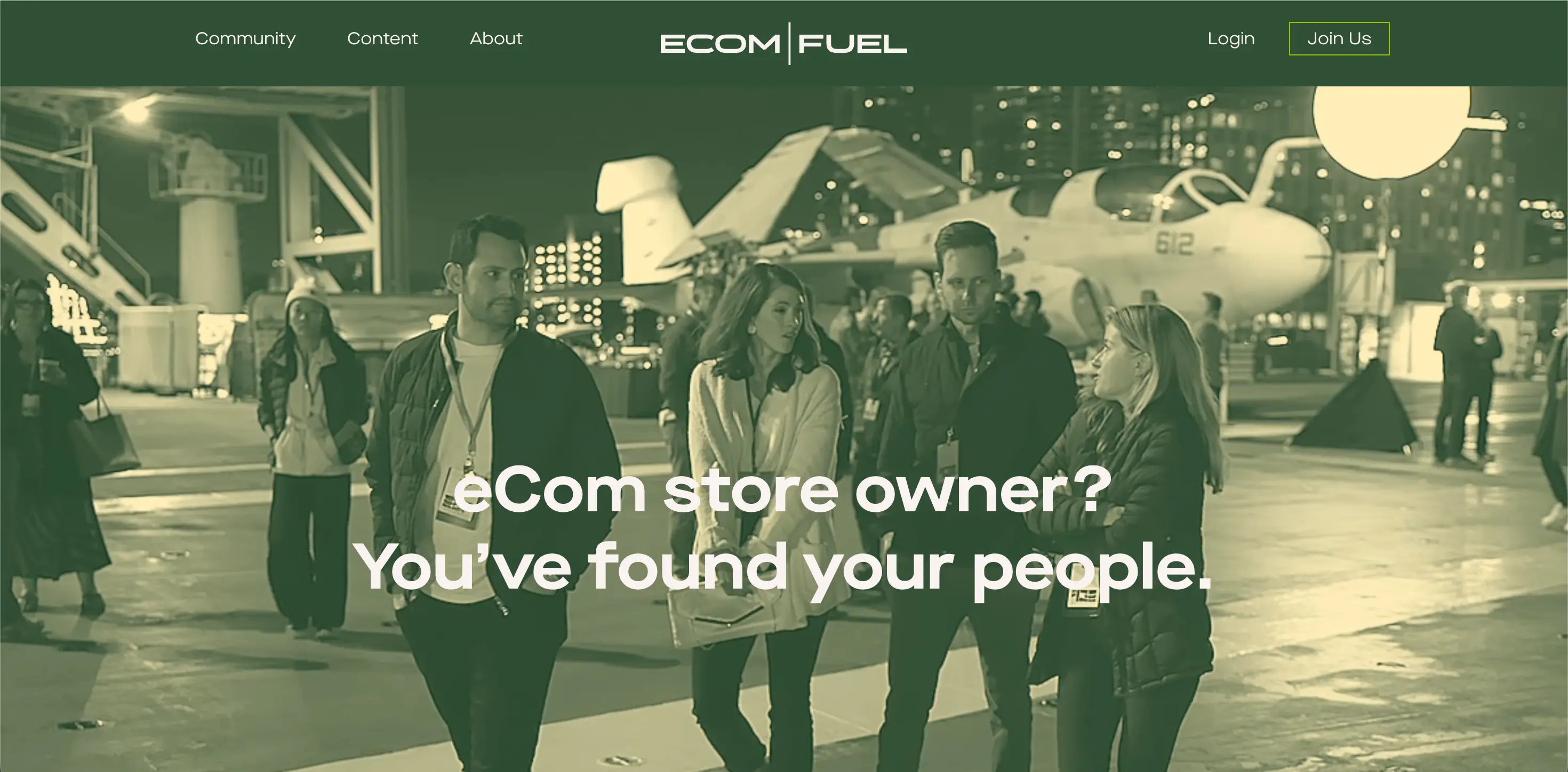
8. eComFuel: Vetted Forum for 7- and 8-Figure Store Owners
- Overview: Formerly eCommerceFuel, this private, paid forum was created in 2013 by Andrew Youderian for owners of independent e-commerce businesses doing at least seven figures annually. It has grown from 150 founding members to over 1,000 businesses. Youderian also hosts the eComFuel podcast.
- Target Members: Store owners who have moved past early stages and seek candid input from peers at similar revenue levels. Amazon-only sellers need $2,500,000+ to qualify.
- Format: Private forum, podcast.
- Joining: Membership is $199/month for 7-figure businesses and $299/month for 8-figure businesses. Requires at least 25% ownership of a business doing $1,000,000+ annually.
- Benefits: Forum access, a comprehensive review directory of software and agencies, member directory search, and exclusive event invitations.
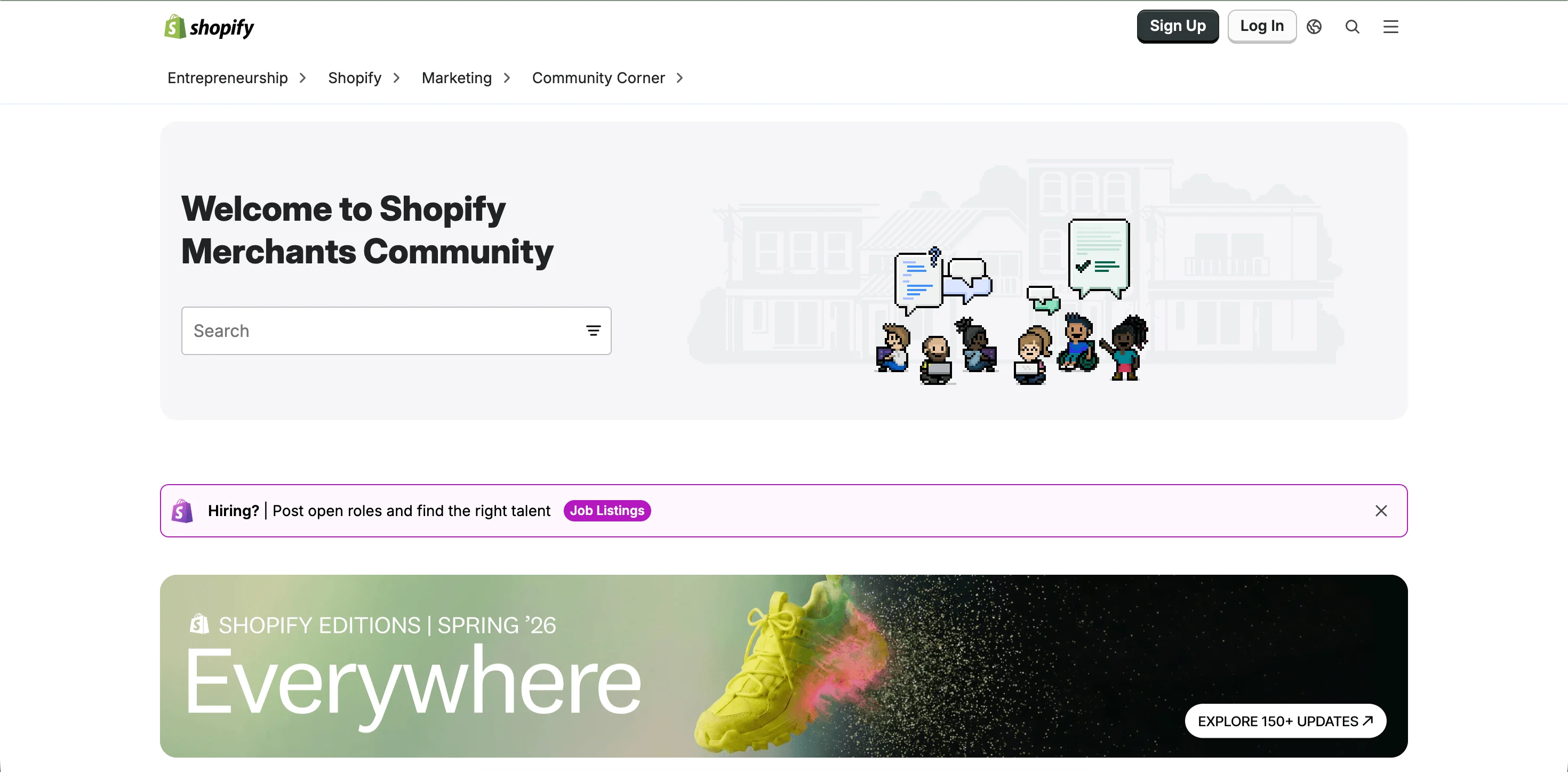
9. Shopify Community: Official Forum for Shopify Merchants
- Overview: Shopify’s official forum connects over 1,000,000 merchants, partners, and developers. It features topic-based boards covering everything from theme customization to marketing and shipping. An official Shopify Community Discord server also exists with over 11,000 members.
- Target Members: Shopify merchants of any size and stage.
- Format: Forum, Discord server.
- Joining: Free, requires a Shopify account.
- Benefits: Peer troubleshooting, official Shopify staff replies on some threads, and a vast archive of previously answered questions, making it an essential resource for the Shopify ecosystem.
10. EcomCrew Premium: Membership Community Built Around a Podcast
- Overview: Established in 2014, EcomCrew Premium pairs the long-running podcast hosted by seven-figure store owners Mike Jackness and Dave Bryant with a paid membership community and course library. It covers both Amazon and Shopify selling.
- Target Members: Sellers seeking mentorship-style access to experienced business owners and operators.
- Format: Private Facebook group, course library, monthly expert webinars.
- Joining: Paid membership, billed quarterly or annually, enrollment opens in quarterly windows.
- Benefits: Extensive library of full-length e-commerce courses, monthly expert webinars, and direct email support from the hosts, providing direct access to seasoned professionals.
11. Chew on This: DTC Media Brand and Events Community
- Overview: Founded in 2019 by Ron Shah and Ash Melwani (co-founders of Obvi), Chew on This is a direct-to-consumer (DTC) media brand and community. It combines a podcast, newsletter, and in-person founder networking events in major cities like New York and Los Angeles.
- Target Members: DTC and CPG founders who value open owner-to-owner content and in-person networking.
- Format: Newsletter, podcast, in-person events.
- Joining: Newsletter and podcast are free; event invitations are shared via newsletter and social channels.
- Benefits: Free access to high-value content and exclusive invitations to founder-only events and dinners, facilitating direct connections within the DTC space.
12. Ecom North: A Global Community of DTC Founders and Operators
- Overview: Started in Toronto in 2024 by Aditya Gullia, Nicasio Co III, and Sharif Virani, Ecom North has grown into a global community for DTC founders, with major meetings in cities including Toronto, Singapore, Los Angeles, and Melbourne. It also runs a year-round membership, "The Collective," for ongoing peer connections.
- Target Members: DTC founders, Amazon sellers, and TikTok Shop sellers who desire a blend of live events and an ongoing community.
- Format: Slack community ("The Collective"), conferences.
- Joining: Pricing available after sign-up; application reviewed to maintain community values, targeting founders with $1,000,000+ in revenue.
- Benefits: Access to "The Collective" private Slack space, event tickets, and direct connections to high-revenue founders, fostering a global network for scaling brands.
13. League of Originals: Membership for CPG and DTC Brand Builders
- Overview: Founded in 2022 in Los Angeles by Karolina Swietoniowska, League of Originals is a membership platform for founders of fast-growing Consumer Packaged Goods (CPG) and DTC brands. Its community includes fashion, wellness, beauty, home goods, and food and beverage brands.
- Target Members: Brand builders seeking mentorship alongside peer connection, primarily in CPG and DTC sectors.
- Format: Circle platform for content, private Slack channel, mentorship booking, and live events across four US cities, including an annual LA Summit.
- Joining: Pricing available after platform sign-up, no specific application requirements.
- Benefits: Members-only content, event access, and a private Slack channel, with the unique ability to book paid time directly with mentors, providing structured guidance.
14. Merchant Mastery: Coaching-Led Community for Shopify Store Owners
- Overview: Founded in 2017 by Scott Cunningham and Simon Trafford, Merchant Mastery is a training and coaching company specifically for Shopify merchants. Its curriculum details strategies for offers, conversion optimization, and high-ROI paid ads.
- Target Members: Shopify store owners, particularly those establishing their businesses or seeking structured guidance.
- Format: Dedicated Facebook group, course modules, weekly coaching calls, community-board Q&A.
- Joining: Varies by course or bundle; bootcamps run across North America.
- Benefits: Step-by-step curriculum, weekly coaching calls, and access to graduate-level coaching, offering a structured learning path with direct expert interaction.
15. Entreprenista: Membership Community and Media Network for Women Founders
- Overview: Started in 2018 by Stephanie Cartin and Courtney Spritzer, Entreprenista is a women-led membership community and media brand. Its "Entreprenista League" boasts over 4,000 members, complemented by a podcast network covering e-commerce topics.
- Target Members: Women founders across various industries, with a strong presence in e-commerce.
- Format: Facebook group, private Circle community platform, weekly live events, expert office hours, annual Founders Weekend retreat, Entreprenista 100 Awards.
- Joining: Paid membership; Lifetime Access Membership at $1,497 USD.
- Benefits: Robust community, access to experts, discounts on business tools, and significant networking opportunities with other women entrepreneurs, fostering a supportive and empowering environment.
Community Selection: Key Considerations for Entrepreneurs
Choosing the right e-commerce community is a strategic decision that can significantly impact a business’s trajectory. The initial filter should always be the business’s current revenue stage. Some communities cater exclusively to nascent startups, providing foundational knowledge and encouragement, while others offer highly specialized, exclusive memberships for established brands generating significant annual profits. This differentiation is critical for ensuring relevant discussions and valuable peer connections.
Beyond the revenue stage, several other factors warrant careful consideration:
- Activity Levels: A vibrant, active community ensures prompt responses and ongoing engagement. Stagnant groups offer little value.
- Format Fit: Determine if a forum, Slack channel, in-person events, or a mix best suits individual learning styles and networking preferences.
- Community Values: Aligning with a community’s ethos—whether it emphasizes aggressive growth, sustainable practices, or specific niche support (e.g., women founders, DTC)—is crucial for a positive experience.
- Cost vs. Value: Evaluate the membership fees against the perceived benefits, including access to experts, exclusive content, and networking opportunities. Free communities offer broad access, while paid ones typically provide more curated, high-value interactions.
- Geographic Focus: While many communities are global, some offer stronger local networks and in-person events, which can be a deciding factor for those seeking local connections.
Maximizing Community Engagement for Business Growth
Once an entrepreneur has selected a community, active and intentional engagement is key to extracting maximum value. Simply joining is not enough. Members are encouraged to introduce themselves openly, ask genuine questions—such as how to best approach new customer acquisition strategies—and consistently contribute to discussions. The brands behind the most successful e-commerce websites often attribute a portion of their success to leveraging shared experiences and insights from their networks. Consistency in participation and a willingness to both learn and teach are hallmarks of effective community members.
The Broader Impact: Fostering Innovation and Resilience
The proliferation and maturation of e-commerce communities signify a broader shift in the entrepreneurial ecosystem. They are democratizing access to high-quality business education and networking opportunities that were once only available through expensive consultants or exclusive industry circles. This, in turn, fosters greater innovation as diverse perspectives converge to solve common problems. By providing a safety net of shared knowledge and support, these communities contribute to the resilience of the e-commerce sector, enabling businesses to adapt more quickly to market changes and economic fluctuations. The collective intelligence harnessed within these groups is not just about individual business growth, but about strengthening the entire digital commerce industry.
Integrating Learning with Action: The Role of E-commerce Tools
Ultimately, the insights gained from participation in these communities must be translated into actionable strategies. The best e-commerce community for an individual can illuminate troublesome obstacles and provide solutions that would otherwise consume significant time and resources. Learning from experienced peers and mentors can significantly shorten the market entry timeline or accelerate scaling efforts.
As businesses grow and refine their strategies through community engagement, the next crucial step is to implement a sustainable growth plan supported by robust tools. Platforms like Omnisend offer all-in-one email and SMS marketing solutions designed to integrate seamlessly into any business workflow. Entrepreneurs can leverage their newly acquired knowledge to set up targeted automation flows, effectively grow their email lists, and ultimately scale their businesses. By combining community wisdom with powerful marketing technology, e-commerce founders are well-equipped to achieve sustained success, capitalizing on an impressive $79 ROI for every $1 spent on Omnisend’s marketing tools.