The landscape of corporate accountability and digital media has undergone a seismic shift this week as major industry players grapple with the consequences of brand safety failures, legal challenges regarding youth mental health, and the evolving economics of the creator economy. Callaway Golf, a titan in the sports equipment industry, has found itself at the center of a firestorm following the release of a controversial advertisement, prompting a comprehensive overhaul of its marketing protocols and a multi-million dollar commitment to social causes. Simultaneously, Meta Platforms Inc. has reached a historic settlement with dozens of U.S. states, signaling a new era of regulation for social media giants. These events, coupled with emerging trends in subscription fatigue and AI-driven search optimization, highlight a pivotal moment for brands navigating the complexities of the modern digital era.
The Callaway Crisis: From Marketing Misstep to Corporate Accountability
Callaway Golf’s recent public relations crisis serves as a stark reminder of the risks inherent in modern digital marketing and the speed at which brand reputation can be compromised. The controversy began when Callaway reposted a video advertisement featuring a male golfer physically shoving a woman to the ground after she considered touching his golf club. The ad, produced in collaboration with the popular YouTube collective Good Good Golf, was intended to be humorous but was immediately condemned by the public and advocacy groups for trivializing and normalizing violence against women.
In the immediate aftermath, Callaway’s initial response was criticized for being evasive and failing to take direct responsibility for the content it had distributed. However, as the backlash intensified, the company pivoted to a more robust and transparent crisis management strategy. On August 27, 2026, Callaway issued an updated, comprehensive statement acknowledging that its internal content review process was "not comprehensive enough" and that the video should never have been approved.
To demonstrate its commitment to rectification, Callaway has officially terminated its partnership with Good Good Golf, a relationship that had been in place since 2023 and was once seen as a cornerstone of the brand’s strategy to reach younger, digital-native audiences. Beyond the severance of this partnership, Callaway pledged $1 million to various organizations dedicated to preventing violence against women, supporting survivors, and providing educational resources. This move represents a significant shift from "apology culture" to "accountability culture," where brands are expected to attach tangible financial and structural consequences to their errors.
The company also announced "internal corrective actions" and a complete overhaul of its marketing approval process. Industry analysts suggest that this event may prompt other sports brands to re-evaluate their "bro-culture" marketing strategies, which often walk a thin line between edgy humor and offensive stereotypes. For Callaway, the path to regaining consumer trust will depend on the sustained implementation of these new standards and the transparency of its future philanthropic efforts.
Meta’s $18 Billion Settlement: Redefining Social Media for the Next Generation
While Callaway manages a brand safety crisis, Meta Platforms Inc. is navigating a legal and regulatory landscape that could fundamentally alter the functionality of Facebook and Instagram. Meta has agreed to a massive settlement, valued at up to $18 billion, to resolve claims brought by 48 U.S. states alleging that the company intentionally designed its platforms to be addictive to teenagers, thereby contributing to a national youth mental health crisis.
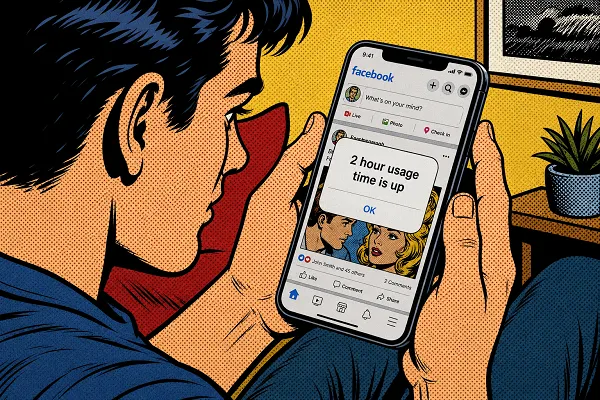
The settlement is one of the largest of its kind in the history of the tech industry and includes a series of mandatory product changes aimed at protecting users under the age of 18. Under the new agreement, teen accounts will default to a two-hour daily time limit. Furthermore, the apps will implement a "dark mode" or shutdown period between midnight and 6:00 a.m., and push notifications will be automatically silenced during school hours. Perhaps most significantly, like counts—a metric often cited by psychologists as a source of social anxiety and comparison among adolescents—will be hidden by default for younger users.
While Meta did not admit to any wrongdoing, the company’s defense highlighted a broader industry challenge. In its official response, Meta argued that restricting teens on a single platform often leads them to migrate to other, perhaps less regulated, apps. The company has called upon its peers in the social media space, including TikTok and YouTube, to adopt similar industry-wide standards.
The implications for brands and advertisers are profound. With teens spending less time on these apps and receiving fewer notifications, the "organic reach" that brands have relied upon for a decade is likely to diminish. Marketers will be forced to develop more sophisticated, less intrusive ways to engage with younger demographics, focusing on high-value content rather than high-frequency exposure. This settlement also sets a precedent for how state governments can use consumer protection laws to force changes in tech product design, potentially leading to similar lawsuits against other silicon valley firms.
The Subscription Fatigue Phenomenon: Challenges for the Passion Economy
The digital publishing world is facing its own reckoning as the "Substack era" hits a plateau. For several years, Substack has been the premier platform for independent journalists and creators to monetize their audiences through direct subscriptions. However, recent data and analysis from industry veterans like Scott Carney suggest that the platform is struggling with a growing problem: subscription fatigue.
While Substack has successfully expanded its features to include video, livestreaming, and social networking tools (such as Substack Notes), these innovations have not necessarily translated into increased revenue for individual writers. The core issue lies in the finite nature of consumer spending. With the average consumer already paying for multiple streaming services, news outlets, and software subscriptions, the willingness to pay an additional $5 to $10 per month for an individual newsletter is reaching a breaking point.
Carney argues that Substack’s recent push toward becoming a social-media-style discovery engine may actually be detrimental to the "paid" model. When readers can access a wealth of free content and interact with writers through social features, the incentive to cross the "paywall" diminishes. This creates a paradox where a writer’s follower count may grow exponentially while their paid subscriber base remains stagnant or even declines.
For brands and creators, this trend highlights a critical distinction between audience size and audience value. High engagement on a free tier does not guarantee financial sustainability. As the subscription model faces headwinds, many creators are looking back toward diversified revenue streams, including advertising, sponsored content, and high-ticket "community" tiers, rather than relying solely on the mass-market subscription model that defined the early 2020s.
The Rise of Creator-First AEO: Influencing the AI Narrative
As traditional search engine optimization (SEO) continues to evolve, a new frontier is emerging: Answer Engine Optimization (AEO). With more users turning to Large Language Models (LLMs) like ChatGPT, Claude, and Google’s Gemini for information, brands are searching for ways to ensure these AI tools recommend their products and speak about them in a positive light.
A new partnership between the marketing agency Influencer and the AI platform Profound has introduced "Creator-First AEO." This strategy recognizes that LLMs are trained on vast datasets of human-generated content, including video transcripts, social media captions, and blog reviews. By strategically deploying creator content that is informative, keyword-rich, and authoritative, brands can effectively "seed" the datasets that AI models use to generate answers.
Ben Jeffries, CEO of Influencer, notes that the goal is to move beyond simple reach and engagement. Instead, brands are now looking to create "evidence" that shapes the AI’s understanding of a product. If a hundred different creators on YouTube and TikTok describe a specific skincare product as the "best for sensitive skin," AI models are likely to synthesize that information and provide that specific recommendation when a user asks, "What is the best skincare for sensitive skin?"
This shift represents a significant evolution in influencer marketing. It moves the discipline from a purely promotional tool to a foundational element of a brand’s digital identity and searchability. Brands are now tasked with ensuring that creators aren’t just showing a product, but are describing its features and benefits in a way that is easily digestible for AI crawlers.
Conclusion: Navigating a More Complex Digital Ecosystem
The events of this week—ranging from Callaway’s hard-learned lessons in brand safety to Meta’s massive regulatory settlement—underscore the increasing complexity of the global media landscape. For corporate leaders and communicators, the takeaway is clear: transparency and proactive accountability are no longer optional. Whether it is addressing a marketing failure or adapting to new regulations protecting children, the "move fast and break things" era is being replaced by an era of "move carefully and build trust."
As subscription models face fatigue and AI changes the way consumers find information, the value of authentic, high-quality content has never been higher. Brands that can navigate these shifts—by prioritizing ethics, respecting user boundaries, and understanding the technological underpinnings of the modern web—will be the ones that thrive in an increasingly scrutinized and competitive marketplace.