The bar for B2B SEO tools has undeniably shifted, moving beyond the traditional goal of achieving page-one rankings to a more sophisticated mandate: actively driving pipeline and attributable revenue. This transformation is largely fueled by the rapid integration of artificial intelligence into search, where B2B buyers are increasingly discovering vendors not through conventional search engine results pages (SERPs), but via AI-generated answers. While a strong Google ranking remains crucial, visibility within AI search environments has become equally, if not more, critical for B2B teams aiming for traffic that translates directly into conversions and sales opportunities.
The Shifting Paradigm of B2B Marketing and Search

For decades, the bedrock of Search Engine Optimization (SEO) revolved around keyword density, backlinks, and technical site health, all geared towards securing top positions on Google’s search results pages. Success was often measured by organic traffic volume and keyword rankings. However, the B2B marketing landscape, characterized by longer sales cycles, multiple decision-makers, and a premium on demonstrable ROI, has always demanded more than just visibility. B2B purchases are rarely impulsive; they involve extensive research, comparison, and consensus-building across various departments, from end-users to finance teams. This inherent complexity has continually pushed B2B marketers to seek deeper connections between their SEO efforts and tangible business outcomes.
The advent of generative AI has fundamentally reshaped this dynamic. AI-powered search experiences, such as Google’s Search Generative Experience (SGE), ChatGPT, Perplexity, and Gemini, are increasingly providing synthesized answers directly to user queries, often citing sources but sometimes bypassing traditional organic listings. Industry reports, such as "Inside the B2B Buyer’s Mind 2025," indicate a significant trend towards buyers commencing their vendor discovery process through these AI interfaces. This means that a brand’s presence in an AI-generated summary can now serve as the critical first touchpoint, effectively redefining what "visibility" means for B2B companies.
This evolution necessitates a strategic pivot for B2B SEO specialists. Their focus must expand to include "AI Engine Optimization" (AEO), ensuring their content is not only crawlable and rankable by traditional search algorithms but also understandable, citeable, and favorably represented by large language models (LLMs). Crucially, the ultimate goal remains consistent: generating qualified leads and contributing directly to the sales pipeline. Marketing teams are under increasing pressure to map their content to complex buying journeys and unequivocally demonstrate SEO’s contribution to revenue, a considerable challenge when decision cycles can span months or even years.

Core Capabilities for Modern B2B SEO Tools
To navigate this intricate new environment, B2B SEO tools must offer a sophisticated suite of functionalities that extend far beyond basic keyword tracking. Key stakeholders across finance, sales, and marketing, alongside the actual practitioners, must collectively evaluate tools based on their capacity to deliver these five core capabilities:
-
Intent-Filtered Keyword Research: B2B buying journeys are multi-faceted, involving distinct stages of awareness, consideration, and decision. Effective keyword research for B2B must therefore go beyond raw search volume, identifying terms that clearly signal a buyer’s intent and their position within the purchasing funnel. For instance, a search for "CRM software" indicates general interest, whereas "best CRM for small business comparison" points to a consideration stage, and "HubSpot CRM pricing" suggests a decision-stage buyer. The right tools differentiate between these layers of intent – informational (researching a problem), navigational (seeking a specific brand), and transactional (ready to buy or demo) – allowing content teams to craft targeted messages that resonate with specific buyer personas at precise moments. This precision is vital for attracting genuinely potential buyers rather than mere browsers.
-
CRM Integration and Pipeline Attribution: This is arguably the most critical feature for modern B2B SEO. Historically, proving SEO’s direct impact on revenue has been a significant hurdle. Without a seamless connection between the SEO platform and a Customer Relationship Management (CRM) system, marketing teams are left to manually reconcile disparate data, making educated guesses about which organic efforts are actually generating opportunities and closed deals. Robust CRM integration closes this attribution loop, linking organic traffic data directly to contact and deal records. This empowers SEO teams to demonstrate precisely which content influenced open opportunities, demos, and ultimately, closed-won revenue, thereby securing essential stakeholder buy-in and justifying continued investment.
-
Competitor and Content Gap Analysis: Understanding the competitive landscape is foundational to any B2B SEO strategy. The best tools not only identify what keywords competitors rank for but also reveal critical content gaps where a brand might be underperforming or entirely absent. This analysis extends beyond keywords to encompass content themes, formats, and buyer personas targeted by rivals. By pinpointing these gaps, content teams can prioritize topics with the highest potential to capture qualified traffic and market share, formulating strategies to outmaneuver competitors in both traditional and AI search environments.
-
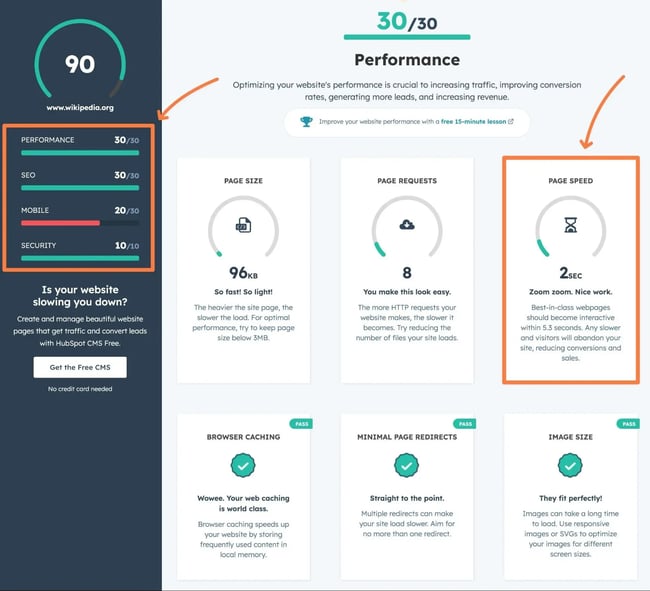
Technical SEO Monitoring: A technically sound website is non-negotiable for B2B success. In an ecosystem where buyers meticulously evaluate multiple vendors, a slow, broken, or poorly structured site can silently hemorrhage conversions. Effective technical SEO monitoring provides continuous crawl monitoring, tracks Core Web Vitals (such as loading speed, interactivity, and visual stability), and delivers prioritized, actionable recommendations. This ensures that marketers and developers can address the most impactful issues first, optimizing site health, user experience, and ultimately, conversion rates, thereby removing unnecessary friction from the B2B buying journey.
-
Content Optimization with AI Suggestions: The sheer volume of content required to engage B2B buyers across their extended journey makes efficient content creation and optimization indispensable. Leading content marketing tools now embed AI capabilities to assist teams in optimizing existing pages, identifying new content opportunities, and maintaining quality and consistency at scale. These AI suggestions can range from keyword integration and readability enhancements to structural recommendations and guidance on schema markup, all designed to improve both traditional SEO performance and AI search visibility.
Leading B2B SEO Solutions in the Current Market
The market offers a diverse range of tools, each with unique strengths, but the most effective B2B SEO solutions share the common thread of connecting organic visibility directly to pipeline and revenue.
HubSpot’s Integrated Ecosystem: The All-in-One for Pipeline Growth
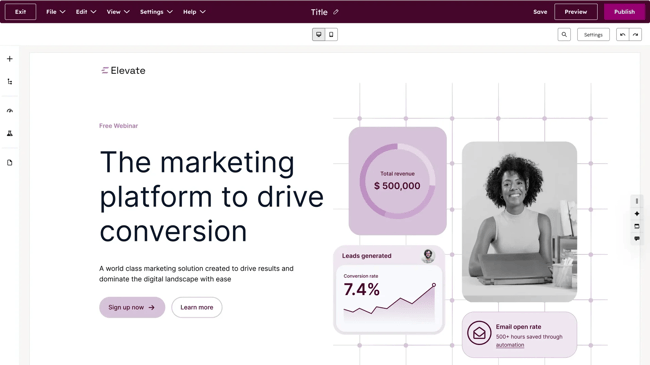
HubSpot’s suite of SEO tools, particularly within its Marketing Hub, stands out as an AI-powered marketing platform designed for B2B teams seeking to consolidate their SEO workflow within a single, unified environment. It aims to eliminate the complexities of managing multiple disconnected tools.
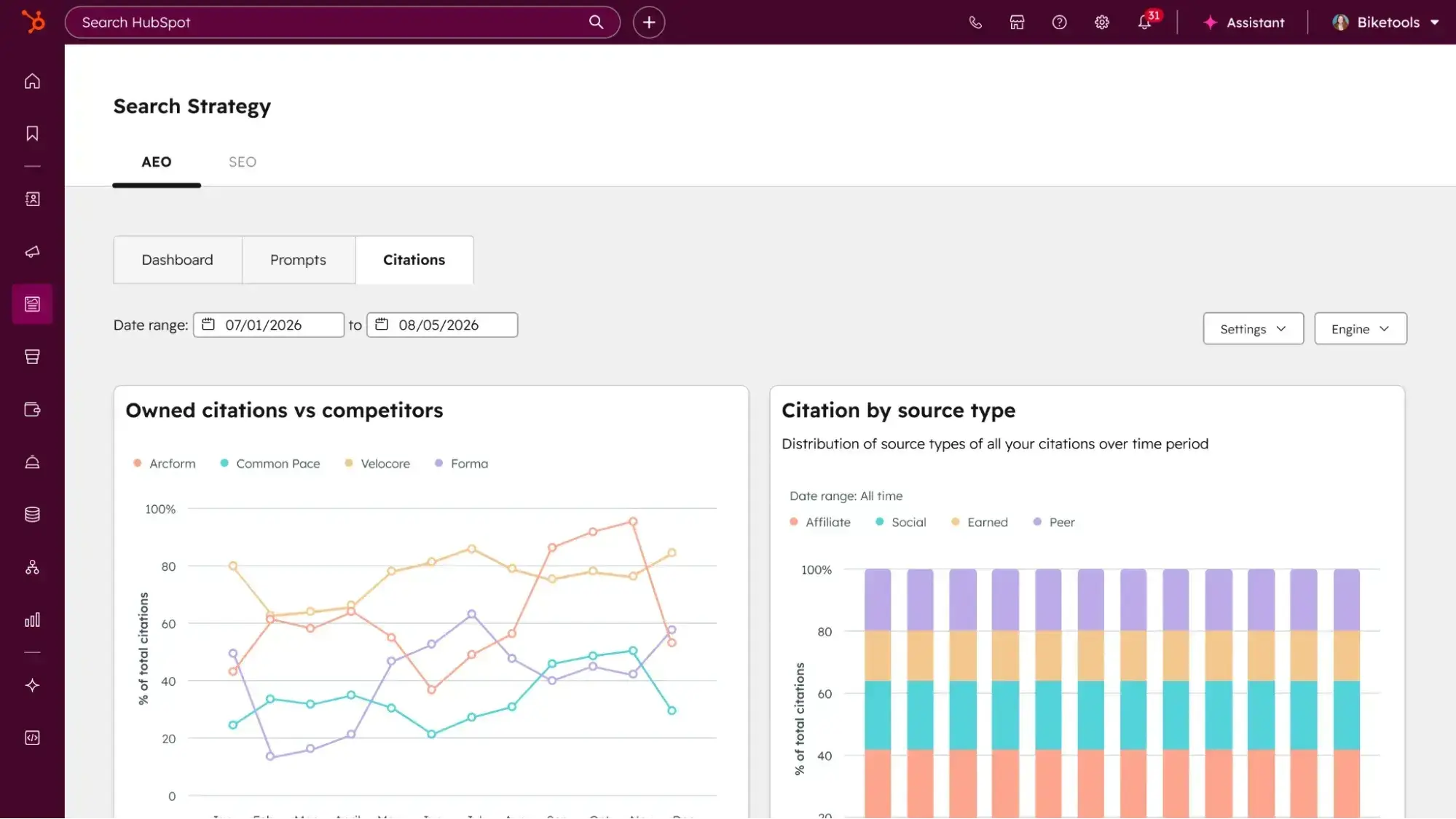
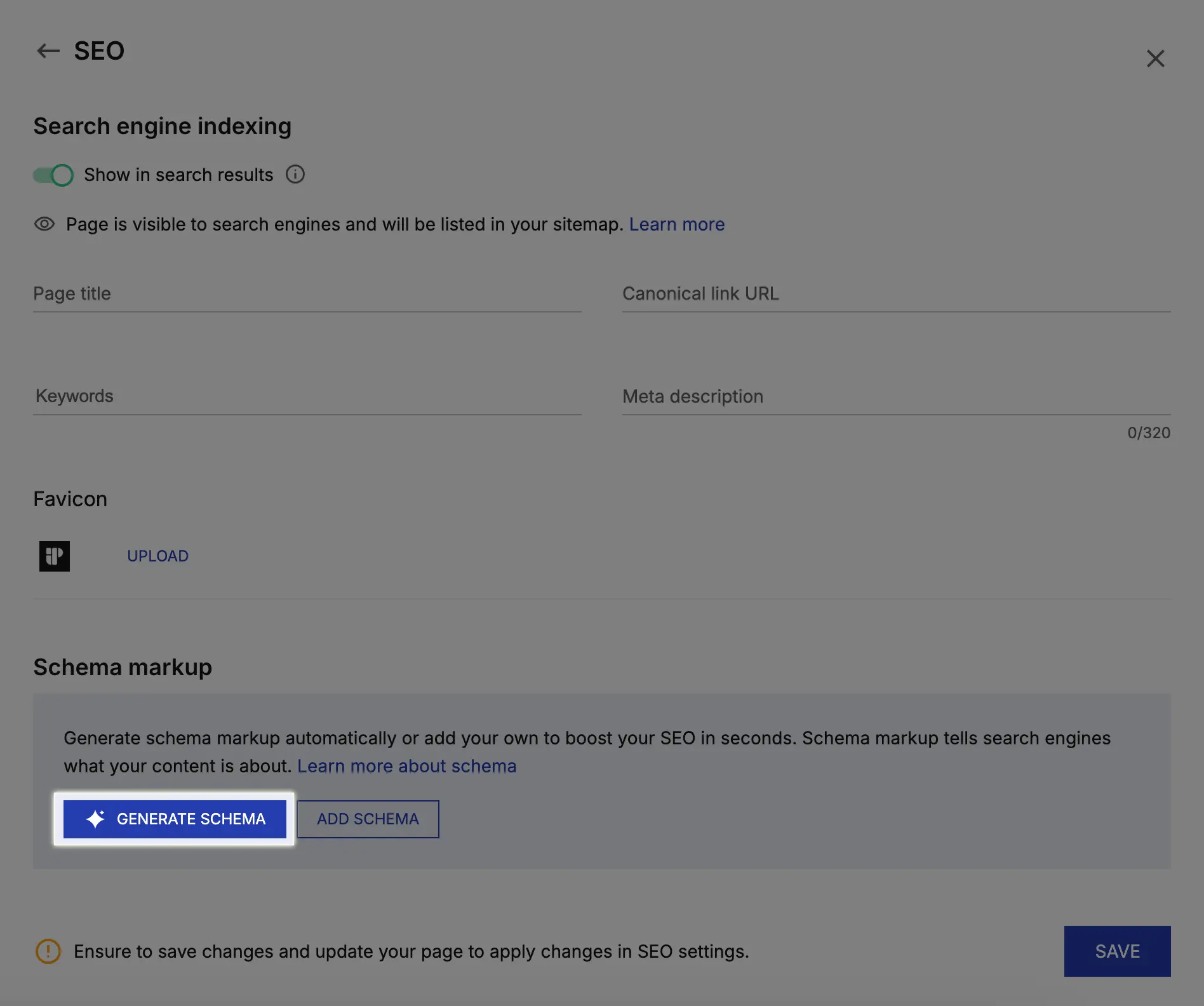
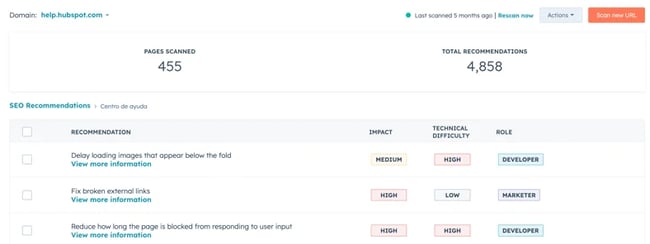
- Marketing Hub’s SEO Capabilities: HubSpot’s SEO tools provide actionable recommendations across the entire content lifecycle, from initial topic planning to ongoing performance analysis. The SEO recommendations feature scans an entire live website, including pages hosted outside HubSpot, and prioritizes suggestions based on impact, difficulty, and the role responsible for implementation (e.g., developer, content creator). This holistic approach addresses technical SEO, on-page optimization, and accessibility. A significant advantage for B2B lies in its structured data and schema guidance, which helps format content for optimal parsing and citation by AI systems, directly supporting AEO initiatives.
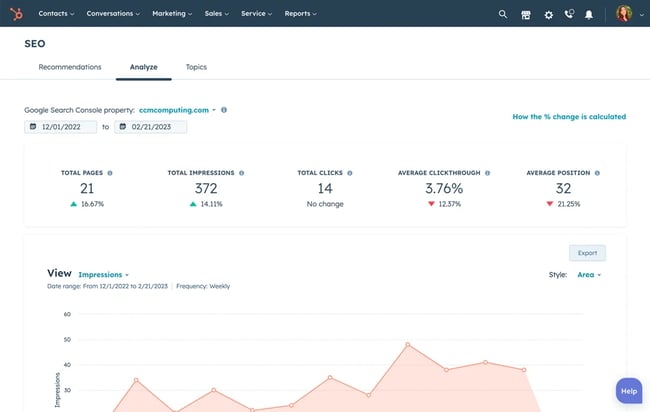
- Analyzing SEO Performance: Performance analysis within Marketing Hub is seamless, allowing teams to track organic sessions, impressions, and keyword positions over time at both domain and individual page levels. Its native Smart CRM integration is a game-changer for B2B, enabling direct SEO-to-pipeline attribution. This crucial link allows SEO teams to move beyond vanity metrics like traffic, demonstrating precisely how their organic program contributes to demos, opportunities, and ultimately, closed revenue – a common pain point for B2B marketing leaders.
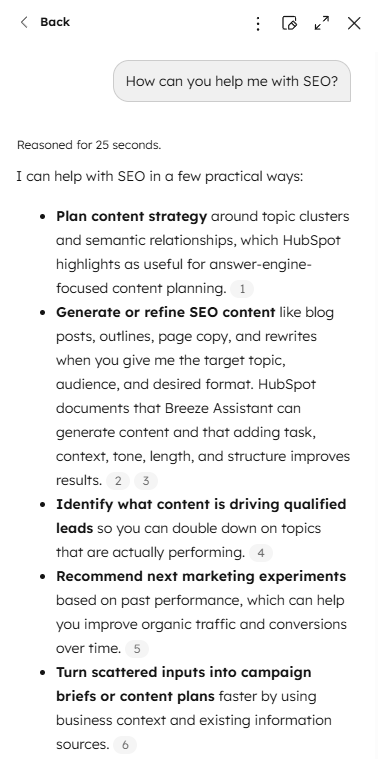
- Breeze Copilot: As part of Marketing Hub, Breeze Copilot leverages AI to accelerate SEO and content tasks. It assists B2B marketers with content briefs, optimization recommendations, and even content generation, enhancing efficiency without necessarily increasing headcount. Its ability to tailor recommendations based on specific account data makes it highly relevant for B2B workflows.
- Content Hub: The SEO-Integrated CMS: For B2B teams producing content at scale, Content Hub is HubSpot’s CMS that embeds SEO suggestions directly into the editing experience. As writers create content, the platform provides real-time SEO recommendations, minimizing the need for multiple optimization tools or constant consultation with an SEO specialist. Its robust support for structured data and schema markup is particularly powerful for AEO, ensuring content is readily digestible and citable by AI crawlers. The integrated AI content writer further streamlines content creation, ensuring alignment with SEO requirements.
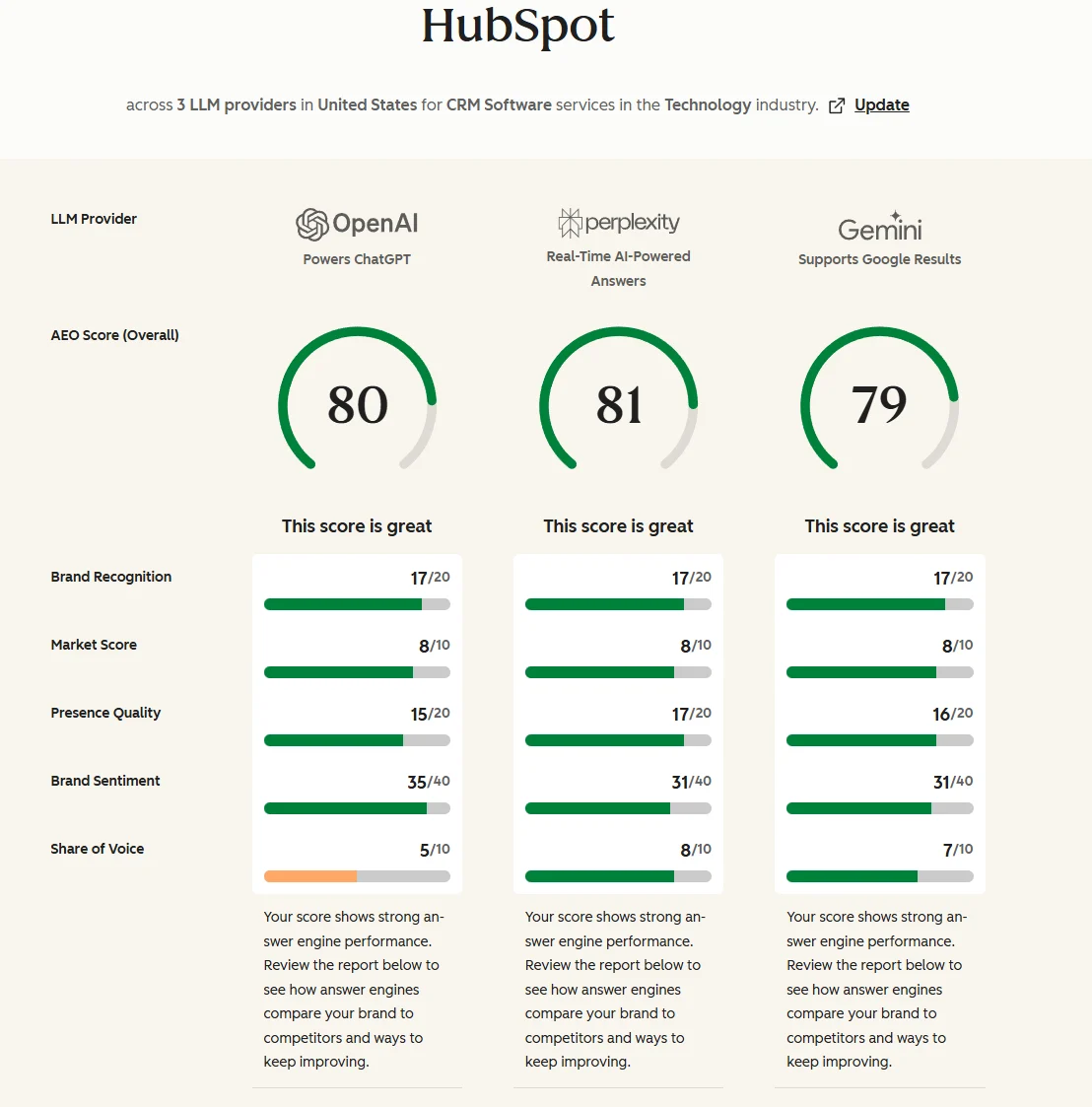
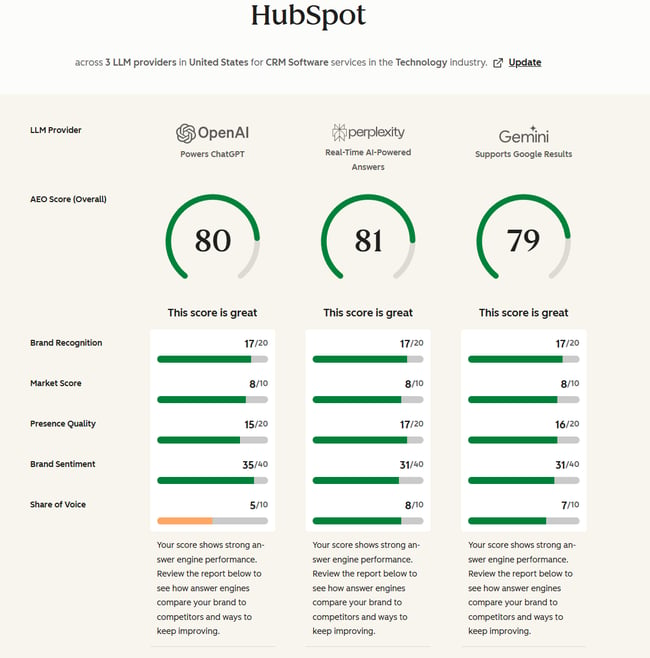
- HubSpot AEO Grader: Free AI Search Visibility Tool: This invaluable free tool assesses a brand’s visibility in AI search environments like ChatGPT, Perplexity, and Gemini. It generates a brand performance score across five dimensions (e.g., visibility, accuracy, sentiment, competitive positioning, and citations), offering critical insights for B2B teams navigating the AI search shift. By running the AEO Grader for both their own brand and competitors, marketers gain a direct comparison of how AI engines portray them against market rivals, informing messaging and content strategies.
Semrush: Comprehensive Research and Competitive Intelligence
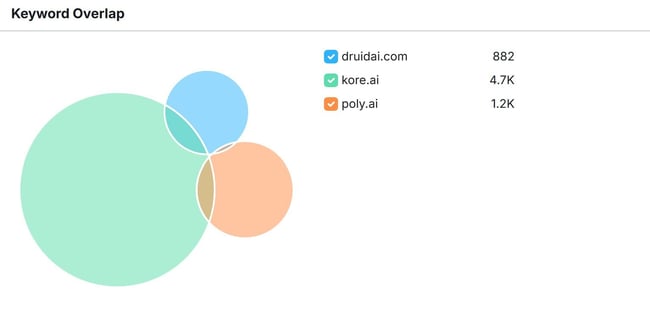
Semrush remains one of the most comprehensive all-in-one SEO platforms for B2B teams, offering robust tools for keyword research, competitor analysis, content strategy, technical auditing, and AI search insights. Ramona Joita, SEO Consultant and Founder of Marketez, highly rates Semrush for its integrated workflow. She specifically highlights the Keyword Overlap/Gap analysis tool, which allows comparison of multiple competitors to identify ranking opportunities and content voids. "I analyze the content that’s already ranking and build a data-backed content plan focused on high-intent topics that can drive pipeline, not just traffic," Joita explains. Semrush has consistently evolved, incorporating AI features as soon as they became viable, leveraging its decades of digital marketing and SEO experience to equip marketing teams for the challenges of AI search. Pricing for Semrush plans typically starts from $139.95/month.
Contentsquare (formerly Hotjar): Unlocking On-Page User Behavior
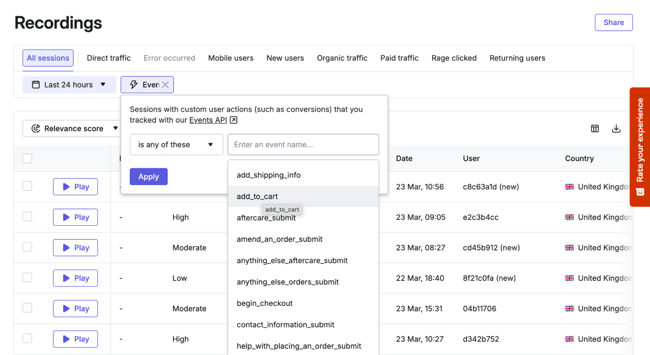
Contentsquare, having acquired Hotjar, provides B2B teams with deep insights into user behavior through heatmapping, scroll depth analysis, click patterns, and session recordings. This qualitative data is crucial for understanding why organic traffic isn’t converting. Emina Demiri-Watson, Head of Digital Marketing at Vixen Digital, recounts a B2B ecommerce client case where combining GA4 data with Contentsquare’s behavioral insights led to a single navigation label change that resulted in a "217% uplift in menu clicks, key events jumping from 24 to 421, revenue up 64%, and new users engaging with that section increasing by 566%." She noted that before, mostly returning users engaged, but after the change, "new visitors, most likely to be in an early buying cycle, started converting once the friction was removed." This demonstrates that pipeline-focused SEO extends beyond traffic acquisition to optimizing the on-page experience to remove friction and facilitate conversions. While setup might be more complex post-acquisition, the value of understanding user interaction remains paramount. A free plan is available, with paid plans starting from $39/month.
Lead Forensics: Bridging Organic Visits to Identifiable Accounts
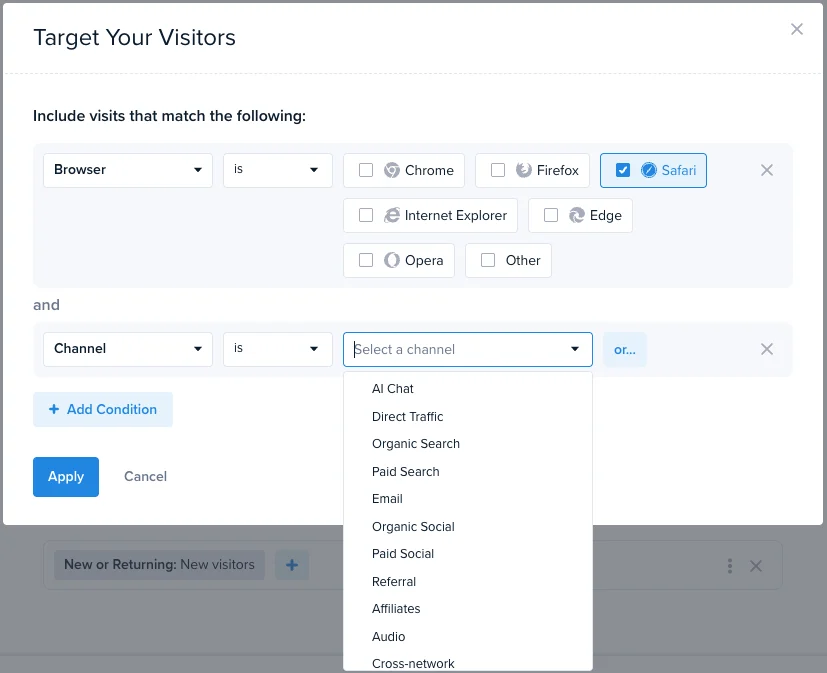
Lead Forensics offers a powerful solution for B2B teams by identifying the companies visiting a website and connecting those visits to the sales pipeline. Laura Nineham, Head of Organic Search and Content at Lead Forensics, emphasizes its core value in attribution. She states that connecting companies to visits and tracking them through to closed deals "…can transform SEO attribution and help us get fair credit for how our activity influences pipeline." This tool is particularly effective for Account-Based Marketing (ABM) strategies, allowing teams to identify companies arriving via organic or AI referrals, use firmographic details to confirm ideal customer profile fit, and then track these leads through the sales funnel. Integrating Lead Forensics with a CRM like HubSpot can automate the creation of new records or enrich existing ones, providing clearer attribution for SEO’s contribution to pipeline. Pricing is custom, based on traffic volume and team size.
Trendos: Navigating AI Search Visibility Over Time
Trendos is a cutting-edge tool designed to monitor how a brand appears in AI-generated search results, tracking its presence and sentiment across various AI answer platforms over time. Eglė Kliukevičienė, Marketing Lead at Trendos, underscores the pipeline implications, noting that platforms like ChatGPT and Gemini now significantly influence how buyers discover and compare B2B brands long before they visit a vendor’s site. "You can see not only where your brand shows up now, but how its presence and sentiment have shifted over time," Kliukevičienė explains. This enables B2B teams to proactively manage their brand’s representation in AI search, particularly in crucial "best tools" or "top platforms" lists where B2B buyers form their initial shortlists. Trendos offers a free tier, with paid plans starting from $169/month.
Google Keyword Planner + Claude: Accessible Intent Analysis
For B2B teams seeking powerful, free tools, pairing Google Keyword Planner with an advanced AI like Claude offers an exceptional workflow for intent analysis. Google Keyword Planner provides foundational data on search volume and keyword variations. Claude then interprets the language of these keywords to infer buyer intent. Laura I. Abreu, Lead Generation, Ads, and SEO Manager at Global and Search, champions this approach for analyzing large keyword datasets. She highlights that while most teams stop at search volume, "Google Keyword Planner gives you data. Claude helps you interpret what the language choice reveals about where the buyer is in their decision." Abreu provides the example of differentiating between "SEO expert" (signaling a willingness to pay a premium) and "SEO specialist" or "SEO consultant" (implying a different buyer profile), a distinction Claude clearly flagged. Both tools are free to use, making this a highly accessible and productive combination for deep semantic analysis.
Strategic Implications and the Future of B2B SEO
The current evolution of search engines, driven by AI, compels B2B marketers to adopt a more holistic and data-driven approach. SEO is no longer a siloed technical function but an integral, strategic component of revenue generation. This shift necessitates an evolution in the skill sets of marketing professionals, who must now possess a blend of technical SEO expertise, deep understanding of buyer psychology, proficiency in data analytics, and a keen eye for AI principles. The ability to justify marketing spend with clear, attributable ROI becomes paramount, solidifying SEO’s position as a vital investment rather than a discretionary expense.
Looking ahead, the integration of AI into search is only expected to deepen. B2B brands that proactively adapt by investing in AI-optimized content, structured data, and tools that measure direct pipeline impact will be best positioned for sustained growth. The emphasis will remain on creating authoritative, high-quality content that not only answers user queries comprehensively but also builds brand trust and expertise, regardless of whether the answer is delivered via a traditional SERP or an AI-generated summary.
Conclusion
The best tools for B2B SEO share a common thread: they connect organic visibility to measurable revenue. Whether it’s HubSpot’s Marketing Hub attributing a closed deal to a specific blog post, or Lead Forensics identifying target accounts arriving via organic search, the focus has unequivocally shifted from merely driving traffic to demonstrating tangible pipeline contribution. For B2B organizations looking to optimize their SEO strategy in this new AI-dominated era, starting with a unified platform that integrates keyword research, content optimization, technical recommendations, and, crucially, CRM attribution, is a strategic imperative. Such integration removes the operational overhead of managing disparate tools and empowers B2B SEO programs to unequivocally prove their real impact on the bottom line.