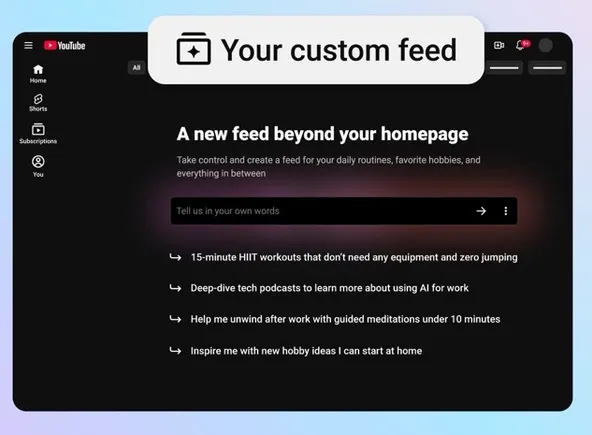
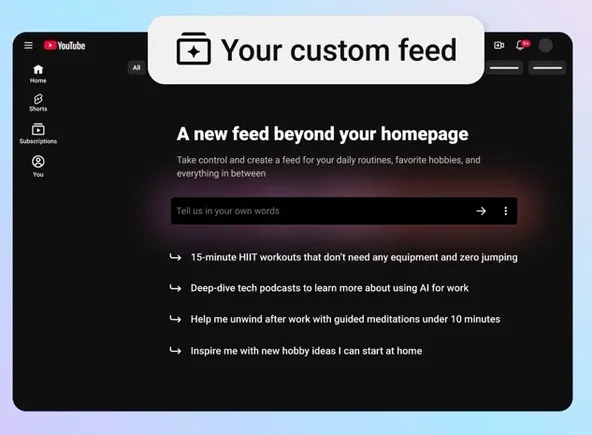
YouTube, the world’s preeminent video-sharing platform, has announced a significant expansion of its custom feeds option, a feature designed to empower users with unprecedented control over their content consumption experience. This latest development allows users to create and manage multiple personalized video feeds, which can be conveniently pinned to their Home display, facilitating a more tailored exploration of diverse interests within the application. The move represents a notable evolution in how YouTube approaches content discovery, blending its powerful algorithmic recommendations with explicit user input, and hints at a broader industry trend towards greater personalization and user agency in digital platforms.
The Evolution of Personalized Content Discovery
The journey towards this enhanced customization began in November of the previous year when YouTube first launched the initial stage of its custom feeds test. At that time, the feature allowed a limited set of users to input a basic conversational prompt to generate a content feed specifically aligned with their declared interests. This initial foray into user-generated feed curation was a significant departure from the traditional model, which primarily relies on implicit signals derived from viewing history, engagement metrics, and demographic data to inform algorithmic recommendations. The concept was to allow users to articulate their desires directly, bypassing some of the potential pitfalls of purely observational algorithms, such as filter bubbles or an overemphasis on previously consumed content.
Following a period of testing and refinement, YouTube expanded this experimental feature to a broader user base in May. This incremental rollout allowed the platform to gather more extensive feedback and refine the underlying artificial intelligence (AI) models responsible for interpreting user prompts and curating relevant content. The current announcement marks a further, more robust expansion, introducing several key enhancements that elevate the custom feeds from a novel experiment to a central component of the user experience.
Under this latest update, users granted access to the custom feeds option will now be able to effortlessly switch between up to eight active personalized feeds, prominently displayed along the top of their Home page. This multi-feed capability addresses a fundamental challenge of single-feed platforms: the difficulty of catering to a user’s multifaceted interests simultaneously. A single user might be interested in quantum physics one moment, gourmet cooking the next, and then switch to documentary filmmaking. Traditionally, satisfying such diverse interests within a single, algorithmically-driven feed often led to a diluted experience or required significant manual searching.
Crucially, the system also introduces dynamic management of these feeds. While users can maintain up to eight active feeds concurrently, inactive prompts will gracefully expire after a few weeks, preventing clutter and ensuring that the curated content remains relevant to current interests. Furthermore, users retain the ability to edit their prompts directly within a text box located at the top of each feed. This iterative refinement capability allows for precise adjustment of the recommendation focus, enabling users to fine-tune the content streams as their interests evolve or as they discover more specific niches they wish to explore.
A significant implication of this expansion is that these custom feeds will replace the standard topic chips that have long populated the top of the Home feed in the mobile application. This move underscores YouTube’s confidence in the efficacy and user appeal of explicit, prompt-driven curation over its previous, more generic category-based suggestions. It signals a strategic prioritization of user agency in content discovery, placing the onus of defining interest categories more directly in the hands of the viewer.
The Underlying Philosophy: Combining Explicit and Implicit Signals
The approach adopted by YouTube leans heavily into the pervasive trend of conversational AI, a paradigm shift exemplified by the rise of tools like ChatGPT and Google’s own Bard. By allowing users to articulate their interests through natural language prompts, YouTube is tapping into an intuitive mode of interaction that has become increasingly familiar across digital interfaces. This methodology is designed to create a more compelling and deeply personalized user experience, ensuring that YouTube’s vast content library is displayed in a manner that more precisely aligns with each user’s personal preferences and expanded interests.
The decision to pivot, at least partially, away from a purely algorithmic content display based solely on user activity is particularly noteworthy. For years, social media and content platforms have invested heavily in sophisticated algorithms, which data consistently shows have driven massive engagement gains. These algorithms, by analyzing billions of data points related to user behavior—such as watch time, likes, shares, comments, and search queries—have become exceptionally adept at predicting what users want to see next, often before users themselves are consciously aware of their next interest. This "algorithmic matching" has been a cornerstone of growth for most social applications, fostering sticky user experiences and extended session durations.
However, the reliance on purely implicit signals also carries inherent challenges. Algorithms, while powerful, can sometimes lead to "filter bubbles" or "echo chambers," where users are primarily exposed to content that reinforces existing beliefs or narrows their perspective. They can also struggle with serendipitous discovery or catering to nascent interests that haven’t yet generated enough implicit data. Moreover, user fatigue with perpetually optimized, yet sometimes predictable, algorithmic feeds is a growing concern across the digital landscape.
YouTube’s new strategy represents a nuanced attempt to address these challenges by combining both explicit and implicit signals. While users explicitly define their desired content through prompts, the platform’s underlying algorithms will undoubtedly continue to play a crucial role in curating the best-matching videos from its immense library, based on quality, relevance, and ongoing user engagement within those custom feeds. This hybrid approach aims to harness the power of AI-driven personalization while simultaneously granting users a greater sense of control and agency, potentially leading to a more compelling and diverse feed display.
Broader Industry Context and Implications
The expansion of YouTube’s custom feeds is not an isolated event but rather a reflection of broader trends within the digital media and AI sectors. The demand for personalization is at an all-time high, with users expecting digital services to adapt seamlessly to their individual needs and preferences. From streaming music services like Spotify, which offers highly curated playlists, to e-commerce platforms like Amazon, which personalizes product recommendations, the industry has long recognized the value of tailored experiences. YouTube’s move signifies a deepening commitment to this principle within the video domain.
Furthermore, the rise of generative AI and large language models has fundamentally altered how users interact with technology. The ability to converse with an AI, providing open-ended prompts rather than selecting from predefined categories, has become a powerful new paradigm. By integrating this conversational interface into content discovery, YouTube is not only leveraging cutting-edge AI capabilities but also aligning itself with an interaction model that is rapidly becoming standard.
For content creators, this shift presents both opportunities and potential challenges. On the one hand, niche creators whose content might sometimes struggle to break through the noise of a general algorithmic feed could find new avenues for discoverability. If users explicitly create feeds for highly specific interests, content tailored to those interests could gain more direct exposure. This could foster a more vibrant ecosystem for specialized content. On the other hand, creators might need to consider how their content aligns with the types of prompts users are likely to employ, potentially influencing content strategy and metadata optimization.
From a monetization perspective, more precisely defined user interests could lead to highly targeted advertising opportunities. If YouTube has explicit data on a user’s interest in, for example, "sustainable farming techniques" or "ancient Roman history," advertisers can reach these specific segments with greater precision, potentially increasing ad relevance and effectiveness. This could, in turn, enhance YouTube’s value proposition for advertisers.
The move also carries implications for data privacy and user trust. While users are explicitly providing information about their interests, the transparent management of this data and clear communication about its use will be crucial for maintaining trust. YouTube, as a Google subsidiary, operates under stringent data privacy policies, and the integration of explicit user inputs will likely be handled with careful consideration for these guidelines.
Current Rollout and Future Outlook
Currently, YouTube’s updated feeds experiment is being progressively rolled out across the United States. It is available to signed-in viewers on both mobile devices (Android and iOS) and desktop platforms, ensuring a broad testbed for the feature’s performance and user reception. This phased rollout strategy is typical for major platform updates, allowing for continuous monitoring, feedback collection, and iterative improvements before a wider global launch.
The decision to conduct this rollout in the U.S. first allows YouTube to gather data from a large and diverse user base that is often at the forefront of digital adoption and innovation. Insights gained from this initial deployment will be instrumental in refining the feature, addressing any unforeseen technical issues, and optimizing the user experience before it becomes universally available.
In conclusion, YouTube’s expansion of its custom feeds option represents a significant strategic pivot, signaling a greater emphasis on user agency in content discovery. By combining the power of its sophisticated algorithms with intuitive, conversational AI prompts, YouTube aims to create a more personalized, compelling, and ultimately more satisfying viewing experience. This move not only solidifies YouTube’s position at the forefront of digital innovation but also offers a glimpse into the future of content platforms, where the line between algorithmic recommendation and explicit user control becomes increasingly blurred, leading to a more dynamic and user-centric digital landscape.


 Neng Nana
 Nana Muazin