In the ever-evolving landscape of digital marketing, businesses often find themselves reaching a plateau with conventional paid media strategies. While platforms like Facebook and Google Ads remain foundational, a growing number of marketers are seeking innovative avenues to expand their brand’s reach and engagement. This pursuit of diversification is driven by a desire to tap into new customer segments, enhance brand awareness, and ultimately, achieve a more robust return on investment. The following exploration delves into three non-traditional yet highly effective strategies that can invigorate a paid media portfolio: influencer marketing, leveraging platforms like Yelp, and the innovative approach offered by Rokt.
The Rise of Influencer Marketing: Cultivating Trust and Targeted Reach
Influencer marketing has transitioned from a nascent trend to a significant pillar of modern marketing. At its core, this strategy capitalizes on the inherent trust and rapport that influencers have cultivated with their dedicated audiences. When an influencer endorses a product or service, their recommendation often carries more weight than traditional advertising, leading to higher quality leads and a greater likelihood of conversion. This approach is particularly potent for new product launches, physical goods, and niche markets where a fervent community exists around specific interests.
The cost-effectiveness of influencer marketing can be substantial. A single, well-executed campaign can generate exponential returns, as the initial investment is amplified by the influencer’s reach and the subsequent engagement from their followers. Beyond direct sales, influencer collaborations are instrumental in building broad brand awareness. The audience of an influencer is typically curated based on shared interests and aspirations, meaning that a partnership naturally aligns a brand with a highly relevant demographic. This offers a degree of "audience targeting" that is often more precise than broad demographic segmentation on other platforms.
The burgeoning importance of influencer marketing is underscored by industry data. According to the Influencer Marketing Benchmark Report 2021, which surveyed over 5,000 marketing agencies, brands, and related professionals, a significant portion of marketing budgets are being allocated to this channel. The report indicated that 11% of respondents planned to dedicate at least 40% of their marketing budget to influencer marketing initiatives. This demonstrates a clear industry-wide recognition of its value.


Geographically, Instagram has long been the dominant platform for influencer marketing, with 68% of respondents utilizing it. However, the report also highlighted the rapid ascent of TikTok, indicating a dynamic shift in where brands are seeking influencer collaborations. This evolving landscape necessitates continuous monitoring and adaptation of influencer strategies to remain effective.
Influencer Marketing: Advantages and Considerations
Pros:
- Enhanced Credibility and Trust: Recommendations from trusted influencers resonate deeply with their followers, fostering a sense of authenticity.
- Highly Targeted Audiences: Influencers cultivate communities around specific interests, allowing brands to reach a pre-qualified and engaged demographic.
- Authentic Content Creation: Influencers often create relatable and engaging content that aligns with their personal brand, which can feel more organic to consumers.
- Significant Brand Awareness Boost: Partnerships can expose brands to vast new audiences, significantly increasing visibility.
- Potential for High ROI: Strategic collaborations can yield substantial returns, particularly when aligned with product launches or specific marketing objectives.
- Versatility for Various Product Types: Effective for both physical products and digital services, and particularly strong for niche markets.
Cons:
- Finding the Right Influencer: Identifying influencers whose values and audience align with a brand can be a challenging and time-consuming process.
- Measuring ROI Accurately: While engagement is measurable, directly attributing sales to influencer campaigns can sometimes be complex.
- Brand Control and Messaging: Brands relinquish some control over messaging once it’s in the hands of an influencer, requiring clear briefs and guidelines.
- Potential for Inauthentic Partnerships: A disconnect between an influencer and a brand can be detrimental and erode audience trust.
- Evolving Platform Algorithms: The effectiveness of influencer content can be influenced by changes in social media platform algorithms.
Yelp: Amplifying Local Visibility and Gathering Customer Insights
While often perceived as a review platform, Yelp presents a compelling opportunity for businesses, particularly those with a local presence, to enhance their advertising efforts. Yelp ads allow businesses to increase their visibility within a specific geographic area, reaching potential customers who are actively searching for local services and products. The platform’s advertising options can be remarkably cost-effective, with campaigns that can be initiated with modest daily budgets, making it accessible for small businesses.
Beyond driving new business, Yelp serves as an invaluable tool for gathering direct customer feedback. Positive reviews can bolster a business’s reputation, while constructive criticism offers actionable insights for service improvement and strategic decision-making. This dual functionality of driving traffic and providing market intelligence makes Yelp a potent, albeit often overlooked, advertising channel.
The platform’s advertising capabilities include keyword targeting, allowing businesses to bid on search terms relevant to their offerings, ensuring their ads appear when users are actively looking for what they provide. Furthermore, robust geotargeting features enable businesses to precisely define their service area, ensuring that advertising spend is directed towards the most relevant local customer base. This localized approach is critical for brick-and-mortar establishments and service-based businesses that rely on proximity to their clientele.


Yelp Advertising: Advantages and Considerations
Pros:
- Hyper-Local Targeting: Ideal for businesses serving a specific geographic area, ensuring ad spend reaches nearby potential customers.
- Captive Audience: Users on Yelp are actively searching for local businesses, indicating high purchase intent.
- Cost-Effective Advertising: Offers flexible budget options, allowing businesses to start with a small daily investment.
- Valuable Customer Feedback: Provides direct insights into customer experiences, aiding in service improvement and reputation management.
- Enhanced Business Listings: Paid placements can significantly improve a business’s visibility and prominence on the platform.
- Direct Lead Generation: Can directly drive calls, website visits, and direction requests from interested consumers.
Cons:
- Reliance on Reviews: While ads can boost visibility, overall business success on Yelp is still heavily influenced by organic reviews.
- Negative Review Impact: Negative reviews, even for competitors, can sometimes cast a shadow or influence user perception.
- Limited Reach Beyond Local: Primarily effective for businesses with a physical presence or local service area.
- Platform Specificity: Primarily relevant for businesses that can be discovered and reviewed on Yelp.
Rokt: Reaching Consumers at the Moment of Decision
Rokt introduces a highly sophisticated and unique advertising model that leverages the critical moment immediately following a purchase. This is a period when consumers are often receptive to relevant offers, having just completed a transaction and potentially being in a buying mindset. Rokt’s technology allows brands to present targeted advertisements on their own confirmation pages or to have their offers featured on the confirmation pages of partner businesses.
Consider the scenario of purchasing concert tickets: immediately after checkout, a customer might be presented with an offer for discounted car rental services for their upcoming trip. This is the essence of Rokt’s offering. The platform operates through two primary avenues: Rokt Ecommerce and Rokt Ads.
Rokt Ecommerce enables a brand to host offers from other businesses on its own post-purchase confirmation page. This allows the hosting brand to generate revenue from these placements while providing added value or exclusive deals to its customers. Conversely, Rokt Ads allows a brand to become the featured offer on another company’s confirmation page, tapping into a different brand’s customer base at a highly opportune moment.

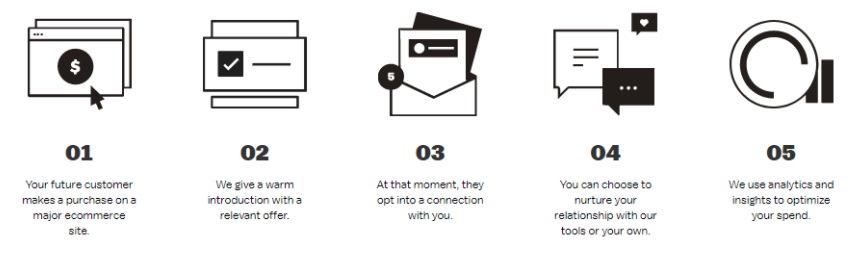
Rokt further expands its offerings with Rokt Calendar, which allows brands to target customers through calendar notifications. This innovative approach places promotional content directly into a user’s personal schedule, ensuring high visibility and relevance. The strategic advantage of Rokt lies in its ability to reach consumers precisely when they are in a transactional state, making them more amenable to impulse purchases or complementary offers.
Rokt Advertising: Advantages and Considerations
Pros:
- High Purchase Intent Targeting: Reaches consumers immediately after a purchase, when they are often more open to relevant offers.
- Strategic Placement: Ads are displayed on confirmation pages, a high-visibility touchpoint in the customer journey.
- Cross-Selling and Upselling Opportunities: Facilitates offering complementary products or services to existing customers.
- Revenue Generation for Publishers: Brands hosting offers can monetize their customer confirmation pages.
- Access to New Customer Bases: Brands advertising on partner sites gain exposure to a relevant, engaged audience.
- Innovative Calendar Integration: Rokt Calendar offers a unique way to reach consumers through their personal scheduling tools.
Cons:
- Requires Partnership or Integration: Effectiveness often depends on integrating with businesses that have robust post-purchase processes.
- Potential for Ad Fatigue: Over-reliance on post-purchase offers could potentially lead to consumer fatigue if not managed carefully.
- Dependence on Transaction Volume: The success of Rokt’s model is intrinsically linked to the volume of transactions occurring on partner platforms.
- Niche Application: Primarily suited for e-commerce businesses and those with clear transactional confirmation touchpoints.
Conclusion: A Multifaceted Approach to Paid Media
The digital marketing landscape is constantly evolving, and staying competitive requires a willingness to explore beyond the conventional. Influencer marketing offers a path to authentic engagement and targeted reach through trusted voices. Yelp provides a crucial avenue for local businesses to connect with nearby customers and glean invaluable feedback. Rokt presents an innovative solution for capturing consumer attention at the precise moment of purchase intent.
By strategically integrating these non-traditional paid media strategies alongside established channels like Facebook and Google Ads, businesses can create a more dynamic, resilient, and effective marketing ecosystem. Each of these approaches offers unique advantages, from building deep trust with niche audiences to amplifying local presence and capitalizing on critical transactional moments.
For businesses looking to refine their digital marketing strategy and unlock new growth opportunities, a comprehensive assessment of these alternative channels is highly recommended. The journey to expand a brand’s advertising efforts is not about abandoning proven methods, but about strategically augmenting them with innovative solutions that cater to evolving consumer behaviors and market dynamics. Engaging with a team of digital marketing experts can provide the tailored guidance needed to craft a solution that best aligns with specific business objectives and maximizes the potential of these diverse advertising avenues.


 Laily UPN
 Siti Muinah