The landscape of high-scale e-commerce optimization has shifted significantly since Adobe’s landmark $1.68 billion acquisition of Magento in 2018. Now rebranded as Adobe Commerce, the platform continues to power a significant portion of the global enterprise market, yet it presents a unique set of technical challenges for digital marketers and conversion rate optimization (CRO) specialists. While standard A/B testing frameworks often assume a linear, easily manipulated front-end environment, the sophisticated architecture of Adobe Commerce—defined by multi-layered caching, complex session handling, and multi-storefront structures—requires a specialized approach to experimentation to ensure data integrity and a seamless user experience.
The Evolution of Enterprise E-commerce Experimentation
To understand why A/B testing on Magento differs from other platforms, one must look at the evolution of the software. Originally an open-source powerhouse, Magento Enterprise Edition was designed for maximum flexibility and scalability. When Adobe integrated it into the Adobe Experience Cloud, it added layers of cloud hosting and enterprise-grade integrations. However, the core codebase remains deeply reliant on server-side logic and aggressive caching mechanisms.
For a global enterprise, the stakes of experimentation are high. With annual revenues often reaching into the hundreds of millions or billions, a 1% lift in conversion rates can translate into millions of dollars in incremental growth. Conversely, a poorly executed test that introduces "flicker"—the brief flash of original content before a variant loads—or breaks the checkout flow can cause immediate and catastrophic revenue loss.
Technical Architecture: The Varnish and Full-Page Cache Hurdle
The primary differentiator in the Magento environment is the Full-Page Cache (FPC) and the Varnish layer. In a typical enterprise deployment, Varnish acts as a reverse proxy cache that sits in front of the web server. It intercepts incoming requests and serves pre-rendered HTML directly to the visitor. This process is what allows Magento stores to handle massive traffic spikes, but it creates a "blind spot" for standard A/B testing tools.
Because Varnish operates at the edge, it often lacks visibility into visitor-level data, such as the cookies used to assign a user to a specific test variant. If the caching layer is not explicitly configured to recognize these "bucketing" cookies, the server may deliver the same cached version of a page to every visitor, regardless of which test variant they should be seeing. This results in "polluted" data where users are exposed to multiple versions of a page, rendering the results of the experiment statistically invalid.
Chronology of a Successful Magento Experiment
Building a reliable testing program on Adobe Commerce requires a disciplined timeline that prioritizes technical validation before creative execution.
- Infrastructure Scoping: Before launching a test, engineers must determine if the experiment will be scoped at the global, website, or store-view level. This is critical for multi-brand or multi-regional enterprises where different storefronts may have unique layouts or currencies.
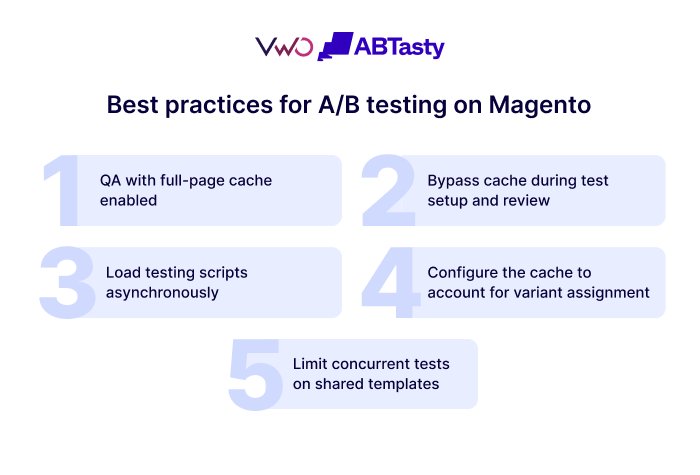
- Cache Configuration: The Varnish or FPC layer must be instructed to "vary" the cache based on the testing tool’s cookie. This ensures that Variant A and Variant B are cached separately and served to the correct audiences.
- SmartCode Deployment: Integration usually involves placing a "SmartCode" or snippet in the
<head>of the Magento admin panel. For enterprise stores, this must be paired with a pre-hiding snippet to suppress the original page content until the variant is ready, effectively eliminating the flicker effect. - Staging and QA: Quality assurance must be conducted in a staging environment that mirrors the production caching setup. Testing on an uncached developer environment is a common pitfall that fails to reveal how the site will behave under real-world conditions.
Strategic Focus Areas for High-Impact Testing
Given the template-driven nature of Magento, certain areas of the site yield higher returns on investment for experimentation.

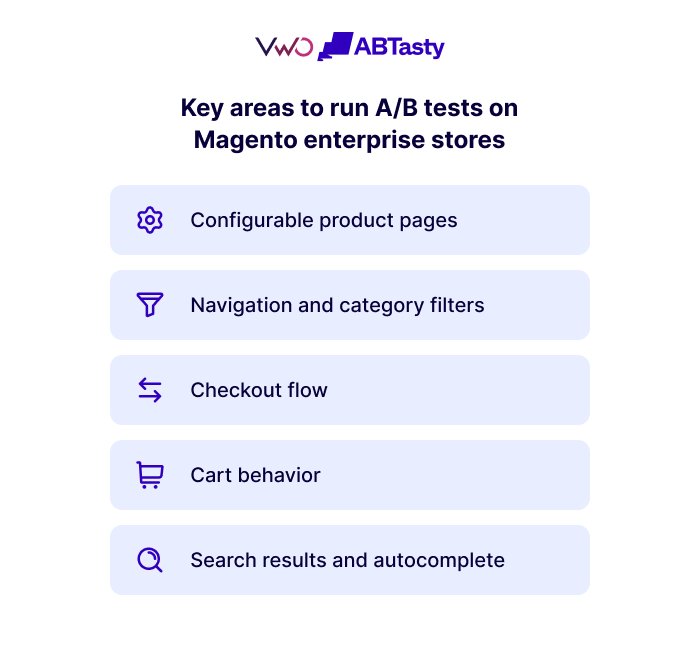
Configurable Product Pages
Magento’s native "configurable products" feature allows for complex attribute selections, such as size, color, and material. Testing how these options are displayed—whether through dropdowns, swatches, or tiles—can significantly influence "Add to Cart" rates. Even minor adjustments to the visual hierarchy of the product description or the placement of social proof elements can drive meaningful engagement.
The Multi-Step Checkout Flow
The checkout process in Adobe Commerce is highly customizable, consisting of distinct steps for address entry, shipping selection, and payment. Unlike more rigid e-commerce platforms, Magento allows enterprise teams to resequence these steps or consolidate them into a single-page checkout. Given that the global average for shopping cart abandonment sits at approximately 70.22%, optimizing this flow is often the most direct path to revenue growth.
Search and Navigation Logic
For stores with massive catalogs, the search bar and category filters are the primary tools for product discovery. Testing the default sort order of search results or the "expanded" versus "collapsed" state of navigation filters can help users find products faster. Data suggests that users who utilize site search often have higher intent; therefore, even a small improvement in search relevance or autocomplete suggestions can lead to a disproportionate increase in conversion.
Industry Perspectives: The Resource Gap
Garret Cunningham, Director of Global Optimization at Columbus Global, emphasizes that the success of an enterprise testing program is often a matter of human capital rather than just software. "Organizations that dedicate design and development capacity to experimentation consistently achieve greater testing velocity and stronger optimization outcomes than those relying on shared teams," Cunningham noted during a recent industry discussion. This highlight underscores a growing trend in the e-commerce sector: the shift toward "experimentation-first" cultures where testing is integrated into the development lifecycle rather than treated as a secondary marketing task.
Furthermore, Ilan Hurwitz, an expert in e-commerce strategy, points out that the challenge for enterprise businesses is rarely a lack of data, but rather a lack of alignment. Securing stakeholder trust is essential, especially when tests involve high-stakes areas like B2B buying flows or post-purchase account pages.
Overcoming Common Challenges in the Magento Ecosystem
The complexity of the platform leads to several recurring issues that can derail an optimization program:

- Cache Invalidation: During a product update or code deployment, Magento’s cache is often flushed. If the testing tool does not use persistent first-party cookies, returning visitors may be reassigned to a different variant, disrupting the user journey and corrupting the data.
- Flicker Effect: This occurs when the browser renders the original cached HTML before the testing JavaScript can apply changes. In the professional e-commerce world, flicker is more than a visual annoyance; it is a conversion killer that signals a lack of site stability to the user.
- Storefront Overlap: In a multi-storefront architecture, a test intended for a UK-based store might accidentally trigger on a US-based store if the scoping is set to "Global." Rigorous validation of store-view isolation is a non-negotiable step in the QA process.
Leading Tools for the Adobe Commerce Environment
To navigate these challenges, enterprise brands typically gravitate toward three major platforms:
- VWO AB Tasty: Known for its deep integration capabilities, VWO allows for both client-side and server-side testing. Its SmartCode can be configured per store view, making it a favorite for complex, multi-regional Magento deployments. It also offers qualitative tools like heatmaps and session recordings to provide context to the A/B data.
- Kameleoon: This platform is often selected by high-traffic stores that require personalization at scale. Kameleoon handles variant assignment earlier in the request cycle, which helps mitigate the issues caused by aggressive caching.
- Optimizely: A mainstay in the enterprise space, Optimizely provides a robust environment for teams running multiple concurrent experiments across different departments. It offers a hybrid approach, allowing teams to choose between client-side flexibility and server-side performance.
Broader Impact and Future Implications
As e-commerce continues to move toward a "headless" or "composable" future, the lessons learned from A/B testing on Magento remain highly relevant. The focus on cache-aware experimentation, the elimination of layout flicker, and the importance of storefront scoping are now standard requirements for any high-performance digital brand.

The integration of artificial intelligence into these testing platforms, such as VWO’s "Wandz" system, is the next frontier. These agentic optimization systems can now analyze user behavior and suggest high-impact test ideas, further reducing the time between hypothesis and execution. For Adobe Commerce store owners, the goal remains the same: transforming a complex, technical architecture into a streamlined, high-converting engine for growth. By mastering the nuances of the platform’s caching and session layers, enterprise brands can ensure that their data is reliable, their user experience is flawless, and their optimization efforts yield the highest possible return on investment.