In the dynamic landscape of e-commerce, businesses that incorporate rental services often find themselves at a crossroads when selecting the right platform. Two prominent contenders, Shopify and Booqable, though fundamentally different in their core offerings, frequently emerge in comparisons for businesses with a rental component. This in-depth analysis, informed by over 60 hours of rigorous testing, aims to provide clarity on which platform, or combination thereof, best suits diverse business needs, from rental-centric operations to hybrid models. The ultimate recommendation hinges on a critical distinction: whether rentals are the primary revenue stream or a supplementary offering.
Shopify vs. Booqable: A Snapshot
At a glance, the two platforms present distinct approaches to online business management. Shopify, a titan in general e-commerce and omnichannel retail, provides a robust foundation for selling products outright. Booqable, conversely, is purpose-built for equipment and product rentals, focusing on date-based bookings and the intricacies of rental logistics.
| Feature | Shopify | Booqable |
|---|---|---|
| Primary Focus | General E-commerce & Omnichannel Retail | Equipment & Product Rentals with Date-Based Bookings |
| Rental Features | Requires third-party apps | Built-in rental logic, contracts, deposits |
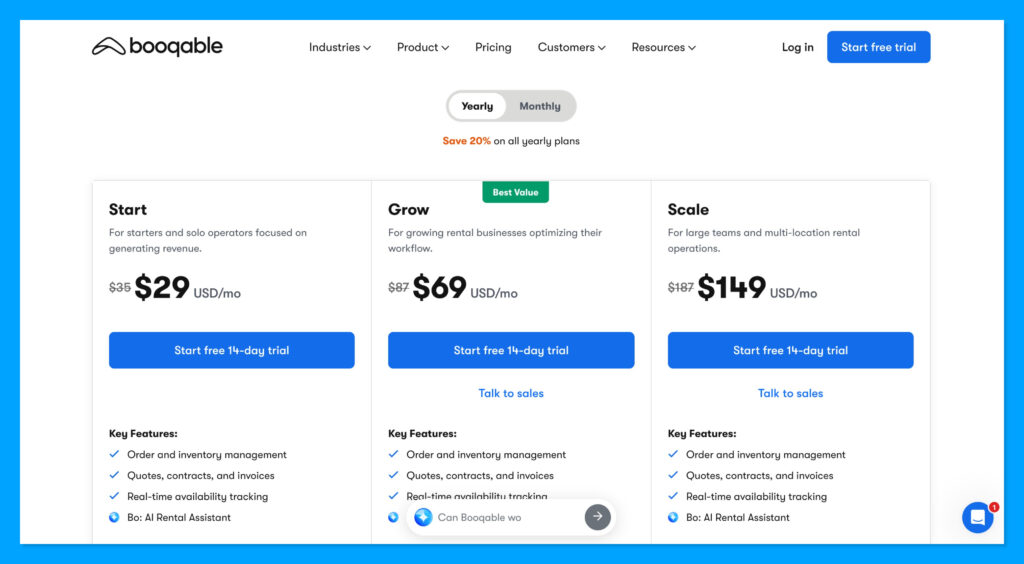
| Starting Price | $29/month (Basic, annual billing) | $29/month (Start) |
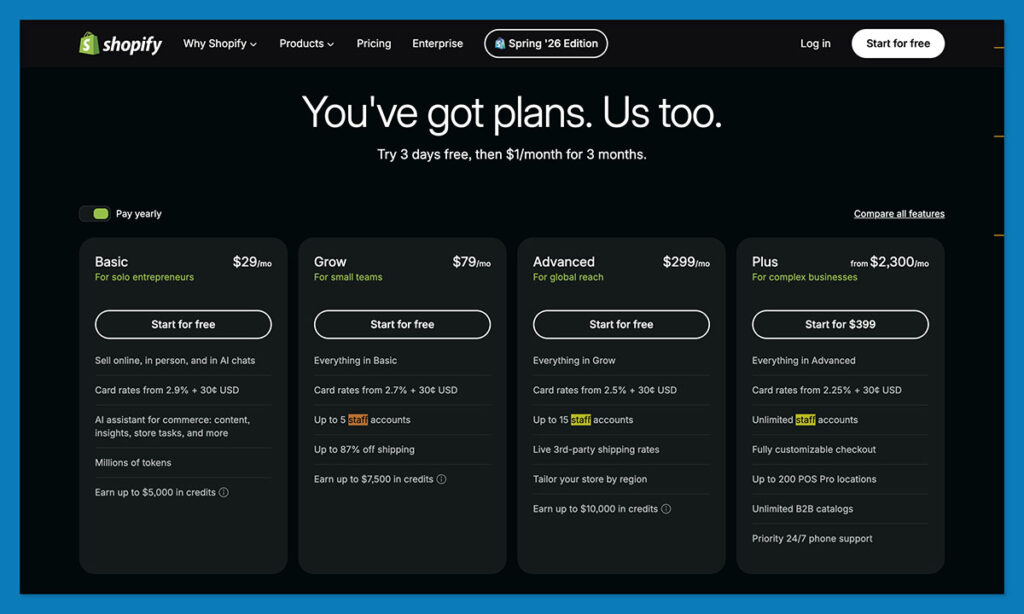
| Higher Tiers | $79, $299/month; Shopify Plus from $2,300/month | $69 and $149/month |
| Free Trial | 3 days | 14 days |
| Inventory Model | SKU stock per location | Time-based availability with rental calendars |
| Checkout | High-converting e-commerce checkout | Rental-specific checkout with deposits |
| POS/In-Person | Full retail POS (Lite and Pro) | Mobile rental check-in/check-out workflows |
| App Ecosystem | Over 8,000 third-party apps | Smaller integration list, API on higher tiers |
| Best For | Product-led brands, DTC, omnichannel retail | Rental-first businesses or hybrid via Shopify integration |
Pricing Structure: A Close Competition with Diverging Scales
The initial pricing for both Shopify and Booqable is identical, starting at $29 per month. However, the long-term cost implications diverge significantly as businesses scale.
Shopify’s Pricing Framework (Annual Billing, 2026 Estimates):
- Basic: $29/month
- Shopify: $79/month
- Advanced: $299/month
- Shopify Plus: Custom pricing, starting from $2,300/month
Beyond the monthly subscription, Shopify levies payment processing fees. On its Basic plan, these start at 2.9% + $0.30 per transaction when using Shopify Payments, reducing to 2.4% + $0.30 on the Advanced plan. Utilizing third-party payment gateways incurs an additional Shopify transaction fee. This fee structure can lead to rapidly escalating costs as sales volume increases.
Booqable’s Flat-Rate Tiers:
- Start: $29/month
- Grow: $69/month
- Pro: $149/month
A key differentiator for Booqable is its absence of transaction fees or commissions on bookings. Businesses pay their chosen payment gateway directly. Higher Booqable tiers unlock advanced features such as multi-location support, increased user accounts, API access, and detailed activity logs.
For trial periods, Booqable offers a more extensive 14-day free trial, contrasting with Shopify’s standard 3-day trial, although Shopify frequently offers introductory promotions such as $1 per month for the initial three months. Neither platform requires a credit card for initial sign-up.
For businesses opting for a combined solution, the monthly subscription costs are cumulative. A minimum of $29 for Shopify Basic and $69 for Booqable Grow (required for robust Shopify integration) totals approximately $100 per month before factoring in payment fees and additional applications.
Pricing Verdict: While the entry-level pricing is a tie, Booqable proves more cost-effective at scale. Its predictable flat-rate model, free of transaction fees, offers greater financial clarity as businesses expand. Shopify’s costs can escalate quickly once payment processing fees and app subscriptions are added.
Rental Feature Mastery: Booqable’s Purpose-Built Advantage
The divergence in rental capabilities is where Shopify and Booqable most distinctly part ways. Shopify’s inventory management is fundamentally based on Stock Keeping Units (SKUs) and quantity tracking, adept at answering "how many do I have?" but not "is this item booked from Friday to Sunday?" Booqable, by design, centers its entire operational logic around time-based availability, the very essence of rental software.
Rental Inventory and Booking Logic: Native Functionality vs. App Integration
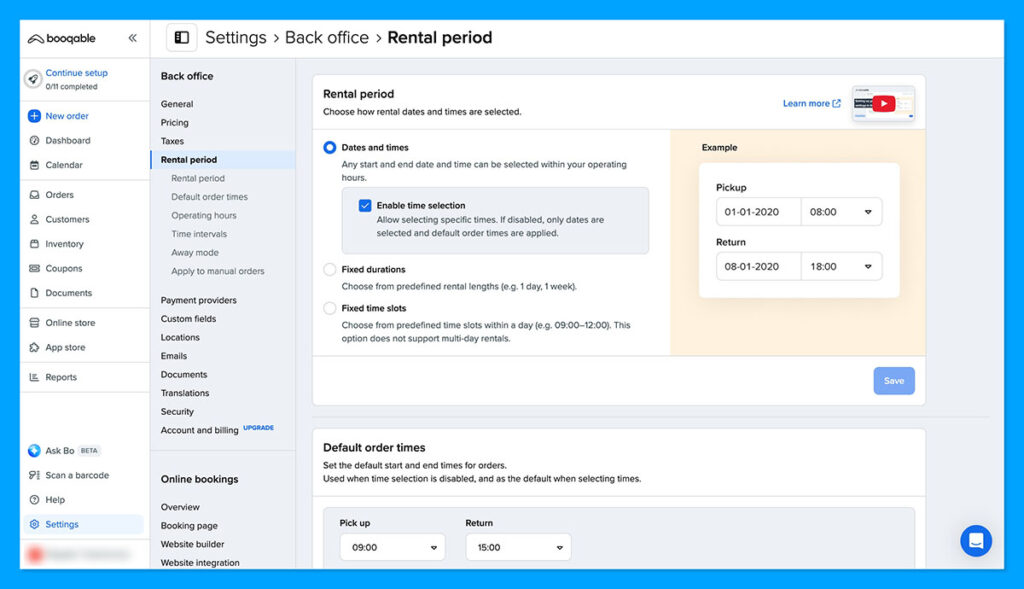
During testing, Booqable demonstrated its inherent strength by allowing each product to be associated with specific date and time windows, featuring live availability checks at checkout to prevent double bookings. The platform adeptly manages both individual, tracked items (e.g., high-value equipment with serial numbers) and bulk stock (e.g., multiple identical chairs). Its intelligent handling of product bundles ensures that when a bundle is reserved, all its constituent components are automatically blocked out from availability.
Recent updates to Booqable have further refined its rental management, including enhanced time selection for stock, improved bundle management within orders, and more sophisticated calendar filtering.
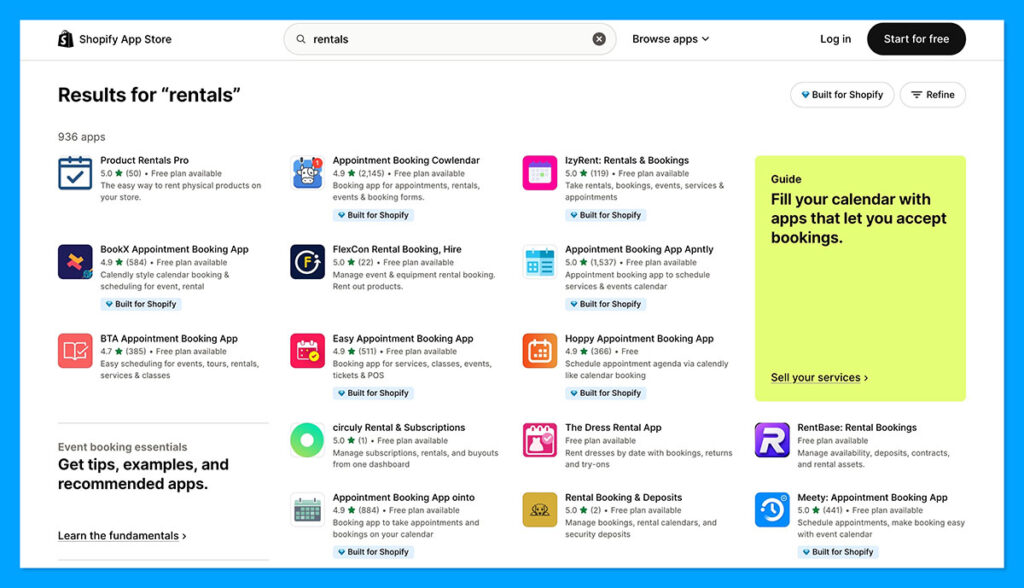
Conversely, Shopify lacks native rental functionality. Rental apps available in its App Store typically integrate a simplified version of this logic onto Shopify’s existing SKU-based inventory system, often resulting in a less seamless experience. This reliance on third-party applications can introduce limitations and potential complexities in managing rental-specific inventory and booking rules.
Quotes, Contracts, and Deposits: Streamlining Rental Transactions
Booqable natively supports the essential quote-to-contract workflow common in equipment rental. This includes the ability to generate quotes, manage customer approvals, send contracts for electronic signatures, and collect deposits separately from the final rental payment. While Shopify can achieve aspects of this through apps, the experience often feels fragmented compared to a system designed from the ground up for these processes.
Check-in and Check-out Workflows: Operational Efficiency
Booqable’s mobile applications are engineered to support the daily operational demands of a rental business. They facilitate efficient item check-out, customer returns, and post-rental inspections, including flagging any damages. While Shopify POS excels in retail transactions, it lacks these specialized workflows for items entering and exiting inventory on a temporary basis. For businesses with a physical rental presence, these daily operational efficiencies are paramount.
Rental Features Verdict: Booqable stands as the undisputed leader in rental features. Its purpose-built design addresses time-based availability, quote generation, contract management, deposit collection, and comprehensive check-in/check-out workflows natively. Shopify requires third-party solutions to approximate these functionalities, often resulting in a less integrated and efficient experience.
Product Sales Excellence: Shopify’s Unrivaled E-commerce Prowess
When the primary business model revolves around outright product sales – be it apparel, electronics, or any other tangible good – Shopify operates in a class of its own. Its decade-long dedication to optimizing the e-commerce experience is evident in nearly every facet of the customer journey.
Sales Features and Conversion Optimization
Shopify offers a comprehensive suite of e-commerce tools, including product variants, discount codes, abandoned cart recovery, gift card functionality, customer accounts, and seamless multi-channel selling capabilities. Its checkout process is consistently ranked among the industry’s highest-converting. Furthermore, Shopify Magic, an integrated AI tool, assists in generating product descriptions, blog posts, and email content, streamlining content creation for merchants.
While Booqable includes a cart and checkout system, it is optimized for rentals, handling date-based pricing and deposits rather than promotional cross-sells or subscription upsells. For businesses selling products outright, Booqable’s checkout may function but will not deliver the conversion-focused experience characteristic of dedicated e-commerce platforms.
The Power of the App Market
Shopify’s App Store boasts over 8,000 third-party integrations, covering a vast spectrum of business needs, from email marketing and subscription management to loyalty programs, customer reviews, shipping solutions, and accounting. The sheer breadth and depth of this ecosystem represent a significant competitive advantage for Shopify, enabling businesses to highly customize and extend their store’s functionality.
Booqable’s integration ecosystem is considerably smaller. It offers integrations with major website platforms (including Shopify, WordPress, Squarespace, and Wix), popular payment gateways, and accounting software. Higher tiers provide API access for custom integrations. While sufficient for many rental businesses, this limited scope can be a constraint for those seeking extensive customization in marketing automation, loyalty programs, and advanced merchandising.
Payment Options and International Reach
Shopify supports over 100 payment methods globally, including PayPal, Apple Pay, Google Pay, and its proprietary Shopify Payments. This extensive network is particularly advantageous for businesses with an international customer base or those requiring region-specific payment solutions like Klarna or iDEAL.
Booqable integrates with prominent gateways such as Stripe and Mollie, along with a select few others. While it supports multi-language back-end interfaces and can be configured for various currencies, its multi-region capabilities are less extensive than Shopify’s.
Product Sales Verdict: Shopify is the definitive choice for businesses focused on selling products directly. Its superior checkout experience, comprehensive sales features, extensive payment options, and unparalleled app ecosystem provide a significantly more robust platform for product merchandising and sales optimization than Booqable can offer.
Marketing and SEO: Shopify’s Strategic Advantage
The domain of marketing and search engine optimization (SEO) further highlights Shopify’s maturity and strategic investment in customer acquisition. Building traffic and converting visitors are distinct challenges from managing rental logistics, and Shopify has long been dedicated to addressing both.
Integrated Marketing Tools
Shopify facilitates direct integrations with social media platforms like Instagram, TikTok, and Facebook, enabling seamless product catalog synchronization with marketplaces such as Amazon and Etsy via the Shopify Marketplace Connect app. The built-in Shopify Email tool empowers merchants to design, dispatch, and track email campaigns directly from their admin interface, offering the first 10,000 emails per month free across all plans.
Booqable’s focus is primarily on the operational aspects of rentals, with less emphasis on acquisition marketing. While integrations with email marketing tools are possible through platforms like Zapier or its API, it lacks the deeply integrated marketing workflows inherent in Shopify.
Search Engine Optimization Capabilities
Shopify provides essential SEO features, including editable meta titles, descriptions, alt text, sitemaps, and canonical tags, with further advanced tooling available through third-party apps. Its partnership with Semrush, facilitated by the Ecommerce Booster app, offers merchants actionable SEO recommendations.
Booqable’s hosted rental sites and embeddable widgets offer basic SEO functionality. However, the platform is not inherently designed around content marketing strategies in the way Shopify is. For businesses heavily reliant on organic search traffic, this distinction is a significant consideration.
Global Expansion and Internationalization
Shopify supports over 30 languages and can automatically direct customers to translated storefronts based on their browser preferences. Its built-in multi-currency selling capabilities, coupled with Shopify Markets, provide robust tools for managing region-specific pricing, taxes, and duties.
Booqable offers multi-language support for its administrative interface and can be configured for different currencies. However, its capabilities for managing international markets are less comprehensive than those offered by Shopify.
Marketing and SEO Verdict: Shopify offers substantially superior tools for marketing, SEO, and international expansion. For businesses whose growth strategy hinges on customer acquisition through search, social media, and email marketing, Shopify provides a more comprehensive and integrated set of resources out-of-the-box.
Ease of Use: A Task-Dependent Evaluation
The assessment of ease of use is contingent upon the specific business activities being performed. Shopify offers a more streamlined and polished onboarding experience for general e-commerce setup. However, Booqable presents a more intuitive interface once users engage with date-based inventory management.
Shopify’s onboarding process is remarkably swift, typically taking under two minutes. It involves a brief questionnaire about business objectives, followed by an immediate drop into the admin dashboard with a setup checklist. The interface is clean, featuring a section-based editor that is easy to learn, and product addition is straightforward.
Booqable’s sign-up process is equally efficient, requiring only basic business details. Its dashboard is organized around orders, calendar views, and inventory status, rather than extensive catalog management. For users new to rental software, there might be a slight learning curve in configuring rental-specific pricing (hourly, daily, weekly) and bundles. However, once the model is understood, the interface proves well-organized and unobtrusive.
In terms of template editing, brand customization, and content management, Shopify demonstrates a clear advantage in usability. Conversely, Booqable excels in the day-to-day management of live bookings, availability conflicts, and rental orders.
Ease of Use Verdict: The winner here is task-dependent. Shopify is generally easier for initial e-commerce setup, content editing, and brand customization. Booqable is more intuitive for the daily operations of running a rental business. For beginners, Shopify offers a gentler introduction to e-commerce, while Booqable’s ease of use shines in its specialized rental functions.
Storefront Design and Template Selection: Shopify’s Aesthetic Edge
Shopify provides access to over 190 templates across diverse industries, including 13 free options and premium themes ranging from $180 to $350 as a one-time purchase. These themes are characterized by modern design, mobile optimization, and a focus on conversion, featuring customizable sections that can be rearranged without requiring coding expertise.
Booqable includes a rental website builder with a more limited selection of templates specifically designed for rental businesses. Alternatively, Booqable’s booking widgets can be embedded into existing websites on platforms like WordPress, Squarespace, Wix, or Shopify, rather than relying solely on its native builder.
For brand-centric businesses where the storefront is an integral part of the product experience, Shopify’s design flexibility is a significant asset. For rental operators who prioritize functional availability calendars and booking flows over award-winning design, Booqable’s templates are adequate.
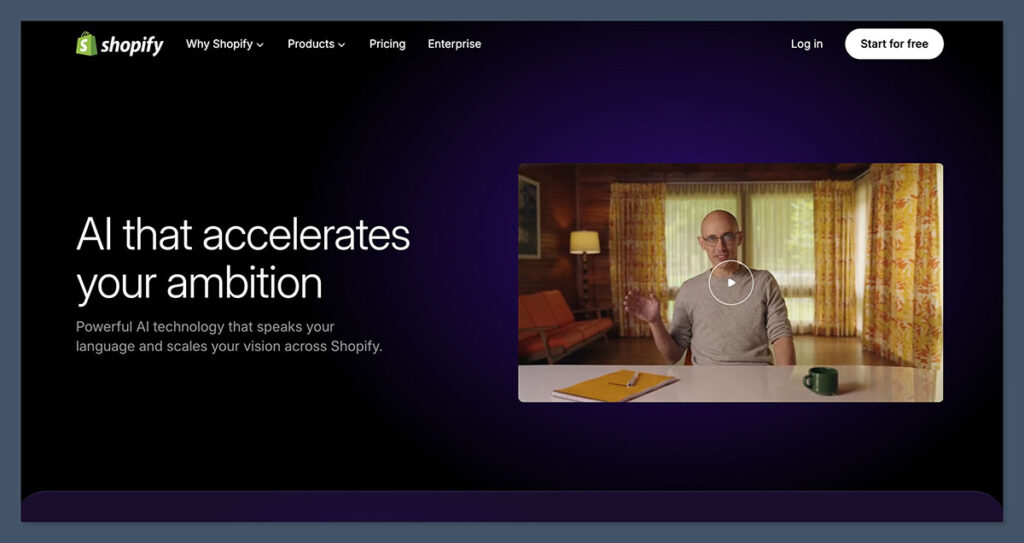
Storefront Design Verdict: Shopify offers a broader spectrum of templates and significantly greater design flexibility. If brand experience and aesthetic appeal are paramount, Shopify’s design ecosystem provides more extensive options. Booqable’s themes are functional but comparatively limited.
The Combined Power: Shopify + Booqable Integration
A crucial aspect of evaluating these platforms is recognizing that they are not mutually exclusive. Booqable offers a native integration with Shopify, effectively transforming Shopify into the primary storefront while Booqable manages the underlying rental logic, inventory, and checkout processes. For many hybrid businesses, this combined stack represents the optimal solution.
Integration Mechanics
Booqable’s Shopify app enables the embedding of rental products, date pickers, and real-time availability directly within Shopify product pages. While product information must exist in both systems, rental pricing, availability, and inventory data synchronize from Booqable to the embedded elements on Shopify. The rental cart and checkout can be branded and optionally hosted on the merchant’s domain, ensuring a cohesive customer experience.
Advantages of the Combined Stack
- Unified Storefront: Leverages Shopify’s design flexibility and marketing capabilities for customer-facing elements.
- Optimized Rental Operations: Utilizes Booqable’s robust, purpose-built rental management features.
- Seamless Customer Experience: Integrates rental bookings within a familiar e-commerce checkout flow.
- Scalability: Allows businesses to scale both product sales and rental services independently.
- Cost-Effectiveness for Hybrid Models: Can be more efficient than attempting to replicate rental functionality within Shopify using multiple apps.
Trade-offs of the Combined Stack
- Increased Complexity: Managing two platforms and their integration requires more effort and technical understanding.
- Higher Monthly Costs: The cumulative subscription fees for both platforms can be substantial.
- Data Synchronization Challenges: Ensuring accurate and real-time data flow between the two systems is critical.
- Learning Curve: Merchants need to become proficient in both Shopify’s e-commerce features and Booqable’s rental management tools.
The combined stack is particularly beneficial for businesses with hybrid models – selling some items outright, renting others, and potentially offering memberships or subscriptions. It also appeals to businesses prioritizing content marketing, SEO, and brand storytelling, requiring Shopify’s content management tools alongside sophisticated rental operations.
Combined Stack Verdict: The Shopify + Booqable integration is the ideal solution for hybrid businesses. It offers best-in-class tools for both e-commerce and rental operations, albeit with increased complexity and cost. This approach is suitable for businesses that sell products and rent others, or those needing advanced marketing capabilities alongside robust rental management.
Customer Support: Shopify’s Broad Reach
Both platforms offer adequate support, but Shopify’s scale provides a more extensive range of channels and resources.
Shopify Support:

- 24/7 live chat, email, and phone support.
- Extensive knowledge base and community forums.
- Large network of Shopify Partners for specialized assistance.
Booqable Support:
- Email support and a comprehensive help center.
- Responsive and knowledgeable support staff focused on rental operations.
Support Verdict: Shopify edges out Booqable in support breadth and availability. Its round-the-clock live chat, vast documentation, and extensive partner network are difficult to surpass. Booqable’s support is proficient and tailored to rental needs, but its overall resources are more limited in scale.
Testing Methodology and Data Verification
Our analysis involved over 60 hours of hands-on testing across seven weighted criteria. This included signing up for trial accounts, building test stores, simulating real-world rental scenarios, and evaluating the Shopify + Booqable integration. Pricing information was verified against current published rates as of 2026.
Final Verdict: Choosing the Right Platform for Your Business
The fundamental distinction between Shopify and Booqable lies not in direct competition, but in their roles within a business’s technology stack. The optimal choice is dictated by the specific nature of the business.
-
Choose Shopify Alone if: Your primary revenue stream is from selling products outright, and rentals are a minimal or negligible part of your business. Shopify’s comprehensive e-commerce features, marketing tools, and vast app ecosystem are unparalleled. For occasional rental needs, a third-party app may suffice.
-
Choose Booqable Alone if: You operate a rental-first business where equipment hire, party rentals, or similar services are the core of your operation. In such cases, Booqable’s purpose-built rental logic, availability management, and operational workflows are essential. Attempting to replicate this functionality on Shopify would likely lead to daily operational friction.
-
Choose Shopify + Booqable if: Your business model is genuinely hybrid, involving both the sale of products and the rental of items. This combination also suits businesses that require polished marketing and customer acquisition strategies alongside sophisticated rental operations. While this integrated approach introduces greater complexity and cost, it provides best-in-class tools for both facets of the business.
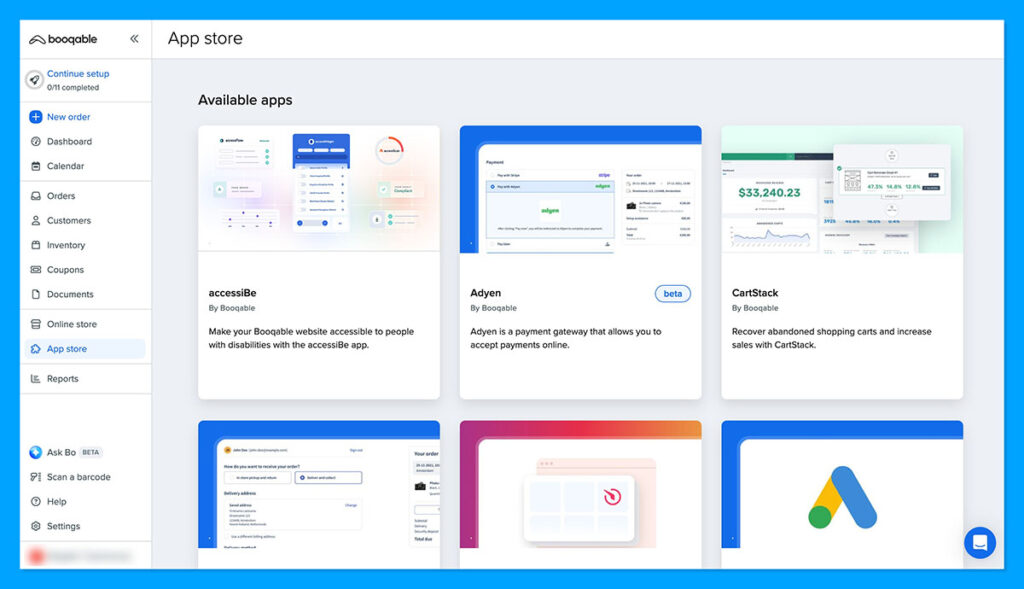
Both platforms offer risk-free free trials, making it advisable for businesses to test the solution that best aligns with their model to gauge practical usability before committing.
Frequently Asked Questions
Can Shopify handle rentals independently?
Technically, yes, through third-party applications from the Shopify App Store. However, Shopify’s native inventory system does not inherently support date-based availability. Rental apps work around this limitation with varying degrees of success. This approach may be adequate for infrequent or simple rental needs but is generally insufficient for rental-first businesses.
Can Booqable completely replace Shopify?
For businesses exclusively focused on rentals, Booqable can serve as a comprehensive solution. It offers a dedicated rental website builder, checkout system, and order management. While it may lack the extensive marketing depth and app ecosystem of Shopify, these are often unnecessary for pure rental operations.
What is the cost of running Shopify and Booqable together?
The minimum monthly cost is approximately $100, comprising Shopify Basic ($29) and Booqable Grow ($69), the latter being essential for robust Shopify integration. Including payment processing fees on Shopify, potential paid apps, and theme costs, a realistic monthly budget for a small operation could range from $150 to $250.
Does Booqable charge transaction fees on bookings?
No, Booqable does not charge commission on bookings or impose platform transaction fees. Businesses are only responsible for the standard processing rates of their chosen payment gateway. This represents a significant cost advantage over Shopify for businesses with high booking volumes.
Which platform is better for in-person rentals: Shopify or Booqable?
Booqable is superior for in-person rentals. Its mobile applications and in-store workflows are designed for the practicalities of rental check-in, check-out, item inspection, and damage tracking. While Shopify POS is effective for retail transactions, it lacks these specialized rental workflows.
Which platform is easier for a beginner to set up?
For beginners to e-commerce in general, Shopify offers a faster setup due to its guided onboarding and extensive template library. For beginners to rental software specifically, Booqable’s learning curve is manageable, and the operational efficiencies gained in rental management often justify the initial learning investment.

 Ammar Sabilarrohman
 Nila Kartika Wati