

The digital age has ushered in an era where personal data is both a valuable currency and a significant responsibility for brands. One fascinating illustration of this dynamic lies in the realm of birthday email marketing, a channel that consistently demonstrates exceptional engagement rates yet often remains surprisingly underleveraged. An informal study by a marketing expert, who maintains two birthdays—a real one and an "email birthday" used for brand sign-ups—recently revealed a stark paradox: out of 124 potential birthday emails triggered by collected data, only 43, or a mere 35%, were actually received. This striking statistic underscores a critical gap between data collection and effective utilization, turning a highly anticipated customer touchpoint into a missed opportunity for many businesses worldwide.
This phenomenon, akin to the British monarch’s dual birthdays, highlights a universal truth in customer relationship management: personalization, when executed thoughtfully, can forge deep emotional connections and drive significant commercial value. However, when poorly implemented or neglected, the collection of sensitive personal data like a customer’s date of birth can lead to consumer disappointment and a diminished brand perception. The emails received by the aforementioned expert, ranging from genuinely delightful offers to perfunctory messages, collectively serve as a compelling case study into the mechanics of effective birthday campaigns and their rightful starring role in the modern customer journey.
The Evolution of Personalized Marketing: A Chronology
The landscape of email marketing has undergone a profound transformation over the past two decades, evolving from rudimentary mass communications to sophisticated, data-driven personalized interactions. In its infancy, around the late 1990s and early 2000s, email marketing was largely characterized by bulk sending. Companies would broadcast generic messages to vast, undifferentiated lists, often with little regard for individual preferences or demographics. The focus was on reach, not relevance, and open rates were naturally low as recipients were inundated with irrelevant content.
The mid-2000s saw the rise of more advanced Email Service Providers (ESPs) and rudimentary segmentation capabilities. Marketers began to categorize subscribers based on basic demographics like gender, location, or purchase history. This allowed for slightly more targeted messaging, moving beyond a one-size-fits-all approach. It was during this period that the concept of "lifecycle emails" started gaining traction. Welcome emails, abandoned cart reminders, and transactional confirmations became standard, recognizing that different stages of the customer journey warranted specific communications.
The introduction of birthday emails as a distinct lifecycle campaign emerged as a natural progression of this personalization trend. Initially, these were simple, automated messages, perhaps offering a generic discount. The primary goal was to acknowledge the customer and provide a small incentive. However, as Customer Relationship Management (CRM) systems became more integrated with ESPs in the late 2000s and early 2010s, the potential for deeper personalization within birthday campaigns grew. Brands could now access richer customer profiles, allowing for more tailored offers based on past purchases, loyalty status, or stated preferences.
The current era, from the mid-2010s onwards, is defined by hyper-personalization, dynamic content, and the integration of artificial intelligence (AI) and machine learning. Marketers can now leverage complex algorithms to predict customer needs, optimize timing, and dynamically populate email content with highly relevant product recommendations or personalized offers. Birthday emails, in this context, have the potential to be truly bespoke experiences, utilizing animated graphics, interactive elements, and highly specific rewards that resonate deeply with individual recipients. This chronological progression underscores that while the tools for sophisticated birthday marketing exist, their full potential is often unrealized, leading to the significant disparity in expected versus received messages.
Unlocking Value: Benefits for Brands and Consumers
The collection of a customer’s date of birth represents a powerful piece of personal data, and its judicious application yields substantial benefits for both businesses and their clientele. For brands, integrating birthdate information into their marketing strategies significantly enhances life-stage segmentation and personalization efforts. This data allows companies to categorize customers not just by demographics, but by a key temporal marker, enabling predictive analytics regarding purchasing behavior and product preferences associated with age groups or life events. Consequently, birthday messages consistently outperform generic promotional campaigns in critical metrics such as open rates and click-through rates, signaling a higher level of customer engagement and interest. These emails are not merely a courtesy; they are a strategic asset for improving campaign performance and fostering stronger customer relationships.
From the consumer perspective, birthday rewards are genuinely anticipated. These can manifest as exclusive discounts, complimentary products, bonus loyalty points, or even access to age-restricted benefits. Beyond the tangible value, there’s an intrinsic pleasure in feeling recognized and valued by a brand. Birthday marketing, by its very nature, is deeply personal, cultivating an emotional connection that transcends mere transactional interactions. This sense of being "known" reinforces brand loyalty and can transform a casual customer into a dedicated advocate.
However, the efficacy of this strategy hinges entirely on its execution. As highlighted by Validity data, a significant portion of collected birthday data goes unused. The study’s finding that only 35% of expected birthday emails were delivered from brands that had explicitly requested and received date of birth information is alarming. This "use it or lose it" scenario carries substantial implications. When brands collect personal data but fail to act upon it, they not only squander a prime marketing opportunity but also risk eroding customer trust. Consumers implicitly expect that data provided will be used to enhance their experience; failing to do so can lead to disengagement and a perception of carelessness or incompetence. This negligence in data utilization is a critical flaw in the customer journey that demands immediate attention.
A Spectrum of Celebration: Analyzing Birthday Email Tactics
Birthday email campaigns typically fall into several distinct categories, each with its own approach to customer engagement and value proposition. Understanding these tactics is crucial for brands seeking to optimize their own strategies.
-
The Sentimental Gesture: Messages of Goodwill: More prevalent among premium brands, this tactic often prioritizes sentiment over direct discounts. For high-net-worth clientele, the expectation isn’t necessarily a freebie, but rather a thoughtful acknowledgment. These emails convey appreciation, perhaps with a beautifully designed card or a subtle suggestion to indulge in their products to celebrate. The core idea is that "it’s the thought that counts," aiming to reinforce brand prestige and loyalty through emotional connection rather than transactional incentives. Some variations might include an invitation to a special event or early access to new collections, subtly encouraging further engagement without overtly offering a discount.
-
The Discount Driver: Transactional Incentives: By far the most common approach, birthday discounts are a straightforward way to encourage immediate purchases. These typically involve a percentage off or a fixed monetary reduction, often accompanied by a minimum spend requirement. While a common strategy, the effectiveness of a discount hinges on its perceived generosity. A token 5% or 10% off might feel insincere, especially if the minimum spend is high. Conversely, a substantial 20-30% discount, or one with a reasonable or no minimum spend, is more likely to drive conversions, making the customer feel genuinely rewarded and valued. The goal is to make the discount appealing enough to warrant action, without appearing desperate or devaluing the brand.
-
The Freebie Enticement: Complimentary Products or Services: Many brands, particularly in the food and beverage industry, offer free products or services as a birthday treat. A prevalent example is the free birthday dessert offered by restaurants, often contingent on the purchase of an entrée. While seemingly a "free" gift, an analysis of average entrée and dessert prices reveals the effective discount embedded within these offers.
| Restaurant | Avg. Entrée | Avg. Dessert | Effective Discount |
|---|---|---|---|
| Seasons 52 | $28 | $4–$9 | 12–24% |
| Olive Garden | $18.50 | $12 | ~39% |
| Yard House | $21 | $10 | ~32% |
| Cheddar’s | $18 | $7.50 | ~29% |
| LongHorn Steakhouse | $26 | $11 | ~30% |
| Applebee’s | $17 | $6 | ~26% |
Viewed through this lens, the average effective discount across these restaurant chains is approximately 30%, with Olive Garden standing out at nearly 39%. This demonstrates that while presented as a free item, these offers skillfully incentivize additional spending, providing a win-win for both the customer (perceived free gift) and the brand (guaranteed purchase).
-
Optimizing Redemption: Extended Windows and Multi-Stage Sequences: A critical factor in the success of birthday campaigns is providing a reasonable window for redemption. Most brands offer customers a period, typically 30 days, to utilize their birthday gift. The most effective strategies, however, go beyond a single email. Brands like Calvin Klein employ a multi-stage sequence: an advance warning email, an on-the-day message, and a timely reminder. This staggered approach maximizes the visibility of the offer, caters to varying customer schedules, and significantly increases the likelihood of the gift being redeemed, thereby boosting engagement and sales.
-
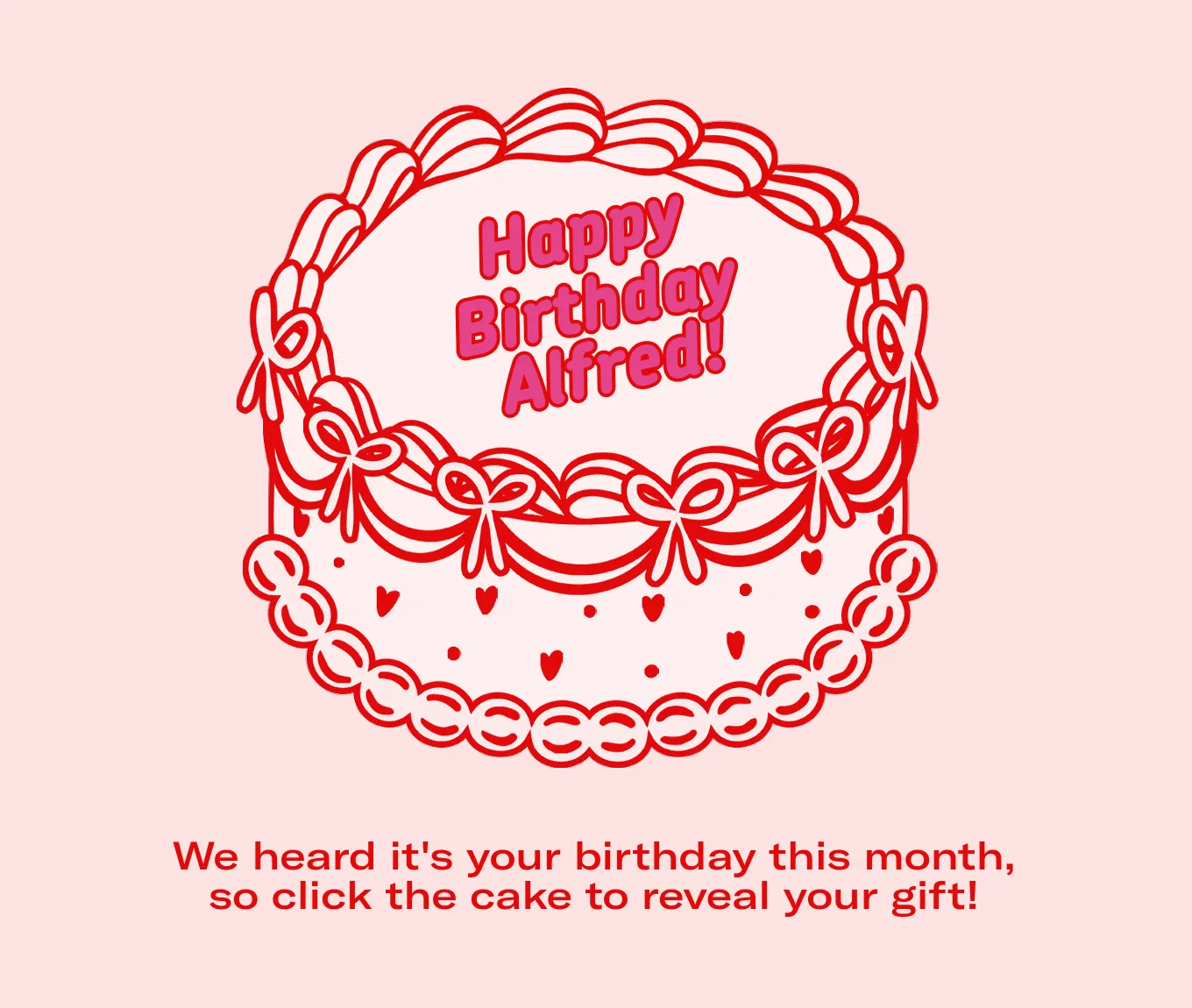
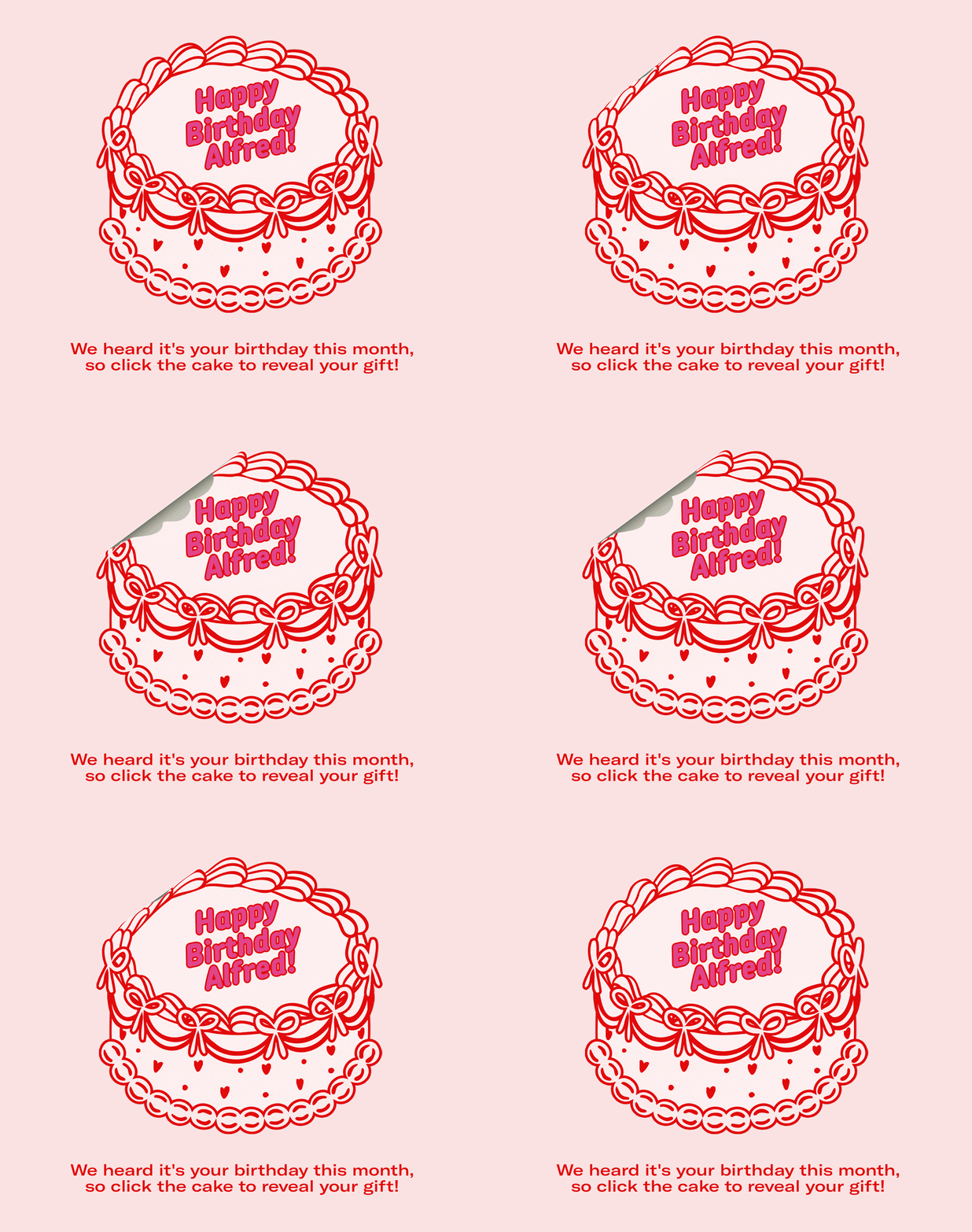
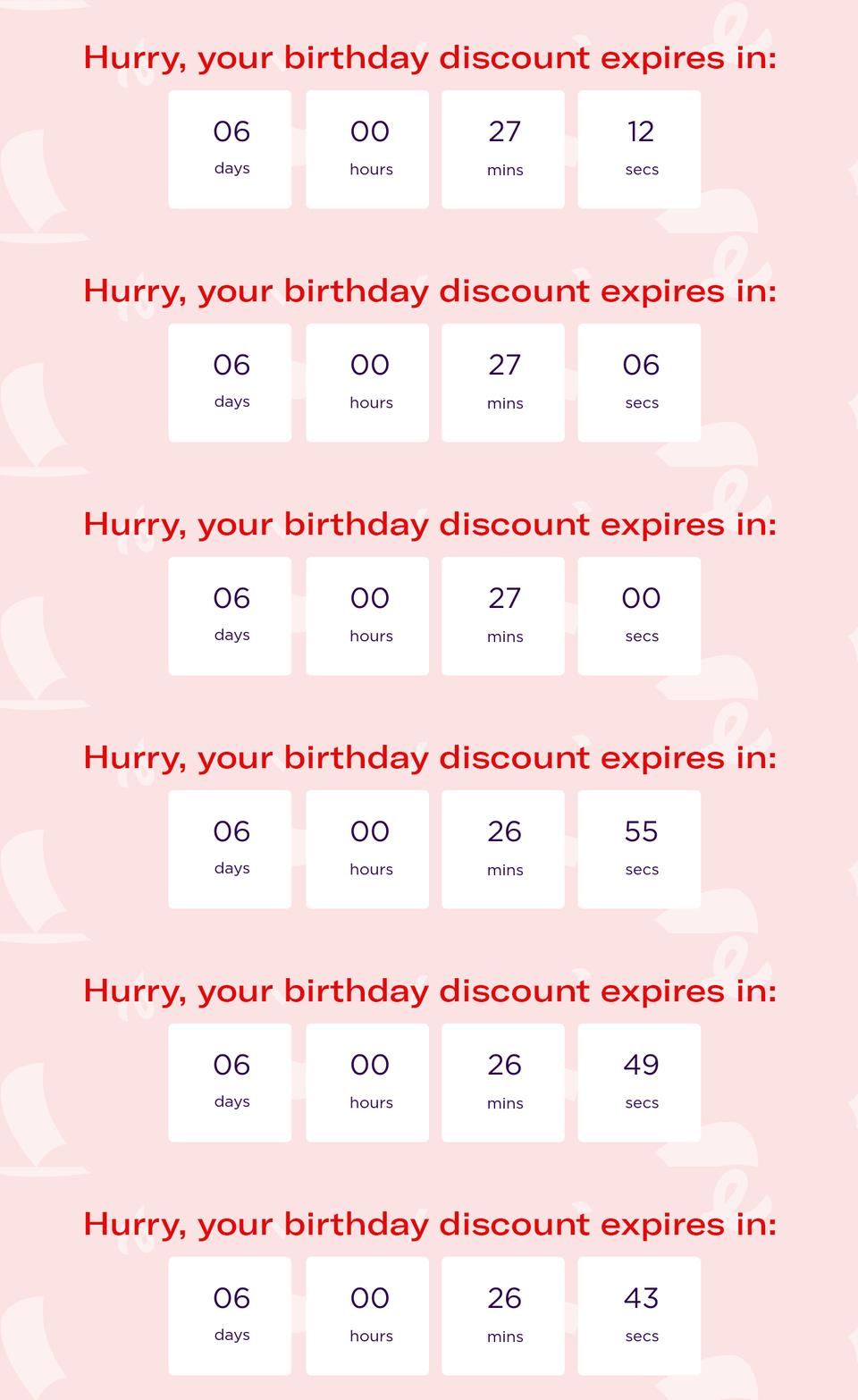
The Power of Engagement: Dynamic Content and Interactivity: Surprisingly, despite the celebratory nature of birthdays, few senders fully leverage animation or dynamic content in their emails. This is a missed opportunity, as birthdays are ideally suited for interactive elements like flickering candles, "open your present" reveals, or animated greetings. Virgin Australia exemplifies best practice in this area: their on-the-day email features an animated cake that visually "reveals" the discount, adding an element of surprise and delight. A follow-up email then incorporates a countdown timer, strategically introducing urgency to encourage prompt redemption. Such dynamic elements not only capture attention but also enhance the overall brand experience, making the birthday message memorable and impactful.
Case Studies in Excellence: Brands That Get It Right
Amidst the deluge of "here’s your birthday discount" emails, certain brands distinguish themselves by offering truly compelling and customer-centric rewards. The gold standard, according to the informal study, was set by Burger King, which simply offered, "Enjoy a free bday Whopper." This offer stood out precisely because of its simplicity and lack of conditions—no minimum spend, no caveats, just a complimentary burger on the special day. This direct, no-strings-attached approach maximizes perceived value and minimizes friction for the customer.
Several other brands also garnered honorable mentions for their thoughtful and valuable birthday offers:
- Marriott Bonvoy: Offering bonus loyalty points, this strategy appeals directly to existing loyalty program members, reinforcing their commitment to the brand and encouraging future stays or redemptions. It’s a smart way to deepen the relationship with high-value customers.
- L’Occitane: Combining a discount with free shipping removes two common barriers to purchase. This dual incentive makes the offer more attractive, especially for online shoppers who are often deterred by shipping costs.
- Domino’s: A free pizza on one’s birthday is a universally appealing and highly shareable offer, often leading to group orders and increased overall spend.
- Dunkin’: A free drink provides an immediate, low-friction reward that encourages a store visit, potentially leading to additional purchases like food items.
- Starbucks: Similarly, a free drink from Starbucks is a highly coveted and frequently redeemed offer, leveraging the brand’s popular product and fostering a sense of appreciation among its loyal customer base.
These examples demonstrate that the most effective birthday campaigns are those that offer genuine value, minimize friction in redemption, and align with the brand’s core offerings in a way that resonates with the customer’s desires. They transform a routine marketing task into a moment of genuine delight and appreciation.
The Commercial Imperative: Quantifying the ROI of Birthday Campaigns
The commercial impact of birthday email campaigns, while often underestimated, is demonstrably significant. The informal study found that the average discount or discount equivalent across over 50 received emails was 18%. While this might seem reasonable from a brand’s perspective—a restaurant operating at a 4% net margin, for instance, has limited scope for giveaways—it prompts a crucial question: could brands achieve greater returns by investing more strategically in these highly personal touchpoints?
The business case for nurturing active customers is robust and well-established. Research from the Harvard Business Review indicates that acquiring a new customer can cost five times more than retaining an existing one. Further, Bain & Company found that even a modest 5% boost in customer retention can lead to a profit increase of up to 75%. Reactivating dormant customers, while cheaper than acquisition, remains considerably more expensive than simply maintaining a strong, ongoing relationship. These figures underscore the immense value of proactive customer engagement.
When specifically examining email marketing performance, the data becomes even more compelling. Experian’s Birthday Emails report highlighted that birthday emails generate an astonishing 481% more transactions and 342% more revenue per email compared to standard promotional campaigns. This positions birthday messages as one of the highest-performing touchpoints across the entire customer lifecycle. In stark contrast, Dotdigital research reveals that win-back emails, even when accompanied by an enticing offer, typically redeem at just over 2%.
This juxtaposition presents a clear economic imperative: it is far more financially prudent to invest in a meaningful birthday gesture than to spend heavily on costly and often unsuccessful win-back campaigns later. Brands routinely extend substantial discounts, sometimes ranging from 25% to 40%, in attempts to re-engage disengaged customers, often with limited success. The data strongly suggests that allocating a fraction of that investment earlier, at a time of high emotional engagement like a birthday, when the customer’s connection to the brand is stronger and their receptiveness to offers is higher, makes profound economic sense. The cost of prevention, in this context, is not only a fraction of the cost of a potential win-back campaign but also yields significantly higher returns on investment.
Mastering the Art: Ten Strategies for Effective Birthday Email Marketing
Given the compelling business case, making subscriber birthday emails truly effective is paramount. Their personal nature dictates that they must be executed flawlessly; errors, irrelevance, or reliance on outdated data can do more harm than good. Here are ten comprehensive strategies for optimizing birthday email marketing:
-
Ensure Data Accuracy and Integrity: The foundation of any successful personalized campaign is clean, current data. Brands must implement robust data validation processes to ensure that collected dates of birth are correct and regularly updated. This includes periodically prompting users to confirm their details or providing easy self-service options for updates. Sending a birthday email on the wrong day can be perceived as careless and undermine trust.
-
Craft a Genuinely Valuable Offer: Move beyond token gestures. The birthday reward should be substantial enough to feel like a real gift. Whether it’s a generous discount, a truly free product with no strings attached (like Burger King’s Whopper), or bonus loyalty points, the perceived value must be high. Consider customer segments and tailor offers accordingly; a high-value customer might appreciate an exclusive experience, while a new customer might prefer a significant discount on their first birthday purchase.
-
Implement a Multi-Stage Email Sequence: A single email is often insufficient. A strategic sequence might include:
- Pre-Birthday Nudge (7-14 days prior): A gentle reminder that their birthday is approaching, building anticipation and providing an early opportunity to plan how they might use their gift.
- On-the-Day Celebration: The main birthday message, clearly outlining the gift and how to redeem it.
- Post-Birthday Reminder (7-14 days after): A follow-up to customers who haven’t yet redeemed their offer, emphasizing the expiration date and providing a final call to action.
-
Leverage Dynamic Content and Interactivity: Infuse emails with celebratory flair. Animated GIFs of cakes, candles, or confetti can instantly elevate the mood. Interactive elements, such as scratch-off reveals for discounts or embedded mini-games, can significantly boost engagement and memorability, making the email a delightful experience rather than just another promotional message.
-
Personalize Beyond the Name: While addressing the recipient by name is a basic requirement, true personalization goes deeper. Use past purchase history to recommend relevant products for their birthday, or acknowledge their loyalty status with an upgraded offer. For example, a travel brand might suggest destinations based on previous bookings, or a beauty brand might recommend products complementing their favorite items.
-
Optimize Timing for Maximum Impact: While the birthday itself is central, consider the optimal time of day for sending. A morning send might catch recipients as they start their day, while an evening send might be better for those planning an after-work celebration. A/B test different send times to identify what works best for your audience.
-
Ensure Mobile Responsiveness and Accessibility: A significant portion of emails are opened on mobile devices. Ensure birthday emails are beautifully rendered and fully functional on all screen sizes. Also, consider accessibility features, such as alt-text for images and clear color contrasts, to ensure the message is accessible to all users.
-
Provide a Clear and Frictionless Redemption Path: The process of claiming the birthday gift must be straightforward. Include a prominent, clear call-to-action button. If a code is required, ensure it’s easily copied and pasted. If redemption is in-store, provide clear instructions and store locators. Any friction in the redemption process can lead to abandoned offers and frustration.
-
Integrate Across Channels (Where Appropriate): While email is primary, consider integrating the birthday celebration with other channels. A personalized SMS reminder on the day, an in-app notification, or even a direct mail piece for high-value customers can amplify the message and ensure it cuts through the digital noise.
-
Analyze and A/B Test Continuously: Birthday campaigns are not static. Regularly review performance metrics such as open rates, click-through rates, conversion rates, and revenue generated. A/B test different subject lines, offers, creatives, and redemption windows to continually optimize for better results. Learn from what resonates with your audience and refine your strategy accordingly.
Getting birthday email marketing right creates meaningful, positive interactions that significantly strengthen the overall brand experience. Even if customers do not convert immediately, a positive birthday interaction enhances brand perception, increases the likelihood of future purchases, and cultivates stronger brand advocates who are more likely to recommend the brand to others. It is an investment in customer relationships that pays dividends in loyalty and lifetime value.
To further empower brands in this endeavor, tools like Validity’s Intelligence Network offer AI-powered email intelligence built on the world’s largest email data network. Validity Engage, for instance, is designed to remove risk and boost email performance, enabling marketers to create, manage, and protect accurate customer segments year-round, producing exceptional results in less time. By embracing these strategies and leveraging advanced analytics, brands can transform birthday emails from a mere formality into a cornerstone of their customer engagement strategy, ensuring that every customer feels genuinely celebrated and valued, every single year.








