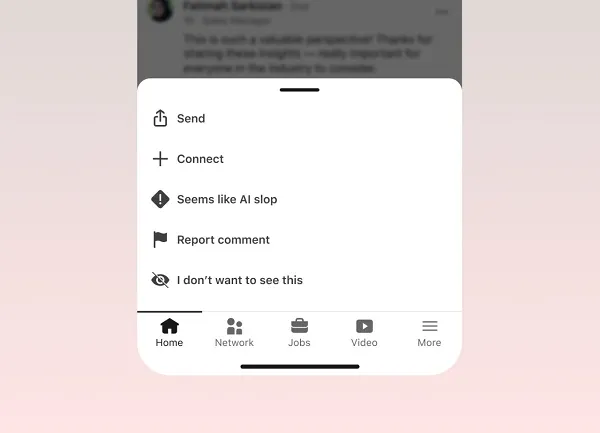
LinkedIn, the world’s largest professional networking platform, has provided a comprehensive update on the initial impact and strategic intent behind its recently introduced "seems like AI slop" reporting option. Launched earlier this month as a systematic mechanism for users to flag content perceived to be generated by artificial intelligence tools, the feature has quickly gained significant traction, underscoring a broader industry challenge concerning content authenticity and quality in the era of generative AI. The platform’s proactive stance reflects a critical effort to preserve the integrity of professional discourse and ensure the value of content shared within its ecosystem.
The proliferation of generative artificial intelligence tools, epitomized by large language models like OpenAI’s ChatGPT and Google’s Gemini, has irrevocably altered the landscape of online content creation. Since their widespread public availability in late 2022, these tools have democratized content generation, making it remarkably easy to produce text, images, and even video at an unprecedented scale and speed. While offering undeniable benefits for productivity and creative expression, this accessibility has also given rise to a deluge of low-effort, generic, and often unoriginal content. Many platforms are grappling with the potential dilution of user experience as feeds become saturated with material that, while technically coherent, lacks genuine insight, unique perspective, or substantive value. For a platform like LinkedIn, which prides itself on fostering professional connections, knowledge sharing, and career development, the integrity and quality of content are paramount. The emergence of what many users have colloquially termed "AI slop" poses a direct threat to this foundational principle, risking a decline in engagement and trust if the platform becomes a repository for automated, uninspired posts.
Recognizing this growing challenge, LinkedIn moved swiftly to empower its user base in combating the perceived decline in content quality. The "seems like AI slop" option was rolled out as part of a broader strategy to maintain a high standard of professional interaction and insight. Hari Srinivasan, LinkedIn’s Chief Product Officer, revealed the remarkable uptake of this new feature, stating that in its inaugural two weeks, the option was utilized by over a million people. This immediate and widespread adoption highlights the palpable frustration among users regarding the increasing presence of generic, AI-generated content in their feeds. The sheer volume of reports underscores the urgency with which the professional community seeks to differentiate authentic human contributions from automated narratives.
However, alongside the enthusiastic embrace of the reporting tool, LinkedIn has also emphasized the precise purpose and operational mechanics behind the "seems like AI slop" designation. A crucial clarification from the platform is that reporting content through this option does not automatically trigger a punitive response or lead to a reduction in its overall distribution. This nuanced approach is vital to prevent misuse and ensure fairness to creators. Sam Corrao Clannon, LinkedIn’s Creator Product Lead, provided a definitive internal definition of "AI slop," describing it as "content that is potentially sophisticated or polished in its presentation, but lacks substance. So it doesn’t have any particular experience, perspective, or insight, but is sort of just empty text that’s posted to take up space and garner attention without effort on the other side.” This definition clearly differentiates between legitimate uses of AI as a creative assistant—such as refining language or brainstorming ideas—and the generation of superficial content purely for engagement without genuine contribution. Corrao Clannon underscored that the feature is not designed to target all instances of AI use in content creation but is specifically aimed at curbing the proliferation of "junk posts" that detract from the user experience.
The implementation of the "seems like AI slop" option represents a key chronological step in LinkedIn’s ongoing efforts to safeguard content quality. The journey began with the platform’s observations of an escalating volume of AI-generated content following the mainstream adoption of generative AI tools. While exact dates for internal discussions are not public, the feature’s launch earlier this month signifies a rapid response to an evolving digital landscape. The subsequent release of usage data by Hari Srinivasan confirmed the initial efficacy of the tool in mobilizing user feedback. LinkedIn’s leadership has been transparent about its intent, with Srinivasan’s posts on the platform serving as direct channels for communicating updates and clarifying policy. Corrao Clannon’s detailed explanations have further elucidated the strategic thinking behind the feature, emphasizing its role in user empowerment rather than as a strict policy enforcement mechanism. This clarification was particularly important given potential misinterpretations that any use of AI would be penalized.
The reporting option, Corrao Clannon clarified, is not "a reporting path for policy violations." Instead, it functions primarily as a sophisticated feedback mechanism designed to provide individual users with greater control over their personalized feeds. When a user flags content as "AI slop," the immediate effect is a signal to LinkedIn’s algorithms that this specific user is less interested in seeing similar content. Consequently, that user will likely encounter fewer posts from the same creator or with similar characteristics in their future feed. This individualized approach is complemented by the platform’s broader data aggregation strategy. Srinivasan elaborated that no single piece of feedback dictates the overall distribution of content. "We look at many signals together, and we’ve built safeguards to help prevent individual feedback from being used to unfairly target other members," he stated. This multi-signal approach ensures that content performance is assessed holistically, preventing malicious reporting from disproportionately impacting legitimate creators.
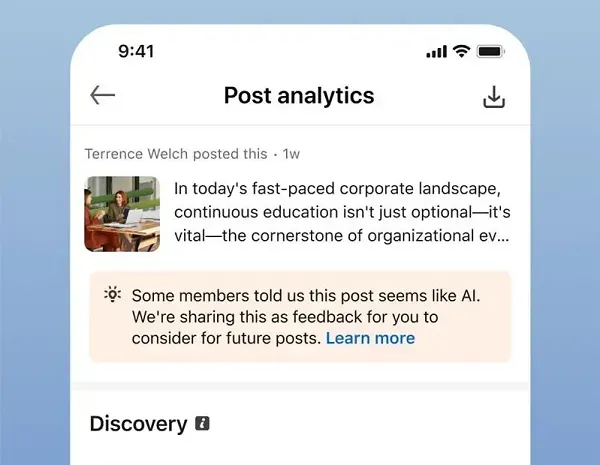
Crucially, while individual reports influence personal feeds, a high volume of similar reports concerning a particular piece of content or a specific creator does trigger broader algorithmic adjustments. In a move that exemplifies LinkedIn’s "informative, rather than punitive" philosophy, the platform is rolling out new notifications for users whose content frequently receives "AI slop" reports. These alerts are designed to inform creators about potential concerns regarding their content, prompting them to re-evaluate their posting strategies and encouraging a shift towards more authentic, human-generated contributions. This educational approach aims to guide creators towards better practices without immediately resorting to harsh penalties, fostering a collaborative environment for content improvement.
The strategic decision to implement this reporting mechanism, combined with an educational outreach to creators, has already yielded tangible results. Hari Srinivasan reported a significant positive impact: content identified by LinkedIn as "AI slop" is now experiencing a 40% reduction in views compared to just a few weeks prior. This substantial decrease indicates that the combined effect of user feedback and algorithmic adjustments is effectively curtailing the reach of low-substance AI-generated posts. This outcome is not merely a quantitative success; it signals a qualitative shift in the content ecosystem, moving towards an environment where genuine expertise and unique perspectives are more likely to gain visibility. Srinivasan acknowledged, "Despite the progress, we know we have more to do to ensure LinkedIn remains a place where you can find real people & real perspectives… this all remains very top of mind." This statement underscores LinkedIn’s ongoing commitment to refining its strategies and adapting to the evolving challenges posed by AI.
Beyond the "AI slop" reporting option, LinkedIn is reinforcing its broader commitment to authenticity through its verification process. The platform actively encourages users to undergo identity verification to confirm they are "real, actual humans." This verification status is now being integrated as a valuable signal, allowing users to filter responses in the app specifically by verified individuals. This layered approach—combining direct content flagging, creator education, and identity verification—aims to construct a robust defense against the potential dilution of content quality. The goal is to create a digital space where professional discourse remains vibrant, trustworthy, and genuinely insightful, positioning LinkedIn at the forefront of platforms actively combating the negative externalities of the AI content wave.
The broader implications of LinkedIn’s initiative are significant for several key stakeholders. For the platform’s millions of users, the most immediate benefit is an expected improvement in feed quality. By providing tools to filter out generic, low-effort content, LinkedIn empowers individuals to curate a more valuable and relevant professional experience, reducing "information fatigue" and increasing the likelihood of encountering meaningful insights. This enhanced control fosters a more engaging environment, which is crucial for a network built on professional development and knowledge exchange.
For content creators on LinkedIn, the implications are two-fold. Those who genuinely invest in sharing their expertise and unique perspectives stand to benefit from a clearer signal-to-noise ratio. Their authentic contributions are less likely to be overshadowed by a deluge of AI-generated fluff, potentially leading to increased visibility and engagement from a more discerning audience. Conversely, creators who have relied heavily on low-effort AI to generate posts purely for attention may find their strategies increasingly ineffective. The notifications about "AI slop" reports serve as a direct call to action, encouraging a shift towards more substantive content creation. This could drive a positive change in content strategy across the platform, emphasizing quality over quantity.
From LinkedIn’s perspective, this initiative reinforces its brand reputation and value proposition. In an increasingly crowded and often superficial digital landscape, maintaining a reputation as a trusted source for professional insights is a critical differentiator. By proactively addressing the challenges of AI-generated content, LinkedIn positions itself as a responsible steward of professional discourse, strengthening user trust and fostering a more credible environment. This strategic move could also set a precedent for other professional and social platforms grappling with similar issues, demonstrating a viable model for balancing innovation with content integrity.
Looking ahead, the "AI slop" initiative highlights the ongoing "arms race" between generative AI capabilities and content moderation efforts. As AI tools become more sophisticated, the challenge of distinguishing human-generated content from highly polished AI-generated content will only intensify. LinkedIn’s approach, which combines user feedback with algorithmic analysis and creator education, offers a multi-faceted defense. However, continuous adaptation and refinement of these strategies will be essential. The platform’s commitment to ensuring "real people & real perspectives" underscores the enduring value of human creativity, experience, and insight in a world increasingly augmented by artificial intelligence. Ultimately, LinkedIn’s proactive measures reflect a critical understanding that the future of professional networking hinges not just on connectivity, but on the enduring quality and authenticity of the conversations that define it.