

A landing page stands as a singularly focused web destination, meticulously crafted to guide visitors toward a specific, predefined action. Devoid of typical website navigation and extraneous distractions, its design is optimized for one clear ask. The precise architecture and content of such a page are entirely dictated by this singular objective. For instance, a page designed to gather email addresses will differ fundamentally in structure and messaging from one built to directly sell a product. Similarly, a page promoting an upcoming webinar necessitates distinct elements compared to one announcing a pre-launch phase. Misaligning the landing page type with its intended goal is a pervasive reason for underperformance in digital marketing campaigns.
Recent research conducted by AWeber underscores the critical role of landing pages within the broader marketing landscape. Over 90% of small business owners utilizing landing pages affirm their importance or paramount importance to their overall marketing strategy. This data highlights that the strategic dilemma for businesses is no longer whether to integrate landing pages into their operations, but rather discerning which specific type to deploy and precisely when to do so for maximum efficacy. For those new to the foundational concepts, understanding "what is a landing page" provides a crucial starting point. However, for marketers already familiar with the basics, a deeper dive into the diverse array of landing page types, their specific functions, and optimal deployment scenarios is essential for elevating conversion rates and achieving specific business objectives.
The Foundational Role of Landing Pages in Digital Strategy
At its core, a landing page serves as a dedicated digital storefront or information hub for a single campaign or offer. Unlike a homepage or a general product page, which typically offers multiple navigation paths and choices, a landing page removes decision fatigue by streamlining the user experience towards one decisive action. This focus is paramount in converting traffic from various sources—be it paid advertisements, social media posts, or email campaigns—into tangible leads or sales. The effectiveness of a landing page is directly tied to its ability to present a compelling value proposition and a clear path to conversion without extraneous elements that could divert the visitor’s attention.
The strategic deployment of landing pages has become increasingly sophisticated, evolving beyond simple lead capture forms to encompass a wide spectrum of goals across the customer journey. From initial awareness and interest generation to direct sales and post-conversion engagement, each stage benefits from a tailored landing page approach.
Key Landing Page Types and Their Strategic Deployment
1. Webinar Landing Page
A webinar registration page is specifically engineered to promote an upcoming live or recorded online event and efficiently collect sign-ups. Its primary function is to inform prospective attendees about the webinar’s core topics, the presenter’s expertise, the scheduled date and time, and, crucially, the compelling reasons why their participation is invaluable. The most successful webinar pages prioritize the tangible benefits and outcomes for the attendee. For example, a statement such as "You’ll walk away knowing exactly how to set up your first email automation" resonates far more powerfully than a mere list of the speaker’s credentials. While presenter bios are relevant, they should follow the initial, compelling case for attendance, addressing the visitor’s fundamental question: "What’s in it for me?"
- Why it works: Individuals register for webinars driven by the anticipated knowledge gain or transformation, rather than solely by the presenter’s identity. By leading with the outcome, the registration page directly addresses visitor motivations, thereby significantly enhancing conversion rates.
- When to use it: This page type is indispensable when hosting any live or pre-recorded webinar and requires a dedicated channel to drive registrations. Effective promotion strategies, such as those detailed in guides on "how to promote a webinar," invariably point back to a well-designed webinar landing page.
2. Ebook Landing Page

An ebook landing page is purpose-built to market and distribute an electronic book. It acts as a dedicated portal where visitors can delve into the ebook’s content, understand its benefits, and subsequently either purchase or download it. This format is particularly popular among aspiring entrepreneurs leveraging platforms to "make money by selling ebooks online," bypassing traditional publishing gatekeepers and distribution channels. Ebooks also serve as highly effective "lead magnets to grow your email list."
- Why it works: Ebook landing pages offer a clear value exchange: valuable content in exchange for an email address or a purchase. They allow businesses to showcase their expertise and provide immediate value, fostering trust and authority.
- When to use it: Ideal for authors, coaches, or businesses looking to monetize their knowledge directly or to attract new subscribers by offering premium content as a lead magnet.
3. Ecommerce Landing Page
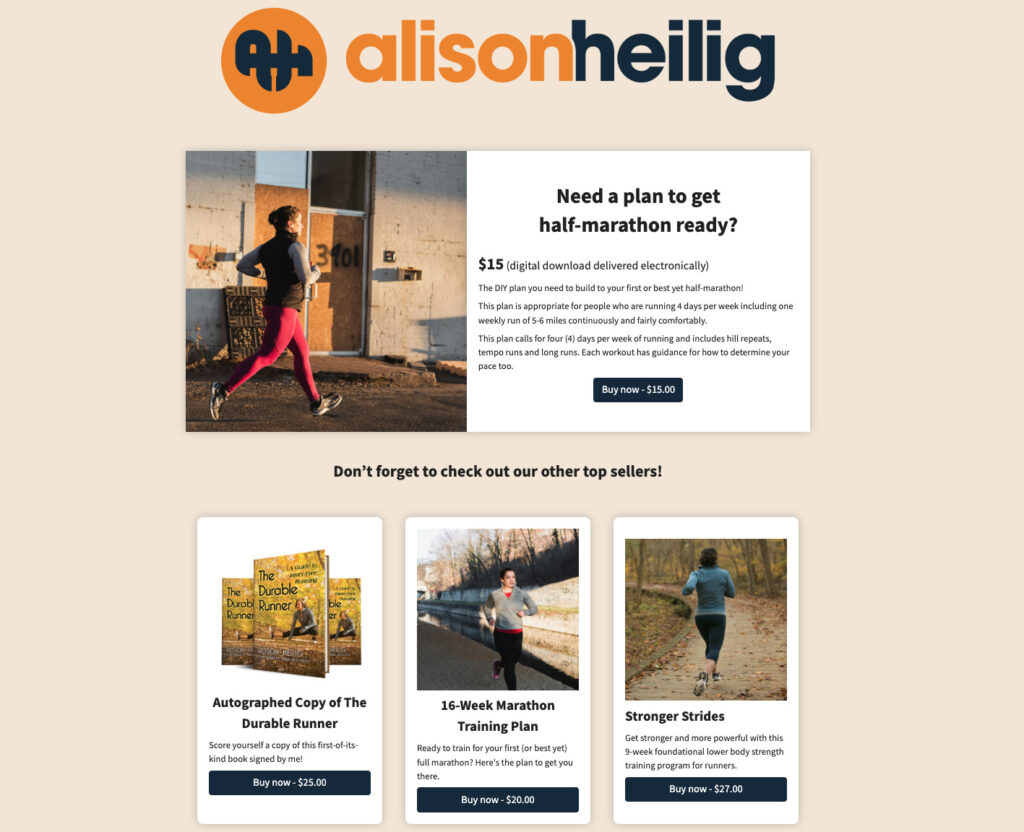
Distinct from a comprehensive product catalog, an ecommerce landing page zeroes in on a single product or a highly specific product category. Its design is tailored to convert traffic originating from a particular source, such as a paid advertisement. Directing paid ad traffic to a dedicated ecommerce landing page typically yields substantially higher conversion rates compared to routing it to a generic homepage or a broad shop page. These pages are meticulously crafted to include high-quality product imagery, transparent pricing, a prominent and clear call-to-action (CTA), robust social proof (e.g., customer reviews, ratings), and concise answers to common pre-purchase inquiries.
- Why it works: Offering too many choices on a homepage or a vast product catalog can overwhelm visitors, leading to decision paralysis and reduced conversion rates. An ecommerce landing page eliminates this optionality, focusing on one product, one offer, and one clear action. This unwavering focus is the primary driver of superior conversion performance.
- When to use it: Essential when running targeted paid advertisements to sell a specific product or when campaign traffic requires a page precisely aligned with the campaign’s unique message, rather than a generic store page.
4. Lead Magnet Landing Page
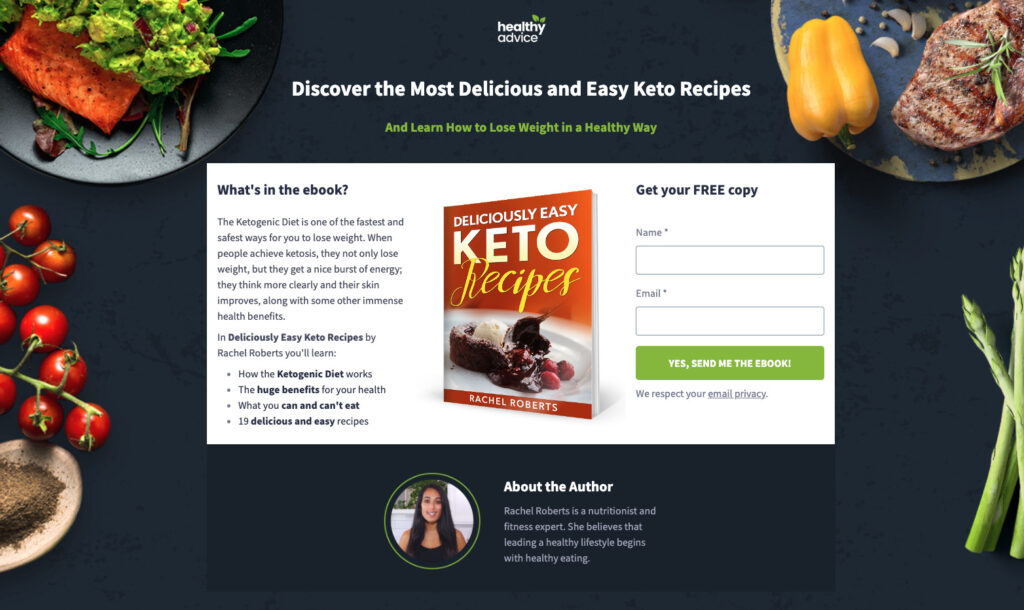
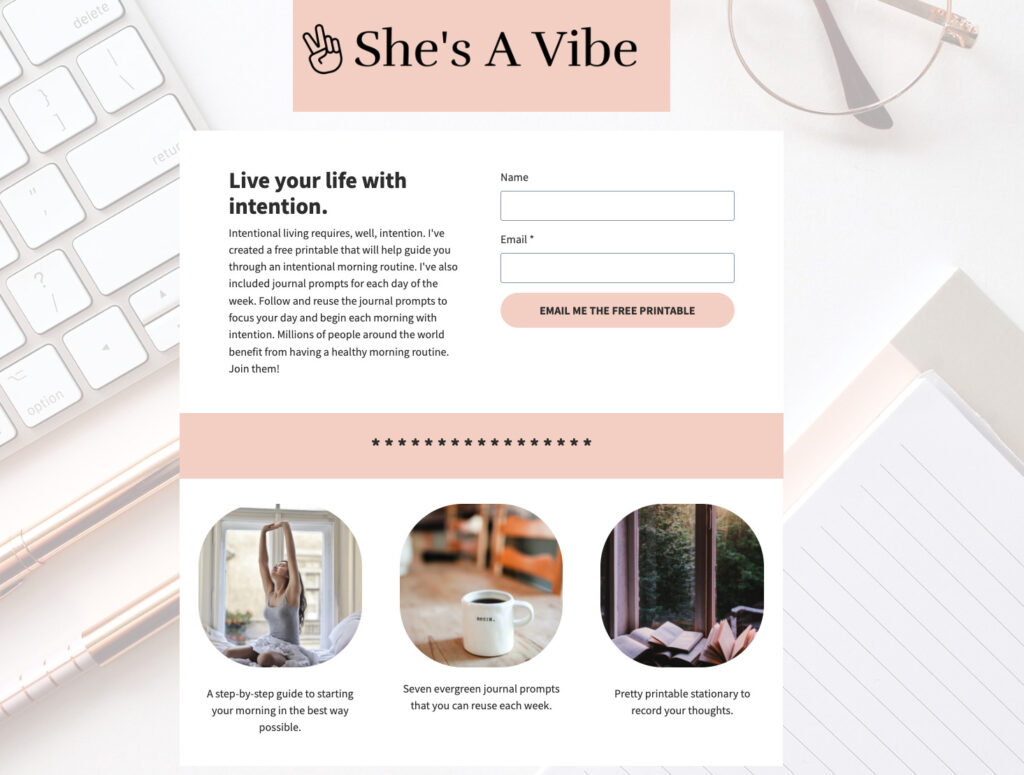
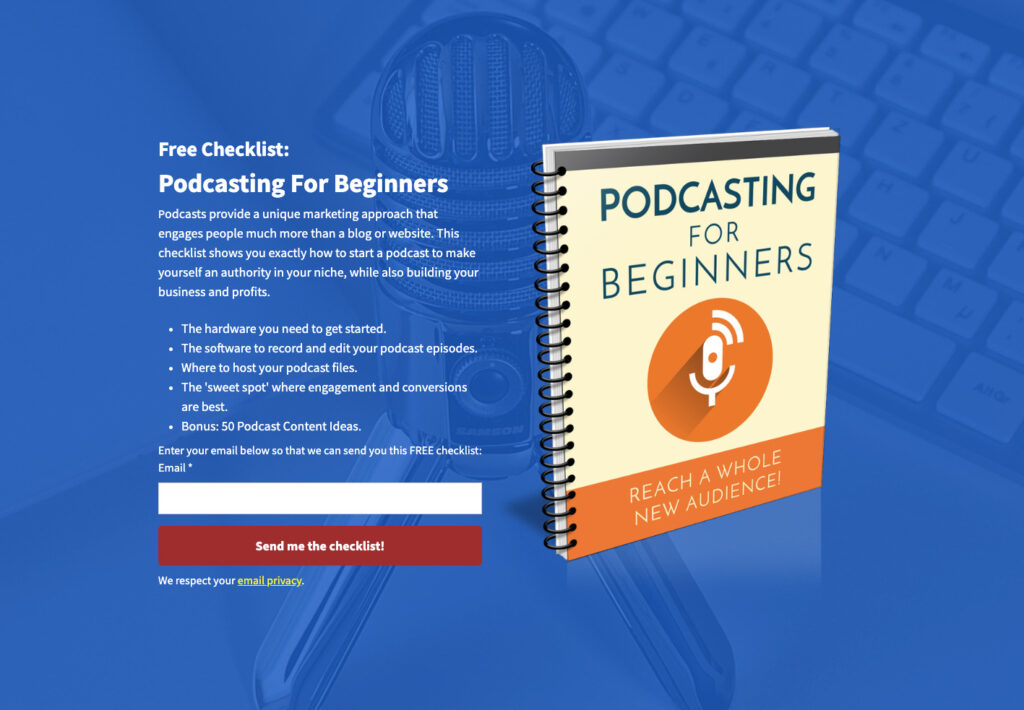
A lead magnet landing page offers a specific, high-value resource in direct exchange for a visitor’s email address. This resource can manifest in various forms, including an ebook, a practical template, a comprehensive checklist, a free introductory course, a useful toolkit, or any downloadable asset that delivers immediate, tangible value. These pages differentiate themselves from basic lead capture pages by making the content itself the central attraction. A highly effective lead magnet page leads with the transformative outcome the visitor will achieve from the resource, rather than focusing on the brand behind it.
- Why it works: Lead magnet pages excel at conversion because the intrinsic value of the offer does the heavy lifting. When the resource directly addresses a pressing problem or need that the audience currently faces, providing an email address feels like a fair and worthwhile exchange, not an obstacle. The page’s primary role is to sell the value of the asset being offered.
- When to use it: Deploy this page when you possess a valuable resource that your target audience genuinely desires. Lead magnets represent one of the most efficient methods for cultivating an email list composed of individuals already deeply interested in your specific niche or topic. For practical ideas, consult resources on "lead magnet ideas to grow your email list," and for implementation, refer to guides on "how to create a lead magnet."
5. Squeeze Page
A squeeze page represents a minimalist, highly condensed version of a lead capture page. Its sole purpose is to acquire an email address, stripping away all non-essential elements. Typically, it features only a compelling headline, one or two concise sentences of supporting copy, a single email input field, and a clear call-to-action button. Squeeze pages diverge from standard lead capture pages by requesting only an email address, foregoing additional contact details. This extreme brevity and laser focus minimize decision fatigue for the visitor.
- Why it works: The deliberately minimal design of a squeeze page removes virtually every potential reason for hesitation. With only one action to take and one field to complete, visitors are presented with a stark choice: opt-in or leave. This radical simplicity is highly effective in maintaining a low cost per lead, especially when managing paid traffic campaigns.
- When to use it: Ideal for paid advertising initiatives where controlling the cost per lead is paramount. Also effective for quickly capturing emails from a warm audience that is already familiar with your brand or offering.
6. Podcast Landing Page
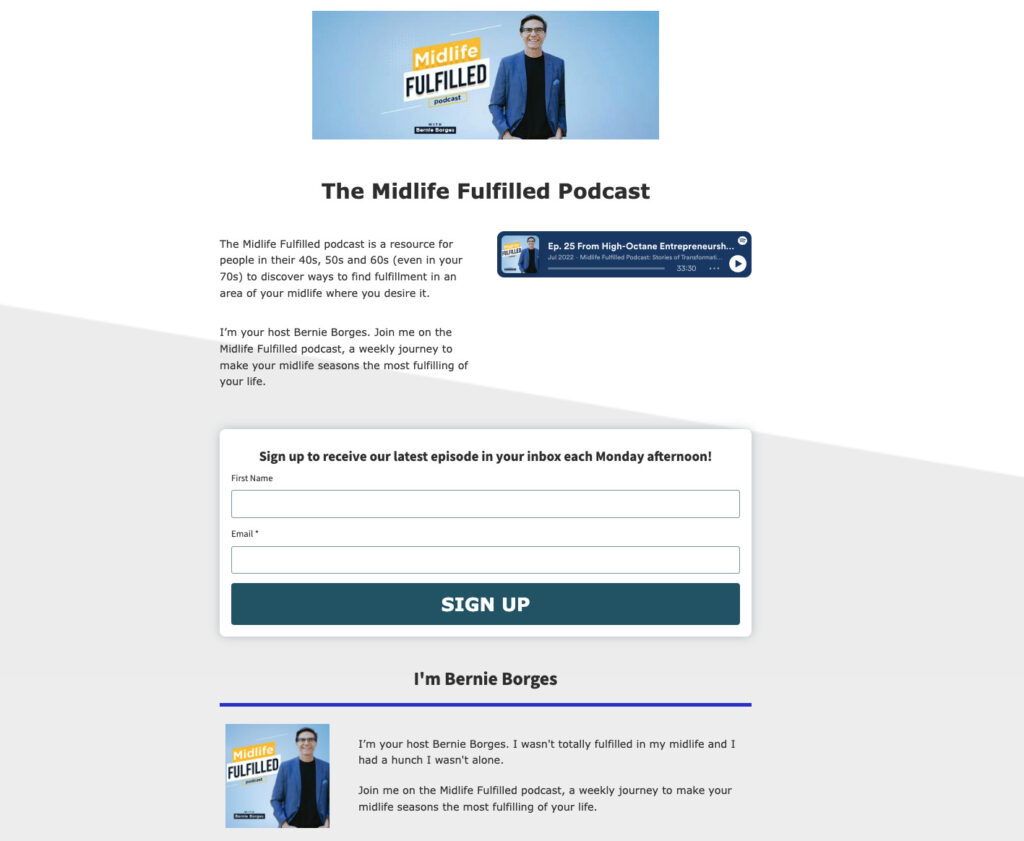
A podcast landing page serves to promote a specific podcast show or a particular episode, offering listeners a direct means to subscribe or join an email list for ongoing updates. Securing podcast listeners onto your email list is strategically vital because streaming platforms inherently control content distribution. On platforms like Spotify or Apple Podcasts, you do not "own" your audience; their access is mediated by the platform’s algorithms. An email list, conversely, establishes a direct, unmediated communication channel with your listeners, impervious to algorithmic shifts or platform changes.
- Why it works: A dedicated podcast landing page achieves what streaming platforms cannot: it transforms a passive listener into a direct subscriber whose contact information you control. Once on your email list, you gain the ability to directly notify them of new episodes, distribute exclusive bonus content, promote related products or services, and engage with them directly without reliance on app notifications or fluctuating platform visibility.
- When to use it: Essential for podcast creators aiming to cultivate and expand a direct audience relationship that extends beyond the confines and control of streaming platforms.
7. PPC Landing Page
A PPC (pay-per-click) landing page is meticulously designed for traffic originating from paid search advertisements. Its fundamental principle is to achieve precise "message match" with the exact keyword or advertisement that prompted the visitor’s click. Message alignment is critically important here, more so than on virtually any other landing page type. If a user clicks an ad for "email newsletters for restaurants" and lands on a generic email marketing page, they are highly likely to abandon the page. Google’s Quality Score algorithm also heavily rewards such message alignment, meaning better-matched pages frequently incur lower costs per click and achieve higher rankings in paid search results.
- Why it works: Paid traffic represents a significant investment. Any visitor landing on a page that fails to perfectly match the promise of the ad constitutes wasted ad spend. A PPC landing page safeguards this investment by delivering precisely what the advertisement promised, driving conversion and simultaneously improving the ad’s Quality Score.
- When to use it: Indispensable for every paid search advertising campaign. Each distinct ad group or keyword theme should ideally be linked to its own bespoke landing page, rather than directing traffic to a shared homepage or general category page.
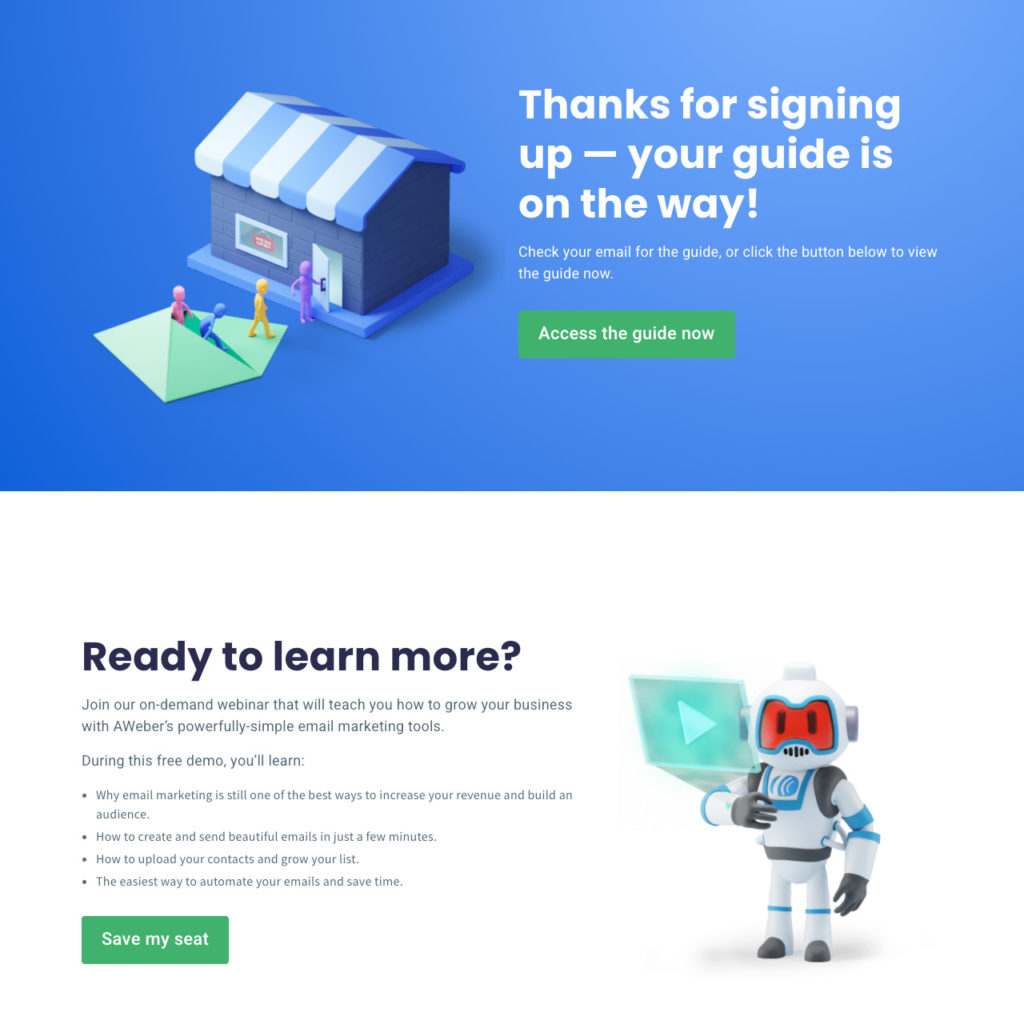
8. Thank You Page
A thank you page is displayed immediately after a visitor successfully completes a desired conversion action—whether they’ve signed up for a service, downloaded content, or made a purchase. Its primary functions are to confirm the completed action and clearly outline the immediate next steps. Critically, most thank you pages are severely underutilized. A visitor who has just converted is at the peak of their engagement within the marketing funnel. This represents an opportune moment to offer a related resource, extend an invitation to book a consultation, or guide them towards a logical subsequent action.
- Why it works: The thank you page capitalizes on a visitor’s heightened engagement. Having just taken a desired action, they are already invested and motivated. This momentum should not be allowed to dissipate. A strategically designed thank you page can transform a single completed conversion into a secondary one, whether that involves an upsell, a social media follow, or a booking.
- When to use it: Following every form submission, purchase, or sign-up. Every successful conversion should logically lead to a dedicated, optimized thank you page.
9. Video Landing Page
A video landing page employs video as the predominant medium for conveying its core message. The embedded video might feature a product demonstration, a compilation of customer testimonials, or a concise explainer. While supporting text is present, its role is to complement the video, not replace it.
- Why it works: Visualizing a product or service in action can effectively dispel hesitation in a way that written copy often struggles to achieve. Video is particularly adept at building trust more rapidly than text, especially for offers that are complex to explain, carry a high price point, or rely heavily on the personality and credibility of the presenter. A visitor who engages with a two-minute product demonstration will typically grasp the product’s value far more comprehensively than one who reads three paragraphs about it.
- When to use it: Ideal when your offer possesses a strong visual component, when your target audience exhibits a preference for video content, or when the objective is to cultivate a personal connection with the audience before soliciting a conversion.
10. Link-in-Bio Landing Page
A link-in-bio page is a specialized single web page designed to host multiple links. Given that popular social media platforms (such as Instagram, TikTok, or X) typically restrict users to a single clickable link within their profile bio, a link-in-bio page ingeniously circumvents this limitation. It functions as a centralized hub, directing followers to various key destinations, including your newsletter, product offerings, latest content, and booking pages, all accessible via one consolidated URL.
- Why it works: Social media platforms provide expansive reach but often impose constraints on where you can direct your audience. A link-in-bio page liberates you from this restriction. Instead of being forced to choose between linking to your newsletter or your newest product, you can link to a single page that encompasses both and more. Every follower who visits your bio gains streamlined access to all the critical information and actions you wish them to take.
- When to use it: Indispensable for individuals or businesses actively engaged on visually-driven social platforms where a single, central destination is needed to direct followers towards multiple calls to action.
11. Pre-Launch Landing Page
A pre-launch landing page is strategically deployed to cultivate anticipation and interest before a new product, service, or feature officially goes live. Its dual purpose is to collect email addresses from individuals eager to be notified upon launch and to serve as a crucial tool for testing market demand before significant resource commitment to development. The ability to generate substantial sign-ups before a product even exists provides compelling early evidence of genuine market appetite. Conversely, slow sign-up rates offer valuable insights, potentially saving considerable resources before full-scale development.
- Why it works: A pre-launch page simultaneously builds an engaged audience for launch day and validates the underlying idea. A list of 500 individuals who opted in pre-launch is often more valuable than a list of 5,000 post-launch subscribers, as those early adopters explicitly indicated a desire for the product before its existence.
- When to use it: Prior to any significant product or service launch. A pre-launch page effectively converts nascent interest into a ready-to-activate audience on day one.
12. Facebook Landing Page
A Facebook landing page is specifically optimized for traffic originating from Facebook ads or a Facebook profile. Its explicit objective is to convert social media followers into email subscribers or direct buyers. It is crucial to remember that you do not "own" your audience on Facebook; the platform dictates who sees your content and retains the authority to alter distribution at any time. Migrating followers onto an email list establishes a direct communication channel, immune to algorithmic disruptions.
- Why it works: Facebook reach is essentially "rented," whereas an email list is "owned." A Facebook landing page acts as the vital bridge between these two states. Every follower who converts to a subscriber becomes a direct contact, reachable regardless of platform changes. "Building your email list with Facebook" is widely considered one of the most high-leverage strategies for transforming social media reach into a durable and controlled audience asset.
- When to use it: When running Facebook advertising campaigns, or when the goal is to convert your social media following into a subscriber list that you directly control.
13. Lead Capture Landing Page
A lead capture landing page is fundamentally designed to collect contact information from visitors in exchange for something valuable. This "something" could be a free guide, a useful checklist, an exclusive discount, or access to a webinar. The visitor receives the desired resource, and in return, the business acquires their email address.
- Why it works: This page facilitates a direct, transparent exchange. The objective is not yet to solicit a purchase but to encourage the sharing of contact information in return for immediate value. Generally, the fewer fields requested, the higher the conversion rate. Typically, just a name and email address suffice as a starting point for building a relationship.
- When to use it: When the primary strategic goal is to expand your email list. Lead capture pages are recognized as one of the most reliable tools for list building, particularly for small businesses. Understanding "how to get email addresses" effectively begins with a well-designed lead capture page.
14. Click-Through Landing Page
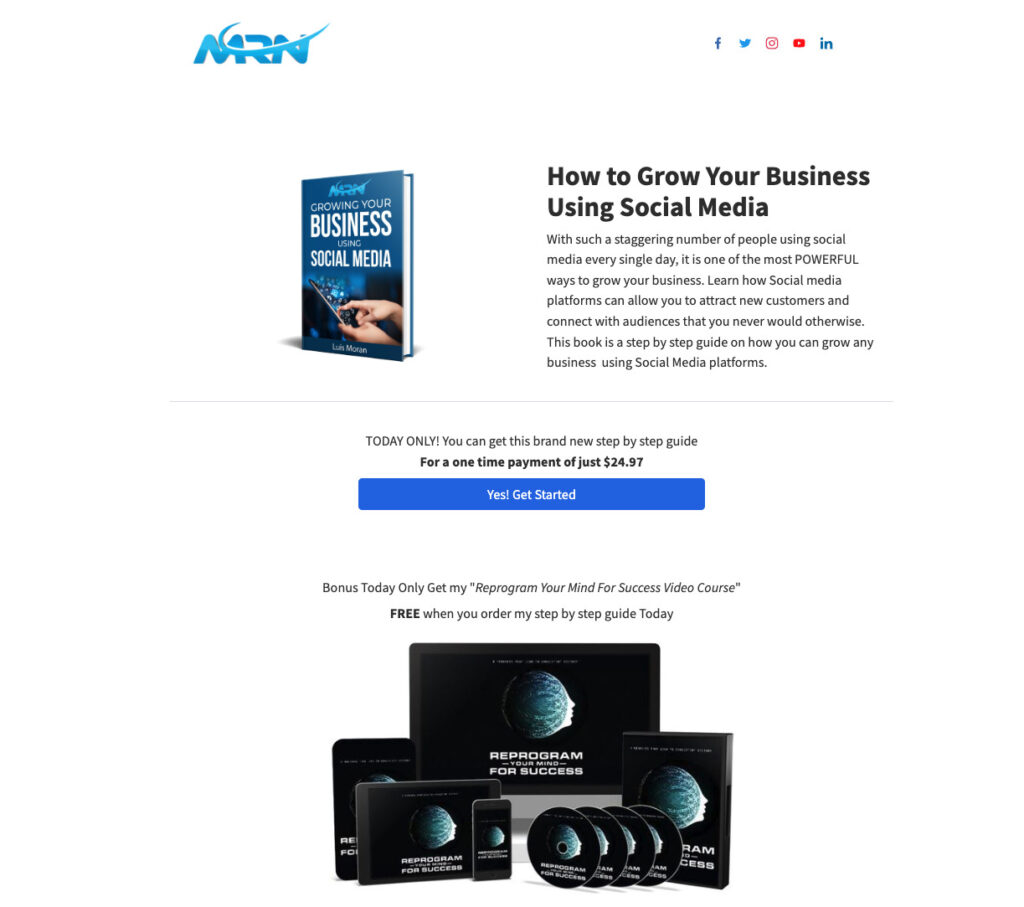
A click-through landing page operates differently by not demanding any immediate commitment or information upfront. Its core function is to "warm up" the visitor, building their interest and confidence before guiding them to click through to a subsequent purchase or sign-up page. It contains no forms or direct transaction mechanisms, only information strategically presented to foster conviction before the next, more committing step. These pages commonly serve as an intermediary stage between an advertisement and a checkout page. They provide visitors with an opportunity to thoroughly understand an offer without the immediate pressure of making a decision. Common formats include free trial offers, detailed product walkthroughs, or feature comparison pages.
- Why it works: Cold traffic rarely converts efficiently on a direct purchase page. A click-through page introduces a crucial middle step where visitors can educate themselves about the offer without being asked for immediate commitment. By the time they arrive at the final purchase page, they have already developed a sufficient level of interest and intent.
- When to use it: When your offer requires a degree of explanation or education before a visitor is prepared to make a purchase. If paid traffic is generating high drop-off rates on your purchase page, a click-through page can effectively bridge that gap, improving downstream conversion.
Choosing the Right Landing Page for Your Goals
The selection of the appropriate landing page type flows directly and logically from your overarching marketing objective. If the primary goal is to acquire email subscribers, then a lead capture page, a squeeze page, or a lead magnet page would be the optimal choice. For warming up cold traffic prior to a purchase, a click-through page is highly effective. When the objective is direct sales, a dedicated sales page for high-ticket items or an ecommerce page for specific products is recommended. Promoting an event calls for a webinar registration page or a pre-launch page. And for paid search campaigns, a highly targeted PPC landing page is non-negotiable.
The most common pitfall leading to landing page underperformance is attempting to achieve too many objectives simultaneously. The golden rule remains: start with one clear goal, and build one page specifically tailored to accomplish that singular goal. This focused approach maximizes conversion potential.
Advancing Landing Page Creation with AWeber’s AI Builder
The landscape of landing page creation is poised for a significant transformation with the impending launch of AWeber’s AI Landing Page Builder. This innovation promises to dramatically accelerate the journey from initial concept to live page. Instead of the traditional method of selecting and modifying existing templates, users will be able to simply describe the desired page – outlining its layout, key copy points, imagery, and sign-up form requirements. The AI will then intelligently construct the entire page, seamlessly integrating subscriber acquisition directly into your AWeber list, ready for subsequent welcome emails and nurturing sequences.
This AI-powered tool is designed to support every type of landing page discussed, from a lead magnet page for a free checklist to a webinar registration page for your next event or a pre-launch page for an upcoming product. By merely articulating your offer and objective, the AI streamlines the entire creation process. Furthermore, users will have the capability to upload a screenshot of an existing landing page they admire, and the AI will recreate it, applying your branding, copy, and specific offer, offering unprecedented efficiency and customization. Even image modifications can be handled by describing the desired change, eliminating tedious stock photo searches or starting designs from scratch.
Frequently Asked Questions and Strategic Distinctions
The most prevalent type of landing page is the lead capture landing page. These pages are widely utilized because they effectively collect visitor contact information, typically in exchange for a free resource or offer. Given the relatively low commitment required compared to a direct purchase, lead capture pages generally achieve higher conversion rates and are broadly applicable across diverse industries and business models.
The distinction between a squeeze page and a lead capture page lies primarily in their length and complexity. A standard lead capture page provides more detailed information, usually featuring a prominent headline, a benefit-driven description, a visual representation of the offer, and a form with multiple fields. In contrast, a squeeze page is intentionally stripped down to its absolute minimum: a headline, one or two lines of copy, an email-only field, and a button. Squeeze pages are often favored in paid traffic scenarios where their brevity helps to minimize friction and keep the cost per lead low.
For businesses focused on building their email list, the most effective landing page types are squeeze pages, lead capture pages, and lead magnet pages. Squeeze pages are particularly effective with paid traffic due to their low-commitment nature, which helps to reduce the cost per lead. Lead capture pages are versatile and perform well across both paid and organic traffic sources. Lead magnet pages excel when a business can offer a highly desirable and specific resource, such as a unique checklist, a comprehensive ebook, or a practical template, that genuinely resonates with and addresses the needs of its target audience.








