The landscape of commerce has always been defined by questions and the search for answers. From the direct inquiries posed to salespeople in bustling marketplaces to the complex queries fed into early search engines, the quest for information has continually evolved. Today, a seismic shift is underway with the integration of artificial intelligence into the search paradigm. This new era presents both unprecedented opportunities and significant challenges, particularly in quantifying the return on investment (ROI) from a brand’s appearance in AI-generated responses. Understanding if your brand’s AI search efforts are truly yielding results has become a critical, yet often elusive, business imperative.
The Genesis of AI Search and the Digital Evolution
For centuries, transactions were built on direct human interaction, where salespeople served as the primary information conduits. The advent of the internet democratized information access, ushering in the age of search engines. Companies quickly adapted, developing sophisticated search engine optimization (SEO) strategies to rank prominently in organic results and capture user attention. This traditional model, however, is undergoing a profound transformation. The rapid development and widespread adoption of generative AI models like ChatGPT, Google Gemini, Perplexity, and the integrated Google AI Overviews have fundamentally altered how users interact with information. These AI systems synthesize answers, often citing multiple sources, rather than merely presenting a list of links. This shift means that for brands, visibility no longer solely hinges on ranking highly in a list, but on being recognized and cited as an authoritative source within an AI-generated summary. The imperative for businesses is clear: adapt or risk being omitted from these crucial new conversations.
This evolution is not merely theoretical; it’s manifesting in measurable market shifts. Data from January 2026 revealed a 2.5% year-over-year decline in organic search traffic in the U.S., signaling a migration of user intent. Concurrently, AI referral traffic to retail sites surged by an astounding 693% over the same period, underscoring the rapid reorientation of buyer research journeys. While the notion that "organic traffic isn’t dead" still holds, its role is undeniably changing, necessitating a recalibration of marketing strategies to account for AI’s burgeoning influence.
The Attribution Conundrum: Unpacking the "Dark Funnel" of AI Influence
One of the most significant hurdles in measuring AI search visibility ROI lies in the complexities of attribution. Unlike direct clicks from traditional search engine results pages (SERPs), AI answers often don’t provide clear referral data. This creates a "dark funnel" where a brand’s initial mention by an AI system can profoundly influence a buyer’s journey without generating an immediate, trackable click.

Consider a common scenario: A prospective buyer asks an AI for product recommendations. Your brand is mentioned as a credible option. Three days later, the buyer directly searches for your brand name on Google, perhaps converting via a paid brand ad. In a traditional last-click attribution model, the credit would be erroneously assigned to paid search, completely obscuring AI’s pivotal role in the initial awareness and consideration phases. This disconnect between AI influence and measurable conversion pathways means that the true impact of AI visibility is often lost, leading to undervalued marketing efforts and potentially misallocated budgets. The absence of comprehensive referral data from most AI search engines exacerbates this problem, making it nearly impossible to quantify direct traffic contributions from AI interactions.
To overcome this, marketers must move beyond simplistic last-click models and embrace a more sophisticated, multi-touch approach. The solution isn’t to abandon attribution entirely, but to enhance it by incorporating a dedicated measurement layer that can effectively identify and track AI touchpoints across the customer journey. This requires a strategic shift towards understanding AI’s role in building awareness and influencing later-stage conversions, even if the direct path isn’t immediately evident.
A Three-Layer Framework for Comprehensive AI Search ROI Measurement
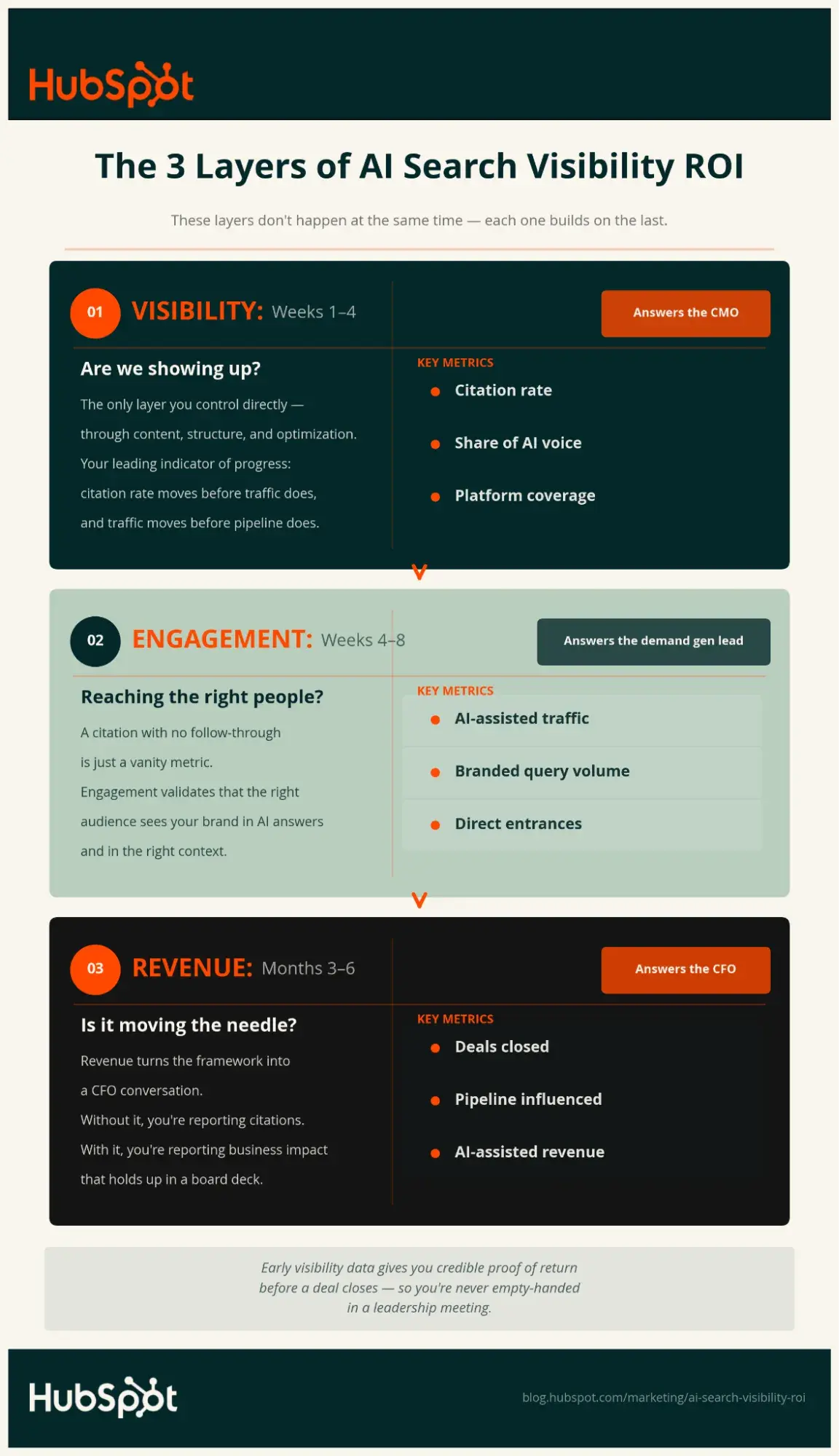
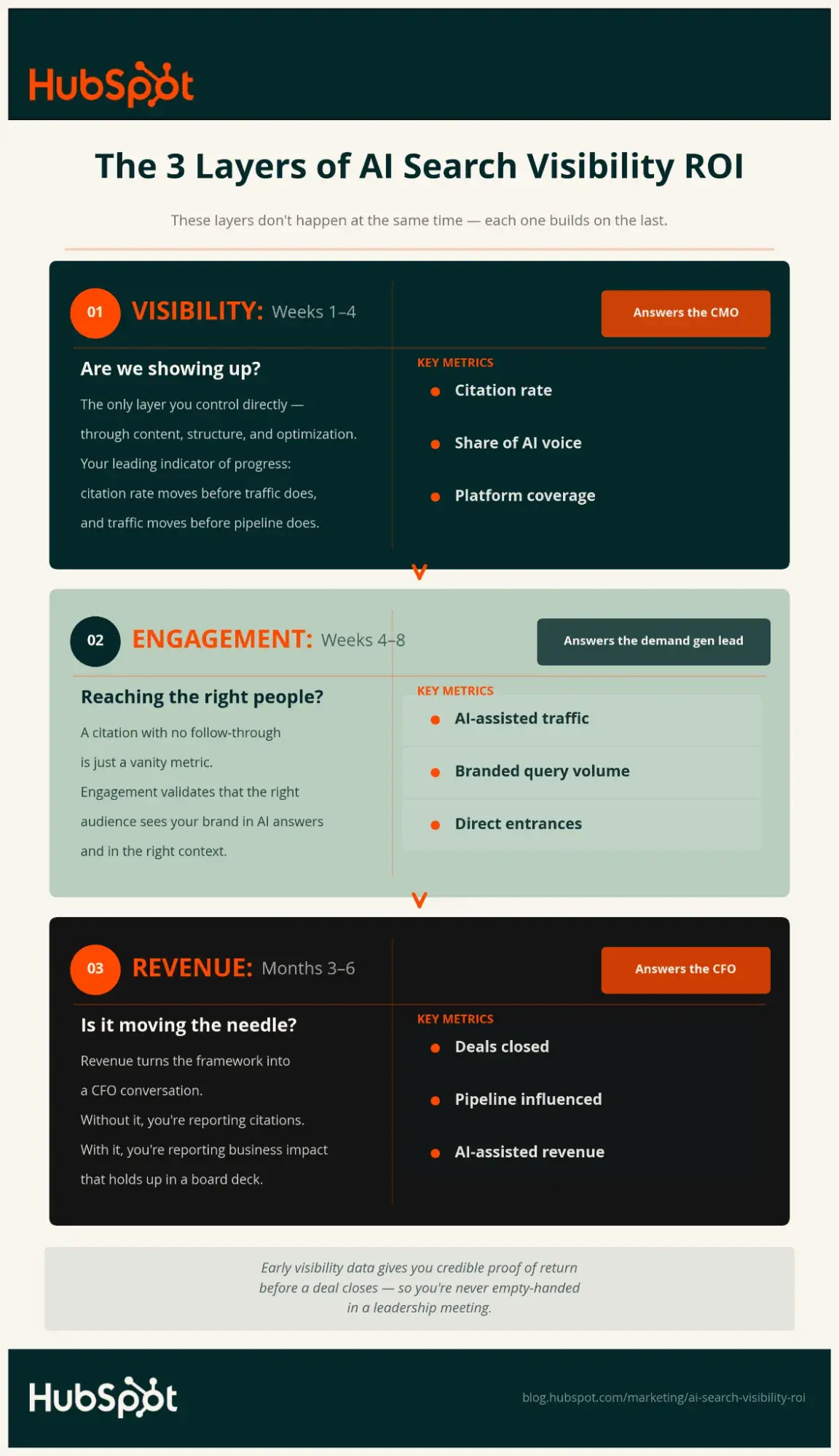
To bring clarity to this complex landscape, a structured, three-layer measurement framework offers a robust approach to understanding the true impact of AI search. This framework recognizes that results unfold in a "delayed funnel," where different metrics mature at varying rates, each playing a distinct role in building a comprehensive picture of ROI.
-
Visibility Metrics: Tracking Share of AI Voice and Citations
The foundational layer of AI search ROI measurement focuses on visibility. This encompasses two primary metrics:- Share of AI Voice (SAIV): This metric quantifies the percentage of relevant AI prompts where your brand appears in the generated answer. It provides a macro view of your brand’s presence in key conversations.
- Citation Tracking: Moving deeper, citation tracking measures whether your brand is explicitly linked or referenced as a source within the AI’s response. Being cited signifies that AI systems recognize your content as authoritative and trustworthy, a crucial indicator of content quality and relevance.
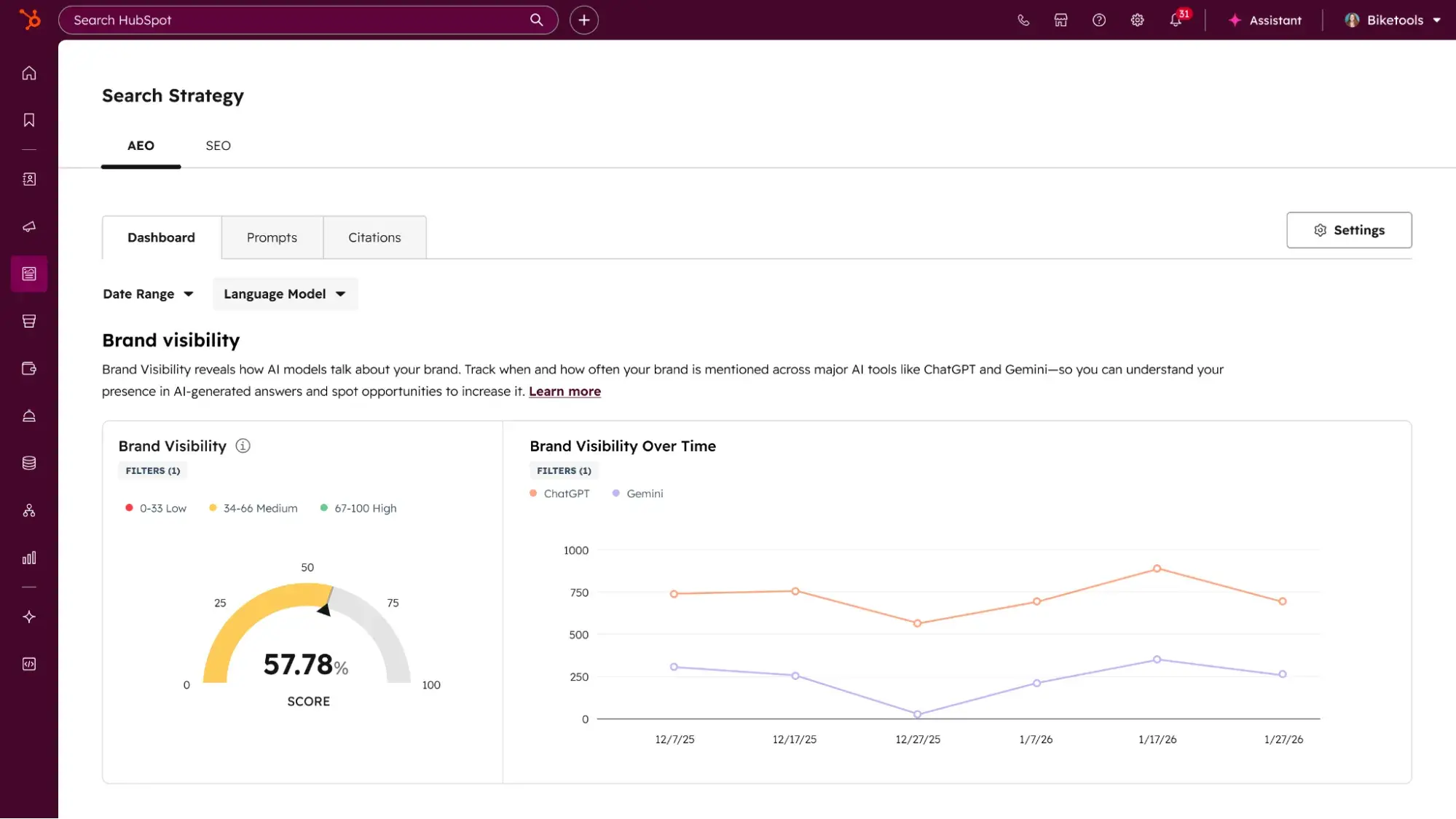
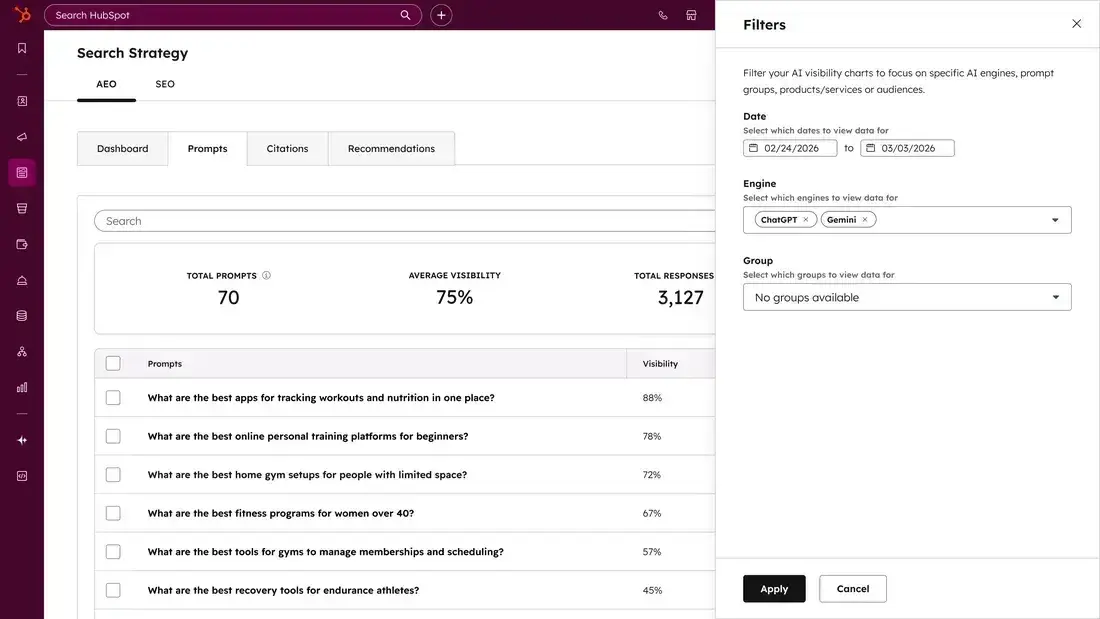
Calculation and Tools: To calculate SAIV, a predefined set of buyer-centric prompts is run across target AI platforms (e.g., ChatGPT, Gemini, Perplexity, Google AI Overviews). Each prompt’s result is assessed for brand mention and citation. Tools like HubSpot AEO (AI Engine Optimization) automate this process, tracking Brand Visibility Scores across multiple platforms, monitoring competitor mentions, identifying content gaps, and integrating this data directly with customer relationship management (CRM) systems. This automated approach is vital, as manual tracking across an expanding array of AI platforms would be prohibitively time-consuming.
-
Engagement Metrics: Uncovering Branded Search Lift and Direct Traffic
The second layer, engagement, captures the indirect but powerful impact of AI visibility on user behavior. When a brand is mentioned in an AI answer, even without a direct click, it plants a seed of awareness. This often leads users to conduct direct searches for the brand at a later time, demonstrating increased brand recognition and interest.
- Branded Search Lift: This refers to a sustained increase in searches for your brand-specific keywords. A rise in branded searches that cannot be attributed to paid campaigns or other traditional marketing efforts strongly suggests that AI mentions are driving organic interest.
- Direct Traffic: An increase in direct website traffic (users typing your URL directly or accessing through bookmarks) can also indicate that users were influenced by an AI mention and later sought out your brand independently.
Calculation and Tools: These metrics are primarily monitored through traditional analytics platforms such as Google Search Console and Google Analytics 4 (GA4). Marketers track branded keyword performance and analyze direct traffic trends, looking for correlations with periods of increased AI visibility. A significant and consistent branded search lift, uncoupled from other marketing initiatives, serves as compelling evidence of AI-driven awareness translating into measurable user intent.
-
Revenue Metrics: Attributing Pipeline Influence in Your CRM
The ultimate goal of any marketing effort is to drive revenue. While perfect, direct AI attribution remains challenging, the third layer focuses on assisted attribution by identifying AI’s influence within the sales pipeline.- Pipeline Influence: This involves tracking instances where a contact exhibited AI-influenced behavior (e.g., engaging with AI-cited content, performing branded searches after an AI mention) at some point before converting into a qualified lead or customer.
- Assisted Revenue Model: By establishing a clear model within the CRM that flags and credits AI touchpoints, businesses can assign a portion of the revenue to AI’s influence, even if it wasn’t the last touchpoint.
Supporting Data and Tools: HubSpot’s January 2026 survey of over 3,000 CRM purchase decision-makers highlighted AI search as the single strongest predictor of purchase intent, surpassing demos, review sites, and sales calls. Buyers who utilized AI search were 36% more likely to purchase. This data underscores the profound impact AI has on conversion likelihood. To operationalize this, marketers need to integrate AI visibility data with their CRM (e.g., HubSpot’s Smart CRM) using custom fields to tag contacts influenced by AI. Marketing automation platforms like Marketing Hub can then automate multi-touch attribution and reporting, providing a unified view of AI’s contribution alongside other channels.
Benchmarking Brand Visibility in the Dynamic AI Search Ecosystem
For AI visibility data to be truly actionable, it must be benchmarked against competitive performance and tracked over time. Without these two elements, marketers lack the context to understand if they are gaining or losing ground and if their optimization efforts are effective.
1. Identify Your Answer Competitors: The first step is to recognize that AI answer competitors are not always direct product or service rivals. AI systems prioritize content that is most authoritative, clearly structured, and relevant to a prompt. This often means that industry media sites, analyst blogs, review platforms (like G2 or Yelp), and niche content aggregators can frequently appear as "answer competitors." By mapping this broader citation landscape, businesses can identify content gaps (e.g., a media site consistently cited for buying-stage prompts instead of your brand) rather than misinterpreting it as a product problem. All cited sources, not just direct business competitors, should be added to competitive tracking sets.
2. Build a Share of Citations Chart: Monthly runs of the defined prompt set, aggregated by topic cluster, can create a clear visualization of competitive positioning. For example:
| Topic Cluster | Your Brand Citations | Top Competitor Citations |
|---|---|---|
| CRM software comparisons | 12/20 prompts | 8/20 prompts |
| Sales pipeline management | 6/20 prompts | 14/20 prompts |
| Marketing automation | 9/20 prompts | 11/20 prompts |
| Email marketing tools | 15/20 prompts | 5/20 prompts |
In this illustrative chart, "Sales pipeline management" emerges as a critical priority gap, demanding immediate content strategy adjustments. Conversely, "Email marketing tools" represents a strong position that requires sustained effort to defend.
3. Interpret Trends with Nuance: A change in citation share can stem from multiple factors: your content improvements, a competitor’s content decline, or updates to AI models. Major model releases (e.g., GPT, Gemini, Perplexity) can independently reshuffle citation patterns, necessitating a fresh baseline after each update. Therefore, the long-term trend line is far more indicative of strategic success than any single snapshot. Consistent tracking over three months provides sufficient data to validate or adjust optimization strategies. Integrating this benchmark data with a CRM and marketing hub automates multi-touch attribution, allowing AI citation share to be viewed holistically alongside other marketing metrics.
Implementing Your AI Search Visibility Measurement Plan
A systematic approach is crucial for successful AI search visibility measurement:
- Define Your Prompt Set: Curate 20-30 prompts that mirror how buyers research your category across different funnel stages (awareness, consideration, decision). Source these prompts from sales call recordings, customer support tickets, and existing keyword research to ensure they reflect genuine buyer intent. Prioritize specificity for more consistent and trackable AI responses. Revisit and refine this prompt set quarterly.
- Input Prompts into Your AI Visibility Tool: Leverage automated tools like HubSpot AEO, which daily updates citation data across platforms like ChatGPT, Perplexity, and Gemini. Manual testing on platforms not yet integrated (e.g., Claude, Google AI Overviews) can supplement this. Multi-platform tracking is vital; Goodie’s 2026 Wave 2 report showed ChatGPT’s share of B2B AI referrals dropping from 89% to 63% in eight months, while Claude rose to 18.5% and Gemini to 10.6%, highlighting the fragmented nature of AI search.
- Record Your Brand Visibility Score: For each prompt, score your brand’s appearance (not mentioned, mentioned, cited as a source, recommended). Aggregate these into a Brand Visibility Score, establishing your baseline. Rerun this process every 30 days to track movement.
- Audit Your Existing Content: Utilize tools like HubSpot’s free AI Search Grader to identify areas where your brand is visible and where competitors are claiming answers. Document your AI performance using a detailed table (Date, Prompt, Platform, Model Version, Brand Mention/Cited, Competitor Cited, Answer Sentiment, Response). This granular audit informs content optimization efforts.
- Repeat and Analyze Consistently: After implementing changes based on your data, consistently re-run prompts and analyze results weekly or bi-weekly. Regular tracking allows for timely adjustments and a clearer understanding of your strategy’s effectiveness.
Calculating the Tangible ROI: A Practical Formula
Given the ambiguity of AI attribution, a pragmatic approach to calculating ROI is essential. The core formula is:
ROI (%) = (AI-Assisted Revenue – AI Costs) ÷ AI Costs × 100
AI-Assisted Revenue: This requires building an assisted revenue model within your CRM. It relies on:
- Tracking AI touchpoints: Identifying when a contact engaged with AI-cited content or performed AI-influenced actions.
- A robust assisted revenue model: Assigning partial credit to AI for conversions where it played an influential role.
- CRM integration: Unifying visibility data and pipeline in your CRM using custom fields and marketing automation to automate multi-touch attribution.
AI Costs: These are more straightforward and typically include:
- Monthly or annual subscriptions for AI visibility tools.
- Costs associated with content creation, optimization, and auditing.
- Personnel costs for team training and dedicated AI marketing roles.
Example Calculation: If a team invests $2,000/month in AI tools and content ($6,000 over a quarter), and their CRM identifies $30,000 in pipeline where contacts had confirmed AI touchpoints, applying a conservative 25% assisted credit yields $7,500 in AI-assisted revenue.
The ROI calculation would be: ($7,500 – $6,000) ÷ $6,000 × 100 = 25% ROI.
This provides a tangible, defensible number to present to leadership, even as the attribution model continues to mature.
Making the Leadership Case: Opportunity, Risk, and a Clear Plan
Presenting the case for AI search investment to leadership requires framing the argument around three critical pillars:
- Opportunity Cost: HubSpot data indicates that AI-referred leads convert at three times the rate of traditional search leads. Every period without measuring and optimizing for AI visibility represents lost opportunities, as high-intent buyers make decisions without your brand being part of the conversation. This is not a hypothetical risk but a quantifiable loss of potential revenue.
- Competitive Risk: Early adopters are already demonstrating significant advantages. HubSpot customers actively optimizing for AI search generate 170% more marketing-qualified leads (MQLs) and 82% more deals than comparable businesses that are not. The gap between those investing in AI visibility and those waiting to observe is widening rapidly, posing a substantial competitive threat.
- Measurement Plan: Leadership demands concrete plans, not vague promises. A detailed 30/60/90-day roadmap outlining a defined baseline, a comprehensive prompt set, a clear metric framework, and a CRM attribution model that connects visibility signals to pipeline movement is essential. This demonstrates exactly how success will be measured and when results can be expected.
Realistic Timelines for AI Search Visibility Milestones:
It’s crucial to set realistic expectations. AI search visibility doesn’t yield instant results like paid media. AEO is a long-term strategy, with results building in layers.
| Timeframe | What You Should See | What to Report |
|---|---|---|
| Days 1–30 | Baseline established, prompt set running | Visibility score, competitor benchmark |
| Days 30–60 | First citation data, branded search trend | Share of AI voice, direct traffic delta |
| Days 60–90 | AI-influenced contacts appearing in CRM | AI-influenced MQL rate, pipeline touch data |
| Days 90–180 | Pipeline influence data, revenue model live | AI-assisted close rate, deal velocity |
Leading Indicators for Early Progress: While waiting for pipeline data to mature, leading indicators provide credible, early signals of success:
- A positive trend in your Share of AI Voice.
- Consistent growth in branded search volume.
- An increase in direct traffic to your website.
- A rising number of qualified leads with confirmed AI touchpoints.
If two or more of these indicators show positive movement by day 60, marketers have a strong, credible story to tell leadership, even before final revenue numbers are available. This pattern of leading indicators points directly to where pipeline data will eventually land.
Optimizing for AI Search Visibility: Practical Strategies
Improving AI search visibility involves a multi-faceted approach:
- Content Structure is Paramount: AI systems favor content that provides direct, clear answers upfront. Prioritize rewriting critical pages so the first 150 words directly address common prompts. Utilize question-based headings that mirror buyer inquiries and implement FAQ and Article schema to make content easily parsable by AI.
- Beyond Your Own Site: AI answers frequently draw from third-party sources. Therefore, enhancing your brand’s reputation and presence on authoritative external sites—review platforms, industry publications, analyst reports—is as crucial as optimizing your own content. This is as much a public relations challenge as it is a content one.
- Multi-Engine Optimization: Avoid optimizing for a single AI engine. ChatGPT, Gemini, Perplexity, and Google AI Overviews each have distinct retrieval logics, citation behaviors, and user intents. A strategy narrowly focused on one platform risks neglecting a growing share of AI-referred buyers.
- Patience and Persistence: Expect 30-60 days for content improvements to manifest in citation rate changes, and 90-180 days for these gains to translate into measurable pipeline influence. AI systems do not index and update in real-time like traditional search engines. However, branded search lift and direct traffic can show shifts within four to six weeks, providing early validation.
Conclusion: The Inevitable Shift and the Imperative to Act
Buyers have always sought answers, and the entities that provide those answers most clearly, credibly, and at the opportune moment are the ones that win business. AI search represents the latest, and arguably most profound, evolution in this dynamic. It has fundamentally altered where those answers originate, but the underlying truth remains unchanged.
The good news is that initiating an AI search visibility strategy doesn’t require an astronomical budget or a dedicated AI team from day one. Begin where you are. Leverage available tools like HubSpot AEO to track your Brand Visibility Score across key AI platforms daily. Start flagging your first AI-influenced contacts in your CRM. Monitor your branded search trends over the next 30 to 60 days. The picture will clarify faster than anticipated, and every data point collected now becomes a critical component of the leadership case you will be making in the coming months. The digital landscape has irrevocably shifted. The only question that remains is whether your brand will be a prominent part of the answer.


 Nana
Nana
 Laily UPN