For decades, the bedrock of digital marketing measurement rested firmly on organic traffic and search engine rankings. Marketers lived by the mantra that high website visits and a coveted spot on Google’s first page of search engine results pages (SERPs) directly correlated with success. However, a seismic shift in how users discover information, driven by the rapid proliferation of artificial intelligence (AI) in search, has rendered these once-sacred metrics increasingly insufficient, even misleading. This paradigm shift demands a complete re-evaluation of key performance indicators (KPIs), ushering in an era where AI search visibility, attribution, and direct revenue impact are paramount.
The evolution of search has been a continuous journey of adaptation for marketers. In the early days of the internet, simple metrics like page views and server hits provided a rudimentary understanding of content consumption. With the advent of sophisticated search engines like Google, the focus sharpened dramatically. Search Engine Optimization (SEO) emerged as a critical discipline, transforming organic traffic and keyword rankings into the gold standards for digital performance. A high search rank meant direct user access to a website, fostering clear conversion paths that were easily traceable through analytics tools. The mobile era further refined these strategies, emphasizing responsive design and local SEO, but the fundamental principles of driving traffic to a website remained unchallenged. Even as featured snippets and knowledge panels began to offer "zero-click" answers directly on the SERP, the underlying goal was still to achieve visibility within Google’s ecosystem, often as a precursor to a click.
Then, the landscape irrevocably changed with the mainstream adoption of generative AI. Platforms like ChatGPT, Google’s Bard (now Gemini), and Perplexity introduced a fundamentally different mode of information retrieval. Instead of merely linking to sources, these AI engines synthesize information, curate answers, and often provide direct recommendations, fundamentally altering the user’s journey from query to conversion. This transformation means that a brand can possess a top organic search ranking and still be entirely absent from AI-generated responses, effectively becoming invisible to a growing segment of its target audience.
The data unequivocally supports this dramatic shift. According to a study by Semrush, visitors arriving via AI search convert at 4.4 times the rate of those from standard organic traffic. This stark difference underscores a critical point: quality over quantity. A brand could experience a 40% reduction in overall organic traffic but still achieve superior business outcomes if its AI search performance is optimized. Conversely, a brand maintaining a #1 traditional organic ranking might remain entirely unmentioned across various AI answer engines, effectively losing out on high-intent conversions. This "AI gap" is precisely why specific AI search performance KPIs are no longer optional but essential. These new metrics delve into AI search visibility, precise attribution signals, AI-influenced conversions, and, crucially, the direct revenue impact derived from AI-driven discovery.
The rapid integration of AI Overviews into Google Search further exemplifies this disruption. BrightEdge reports that AI Overviews now appear on approximately 48% of all Google searches, a significant increase from 31% just a year prior. When these AI Overviews are present, organic click-through rates (CTRs) for even the top-ranked results can plummet by as much as 61%, according to research from Seer Interactive. This means that relying solely on traditional organic traffic and CTRs for success reporting is akin to navigating with an outdated map; it fails to account for the new digital terrain. Industry analysts initially grappled with the implications of these changes, but a consensus is rapidly forming: marketing leaders must re-evaluate long-held assumptions about search performance.
In this evolving environment, marketers must exercise extreme caution to avoid the trap of "vanity metrics." Just as high website traffic without corresponding conversions was once flagged as a vanity metric, impressive-sounding numbers in AI search reporting that lack a clear connection to business impact are equally deceptive. Metrics like the sheer number of AI mentions or the frequency of AI Overview appearances, while initially exciting, provide little strategic value if they don’t translate into tangible outcomes. Context is paramount; it transforms a raw number into an actionable signal. Without understanding the "so what" behind the numbers—their impact on leads, pipeline, and revenue—marketers risk celebrating hollow victories.
A robust AI search measurement framework typically integrates three distinct layers of KPIs: Direct Metrics, Proxy Metrics, and Business Impact Metrics. While not every brand may have immediate access to every direct metric, the strategic goal is to build a comprehensive reporting stack that layers these elements, preventing over-reliance on any single data point. For organizations embarking on this journey, benchmarking current AI search visibility is a crucial first step, providing a baseline against which future performance can be measured.
Direct Metrics: Unveiling AI Visibility and Influence
Direct metrics offer the most immediate insights into a brand’s presence within AI search environments.
-
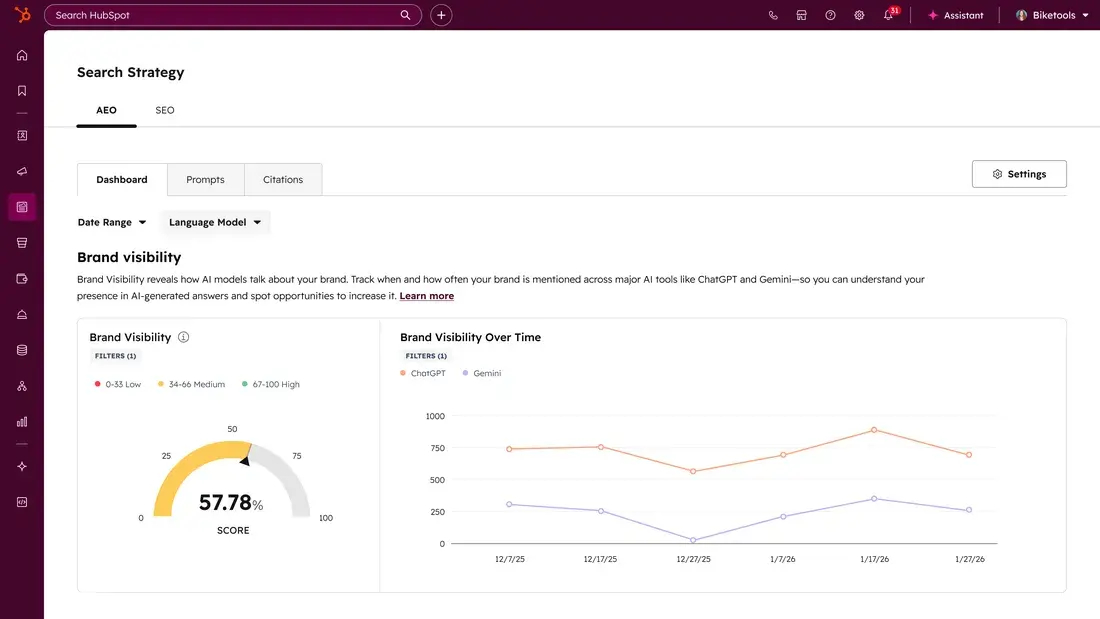
AI Visibility Rate: This foundational metric quantifies how often a brand appears in AI-generated answers for a defined set of prompts. It directly addresses the question of whether a brand is genuinely "showing up" where its target audience is seeking information via AI. Measuring this involves systematically querying AI platforms with relevant prompts and tracking brand citations. The challenge lies in the non-deterministic nature of AI answers, which can vary across sessions, users, and locations, necessitating consistent tracking methodologies. Early adopters of AI measurement tools report significant gains in understanding their brand’s presence and identifying immediate opportunities for optimization.
-
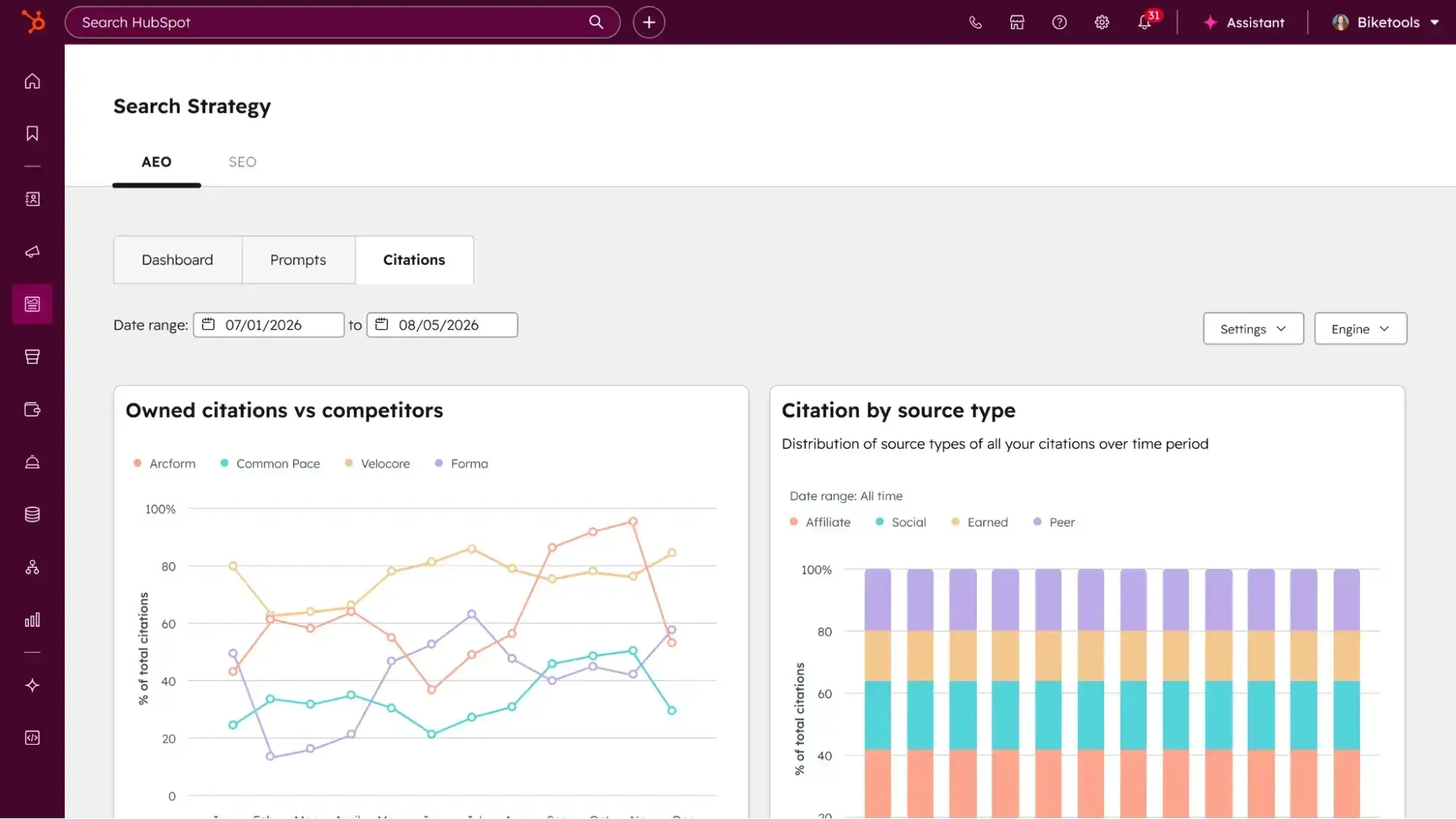
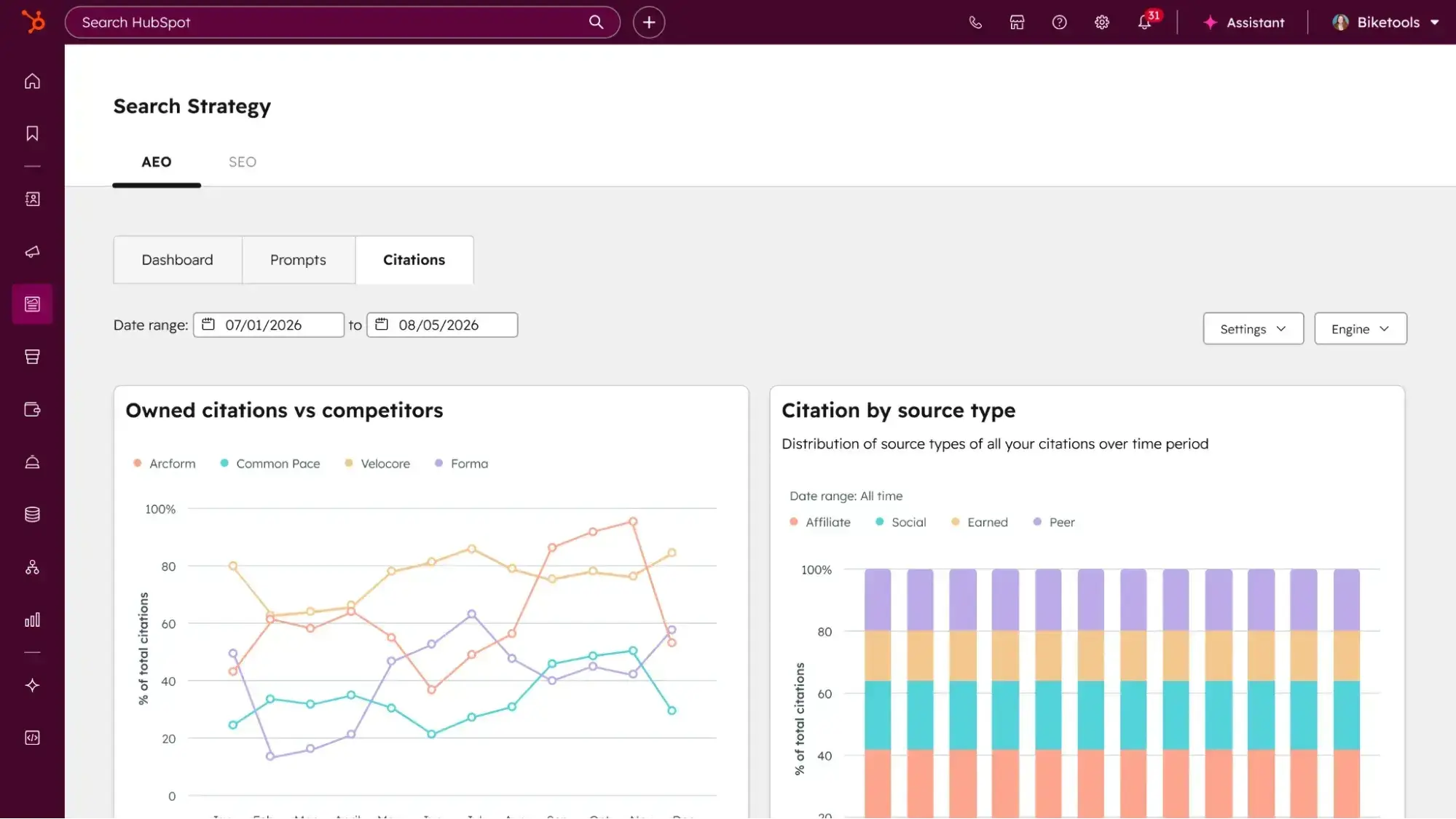
Citation Share: Complementing visibility rate, citation share measures a brand’s percentage of citations relative to its competitors across the same prompt set. This is the AI search equivalent of "share of voice," providing crucial competitive context. A brand might appear in 30% of AI answers, which sounds respectable, but if a key competitor appears in 60%, the brand is losing the battle for AI attention. Calculating citation share involves running the prompt set for both the brand and its competitors, then comparing the number of owned citations. This metric is invaluable for competitive reporting and identifying strategic gaps.
-
Answer Accuracy and Sentiment: As powerful as AI engines are, they are not infallible. A brand frequently cited but inaccurately (e.g., incorrect product features, outdated pricing, misaligned use cases) risks not only damaging conversion rates but also its overall reputation. Tracking accuracy and sentiment is a qualitative, yet critical, endeavor. It involves human review of AI-generated answers that cite the brand, assessing whether the information is correct, current, and reflects the desired brand positioning. AI ethics experts frequently highlight the importance of accuracy for maintaining user trust and brand integrity. This qualitative feedback is vital for refining content strategies and ensuring brand messaging is correctly interpreted by AI models.
Proxy Metrics: Behavioral Signals of AI Impact

Given the limitations in direct referral data from many AI platforms, proxy metrics offer invaluable insights into user behavior influenced by AI interactions.
-
Branded Search Lift: This is one of the most powerful yet often underutilized proxy metrics. Scrunch’s analysis of millions of search events revealed that when an AI platform recommends a brand to someone with no prior exposure, that individual becomes 182% more likely to search for the brand on Google within the following week, and 117% more likely to visit the brand’s website directly. This "zero-click discovery" scenario is common: a user reads an AI answer, sees a brand mentioned, closes the chat, and then directly searches for the brand on Google or navigates to its website. Since most AI engines don’t pass referral data, this subsequent action appears as organic branded search or direct traffic in analytics, making it invisible to standard attribution models. Tracking an increase in branded search volume correlating with improved AI visibility provides a strong, directional attribution signal.
-
AI-influenced Engagement: Traffic referred by AI platforms often exhibits distinct behavioral patterns compared to standard organic traffic, signaling higher intent. Similarweb’s research found that ChatGPT-referred visitors spent an average of 15 minutes on-site compared to Google’s 8 minutes, viewed 12 pages per session versus Google’s 9, and converted at 7% compared to 5% on transactional sites. Tracking engagement metrics specifically for AI referral traffic segments (e.g., average session duration, pages per session, bounce rate) helps marketers understand which content resonates most effectively with AI-qualified visitors and where improvements are needed. Strong engagement from AI traffic, even if volume is low, indicates high-quality leads.
Business Impact Metrics: Connecting AI to the Bottom Line
Ultimately, the true value of any marketing activity is its contribution to business growth and revenue.
-
AI-influenced Conversion Rate: The high intent of AI-referred visitors translates directly into superior conversion rates. Ahrefs, for instance, reported that AI-referred visitors accounted for just 0.5% of its website sessions but drove a remarkable 12.1% of all signups, representing a 23x conversion differential. This demonstrates that by the time an AI engine directs a user to a site, it has often pre-qualified them, synthesized options, and compared alternatives, meaning they arrive ready to act. Measuring AI-influenced conversion rate involves segmenting conversions by AI traffic sources within analytics platforms like Google Analytics 4 and comparing these rates against organic and direct traffic.
-
AI Revenue Contribution (via CRM): This is the ultimate KPI, directly linking AI search visibility to the organization’s financial performance. To measure this, marketers must integrate AI discovery signals into their Customer Relationship Management (CRM) system. By creating custom contact properties for "AI Discovery Source" and tracking these contacts through the entire deal cycle, organizations can attribute closed revenue to AI-influenced leads. While self-reported attribution in CRM systems is inherently imprecise, it captures the critical zero-click discovery path that traditional analytics tools miss entirely, providing a defensible, directional link between AI efforts and revenue. CFOs and executive leadership demand quantifiable revenue impact, making CRM integration non-negotiable for proving AI marketing ROI.
Methodologies for AI Search Measurement: A Practical Guide
Measuring AI visibility and citation share requires a structured, consistent approach. Unlike traditional SEO, where established tools provide comprehensive ranking and traffic data, AI search measurement is a nascent field requiring a bespoke system.
-
Establish Your Prompt Set: The foundation of AI visibility measurement is a carefully curated prompt set – a list of questions mirroring how target audiences interact with AI engines. This set should typically include 30-50 prompts across three categories: discovery (e.g., "What is the best CRM for small businesses?"), comparative (e.g., "HubSpot vs. Salesforce: pros and cons"), and long-tail (e.g., "How to integrate HubSpot CRM with a marketing automation platform?"). This iterative process of prompt refinement ensures relevance and comprehensiveness.
-
Input Prompts into AI Visibility Tools: Marketers can manually test prompts across various AI platforms (ChatGPT, Gemini, Perplexity, Claude, etc.) or leverage specialized tools like HubSpot AEO, which automate the daily tracking of citations. A multi-platform approach is crucial because AI search visibility is not a single-platform story. Goodie’s 2026 Wave 2 report highlighted that ChatGPT’s share of B2B AI referrals dropped from 89% to 63% in just eight months, while Claude reached 18.5% and Gemini hit 10.6%. This demonstrates the fragmentation of the AI search landscape and the necessity of broad coverage. Understanding how each platform differs in retrieval logic and citation behavior is key.
-
Evaluate and Document Findings: Consistent documentation is vital. Track changes in citations (increases/decreases) for both your brand and competitors. Record the source of citations, their sentiment, and accuracy. Every finding should inform content briefs and strategy, identifying which content pieces drive the most citations and engagement. Critically, running prompt sets for competitors helps surface gaps in their AI visibility and content strategy, providing actionable insights for competitive advantage.
-
Repeat Consistently: AI models are constantly evolving, and so are their answers. Consistency in tracking and analysis—ideally weekly or bi-weekly—is paramount to identify trends and measure the impact of content optimizations.
Overcoming Attribution Challenges: The Path to Revenue
The inherent attribution gap in AI search – where most AI engines do not pass referral data – necessitates a multi-pronged approach to connect KPIs to conversions and revenue.
-
Use Self-Reported Attribution: Since tracking pixels, UTM parameters, and referral headers often fail in AI search scenarios, directly asking users "How did you first hear about us?" becomes crucial. Explicitly including AI engines as answer options on lead forms, surveys, and post-purchase questionnaires captures the zero-click discovery path. Semrush’s survey found that 55% of U.S. consumers use AI specifically for product research at least weekly, and Fairing confirmed a tenfold increase in customers naming LLMs in "how did you hear about us" surveys from January to mid-July 2025. While imprecise, this data provides an invaluable, otherwise invisible, signal of AI’s influence.
-
Track Branded Search Lift and Direct Entrances: As discussed, a surge in branded search volume or direct traffic correlating with improved AI visibility serves as a powerful proxy for AI influence. When users bypass direct clicks from AI answers and instead search for the brand directly on Google or navigate to its site from memory, these actions become the measurable signals of AI discovery. Monitoring these trends in Google Search Console and Google Analytics 4 provides a strong, directional indication of AI’s impact on brand recognition and intent.
-
Set Up Your CRM to Capture AI Discovery Signals: To translate AI visibility into quantifiable revenue, CRM integration is indispensable. Marketers must configure their CRM to manage custom contact fields such as "AI Discovery Source," "AI First Touch Date," and "AI Influenced Lead Score." This structure allows for filtering deals by AI Discovery Source, tracking close rates for AI-sourced contacts versus other channels, and calculating the pipeline contribution of AI-influenced leads over any period. HubSpot CRM, for example, enables the creation of such custom properties and automation to populate fields, making it possible to present leadership with concrete data on AI search’s financial impact.
Strategic Implications and Future Outlook
The shift towards AI-centric search measurement profoundly impacts marketing teams, influencing budget allocation, content strategy, and competitive intelligence. Marketing teams must evolve from siloed SEO efforts to integrated AEO (Answer Engine Optimization) strategies, focusing on providing comprehensive, accurate, and authoritative content that AI models can readily synthesize. This necessitates deeper collaboration between content creation, technical SEO, and analytics teams. As AI platforms continue to evolve and potentially offer more robust referral data in the future, the measurement practices will also adapt. However, the fundamental need to move beyond traditional metrics and focus on true business impact will remain constant.
The goal of AI search measurement is not merely to create impressive dashboards but to inform strategic decisions that drive growth and profitability. By proactively embracing new KPIs, adopting sophisticated measurement methodologies, and integrating AI insights into their CRM systems, marketers can confidently navigate this new frontier, turning AI visibility into tangible revenue and securing a competitive edge in the evolving digital landscape. The time to measure AI search visibility is now, establishing baselines and building robust strategies from there.