The advent of generative artificial intelligence has profoundly reshaped the digital search landscape, making keyword research for Answer Engine Optimization (AEO) an increasingly complex yet critical endeavor for digital marketers. Audiences are now engaging with AI search tools through nuanced, personalized, and often lengthy queries, seeking direct answers rather than mere lists of links. This seismic shift moves beyond traditional search engine optimization (SEO) metrics, where clear search volumes and page rankings once dictated strategy, towards a new paradigm focused on visibility, answerability, and contextual relevance within AI-generated responses.
The Paradigm Shift: From Keywords to Conversational AI
For decades, traditional SEO revolved around optimizing content for specific keywords, leveraging quantitative data such as search volume, keyword difficulty, and click-through rates. The goal was simple: rank high on Google’s Search Engine Results Pages (SERPs) to drive traffic to a website. Marketers meticulously crafted content around target keywords, hoping users would click on their “blue links” to find information. Success was largely measured by SERP position, impressions, and direct clicks.
However, the rapid proliferation of generative AI and large language models (LLMs) has introduced a new dimension to search. Users are no longer limited to short, fragmented keyword phrases. Instead, they are increasingly posing complex, multi-sentence questions, conversational prompts, and scenario-based queries directly to AI tools like Google’s AI Overviews, ChatGPT, Claude, and Perplexity. A recent qualitative study by Ofcom, the UK’s communications regulator, highlighted that AI search tools are particularly valued for their ability to synthesize information for highly specific, detail-rich questions that would otherwise require multiple traditional queries and extensive manual research.
This fundamental change necessitates a shift in keyword research from a purely quantitative approach to one that heavily emphasizes qualitative data. Instead of focusing solely on how many times a keyword is searched, AEO keyword research delves into:
- User Intent: Understanding the underlying “why” behind a query.
- Question Phrasing: How users articulate their needs in natural language.
- Context: The broader scenario or problem the user is trying to solve.
- Information Gaps: What specific information is missing or unclear in existing answers.
In this AI-driven environment, users expect comprehensive answers synthesized from various sources directly within the search interface, often without needing to click through to individual websites. This means traditional SEO metrics like clicks to a website become less reliable indicators of success. AEO specialists, therefore, consider visibility within AI summaries, qualitative data derived from AI interactions, and, crucially, conversions as primary measures of effectiveness. While the immediate click might diminish, the brand’s presence and authoritative citation within an AI answer can significantly bolster trust and long-term engagement.
Driving Forces Behind AEO’s Rise

The emergence of AEO is not an isolated phenomenon but rather a convergence of several technological and behavioral trends:
-
Advancements in Large Language Models (LLMs): The breakthroughs in LLM technology, exemplified by models like GPT-4, have enabled AI systems to understand natural language with unprecedented accuracy and generate coherent, contextually relevant responses. These models can parse vast amounts of information, identify entities, and synthesize complex topics into concise answers.
-
Evolution of Search Engine Capabilities: Major search engines, most notably Google, have integrated generative AI directly into their core search experience (e.g., Search Generative Experience, or SGE, now often referred to as AI Overviews). This means AI-generated summaries and answers are increasingly displayed prominently at the top of the SERPs, often before traditional organic listings.
-
Changing User Behavior: The proliferation of voice assistants (Siri, Alexa, Google Assistant) and conversational AI interfaces has accustomed users to asking questions in a more natural, conversational style. This behavior is now extending to text-based search, where users expect AI to understand their complex queries and provide direct, definitive answers.
-
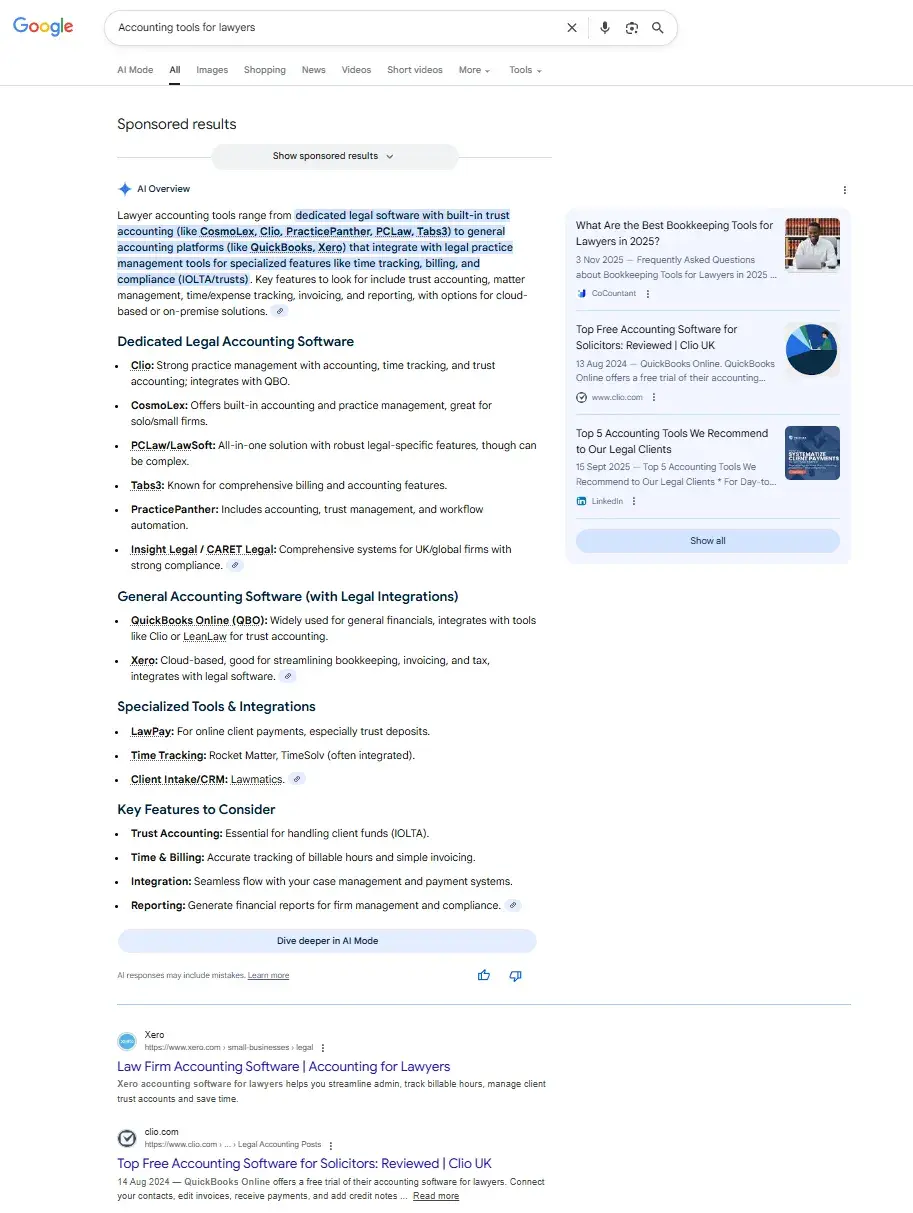
Fragmentation of the Digital Information Ecosystem: While Google still dominates traditional web search, the landscape of information discovery is becoming more fragmented. Users are finding answers not only through Google’s AI Overviews but also directly within specialized AI platforms like ChatGPT, Claude, Perplexity, and even social media search functions. Data from FirstPageSage, for instance, has reported significant growth in monthly users for platforms like ChatGPT, indicating a diversified approach to information seeking. This fragmentation means a brand’s content needs to be optimized for discoverability across a wider array of AI-powered touchpoints.
Core Principles for AEO Keyword Research
An effective AEO keyword strategy transcends merely identifying high-volume keywords; it focuses on creating content that is relevant, easily parsed, and synthesizable by AI crawlers. Several core principles underpin this approach:
-
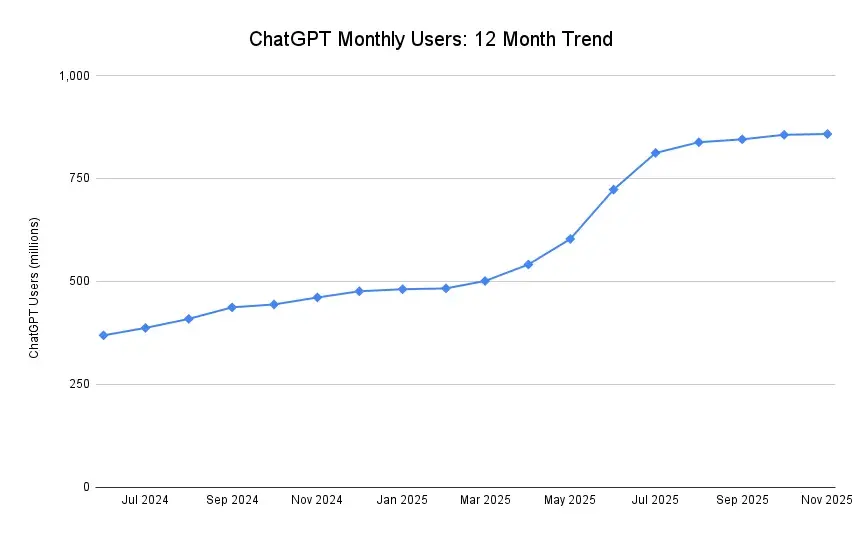
Intent-First (Including Search and Audience Intent): The bedrock of AEO is understanding the “why” behind a user’s search. AI systems are designed to resolve intent, especially for complex, nuanced, or contextual questions. AEO marketers must identify the specific problems, questions, or needs their target audience has and create content that comprehensively addresses these. This involves mapping content not just to keywords, but to the full spectrum of user intent (informational, navigational, transactional, commercial investigation). For example, a search for “accounting tools for lawyers” might appear simple, but an AI system understands the nuanced professional needs, regulatory compliance, and specific features a lawyer would require, potentially surfacing niche tools that don’t rank highly in traditional search but are highly relevant. This was evident in the real-world example provided, where brands like CosmoLex, PC LawSoft, and LawPay gained AI visibility despite lower traditional SERP rankings, purely due to their relevance.
-
Entity Mapping: This principle involves structuring content around distinct “entities”—people, places, organizations, concepts, or products—and establishing their relationships within a broader knowledge graph. For an article on “keyword research for AEO,” relevant entities would include “SEO,” “generative AI,” “LLMs,” “content marketing,” and specific tools like “HubSpot’s XFunnel.” By clearly defining and interlinking these entities, content helps answer engines understand the topic’s depth, evaluate its authority, and trust its information. Entity SEO has been a foundational concept in search for years, but its importance is magnified in the AI era, where knowledge graphs are central to how AI systems process and synthesize information. Structured data and schema markup become crucial tools for explicit entity definition.
-
Cross-Engine Optimization: The traditional SEO focus on Google, due to its dominant market share (over 88% globally according to StatCounter), is no longer sufficient. The rise of multiple AI platforms means content must be optimized for a fragmented ecosystem that includes Google’s AI Overviews, ChatGPT, Bing AI, Perplexity, and other emerging AI search tools. A cross-engine approach ensures that the keyword and entity strategy is robust enough to facilitate discovery wherever users are seeking information. This requires understanding the unique ways different AI models process and present information, while always prioritizing the human audience.
-
Answerability Over Volume: In AEO, the ability to directly and comprehensively answer a user’s question, especially for the ideal client, takes precedence over the sheer search volume of a query. The goal shifts from chasing vanity metrics like high visibility alone to solving specific problems, answering precise questions, and driving conversions. Answerability is assessed by how easily an AI engine can extract, understand, and trust the content. This involves evaluating the content’s clarity, conciseness, and the presence of direct answers. Tools like HubSpot’s AEO Grader can help assess a piece of content’s alignment with answer engine expectations.
-
Conversational Phrasing: Users interact with AI systems conversationally, using full sentences, comparisons, examples, and detailed scenarios. Optimizing for conversational phrasing means structuring content to mirror these natural language patterns. This increases the likelihood that content will align with how answer engines interpret and respond to queries, making it easier for AI to extract and synthesize relevant information. Content management systems like HubSpot’s Content Hub, with their built-in AI writing and SEO suggestions, can assist marketers in naturally incorporating conversational language and structure.
Practical Application: A Step-by-Step Guide to AEO Keyword Research
While traditional keyword research remains a starting point, it must expand significantly for AEO. The inherent limitations of current tools, which struggle to provide consistent volume or ranking data for AI prompts, necessitate a more nuanced and multi-faceted approach.
-
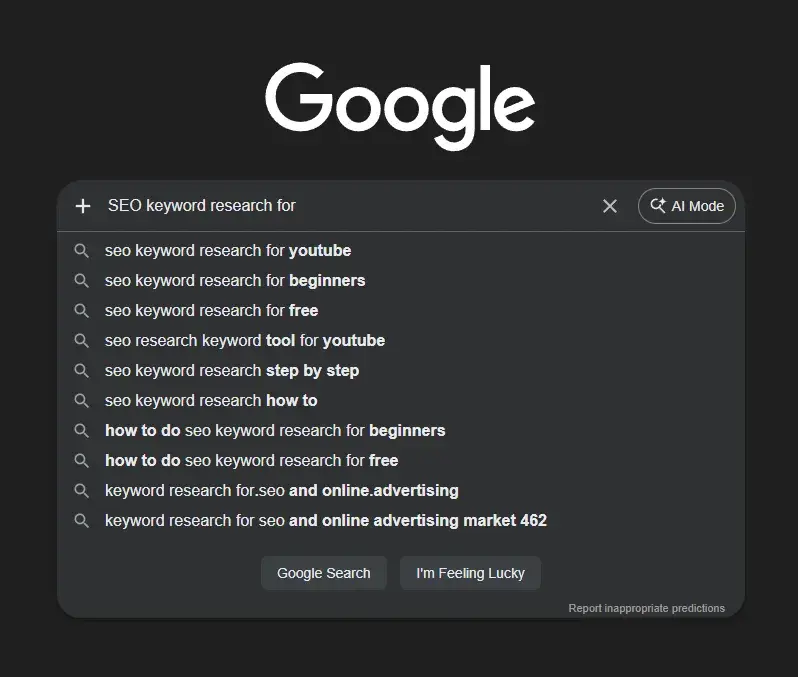
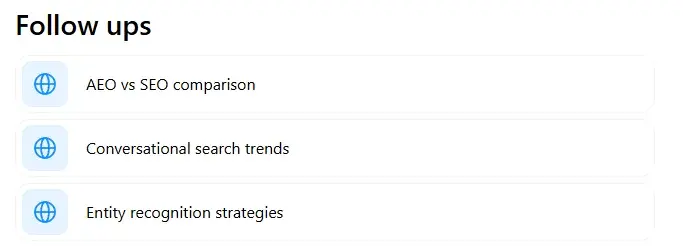
Find Conversational Queries with Autocomplete: Autocomplete features in search engines (Google, Bing), AI tools, and social media platforms are invaluable for uncovering natural language patterns and long-tail queries. By typing a seed keyword (e.g., “SEO keyword research for…”) into these interfaces, marketers can observe real-time suggestions that reflect how users naturally phrase questions. This reveals common user needs, potential audience segments (beginners, YouTubers, online advertisers), and question variations. Analyzing follow-up questions within AI tools like Sigma AI further expands this understanding. This method is most effective when conducted in incognito mode to prevent personalization bias.
-
Talk to Customers and Uncover Specific Problems: Some of the richest AEO insights come directly from customer interactions. Real conversations with target audiences, focus groups, or sales teams can reveal nuanced problems, contextual factors, and specific phrasing that no automated tool can capture. For a B2B SEO strategy, especially in niche markets, understanding customer pain points is paramount. Questions should delve into their problems, how they typically search for solutions, the language they use, their evaluation of existing answers, and their decision-making processes. These qualitative insights transform abstract search data into concrete, answerable problems that AI systems are designed to address.
-
Use LLM Query Fan-Outs to Expand Ideas: A query fan-out is a technique where a single question is expanded into a cascade of related follow-up questions, refinements, and edge cases. LLMs excel at this, simulating how a user might explore a topic conversationally. By prompting an LLM with an initial query, marketers can generate a comprehensive map of the “conversation space” around a topic. This reveals layers of intent, comparisons, constraints, and “what if” scenarios that traditional keyword tools often miss, providing powerful inputs for creating AEO-focused content that anticipates the full user journey.
-
Map Entities and Semantic Variants: Beyond individual keywords, AEO requires mapping entities and semantic variants to build a comprehensive contextual understanding. This involves identifying the core concepts, related terms, and synonyms associated with a topic. For instance, “digital marketing strategy” might involve entities like “content marketing,” “social media,” “email marketing,” and “SEO.” By demonstrating a deep knowledge of these interconnected entities, content signals to answer engines its authority and trustworthiness. This practice also strengthens traditional SEO by enhancing a website’s overall topical relevance and expertise. HubSpot’s Content Hub, with its SEO recommendations, facilitates this by promoting strong entity coverage and semantic depth.
-
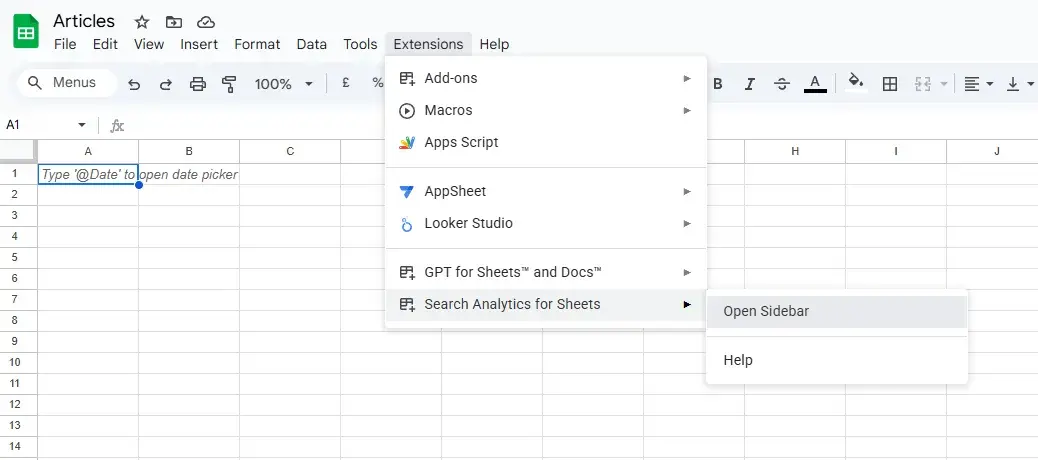
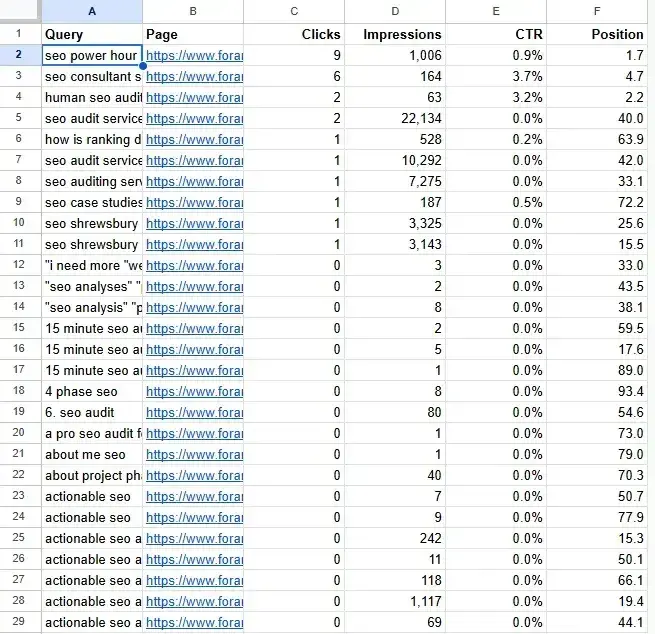
Refer to Google Search Console for Zero-Search Insights: Google Search Console (GSC) is an indispensable tool for AEO, particularly for unearthing niche, intent-rich queries that may not show up in traditional keyword tools due to low reported volume. GSC reflects actual queries that have already triggered a website’s content, offering unique insights into how users phrase questions, explore nuance, and search beyond obvious keywords. Marketers can analyze performance reports to identify long-tail queries, especially those containing words like “for,” “with,” “without,” “versus,” or “best,” which often indicate specific problems or audience segments. Tools like Search Analytics for Sheets can further streamline this process, allowing for easy filtering and analysis of GSC data to uncover AEO opportunities. These “zero-search” or very low-volume queries are often goldmines for AEO, representing genuine user interest and intent.
Essential Tools for AEO Keyword Research
While no single tool perfectly captures the intricacies of AEO, a combination of specialized platforms and established SEO tools with AI integrations can significantly enhance keyword research efforts.
-
HubSpot’s XFunnel: Purpose-built for AEO and Generative Engine Optimization (GEO), XFunnel measures LLM visibility and AI search performance. It helps marketers understand how brands and content are referenced and cited within AI-generated answers, providing insights beyond traditional rankings. Its Research functionality guides decisions on target questions, entity prioritization, and content structuring for AI synthesis.
-
Semrush: A comprehensive SEO platform that has rapidly integrated AEO features. Semrush offers AI Visibility Plans, competitive analysis within the AI landscape, and keyword research tools that can identify question-based queries and semantic clusters relevant to AI understanding. While its core pricing is $199/month, AI features typically incur an additional fee, reflecting the specialized nature of these capabilities. Semrush’s long-standing presence in the SEO space provides a robust foundation for its AI integrations.
-
AlsoAsked: This tool visualizes how people ask follow-up questions around a topic, providing a tree-like structure of interconnected queries. It’s excellent for understanding the natural evolution of user questions and uncovering information gaps. AlsoAsked helps identify related concepts and common pain points, making it valuable for developing comprehensive, answerable content. It offers a free tier with limited usage, with paid plans starting at $12/month.

-
AnswerThePublic: A search listening tool that aggregates autocomplete data from various search engines, social platforms, and AI tools. It visually presents questions, prepositions, comparisons, and alphabetical variations around a seed keyword. AnswerThePublic is particularly effective for AEO because it reflects real, conversational inputs, helping marketers translate a single topic into a wide array of AEO-ready content angles. It also provides a free tier with limited searches, and paid plans starting around $20/month.
Measuring Success and Overcoming Challenges in the AEO Landscape
Proving the impact of AEO to leadership requires a focus on tangible business outcomes. The most important metrics are conversion rate and revenue impact, which can be tracked through analytics platforms like Google Analytics by segmenting traffic from AI sources. Once the business impact is established, layer in visibility signals such as AI mentions, citations, branded references, and overall presence in answer engines. HubSpot’s AEO Grader can provide a benchmark for AI visibility, connecting optimization efforts to measurable improvements.
Refreshing AEO content is crucial, especially for competitive or fast-moving topics, as AI answers evolve quickly with new indexed sources. The key is to maintain factual accuracy, freshness, and relevance.
Regarding schema types, FAQPage, HowTo, Article, and Product schemas are particularly important for AEO as they explicitly define content structure, answer specific questions, and clarify conceptual relationships for AI systems. Additionally, Product, Person, and Organization schemas help connect entities, signaling to AI systems the “who,” “what,” and “which brand” behind the content.
When AI models cite competitors, it should be viewed as a research opportunity. Analyze why competitors are being cited—is their content clearer, more comprehensive, or better aligned with user intent or entity relationships? Use these insights to identify gaps in your own content, expand its depth, and strengthen its clarity. Over time, as higher-quality and more relevant sources emerge, answer engines often adjust their citations.
The Future of Search: Embracing AEO for Enduring Visibility
Keyword research for AEO is not about abandoning the fundamental principles of SEO; it is about strategically evolving them to meet the demands of an AI-driven digital world. As search becomes increasingly nuanced, conversational, and fragmented across various platforms, effective AEO keyword research shifts its focus from mere volume and rankings to understanding intent, mapping entities, and ensuring answerability.
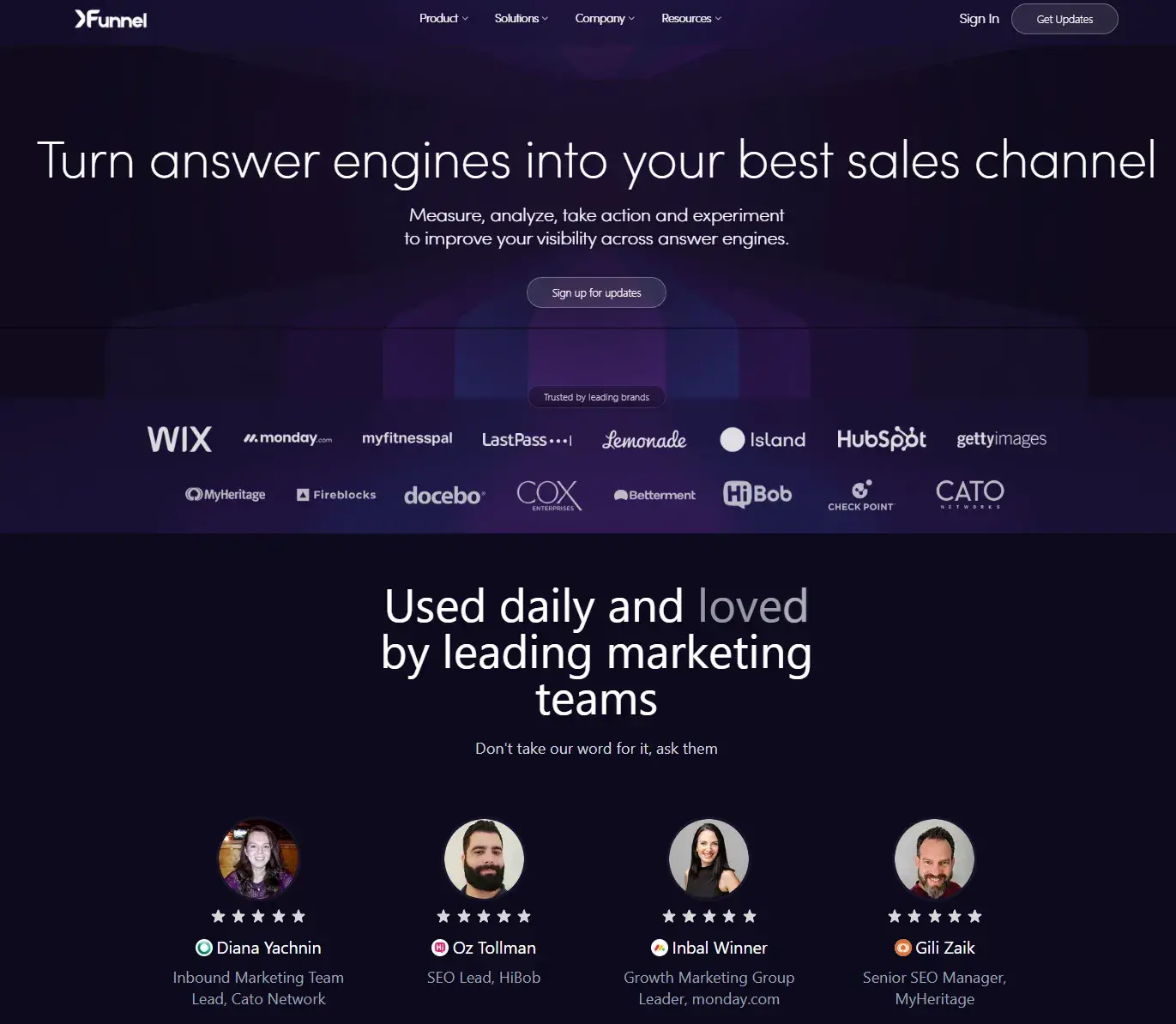
Platforms like HubSpot’s XFunnel are instrumental in bridging the gap between traditional SEO and AEO, providing insights into how brands and content appear in AI-generated answers and which entities and questions drive visibility. When used in conjunction with traditional research methods, these tools make AEO keyword strategy more measurable and actionable. HubSpot’s broader SEO tools further support this transition by offering continuous content optimization based on performance insights and on-page recommendations, facilitating alignment with intent, improving answerability, and increasing the likelihood of content being surfaced in AI-generated responses.
Ultimately, success in AEO will belong to the teams that move beyond an isolated keyword chase to a deep understanding of their audiences and the intricate problems they seek to solve. By prioritizing relevance, clarity, and intent, digital marketers and SEO specialists can navigate the evolving search landscape and secure enduring visibility within the era of answer engines.