

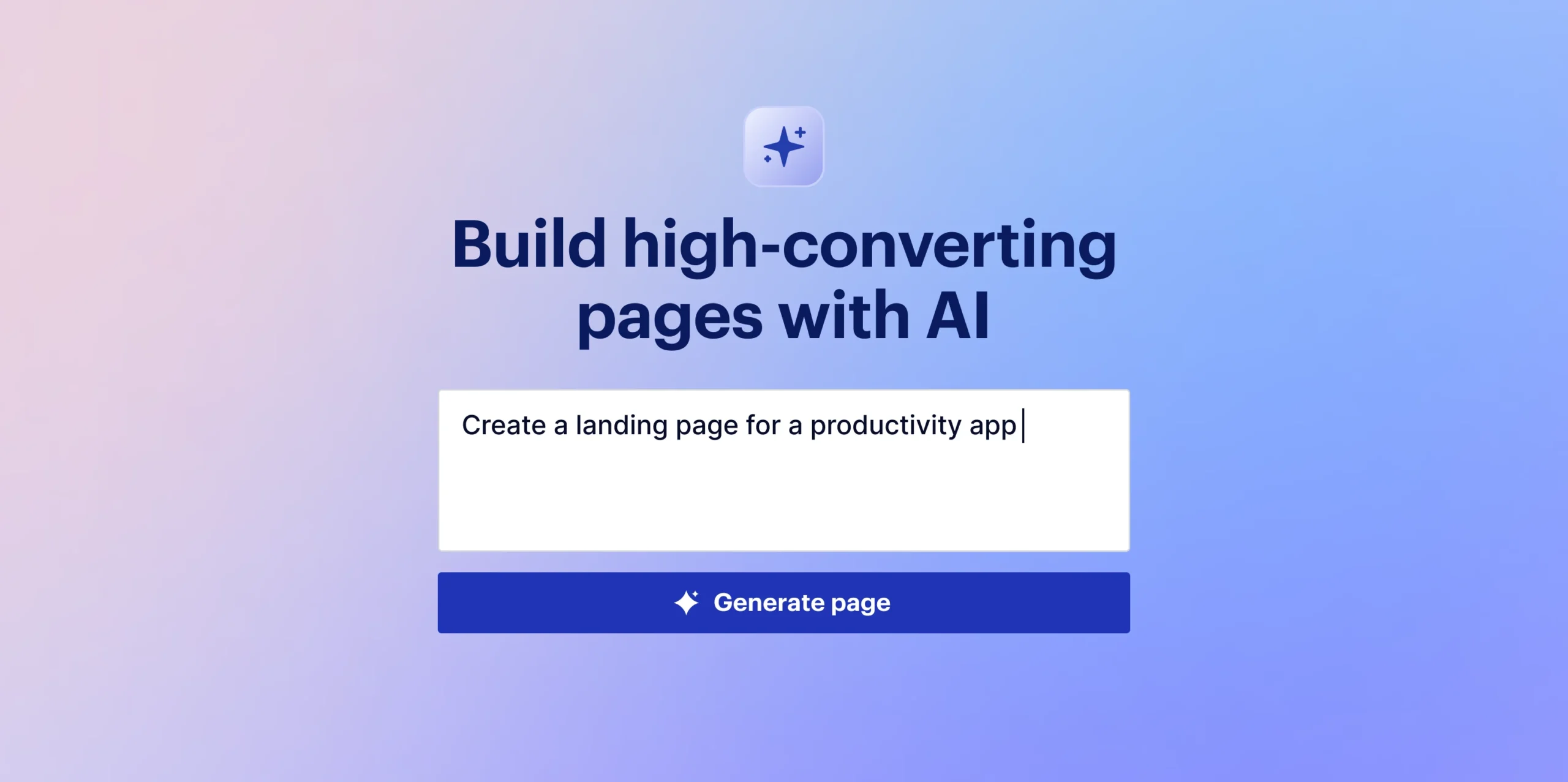
The digital marketing landscape has reached a significant turning point as Instapage, a long-standing leader in landing page technology, officially transitions into a comprehensive, end-to-end AI-powered marketing platform. This evolution, marked by the release of a new suite of generative AI tools, signifies a strategic shift from a specialized landing page builder to a holistic ecosystem designed to manage the entire conversion funnel. By integrating AI-driven page generation, automated email sequences, and advanced data analytics into a single interface, the company aims to eliminate the fragmentation that has historically hindered marketing efficiency. This move comes at a time when businesses are facing increasing pressure to deliver personalized customer experiences while operating with leaner teams and more restrictive budgets.
The Evolution of Conversion Rate Optimization: A Decade of Development
To understand the significance of Instapage’s latest technological leap, it is necessary to examine the company’s trajectory within the Marketing Technology (MarTech) sector. Founded in 2012, Instapage initially addressed a specific pain point in the industry: the difficulty of creating high-converting landing pages without extensive coding knowledge. Over the following decade, the company pioneered the concept of the "Post-Click Automation" (PCA) category, recognizing that the experience a user has after clicking an ad is just as critical as the ad itself.
Between 2012 and 2020, Instapage expanded its core builder into a sophisticated Conversion Rate Optimization (CRO) suite. This period saw the introduction of heatmaps, A/B testing, and "AdMap" technology, which allowed marketers to visualize the connection between specific advertisements and their corresponding landing pages. However, as the digital ecosystem grew more complex, the "tool sprawl" phenomenon began to affect marketing departments. Teams were forced to stitch together disparate tools for email, web design, personalization, and analytics, leading to data silos and operational inefficiencies.
The 2023–2025 period marked the beginning of Instapage’s AI integration phase. Early features included AI-powered copywriting assistance and basic experimentation tools. The current 2026 release represents the culmination of this roadmap, moving beyond simple assistive AI to generative AI that handles the structural and logic-based heavy lifting of marketing campaigns.
Technical Specifications of the AI-Powered Suite
The centerpiece of the new platform is the AI Page Generation tool. Unlike traditional templates or standalone AI generators that often produce rigid, non-editable layouts, Instapage has developed a hybrid system. This system allows users to describe their campaign goals, target audience, and brand voice through natural language prompts. The AI then synthesizes this information to construct a complete, conversion-optimized page in seconds.
The technical innovation lies in the integration with Instapage’s "pixel-perfect" drag-and-drop builder. In many competing AI tools, making a structural change to an AI-generated layout requires a complete "regeneration" of the page, which consumes additional processing tokens and time. Instapage’s architecture allows the AI to create the initial framework, which remains fully editable at the element level. This approach addresses the "last-mile" problem of AI design, where human marketers need to make granular adjustments to align with specific brand guidelines without fighting against an inflexible algorithm.
In addition to page generation, the platform has introduced AI Email Generation and AI Collections. These tools are designed to solve the "follow-up gap." Statistical data suggests that the likelihood of converting a lead drops by 10x if the first follow-up occurs more than five minutes after the initial contact. By housing email automation within the same platform as the landing pages, Instapage enables instantaneous, context-aware responses. The AI analyzes the data captured on the landing page to generate tailored email content that reflects the specific interests of the lead, thereby increasing engagement rates.
Supporting Data: The Economic Impact of Marketing Automation
The transition toward AI-centric platforms is supported by significant industry data regarding productivity and conversion. According to recent market research, the average marketing team uses between 15 and 20 different tools to manage their daily operations. This "context switching"—the act of jumping between different software interfaces—can cost businesses up to 40% of their productive time. By consolidating these functions, Instapage claims to help businesses scale their operations without the traditional requirement of increasing headcount.
Furthermore, conversion data highlights the necessity of the personalization that Instapage’s AI now automates. Personalized landing pages and emails can drive a 20% increase in total sales compared to generic campaigns. However, manual personalization at scale is historically labor-intensive. The implementation of AI Collections—a feature that organizes and deploys personalized content blocks across thousands of pages—allows small teams to achieve the level of granular targeting previously reserved for enterprise organizations with massive budgets.

The cost of customer acquisition (CAC) has also risen by over 50% in the last five years across many industries. This trend has made CRO a survival necessity rather than a luxury. Instapage’s data indicates that their AI-driven experimentation tools can reduce the time required to find a winning page variation by nearly 70%, directly impacting the ROI of paid advertising spend.
Official Responses and Strategic Vision
Industry analysts view this move as a direct challenge to broader platforms like HubSpot and Adobe, as well as specialized competitors like Unbounce. In a statement reflecting the company’s strategic direction, product leadership emphasized that the goal was never just to "add AI" but to rethink the workflow of a modern marketer.
"Most platforms treat AI as a bolt-on feature—a subject line generator here or a copy tool there," noted an internal product strategist during the launch briefing. "Our philosophy was to build AI into the connective tissue of the platform. We wanted to eliminate the ‘blank page syndrome’ that stalls so many campaigns and replace it with a system that understands the intent behind a marketing goal and builds the necessary infrastructure to achieve it."
Marketing professionals who participated in the beta testing phase of the AI tools have reported a significant reduction in "time-to-market." One enterprise marketing director noted that a process that previously took two weeks—involving a copywriter, a designer, and a developer—can now be completed in a single afternoon by a single marketing manager. This democratization of technical skills is a core component of Instapage’s value proposition in 2026.
Broader Implications for the MarTech Industry
The move by Instapage reflects a larger trend in the software-as-a-service (SaaS) industry: the shift from "tools" to "solutions." As AI continues to commoditize basic tasks like writing and layout design, the value of a platform increasingly depends on its ability to integrate these tasks into a cohesive, data-driven workflow.
There are also significant implications for the labor market within the advertising and marketing sectors. The rise of "end-to-end" AI platforms suggests a shift in the required skill sets for marketers. There is a moving away from tactical execution (e.g., manual A/B test setup or basic HTML editing) toward strategic prompt engineering and high-level data interpretation. The role of the marketer is evolving into that of an "orchestrator" of AI systems rather than a manual builder of assets.
However, the transition is not without its challenges. The reliance on generative AI raises questions about brand consistency and the potential for "algorithmic bias" in conversion strategies. Instapage has addressed this by maintaining the manual override capability within their builder, ensuring that human oversight remains a central part of the creative process.
Chronology of the Instapage AI Rollout
The deployment of these features follows a structured timeline designed to ensure platform stability and user adaptation:
- Q4 2024: Initiation of the "AI Copywriter" beta, allowing users to generate headlines and CTA buttons based on keyword inputs.
- Q2 2025: Launch of AI Experimentation, which automated the selection of traffic splits for A/B testing based on real-time performance.
- Q1 2026: Limited beta release of AI Page Generation for select enterprise clients.
- Current Phase: Public rollout of the full AI-powered marketing platform, including integrated AI Email and AI Collections.
- Future Outlook: Plans for "Autonomous Optimization," where the platform will not only build pages but proactively suggest and implement changes based on predictive analytics and global conversion trends.
Conclusion and Future Outlook
Instapage’s transformation into an end-to-end AI marketing platform is a response to the dual pressures of technological advancement and economic necessity. By providing a single point of control for the creation, optimization, and follow-up phases of the marketing funnel, the platform seeks to redefine the standard for conversion technology.
As the digital landscape moves further into the age of automation, the ability to rapidly deploy high-quality, personalized experiences will likely be the primary differentiator between successful brands and those left behind. With its 14-day trial now open for the new suite, the industry will be watching closely to see how these integrated AI workflows perform in the highly competitive arena of digital performance marketing. The company has indicated that while select features remain in beta, the trajectory is clear: the future of marketing is not just assisted by AI, but powered by it from start to finish.







