Over the past three years, marketing teams globally have embarked on an ambitious journey of experimentation with generative artificial intelligence, seeking to harness its transformative potential. While a select few have successfully unearthed genuine efficiencies and strategic advantages, a significant number have found themselves adrift in a sea of accumulated tool subscriptions, their initial optimism curdling into frustration. This divergence underscores a persistent and widening chasm between AI’s much-touted promise and its tangible, practical value, leaving many to question the efficacy of widely circulated "AI best practices" that often lack clear traceability to measurable outcomes. The urgency for clarity is further amplified by the observed freefall in clicks and organic traffic, a trend attributed by many to evolving search paradigms influenced by AI.
The Generative AI Hype Cycle in Marketing: A Brief Chronology
The journey of generative AI in marketing began with an explosive burst of excitement in the early 2020s, coinciding with the public release and rapid adoption of advanced large language models (LLMs). Initial predictions, often bordering on utopian, heralded a paradigm shift where content creation, campaign optimization, and customer engagement would be entirely reimagined.
- Early 2022 – Mid 2023: The Era of Experimentation and Proliferation: Following the widespread availability of tools like ChatGPT, marketers rushed to integrate generative AI into their workflows. This period saw a rapid proliferation of AI-powered tools, each promising to revolutionize specific aspects of marketing, from copywriting and image generation to data analysis. The focus was largely on exploring capabilities and increasing content volume, driven by a strong "fear of missing out" (FOMO) among businesses. According to a 2023 survey by HubSpot, approximately 60% of marketers had already integrated AI into their content strategies, with a primary goal of improving efficiency and scalability.
- Late 2023 – 2024: Peak Hype and Emerging Challenges: As experimentation matured, the initial euphoria began to temper. While some teams reported moderate gains in content production speed, many encountered hurdles related to quality control, brand voice consistency, and the sheer management of a burgeoning tech stack. Industry reports, such as one by Gartner in late 2024, started to highlight that while AI adoption was high, a significant portion (around 40%) of early adopters struggled to demonstrate clear return on investment (ROI). The conversation shifted from "can AI do this?" to "should AI do this, and how effectively?"
- 2025: The Demand for Strategic Refinement and ROI: Entering 2025, the narrative around AI in marketing has pivoted decisively towards strategic integration, measurable outcomes, and sustainable implementation. The industry is collectively moving beyond mere experimentation to a critical evaluation of what truly works, demanding discipline over speculative adoption. This year is marked by a clear imperative to cut through the noise, identify actionable strategies, and debunk persistent myths that hinder effective AI deployment.
Navigating the AI Landscape: Mixed Realities for Marketing Teams
While companies like Contently firmly advocate for AI’s potential as a force multiplier for high-performing teams, recognizing its capacity to streamline research, tighten workflows, and accelerate the delivery of higher-quality content, there is a parallel acknowledgment of enduring "marketing myths." These misconceptions, often fueled by the extreme swings between hyperbolic promises from "hype merchants" and outright dismissal from skeptics, create significant challenges for marketing directors seeking practical, actionable solutions. A 2024 report by McKinsey & Company indicated that while 70% of organizations expect generative AI to significantly impact their marketing functions, only 30% felt adequately prepared to leverage it strategically, highlighting a critical capability gap.
The following five myths represent common pitfalls that deserve to be left behind as marketing teams forge a more disciplined and results-oriented approach to AI in 2025.
Debunking the Dominant Myths of AI in Content Marketing
Myth 1: More AI Tools Automatically Mean More Efficiency
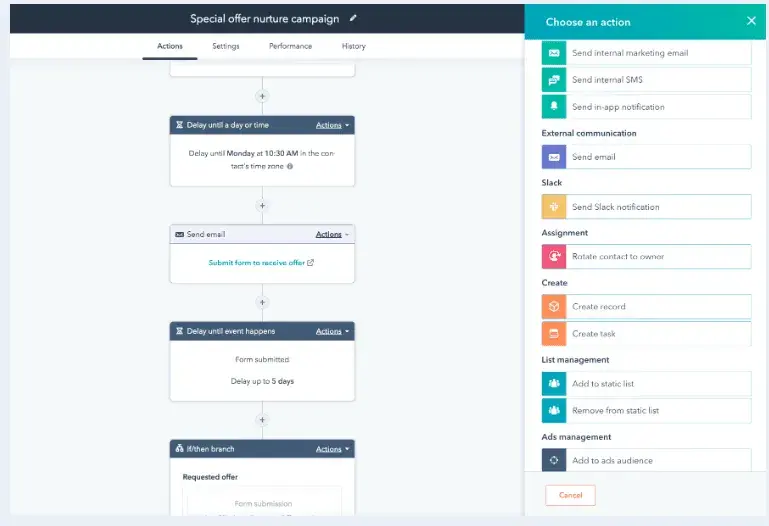
The intuitive appeal of this myth is undeniable: ostensibly, increasing the number of AI tools deployed should correlate directly with enhanced productivity. However, practical experience frequently reveals the inverse. Instead of seamlessly replacing manual steps, marketing teams often find themselves layering new AI applications onto existing, sometimes cumbersome, workflows. This accumulation can lead to tool sprawl, where different AI solutions operate in silos, requiring manual data transfer, context switching, and the overhead of managing multiple subscriptions and interfaces. A recent informal survey among marketing professionals revealed that 55% reported increased complexity and friction when integrating more than five disparate AI tools without a unified strategy.
Industry analysts suggest that true efficiency stems not from the sheer volume of tools, but from connected, intelligent workflows. When AI capabilities are embedded within the platforms where work naturally occurs – such as content management systems (CMS), project management tools, or editorial calendars – the gains become significant. For instance, an AI assistant integrated directly into a CMS can help optimize existing content or generate new drafts within the same environment, eliminating disruptive context shifts. Furthermore, investing in comprehensive training and establishing clear guidelines for the existing toolset often yields greater productivity improvements than constantly chasing the latest feature releases from new vendors. Teams that prioritize a few well-integrated tools and ensure their staff are proficient in using them consistently report higher satisfaction and better outcomes.
- Implications: Wasted financial resources on redundant or underutilized subscriptions, increased operational friction, fragmented data, and mounting frustration among team members burdened by tool proliferation rather than empowered by it.
- Effective Strategies: Before introducing any new AI tool, conduct a thorough audit and mapping of current content processes, from ideation to publication. Identify specific bottlenecks that AI can realistically address. Prioritize consolidation where possible, opting for integrated platforms over standalone solutions. Crucially, invest in robust training for existing tools and establish clear guardrails and best practices to prevent teams from simultaneously experimenting in disparate, uncoordinated directions.
Myth 2: AI-Generated Content Performs Just as Well on Its Own
The advent of generative AI has undeniably resolved the issue of content scarcity, enabling most teams to publish at unprecedented volumes. However, this surge in quantity has foregrounded a more profound challenge: creating content that possesses a distinct brand voice, conveys genuine expertise, and earns the trust of an audience increasingly bombarded with generic information. The risk is that AI, left unguided, tends to default to the safest, most statistically probable version of an idea, which is rarely memorable or persuasive, and unlikely to drive conversions. In an environment where audiences encounter near-identical posts within minutes, performance now fundamentally hinges on unique expertise, authentic perspective, and a compelling narrative, not mere volume.
Both search engines and discerning readers are actively seeking signals of human authorship – evidence that a knowledgeable individual with lived experience and unique insights is behind the keyboard. Generic AI text, while grammatically correct, frequently lacks the nuanced perspective, emotional resonance, and deep understanding that distinguishes truly persuasive content. A recent study by the Content Marketing Institute indicated that content infused with strong human expertise and unique perspectives saw 2.5 times higher engagement rates compared to generic or thinly written pieces.
The marketing teams achieving significant results are treating the AI content creation process as a collaborative endeavor between machine and human. They leverage AI for its speed in generating outlines, conducting research, and drafting initial passes. However, the critical value addition comes from human intervention: layering in real customer examples, clarifying complex claims, tightening arguments, rigorously fact-checking (a non-negotiable step), and meticulously ensuring that every piece serves a clear, overarching business objective. This hybrid approach ensures that while AI handles the heavy lifting of raw content generation, the final output resonates with the brand’s unique voice and strategic goals.
- Implications: Lower audience engagement, reduced conversion rates despite increased traffic, erosion of brand credibility and trust, and a failure to differentiate in a crowded digital landscape.
- Effective Strategies: Employ AI to accelerate the initial stages of content creation, such as brainstorming, outlining, and generating first drafts or research summaries. The subsequent, and arguably more critical, phase involves human editors meticulously refining the content for accuracy, ensuring it aligns perfectly with the brand’s unique voice, infusing it with compelling storytelling, adding differentiating insights, and rigorously verifying all facts.
Myth 3: AI Will Solve Bad Strategy
AI is an unparalleled optimizer of execution, capable of performing tasks with speed and scale previously unimaginable. However, it possesses no inherent capacity to correct fundamental strategic flaws, such as fuzzy brand positioning, ill-defined business objectives, or a lack of understanding of target audience pain points. In fact, applying AI to a flawed strategy merely amplifies the wrong direction, accelerating movement towards an undesirable outcome.
This phenomenon is frequently observed in practice. Teams, excited by AI’s potential, deploy it to publish content more rapidly and in greater volume. While surface-level metrics like traffic might see an uptick, deeper, more critical metrics often remain stagnant. Conversions may stall despite increased visibility, or the content, while ranking for target keywords, fails to genuinely address real buyer pain points or progress them along a conversion path. Without a clear strategic foundation – robust messaging, a well-defined value proposition, and an explicit path to conversion – all the newfound visibility generated by AI simply evaporates before it can contribute meaningfully to pipeline generation or revenue. A 2023 report from Forrester Consulting highlighted that companies with a well-defined content strategy were 3x more likely to report significant ROI from their AI investments than those without.
Marketing leaders consistently emphasize that AI is a powerful engine, but it requires a well-defined strategic map to reach the correct destination. The machine can optimize the route, but it cannot dictate the destination itself.
- Implications: Significant wasted resources (time, money, effort) on misdirected content production, inflated vanity metrics that mask a lack of genuine business impact, and a failure to achieve core marketing and business objectives.
- Effective Strategies: Prioritize and solidify your foundational marketing strategy before scaling production with AI. Get exceptionally crisp on messaging, target audience understanding, value propositions, and clear conversion paths. Once this strategic clarity is established, then leverage AI to efficiently execute and amplify a strategy that is already pointed in the right direction.
Myth 4: Everyone Needs to Adopt AI for Everything Immediately
The pervasive "Fear Of Missing Out" (FOMO) often proves to be a powerful, yet detrimental, driver of technology adoption decisions. Teams frequently acquire new AI tools not because they have identified a specific, critical problem that these tools can solve, but rather because competitors are perceived to be using them. This reactive, unstrategic approach often leads to the acquisition of "wrong-fit" tools, which subsequently introduce unnecessary costs, foster confusion within teams, and cultivate a deep-seated cynicism that makes future, more strategic AI adoption much harder.
Successful AI integration, as demonstrated by leading organizations, is characterized by deliberate, thoughtful moves rather than hasty, universal adoption. These teams initiate their AI journey by first identifying a tangible problem worth solving, clearly defining what success would look like for that specific use case, and only then proceeding to select the appropriate technology. A recent study on technology implementation revealed that projects initiated with a clear problem statement and success metrics were 70% more likely to achieve their objectives.
Furthermore, organizational readiness plays a crucial role. A marketing team still grappling with fundamental content workflows – struggling with consistent brand guidelines, editorial calendars, or basic process documentation – will derive minimal leverage from advanced AI optimization features. Attempting to introduce complexity into an already chaotic environment often exacerbates existing issues. Moreover, teams operating without clear governance structures risk inadvertently multiplying brand inconsistencies, legal liabilities, and data privacy risks as soon as AI scales content production. The absence of robust guardrails for AI usage can lead to costly errors and reputational damage.
- Implications: Unnecessary expenditures on underutilized or unsuitable technology, increased team confusion and resistance, heightened cynicism towards future tech initiatives, and significant risks related to brand consistency, legal compliance, and data privacy.
- Effective Strategies: Identify a single, high-impact use case where AI can realistically remove significant friction or cost. Conduct a contained pilot program to test the solution, meticulously documenting what improved (and what did not). Based on empirical evidence from the pilot, refine the process and then strategically expand its application to other areas, ensuring a phased and problem-driven rollout.
Myth 5: AI Search Is Basically the Same as Traditional SEO
For many years, marketers have understood digital visibility primarily through the lens of search engine rankings, with SEO strategies meticulously crafted to elevate pages on Google’s algorithm. This historical context makes it easy to mistakenly assume that AI-powered answers, such as Google’s AI Overviews, are merely a logical extension of traditional SEO. This assumption, however, fundamentally misrepresents the evolving landscape of search.
While foundational SEO metrics – including robust site structure, technical performance, and domain authority – remain critically important, the mechanics of AI Search operate on a fundamentally different principle. Instead of simply ranking and displaying individual web pages, advanced language models actively compress, synthesize, and rewrite information drawn from multiple sources to provide a direct answer within the search interface. As highlighted by Ahrefs’ 2025 research, AI Overviews have been observed to reduce clicks to top-ranking organic pages by an estimated 34.5%. This stark statistic underscores a pivotal shift: achieving a high rank no longer guarantees direct user engagement or traffic to one’s website.
Visibility in the AI Search paradigm is increasingly contingent upon whether content is structured with extreme clarity, rich with credible context, and readily extractable by language models. Consider two articles that might rank identically on the first page of traditional search results. The article that incorporates clear entity definitions, robust schema markup, structured data, and directly answers common user questions is significantly more likely to be cited repeatedly by AI assistants and appear in AI-generated responses. Conversely, the equally ranked article lacking these AI-specific optimizations may rarely feature in these synthesized answers, effectively rendering it invisible in the new search frontier. This necessitates a dual-pronged approach to search optimization.
- Implications: A significant reduction in organic traffic and potential leads, despite maintaining high traditional search rankings, leading to a diminished return on content investment and a loss of brand presence in critical information-seeking moments.
- Effective Strategies: Sustain and strengthen traditional SEO foundations, including technical SEO, link building, and content authority. In parallel, layer on practices specifically designed for AI visibility: ensure clear entity definitions within content, implement comprehensive structured data (e.g., Schema.org markup), and develop content formats that directly answer user questions, making information easily digestible and attributable for AI models.
The Path Forward: Discipline, Integration, and Measurable Outcomes
If the preceding few years were characterized by a pervasive spirit of experimentation and exploration within the realm of generative AI, the immediate future, particularly 2025 and 2026, demands a profound pivot towards discipline, strategic integration, and a relentless focus on measurable outcomes. The era of indiscriminate tool accumulation and blind adoption is giving way to a more pragmatic and results-oriented approach.
The key to successful AI adoption in marketing lies in judicious application: leverage AI where it demonstrably enhances efficiency, quality, or strategic impact, and critically, resist its implementation where it introduces unnecessary complexity, fails to address a clear problem, or dilutes brand authenticity. The focus must shift from the abstract promise of transformation to concrete, verifiable proof that the work is not merely being done, but is actively working towards defined business objectives.
This disciplined approach will pave the way for a more impactful 2026, one characterized by fewer breathless predictions and a greater abundance of tangible evidence that AI investments are yielding genuine, sustainable value for marketing organizations worldwide. It is a call to action for marketers to become architects of intelligent workflows, discerning curators of technology, and steadfast champions of human-centric content, amplified by the judicious power of AI.
Ready to build AI workflows that genuinely help your team accomplish real work? Contently’s AI-assisted content platform combines generative AI efficiency with essential editorial oversight – ensuring your team accelerates without sacrificing critical quality or brand safety.
Frequently Asked Questions (FAQs):
How do I know if my team is ready for AI adoption?
Assessing readiness for AI adoption involves a clear-eyed evaluation of your current content operations. Your team is likely ready to pilot AI tools if you have well-documented workflows, clear and consistent brand guidelines, and established, consistent publishing processes. These foundational elements provide the necessary structure for AI to integrate effectively. Conversely, if your basic operational processes remain chaotic, unclear, or inconsistent, it is imperative to strengthen these fundamental foundations first. Introducing AI into an unstructured environment often exacerbates existing inefficiencies rather than solving them. A readiness assessment should also consider your team’s digital literacy and willingness to adapt to new tools and methodologies.
What’s the minimum investment needed to see results from AI?
The minimum investment required to see results from AI is often less about significant capital expenditure and more about strategic allocation of time and resources for training. Many existing content platforms and marketing suites are now integrating AI features at little to no additional cost, making the entry barrier for tools relatively low. The real investment lies in human capital: expect to dedicate a concentrated period, typically two to four weeks, to comprehensively train your team on effective prompting techniques, AI-driven editing workflows, and the ethical considerations of AI use. This learning curve is crucial for achieving consistent productivity gains and ensuring quality control. Budgeting for this dedicated training time and acknowledging that initial outputs may require more oversight is key to realizing a positive ROI.
How should I balance traditional SEO with AI Search optimization?
Balancing traditional SEO with AI Search optimization requires a complementary approach rather than a mutually exclusive one. Continue to prioritize traditional SEO fundamentals: building topical authority through high-quality, relevant content; optimizing site performance (speed, mobile-friendliness); ensuring a robust, crawlable site structure; and earning high-quality backlinks. These elements still form the bedrock of overall digital visibility. On top of these foundations, layer AI-specific practices: implement comprehensive structured data markup (Schema.org) to help AI understand your content’s context, clearly define entities (people, places, concepts) within your content, and structure content formats to directly answer specific user questions. This dual strategy ensures your content is optimized for both traditional search algorithms and the evolving information synthesis capabilities of AI.