The digital landscape is undergoing a seismic transformation, with Google’s latest announcements at its annual I/O developer conference in 2026 solidifying a future where artificial intelligence is not just a feature, but the very core of the search experience. This evolution, long anticipated and actively prepared for by forward-thinking marketing agencies, marks a definitive departure from traditional search engine optimization (SEO) and necessitates a fundamental recalibration of B2B marketing strategies. The era of the "blue link" is waning, replaced by an AI-powered ecosystem that prioritizes synthesized answers, conversational queries, and agentic interactions.
At the heart of this shift is Google’s AI Mode, which has rapidly surpassed one billion monthly users. This burgeoning platform is witnessing an exponential surge in query volume, growing at a rate that underscores its ascendancy as the primary method for users to discover, learn, and make decisions. The implications for B2B brands are profound, as the methods that once drove traffic and generated leads are rapidly becoming obsolete. This analysis delves into the critical announcements from Google I/O 2026, the behavioral data that illuminates user adoption, and the strategic imperatives for B2B marketers to not only adapt but thrive in this new AI-centric search paradigm.
The Dawn of an AI-Centric Search Experience
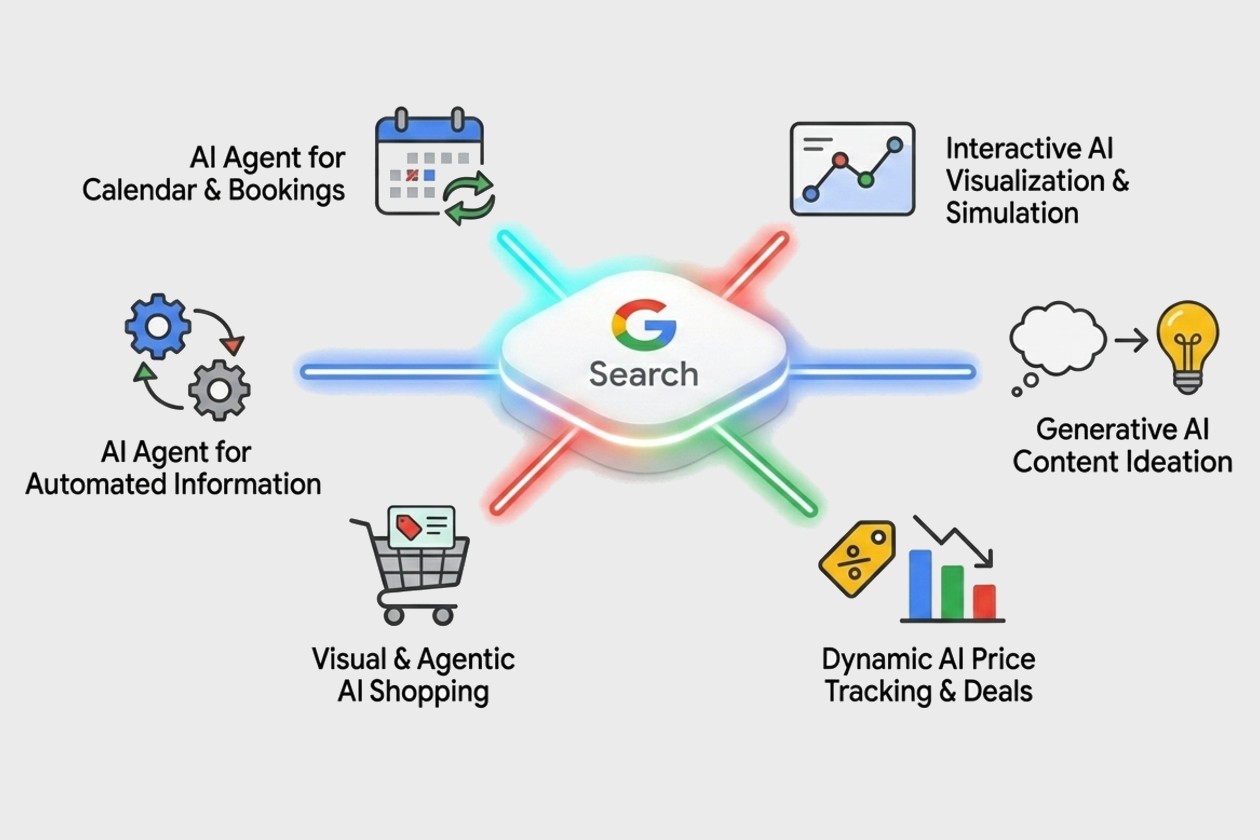
Google I/O 2026 unequivocally signaled the end of the traditional 10-blue-link search results page as the primary interface for information retrieval. Instead, Google is championing an AI-powered experience centered on synthesized answers, autonomous information agents, and dynamically generated user interfaces. This strategic pivot aims to transform Google Search from a discovery engine into a powerful facilitator of decisions across the entire buyer journey.
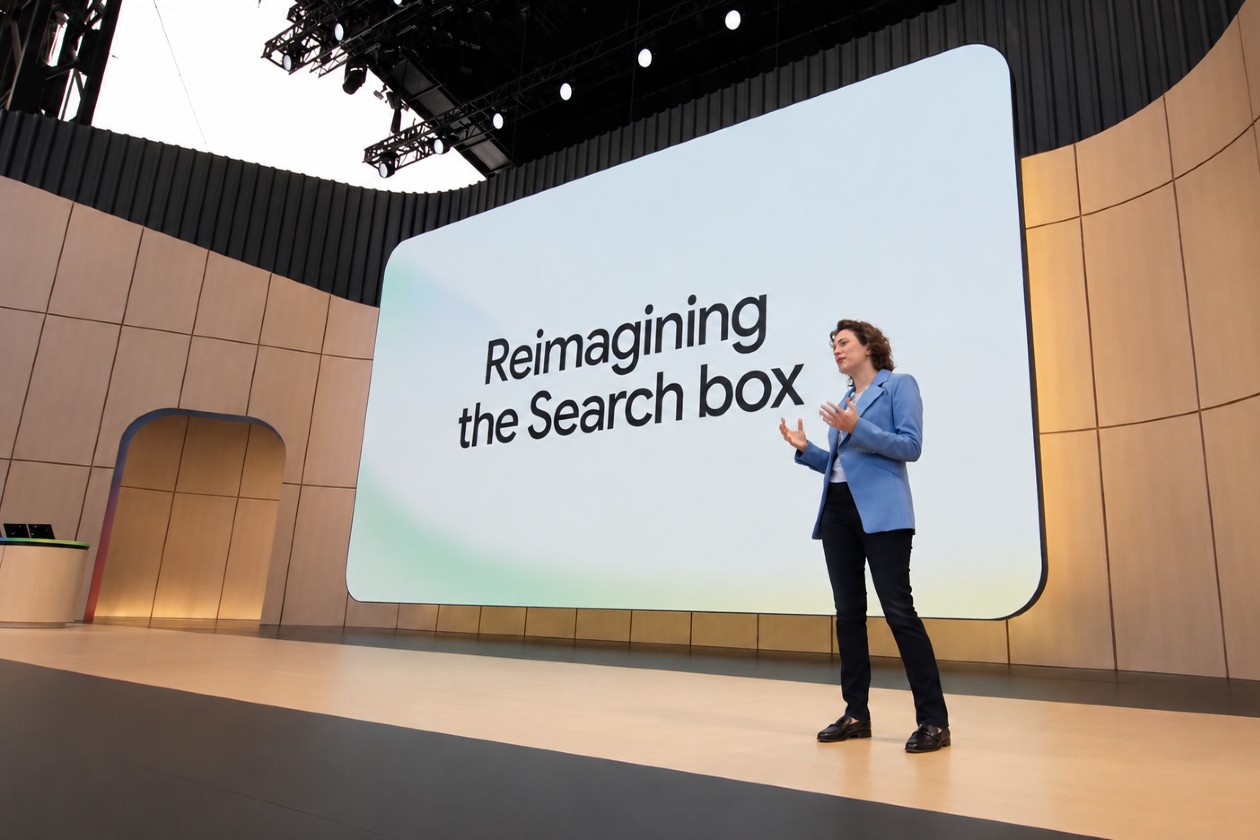
Elizabeth Reid, Google’s VP of Search, described these developments as "the next step in bringing together the best of a search engine with the best of AI." This vision is rapidly materializing. The search box itself has been fundamentally reimagined for the first time in two decades. It now dynamically expands to accommodate longer, more conversational queries, accepts multimodal inputs including text, images, files, and video, and offers AI-powered query suggestions that extend far beyond simple autocomplete. While this added complexity might initially deter some users, for many, it unlocks unprecedented capabilities for in-depth research, resource identification, and informed decision-making.
AI Mode’s Ascendancy and the Rise of Search Agents
The sheer scale of AI Mode’s adoption is a testament to its growing importance. Within just one year of its launch, AI Mode has amassed over a billion monthly users, with query volumes more than doubling each quarter. AI Overviews, a key component of this AI-driven experience, now reach an estimated 2.5 billion monthly users. This indicates that the majority of Google searches are no longer occurring through the familiar list of blue links but are instead being processed and answered within the AI Mode framework.
A significant development highlighted at I/O 2026 is the introduction of "Search Agents." These AI-powered entities allow B2B customers to create, customize, and manage agents that operate continuously in the background. These agents can scan the web, monitor specific topics, synthesize new information, and deliver timely updates. Rather than presenting a list of links, these agents are designed to return synthesized answers accompanied by actionable recommendations. This signifies a fundamental shift in audience perception, with "agents" poised to become a significant secondary audience for content, complementing human engagement.
Generative UI: Interactive and Personalized Search Experiences
Complementing the rise of AI agents, Google is also enhancing its generative UI capabilities. Search is evolving to enable users to build custom interactive experiences on the fly, directly in response to their queries. This could manifest as visual explainers or stateful mini-applications that users can revisit over time. For instance, a buyer could instruct Google to generate a comparative table of features between different vendors directly within the search interface. This capability builds upon last year’s "query fan-out" feature, where AI Mode concurrently executes multiple related searches across subtopics. The evolution into a full agentic system underscores Google’s commitment to autonomous AI functioning on behalf of users.
Crucially, Google’s own AI optimization guide, updated in May 2026, corroborates the importance of foundational content authority in this new ecosystem. It explicitly states that both query fan-out and retrieval-augmented generation (RAG) remain integral to its core search ranking systems, reinforcing the idea that well-established, authoritative content will continue to influence what AI surfaces. As reported by Sarah Perez of TechCrunch, this evolution suggests that "searching the web" will increasingly be delegated to AI agents, with human users focusing on acting upon the information provided. This trend is also being recognized by industry analysts, with Adobe’s Marissa Dacay coining the term "agent-based marketing" and Forrester advocating for a "business to agent" (B2A) strategy.
Behavioral Data Unveils the New Search Landscape
Beyond the technological advancements, Google has released crucial behavioral data insights from AI Mode usage in the U.S. This data provides an invaluable lens through which B2B marketers can understand how buyers are interacting with AI-powered search and what content strategies will be essential for visibility, trust, and eventual selection.
Key findings from this data include:
- Extended Query Length: The average AI Mode search query is now triple the length of a traditional search query. This indicates that users are no longer constrained by keyword optimization and are instead articulating their needs and questions in a more natural, conversational manner. This shift renders keyword-centric content strategies increasingly misaligned with buyer behavior.
- Increased Follow-up Conversations: Follow-up queries within AI Mode have increased by 40% month-over-month. This suggests that buyers are engaging in deeper exploration, delving into related angles, and continuing their information-gathering conversations rather than making one-off inquiries. Brands that possess only a narrow topical focus risk being excluded from consideration as these follow-up conversations progress.
- Multimodal Search Adoption: One in six searches are now multimodal, meaning they incorporate elements beyond simple text. Image input, in particular, has seen a surge of over 40% month-over-month since AI Mode’s launch. This highlights the growing importance of visual and multimedia content in B2B content strategies within an AI-powered search environment.
The top initial words in AI Mode queries, such as "What," "How," "I," "Is," and "Can," coupled with top keywords like "Information," "Identify," "Find," "Explain," and "Summarize," point to a search experience that is fundamentally built around questions and explanations, moving beyond pure keyword matching. Content that directly addresses "what" and "how" questions with clear definitions, frameworks, and expert perspectives is precisely what AI Mode is designed to surface.
Five Behavioral Modes of AI Search Engagement
Google’s AI Mode usage report further categorizes user behavior into five distinct modes: Explore, Decide, Learn, Do, and Create. Understanding these modes is crucial for B2B marketers seeking to align their content strategies with buyer intent.
- Explore: Brainstorming-related queries are growing 30% faster than overall AI Mode queries. Users are leveraging AI Mode to discover new ideas and explore open-ended concepts, particularly at the early stages of problem identification when they may not yet know what category of solution they require. Top-of-funnel (TOFU) content must acknowledge this exploratory, open-ended approach.
- Decide: Searches beginning with "which" have increased 40% faster than overall AI Mode queries. In B2B contexts, this translates to evaluative queries like "which platform," "which provider," or "which approach." Trust signals, comparative content, and credible third-party validation become paramount in influencing visibility at this critical decision-making stage.
- Learn: AI Mode is being extensively utilized for professional development and in-depth learning. B2B buyers often build competency in a category before evaluating vendors. Brands producing educational content, from original research to expert-led explainers, can position themselves as authoritative sources for these learning sessions.
- Do: Planning-related queries in AI Mode have grown 80% faster than overall AI Mode queries in the past six months. Google’s Canvas tool is being employed for complex, multi-step structured planning tasks. B2B brands that publish structured, actionable content, such as step-by-step guides and decision frameworks, can become the go-to resources for these planning activities.
- Create: Image creation queries in AI Mode have more than tripled since the beginning of the year. B2B buyers are increasingly using AI Mode as a productivity tool. Modular, repurposable content that AI can integrate into creation workflows presents a novel visibility opportunity for many B2B brands.
The Declining Efficacy of Traditional SEO Tactics
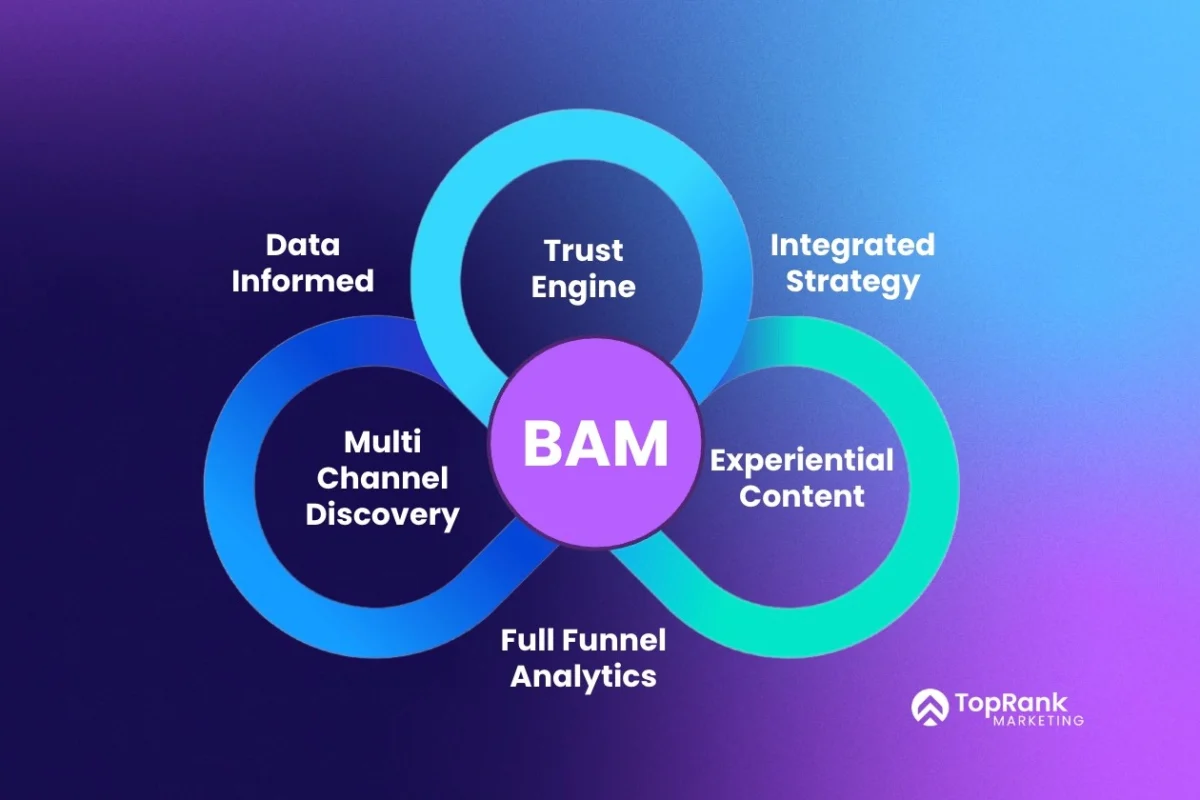
Google’s own guidance for AI search optimization explicitly debunks many of the tactics that have circulated in the market. Strategies such as creating LLMS.txt files, chunking content without regard to context, manufacturing mentions, and an over-reliance on structured data for manipulative purposes are identified as ineffective. This validation aligns with the principles of "Best Answer Marketing" (BAM), a framework developed by TopRank Marketing, which emphasizes unique, non-commodity content backed by original research, genuine thought leadership, and robust credibility signals that AI systems inherently recognize and reward.
The shift towards AI-driven search means that the focus must move from optimizing for clicks to ensuring content is discoverable and valuable within AI-generated answers. This concept of "zero-click search," where users obtain their answers directly from the search interface without visiting a website, is no longer a fringe concept but a dominant reality. As articulated by Jon Miller, Co-Founder of Stealth AI Start-up and Co-Founder of Marketo, "It’s not about showing up on the page one of Google. It’s about getting referenced inside of an AI answer… The playbooks that we used to use just don’t work anymore."

The "Best Answer Marketing" Framework: A Roadmap for the AI Era
The Best Answer Marketing (BAM) framework, developed over years of adapting to search engine evolution, is strategically positioned to address the demands of this new AI-driven landscape. BAM is built upon the premise that buyer behavior and the technologies they employ are in constant flux, with AI being the primary catalyst for current changes.
A recent survey by TopRank Marketing, detailed in their report "Answer Engine: The State of B2B Thought Leadership in 2026," found that 35% of marketing leaders acknowledge that AI and GenAI platforms are actively reshaping content discovery, trust, and engagement. Furthermore, 32% of B2B professionals now report discovering thought leadership through GenAI tools, a figure that is undoubtedly higher today.
Google’s AI optimization guide reinforces the distinction between "commodity content"—generic information accessible from multiple sources—and "non-commodity content"—unique, expert-driven insights that go beyond the commonly known. The guide warns that inauthentic mentions offer little benefit, and AI systems are designed to reward genuine, high-quality content. BAM’s core pillars directly address these requirements:
- Data-Informed: This pillar emphasizes answering the specific questions buyers are asking, leveraging customer surveys, CRM data, audience research, and original research to identify buyer needs. The clear intent signals from AI Mode queries (What, How, Explain, Identify, Summarize) provide a direct roadmap for content briefs. As David Rowlands, Head of Product at B2B Marketing & Propolis, notes, "The content that we find that’s really valuable is the content that’s based in proprietary data and actually has a really strong foundation for saying something different in the industry."
- Integrated Strategy: With the rise in follow-up queries, the depth and coherence of topical coverage are crucial. BAM’s Integrated Strategy pillar ensures that brand, demand, and lead generation content goals are unified across formats and channels, creating consistent narratives. This topical coverage across the buyer journey is now a prerequisite for relevant AI Mode visibility.
- Trust System: In the "Decide" stage, where "which" queries dominate, credibility is paramount. BAM’s Trust System focuses on producing non-commodity content through original research, expert authorship, and robust credibility signals like E-E-A-T (Experience, Expertise, Authoritativeness, Trustworthiness). Google’s own research indicates that 97% of B2B marketers consider thought leadership critical, with original research being significantly more valuable than AI-generated content for building trust.
- Experiential Content: The surge in multimodal search necessitates a move beyond text-only content. BAM’s Experiential Content pillar addresses the need for rich formats and content structures that AI can easily parse and recommend. This aligns with Google’s generative UI capabilities, which can create interactive experiences directly from web content.
- MultiChannel Visibility: With AI agents performing much of the initial search, ensuring visibility across the five behavioral modes is critical. BAM’s MultiChannel Visibility pillar drives discovery across the diverse range of formats and channels that align with each buyer mode, acknowledging that buyers now utilize an average of 10.2 channels during their purchase journey, according to McKinsey.
- Unified Analytics: As direct clicks diminish as a primary performance signal, metrics must evolve. BAM’s Unified Analytics pillar focuses on AI citation rates, brand mention share, topic authority, and pipeline influence, bringing together disparate data sources to measure full-funnel outcomes in an AI-driven world.
The Narrowing Window for Adaptation
The new Google Search interface is already rolling out, with generative UI features to follow shortly. Information agents and mini-app functionalities will be progressively introduced. The behavioral data from Google underscores the urgency: triple-length queries are the norm, follow-up conversations are increasing, and multimodal search is rapidly expanding. Brands that are actively building content strategies around these evolving buyer behaviors are positioning themselves to establish authority and preference not only with AI systems but also with human buyers.
As TopRank Marketing stated last year, embracing a Best Answer Marketing strategy is the path for B2B marketers to transition from simply being found to becoming the indispensable answer customers seek, regardless of how or where they search. The data emerging from Google I/O 2026 and the accompanying behavioral insights confirm that this is precisely the direction the search experience is irrevocably heading. The time for B2B brands to adapt their strategies is now, before the window of opportunity closes.