

The word "target" is fundamental to effective marketing. Identifying and understanding who you are speaking to is paramount, and this extends beyond traditional demographic, psychographic, geographic, and behavioral segmentation. A crucial layer of this understanding involves recognizing the distinct characteristics and preferences of different generational cohorts. This article delves into the nuances of marketing to Millennials, the largest generation in today’s consumer landscape, building upon previous discussions on Gen Z and setting the stage for future explorations of Gen X and Baby Boomers. The goal is to equip marketers with the insights needed to connect with this influential group through the right channels and with resonant messaging.
Millennials, generally defined as individuals born between 1980 and 1994, have ascended to become the largest generational bloc, surpassing the Baby Boomers in sheer numbers. This demographic shift has naturally amplified their economic and cultural influence. While often characterized by their digital fluency, health consciousness, and perceived debt burdens, a deeper examination reveals a more complex and multifaceted consumer profile. Reducing this diverse group to a few simplistic adjectives overlooks the rich tapestry of their experiences, values, and purchasing behaviors.
The Millennial Mindset: A Digital Native’s Journey
Millennials are distinguished by their formative years coinciding with the dawn of the digital revolution. Unlike Gen Z, who were born into an already established digital world, Millennials witnessed and actively participated in its evolution. They were the generation for whom the internet became ubiquitous, social media platforms like Facebook (founded by a Millennial) emerged as transformative communication tools, and tech giants such as Google, Amazon, and Apple rose to prominence during their childhood and early adulthood. This immersion has fostered a deep-seated tech savviness and an intuitive understanding of digital ecosystems.
Data from Pew Research Center highlights that Millennials have achieved higher levels of education than previous generations. However, this educational attainment has often come with significant financial implications. Rising costs of higher education and the escalating price of housing have contributed to a substantial debt burden for many, impacting their ability to reach traditional life milestones at earlier ages. Consequently, Millennials are often delaying major life events such as marriage, homeownership, and starting families, pushing these transitions into their later twenties and thirties.
Beyond these observable trends, the Millennial mindset is often characterized by a degree of self-orientation, coupled with idealism and a strong value placed on individual freedom. This introspection often translates into a heightened awareness of personal well-being, driving trends like the increasing adoption of vegetarianism, veganism, and pescetarianism, as well as a cultural embrace of items like avocado toast. Crucially, for many Millennials, experiences often hold more intrinsic value than the accumulation of material possessions. This preference for experiences over goods significantly influences their consumption patterns and brand loyalties.
Millennial Consumption Patterns: Beyond Stereotypes
Research by McKinsey & Company has identified several distinct consumption behavior clusters within the Millennial demographic, offering a more granular understanding of their purchasing habits. These clusters, while not exhaustive, provide valuable insights into how Millennials approach spending and brand engagement:
- The Pragmatic Spenders: This segment prioritizes value for money and is diligent in comparing prices and seeking out deals. They are less swayed by brand prestige alone and more inclined to research thoroughly before making a purchase. For this group, durability and long-term utility are key considerations.
- The Experience Seekers: As mentioned, experiences are highly valued. This translates into a willingness to allocate significant portions of their budget to travel, events, dining out, and activities that create lasting memories. Brands that can facilitate or enhance these experiences stand to gain their loyalty.
- The Health and Wellness Advocates: This cluster is deeply invested in their physical and mental well-being. They actively seek out products and services that promote a healthy lifestyle, ranging from organic foods and fitness classes to sustainable and ethically sourced goods. Transparency in ingredients and production processes is often paramount.
- The Tech-Savvy Innovators: Always on the lookout for the latest gadgets and digital solutions, this group embraces new technologies readily. They are early adopters of innovative products and are influenced by reviews, social media trends, and the perceived efficiency or entertainment value of new offerings.
- The Socially Conscious Consumers: Driven by a desire to make a positive impact, this segment gravitates towards brands that demonstrate social responsibility, ethical sourcing, and environmental sustainability. They are willing to pay a premium for products from companies that align with their values and contribute to a better world.
It is imperative to note that despite often expressing concerns about their financial futures, Millennials are not inherently averse to spending. Instead, they exhibit a discerning approach, demonstrating a willingness to invest in premium or quality products that offer tangible benefits, whether in terms of longevity, health advantages, or alignment with their personal values. This indicates a shift from impulsive buying to more considered and purposeful consumption.
Strategic Marketing to Millennials: Platforms and Messaging
Understanding the Millennial mindset and their consumption patterns is the first step; effectively reaching them is the subsequent challenge. Marketers must strategically select platforms and craft messaging that resonates with their specific values and behaviors.
Platforms to Reach Millennials
Millennials are digitally native and spend a significant amount of time online. However, their platform preferences are not monolithic and have evolved over time. While early platforms like Facebook remain relevant, newer channels have gained traction.
- Social Media: Facebook, Instagram, and increasingly TikTok are key platforms. Instagram, with its visually driven content, appeals to their appreciation for aesthetics and experiences. TikTok, with its short-form video format, has captured a significant portion of the younger Millennial demographic and is rapidly growing. LinkedIn is crucial for reaching professionals and for B2B marketing efforts targeting this demographic.
- Video Content Platforms: YouTube is a dominant force, serving as a hub for entertainment, education, and product reviews. Millennials often turn to YouTube for in-depth information and to see products in action before making a purchase.
- Streaming Services: With the decline of traditional television, streaming platforms like Netflix, Hulu, and Disney+ are primary entertainment sources. Advertisers are increasingly exploring opportunities within these platforms, though ad load and targeting capabilities can vary.
- Podcasts: The rise of podcasting has provided a more intimate and engaged medium for reaching Millennials. Many listen to podcasts during commutes, workouts, or while multitasking, offering an opportunity for brands to connect through informative or entertaining content.
- Influencer Marketing: Millennials are highly influenced by peers and trusted voices. Collaborating with relevant influencers who align with brand values can be an effective way to build credibility and drive engagement.
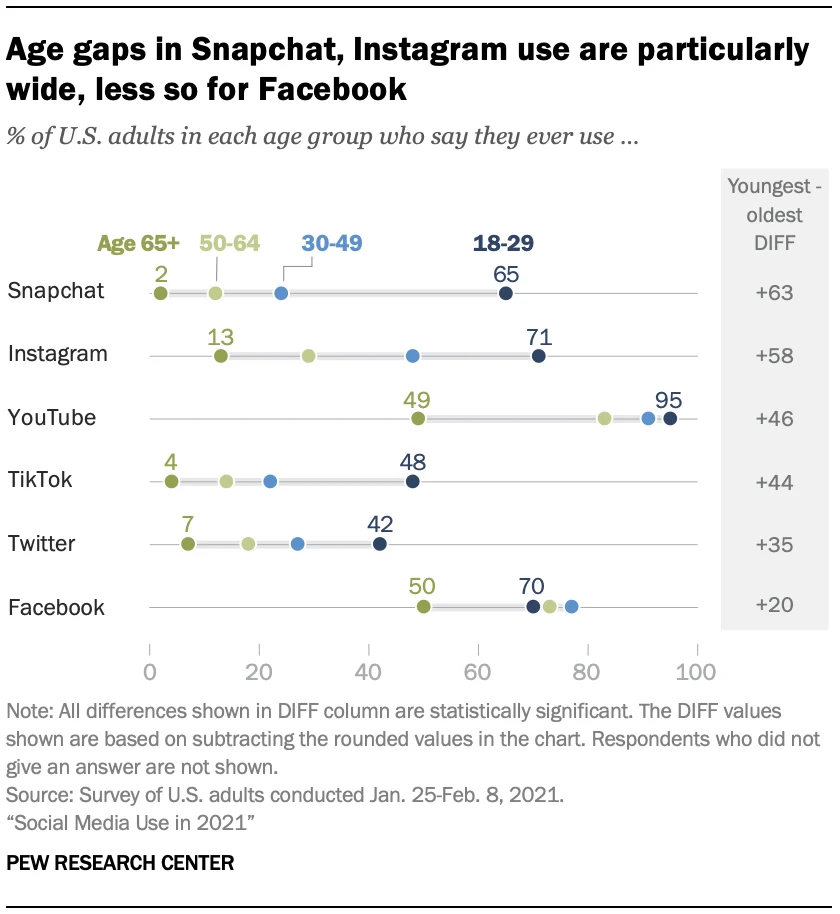
The accompanying visual, depicting age gaps across different social media platforms, underscores the importance of platform selection. While older platforms may still hold a portion of the Millennial audience, understanding the generational breakdown on each is crucial for efficient targeting. For instance, while Facebook has a broad user base, newer platforms might offer a more concentrated reach to younger Millennials.
Messaging That Speaks to Millennials
Once the right platforms are identified, the art of crafting compelling messaging becomes paramount. It is essential to tailor the communication to the specific Millennial consumer cluster being targeted.
- Authenticity and Transparency: Millennials value genuine interactions. Brands should avoid overly polished or inauthentic messaging and instead focus on honesty, transparency, and clear communication. This includes being upfront about product sourcing, ingredients, and company values.
- Value Proposition Beyond Price: While price is a consideration, messaging should highlight the broader value proposition. This could include emphasizing the quality, durability, health benefits, or the positive social or environmental impact of a product or service. For experience-seeking Millennials, the focus should be on the emotional and memorable aspects of an offering.
- Storytelling and Purpose-Driven Marketing: Millennials are drawn to brands with a story and a purpose. Sharing the brand’s mission, values, and commitment to social or environmental causes can foster a deeper connection and build loyalty. Narratives that highlight personal growth, community, or positive change are particularly effective.
- User-Generated Content and Social Proof: Millennials trust recommendations from peers and online communities. Encouraging and showcasing user-generated content, such as reviews, testimonials, and social media posts, can be a powerful marketing tool.
- Interactive and Engaging Content: Generic advertising is often ignored. Millennials respond well to interactive content, such as polls, quizzes, contests, and personalized recommendations. Content that educates, entertains, or solves a problem is more likely to capture their attention.
- Focus on "Why": Instead of simply stating what a product does, explain why it matters. Connect the product or service to the Millennial’s aspirations, values, and lifestyle. For example, instead of just saying a product is sustainable, explain how it contributes to a healthier planet for future generations.
It is crucial to recognize that these are generalized insights, and significant variations exist within the Millennial generation based on individual experiences, geographic location, and specific industry contexts. A one-size-fits-all approach is unlikely to yield optimal results. Therefore, continuous research, A/B testing of messaging, and a commitment to understanding niche audience segments are vital for success.
Broader Implications and Future Considerations
The economic and cultural influence of Millennials is undeniable. As they continue to mature, their purchasing power will only increase, making them a critical demographic for businesses to understand and engage with effectively. The strategies employed to reach them are not merely tactical marketing adjustments but reflect a broader shift in consumer expectations towards authenticity, purpose, and personalized experiences.
The success of marketing efforts targeting Millennials hinges on a deep understanding of their evolving needs and values. The tendency to delay traditional life stages, coupled with a strong emphasis on personal well-being and experiential consumption, signifies a departure from previous generations’ patterns. Brands that can adapt their offerings and communication to align with these core tenets are best positioned to capture their attention and foster long-term loyalty.
Looking ahead, as Millennials continue to navigate their financial journeys and life stages, their consumption patterns will likely continue to evolve. Marketers must remain agile, continuously monitoring trends and consumer sentiment. The ability to pivot strategies, embrace new technologies, and maintain a consistent commitment to authentic engagement will be key differentiators in the competitive landscape of reaching this dominant consumer cohort. For organizations seeking to refine their digital marketing strategies and forge deeper connections with the Millennial audience, consulting with experienced marketing professionals can provide tailored solutions and expert guidance.









