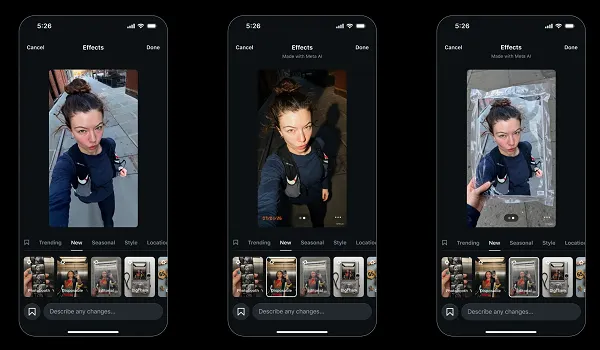
Instagram Chief Adam Mosseri has officially confirmed that users of the popular social media platform will eventually need to pay for access to advanced in-app artificial intelligence (AI) tools. The announcement, made during Mosseri’s weekly Q&A session on Instagram Stories, signals a significant shift in Meta’s monetization strategy for its rapidly evolving AI capabilities. Mosseri explicitly stated that the substantial operational expenses associated with running sophisticated AI models necessitate a move towards a subscription-based model, offering users a choice between throttled free access or paid, unlimited usage.
This revelation comes as Meta, Instagram’s parent company, intensifies its efforts to establish robust revenue streams for its ambitious and costly AI initiatives. The company has been investing billions of dollars into AI research, development, and infrastructure, aiming to integrate generative AI across its family of apps and hardware. The decision to introduce paywalls for AI features underscores the economic realities of deploying cutting-edge technology at scale and reflects a broader industry trend towards monetizing advanced digital services.
The Economic Imperative: High Costs of AI Operations
Mosseri’s explanation was direct and unequivocal: "Basically, these AI models are very expensive to run, and so we try to just offer them for free, but we have a cap on how many times you can use them per day. Eventually, you’re going to be able to subscribe to be able to get access to more, we’re working on that right now." This statement highlights the core challenge facing many tech companies at the forefront of AI development: while the potential applications are vast, the computational resources required to train, deploy, and maintain these models are immense.
Generative AI models, such as those powering advanced image and video creation or complex conversational agents, demand significant computing power, often relying on specialized Graphics Processing Units (GPUs) and vast data centers. The cost of electricity, hardware maintenance, cooling systems, and the continuous refinement of algorithms contribute to an escalating operational expenditure. Industry estimates suggest that training a single large language model (LLM) can cost tens of millions of dollars, with ongoing inference costs (the cost of running the model for each user query) adding up quickly when scaled to hundreds of millions or billions of users. For a platform like Instagram, with over 2 billion active users globally, offering unlimited free AI access would quickly become unsustainable.
Meta’s commitment to AI has been evident in its financial disclosures. The company has publicly stated its intention to invest "billions of dollars" annually into AI infrastructure, including acquiring hundreds of thousands of NVIDIA H100 GPUs, which are crucial for AI workloads. Such investments are a testament to the strategic importance Meta places on AI, viewing it as fundamental to its future growth and competitive positioning. However, these massive outlays naturally create pressure to find corresponding revenue streams to justify and sustain the investment.
A Phased Rollout: From Free Access to Subscription Tiers
The transition to a paid AI model on Instagram is not an abrupt shift but rather the culmination of a gradual strategy. Mosseri’s comments indicate that Meta has initially offered AI tools with usage caps, allowing users to experience the features while managing the associated costs. This approach serves a dual purpose: it introduces users to the capabilities of Meta’s AI and gauges interest, simultaneously preparing them for the eventual introduction of subscription tiers.
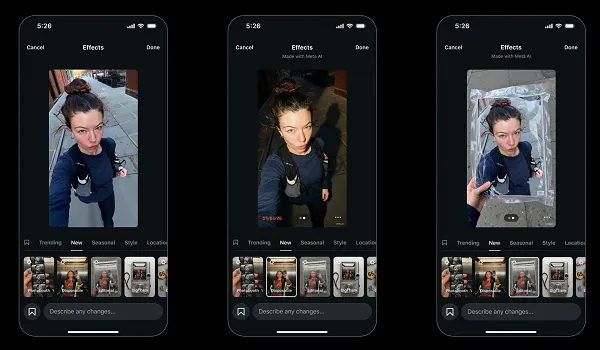
This strategy has already been observed in other Meta products. For instance, the company recently launched its "Instagram Plus" add-on subscription package, although it does not yet explicitly include AI features. However, Meta has been implementing restrictions on the use of effects powered by its latest Muse image model, directing users who hit these limits to subscribe to Meta services.
Beyond Instagram, Meta’s broader AI monetization strategy is also taking shape through its "Meta One" subscription package. This package, designed for users of Meta AI glasses, offers unlimited usage of the "Conversation Focus" feature for paying subscribers, while non-paying users are restricted to three hours per month. These early implementations serve as test cases and precedents for the more widespread integration of paid AI features across Meta’s ecosystem. The consistent pattern across these initiatives points to a deliberate corporate strategy to transform advanced AI functionality into a premium service.
Background and Chronology of Meta’s AI Push
Meta’s journey into AI is not new, but its recent push into generative AI and consumer-facing applications marks a significant acceleration. For years, AI has underpinned many of Meta’s core functionalities, from content recommendation algorithms on Facebook and Instagram feeds to targeted advertising and spam detection. However, the advent of sophisticated generative AI models, capable of creating novel content (images, text, video) from simple prompts, opened up new frontiers for user engagement and creative expression.
- Early 2020s: Meta begins heavily investing in foundational AI research, particularly in large language models and multimodal AI, aiming to compete with Google, OpenAI, and Microsoft.
- Late 2022: Meta unveils its "Make-A-Video" text-to-video generation tool, demonstrating its capabilities in generative AI.
- Mid-2023: Meta introduces "Meta AI," its conversational assistant, across its apps and hardware, including WhatsApp, Messenger, and Instagram, and later on its Ray-Ban Meta smart glasses. This marked a significant public-facing rollout of its AI capabilities.
- Late 2023: Meta launches new generative AI features for image and video generation within Instagram, allowing users to remix public posts and apply AI-powered effects. Initial usage is free but often comes with soft caps.
- Early 2024: Meta begins to roll out "Instagram Plus" and "Meta One" subscription packages, testing the waters for premium features, some of which are AI-enhanced. Mosseri’s latest confirmation solidifies the long-term plan for paid AI.
Mosseri himself has been hinting at this trajectory for years. In various interviews and Q&A sessions, he has consistently emphasized the increasing costs associated with developing and maintaining advanced features, subtly preparing the user base for potential monetization shifts. With Meta continuing to pour billions into AI development, it was widely considered inevitable that some of these costs would eventually be passed on to users. The latest announcement provides clear, official confirmation of this strategic direction.
Broader Implications for Users and the Platform
The introduction of paid AI features on Instagram presents a complex array of implications for both users and the platform itself.
- User Experience and Equity: For many users, the prospect of paying for features that were once free, or are currently available with limitations, may be met with resistance. Social media platforms have largely operated on a freemium model, where core functionalities are free, supported by advertising. Shifting essential creative tools behind a paywall could create a two-tiered user experience, potentially limiting access to advanced creative capabilities for users unwilling or unable to pay. This could exacerbate digital divides, where those with financial means have access to superior tools and potentially gain an advantage in content creation and engagement.
- Value Proposition: The success of Meta’s AI monetization strategy will depend heavily on the perceived value of these premium features. Users will need to feel that the subscription cost is justified by the enhanced functionality, convenience, and unique capabilities offered by the AI tools. If the free tiers remain sufficiently robust, or if the paid features do not offer a compelling advantage, adoption rates for subscriptions might be lower than anticipated.
- Innovation and Creativity: On the positive side, a stable revenue stream from AI subscriptions could enable Meta to invest even more heavily in research and development, leading to more innovative and powerful AI tools. This could foster new forms of creativity and content generation on the platform, pushing the boundaries of what users can achieve with digital tools.
- Monetization Diversification: For Meta, this move represents a crucial step in diversifying its revenue streams beyond its heavily advertising-dependent model. While advertising remains the company’s primary source of income, the increasing regulatory scrutiny on data privacy and the volatile nature of digital ad markets make subscription revenue an attractive, more stable alternative. This diversification is critical for Meta’s long-term financial health and resilience.
- Competitive Landscape: This decision will also influence the competitive landscape. Other social media platforms and creative tools (e.g., TikTok, Snapchat, Canva, Adobe) are also integrating AI. How they choose to monetize these features will be closely watched. If Meta successfully implements a paid AI model, it could set a precedent for the industry, encouraging other platforms to follow suit. Conversely, if users strongly reject paywalls, competitors might opt for different monetization strategies, such as ad-supported AI or more limited free tiers.
Official Responses and Strategic Rationale
While Mosseri’s Q&A provided direct insight, Meta’s broader corporate strategy aligns with this move. Mark Zuckerberg, CEO of Meta, has repeatedly emphasized the company’s long-term commitment to AI, stating that it will be integral to every product and service Meta offers. This vision includes not only consumer-facing tools but also backend infrastructure and developer platforms. The substantial investment required to realize this vision necessitates a clear monetization pathway.
The company’s approach seems to be a pragmatic one: "we would prefer to keep as many of our features available for free, but at some point it costs, the servers they add up too much, and we have to actually either throttle people or ask them to pay." This statement from Mosseri encapsulates the economic reality that even with Meta’s vast resources, unlimited free access to computationally intensive AI is not sustainable in the long run. The strategy is to offer a basic, limited free experience to attract a broad user base, while reserving advanced, high-cost features for paying subscribers.
Industry Context and Future Outlook
Meta’s pivot to paid AI features is part of a larger trend observed across the tech industry. Companies like OpenAI (ChatGPT Plus), Microsoft (Copilot Pro), and Google (Gemini Advanced) have already introduced subscription tiers for their most advanced AI models and features. This indicates a consensus among leading AI developers that premium AI access is a viable and necessary monetization strategy.
The challenge for Meta, and Instagram specifically, will be to effectively communicate the value of these paid AI features to its vast and diverse user base. The company will need to demonstrate clear advantages over free alternatives, whether through superior quality, speed, advanced functionalities, or exclusive content. Moreover, the pricing structure will be critical – it must be perceived as fair and accessible enough to encourage widespread adoption among those willing to pay.
The success of this strategy will ultimately determine not only Meta’s ability to recoup its significant AI investments but also the future direction of content creation and consumption on social media. As AI tools become more powerful and ubiquitous, the distinction between free and paid access will increasingly shape how users interact with digital platforms and express their creativity. Meta’s decision marks a pivotal moment in this evolution, setting a new precedent for the integration and monetization of artificial intelligence in the mainstream digital experience.