

The summer vacation season is traditionally a vibrant period marked by bustling airports, booked hotels, and adventurous itineraries, with millions finalizing their travel plans. However, the summer of 2026 is poised to diverge significantly from this familiar pattern, emerging as one of the slowest travel seasons in recent memory. A comprehensive survey conducted across key Western economies—involving 1,075 Americans, 1,114 Brits, and 1,068 Canadians—reveals a striking trend: approximately half of these populations are either substantially scaling back their vacation aspirations or abandoning them entirely. This widespread retrenchment underscores a pervasive sense of economic caution and an evolving consumer landscape.
Further corroborating these findings, independent analyses paint a consistent picture of a constrained travel market. Deloitte’s latest insights indicate that U.S. summer travel intent has plummeted to a six-year low, with a mere 45% of Americans planning overnight vacation stays. Similarly, Bank of America’s economic forecasts project a notable decrease in spending on tourism-related services compared to the preceding year. These converging data points signal a profound shift in discretionary spending patterns, prompting a deeper inquiry into the underlying factors driving this unprecedented slowdown.
The Retreat from Grand Journeys: A Closer Look at Travel Intent
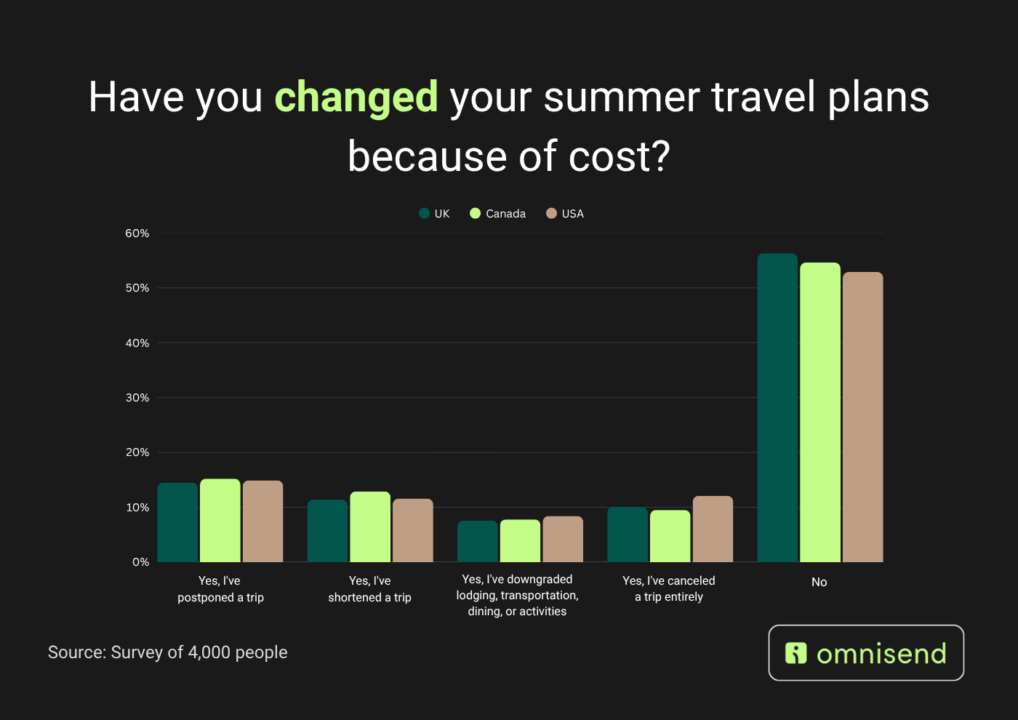
While a superficial glance at the survey data might suggest a relatively robust travel season—with 59% of Americans, 67% of Brits, and 67% of Canadians still intending to travel—a granular examination reveals a starkly different reality. The prevailing theme for Summer 2026 is one of diminished scope and altered expectations. Grand, far-flung adventures involving flights and paid lodging are increasingly becoming the exception rather than the norm. Only a modest 17% of Americans, 24% of Brits, and 17% of Canadians are committing to such significant trips. This data challenges the conventional image of summer travel as a period for extensive, resource-intensive getaways.
Instead, a substantial segment of the populace is gravitating towards more financially prudent alternatives. Shorter excursions and localized travel destinations are experiencing a surge in popularity, with 19% to 28% of those surveyed opting for these more accessible forms of leisure. Concurrently, a significant portion, ranging from 21% to 24%, is actively seeking ways to economize, either by identifying cheaper options or by reducing the duration of their planned trips. This strategic downsizing reflects a broader consumer adaptation to prevailing economic pressures.
The most telling indicator of this shift is the widespread embrace of the "staycation," a term now firmly embedded in common parlance, referring to vacationing at home or in one’s local area. This trend is particularly pronounced in the United States, where 18% of respondents report foregoing any vacation-like activities whatsoever, complemented by an additional 14% who explicitly state their intention to remain at home. This collective pivot towards domestic and budget-friendly leisure activities marks a pivotal moment in contemporary travel behavior.
Economic Headwinds: The Primary Driver of Reduced Travel
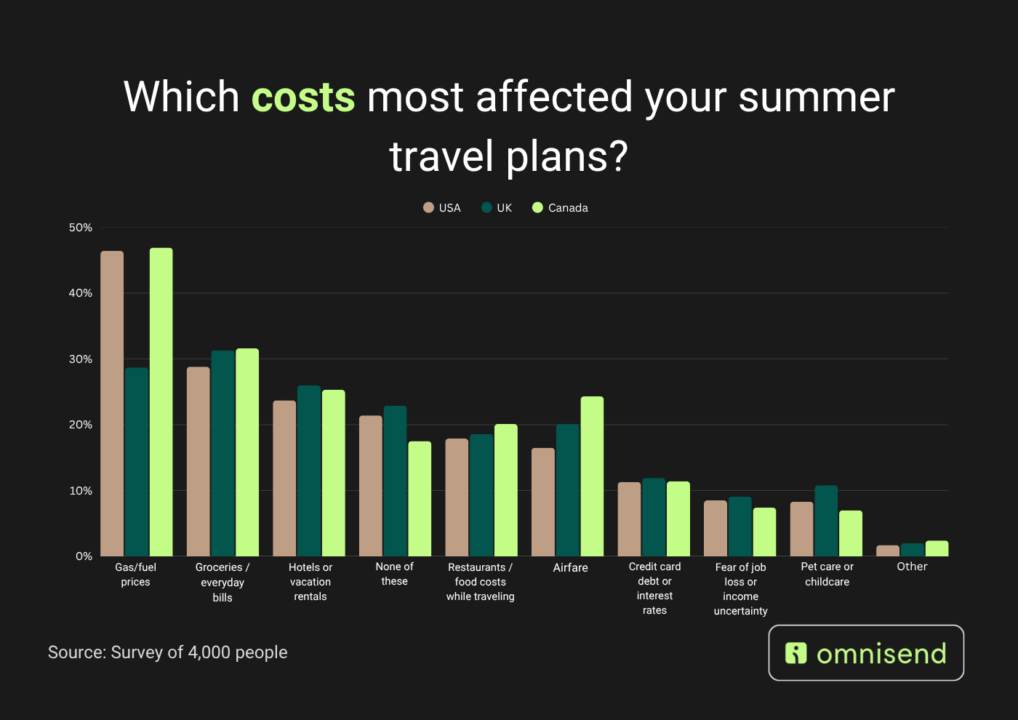
The primary catalyst for this widespread scaling back or outright cancellation of vacation plans is the unrelenting pressure of elevated costs. A significant majority of respondents across all surveyed nations—47% of Americans, 44% of Brits, and 45% of Canadians—identify high costs as the overriding factor influencing their decisions. The impact of recent price increases has been felt acutely across various sectors, but particularly in fuel. Soaring gas prices have emerged as a particularly painful deterrent, especially for North American travelers. A striking 46% of Americans and 47% of Canadians cited fuel costs as a critical determinant in altering their summer travel plans. In the United Kingdom, while gas prices remain a concern, the burden of groceries and everyday household bills takes precedence, cited by 31% of Brits as a key factor.
Marty Bauer, an E-commerce Expert at Omnisend, aptly summarizes the cascading effects of these cost escalations. "Gas prices have a ripple effect," Bauer explains. "It’s not merely that travel or flights become more expensive. It also inflates the prices of other commodities that we typically associate with vacationing, from dining out to local attractions. Furthermore, the more one spends on essentials like fuel or airfare, the more the overall vacation budget inevitably shrinks. This leaves individuals facing an uncomfortable conundrum: Is it worthwhile to compromise the quality of their leisure time, or is it more judicious to allocate those funds elsewhere?" This dilemma encapsulates the difficult choices consumers are confronting in the current economic climate.
Redirecting Budgets: Prioritizing Essentials and "Little Treats"
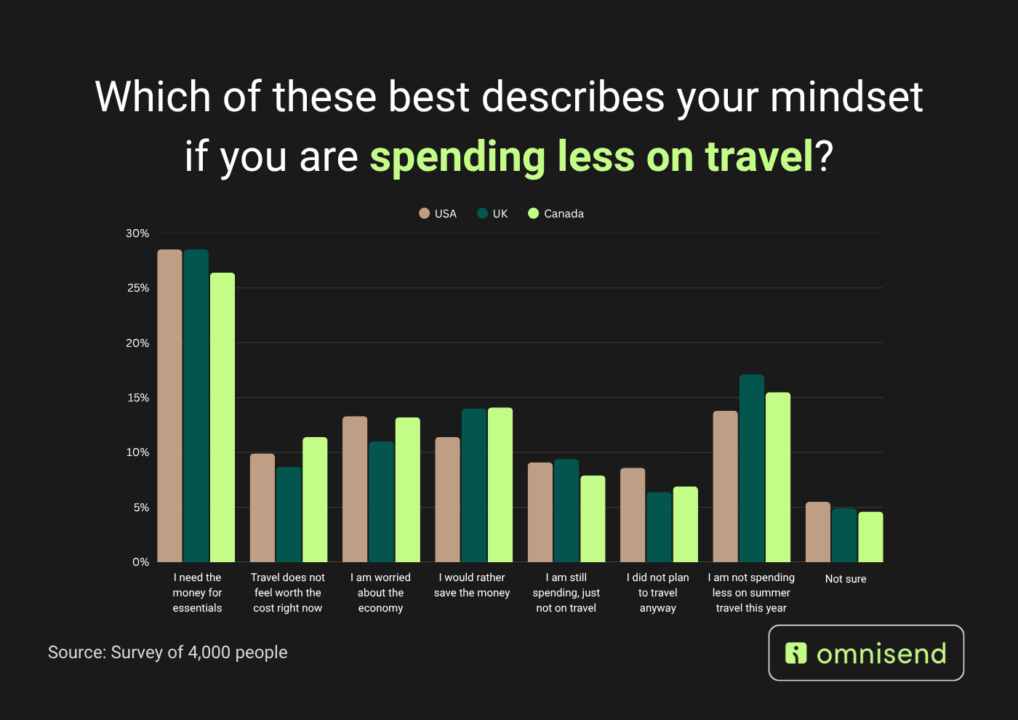
The survey further illuminates the reallocation of funds that would otherwise be earmarked for travel. A substantial portion of the population is diverting their discretionary income towards fundamental necessities. This practical redirection is the main motivation for 29% of Americans, 29% of Brits, and 26% of Canadians. The pervasive sense of economic uncertainty also plays a significant role in consumer decision-making, with 11% to 13% of respondents expressing concerns about the broader economic outlook. Furthermore, 9% to 11% articulate a sentiment that, at present, travel simply does not represent good value for money.
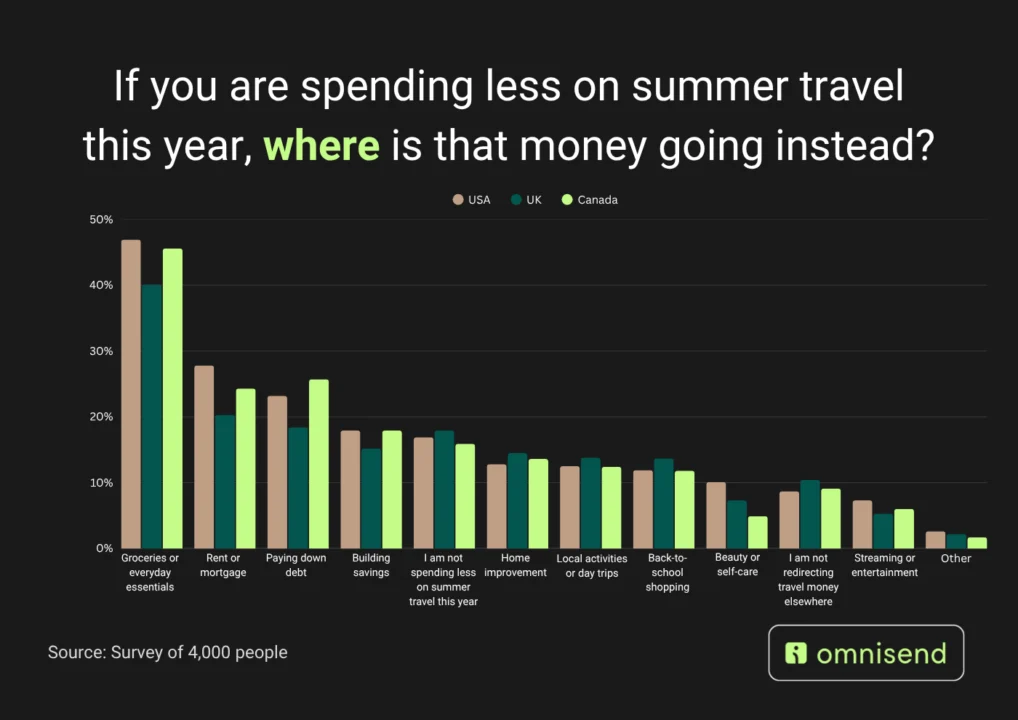
Those who are curtailing their travel expenditures are primarily channeling their resources into essential aspects of daily life. The most frequently cited categories for this redirected spending include groceries and daily essentials (40% to 47%), rent or mortgage payments (20% to 28%), and debt reduction (18% to 26%). This pattern underscores a broader tightening of household budgets, where fundamental financial security takes precedence over leisure travel.
For a considerable segment of the surveyed population, this fiscal conservatism extends beyond travel. A notable 29% of Americans, 25% of Brits, and 24% of Canadians who have scaled back their vacation plans are concurrently reducing spending on everyday purchases, indicating a more profound adjustment to their overall consumption habits. This suggests that the current economic pressures are prompting a holistic re-evaluation of discretionary spending.
However, the phenomenon of the staycation is not solely characterized by austerity. Consumers are also finding alternative avenues to indulge and reward themselves within their constrained budgets. Among those opting for a staycation this year, a striking 58% of Americans, 60% of Brits, and 60% of Canadians express a high likelihood of purchasing smaller "treats" for themselves. This behavior aligns with the well-documented "lipstick effect," where consumers forgo larger luxury purchases in favor of more affordable indulgences during economic downturns.
The most popular categories for these smaller treats include clothing (14% to 17%), food delivery services (9% to 13%), local experiences (11% to 16%), restaurant meals (9% to 15%), and premium groceries (8% to 10%). Bauer posits that in this period of economic volatility, these smaller luxuries serve as a psychological counterbalance, allowing individuals to reward themselves for their daily efforts and sacrifices. "You could say that we’re witnessing the lipstick effect in action," Bauer elaborates. "During economic downturns, people often forgo larger purchases, but keep paying for small luxuries. It fulfills their need to treat themselves, simultaneously allowing them to reduce spending on other goods. In this case, travel. In fact, economists call it one of the best indicators that the trust in the economy is in a downturn." This observation highlights the intricate interplay between consumer psychology and economic realities.
Background Context: From "Revenge Travel" to Reality Check
The current slowdown in summer travel follows a period of unprecedented "revenge travel" in the immediate aftermath of the global pandemic. As travel restrictions eased, a pent-up demand for experiences led to a surge in bookings and spending throughout 2022 and early 2023. This boom, however, was unsustainable, particularly as global economic conditions began to shift. Inflationary pressures, exacerbated by supply chain disruptions, geopolitical events, and robust consumer demand, started to bite in late 2023 and intensified into 2024 and 2025. Central banks responded with interest rate hikes, further tightening household budgets and increasing the cost of borrowing.
This chronological progression illustrates a pivot from a period of unbridled post-pandemic spending to a more cautious and financially prudent approach. The initial surge in travel was largely driven by a desire for normalcy and deferred gratification, often funded by pandemic-era savings or stimulus checks. As these buffers diminished and the cost of living continued to climb, the ability and willingness to undertake expensive vacations began to wane. The data for 2025 and 2026 clearly reflects the delayed impact of these macroeconomic forces on consumer discretionary spending.
Broader Implications and Industry Responses
The pronounced shift towards staycations and budget-conscious travel carries significant implications for the global tourism industry. Airlines, hotel chains, tour operators, and destination marketing organizations face the challenge of adapting to a more discerning and cost-sensitive consumer base. Industry analysts suggest that we may see a heightened focus on value-driven packages, increased promotions for domestic travel, and a greater emphasis on experiential tourism that caters to local and regional markets. Smaller, independent travel businesses, particularly those reliant on international tourism, may find the current climate especially challenging.
For instance, major airlines might adjust their capacity on international routes, potentially increasing domestic flight options or introducing more economy-focused offerings. Hotel groups could pivot towards promoting staycation-friendly amenities, such as enhanced local activity partnerships or discounted weekend rates for residents. Tourism boards, which previously targeted international visitors, might re-focus their campaigns on encouraging residents to explore their own regions, highlighting accessible natural attractions or cultural sites.
Economists generally view this trend as a clear indicator of broader consumer confidence levels. While the desire for leisure and exploration remains strong, the capacity to fulfill these desires through traditional means is hampered by economic anxieties. The "lipstick effect," as highlighted by Bauer, suggests that consumers are not entirely abandoning self-reward, but rather recalibrating its form and scale. This phenomenon has been observed in previous economic downturns, signaling a consistent human need for psychological uplift even amidst financial constraints.
The long-term implications could include a permanent recalibration of vacation habits for some demographics. If economic pressures persist, or if the convenience and cost-effectiveness of staycations prove increasingly appealing, a segment of the population might permanently favor shorter, localized breaks over extensive, expensive trips. This could foster the growth of regional tourism economies and shift investment patterns within the travel sector.
Conclusion: A New Era of Thoughtful Leisure
The summer of 2026 represents a critical juncture in the evolution of leisure travel. Far from being a mere blip, the widespread trend of scaling back or canceling vacations underscores the profound impact of global economic headwinds on household budgets and consumer behavior. High costs, particularly for fuel and everyday essentials, are compelling individuals in the U.S., UK, and Canada to make difficult choices, prioritizing financial stability over traditional holiday indulgence.
However, this shift is not entirely devoid of positive adaptations. The rise of the staycation and the redirection of spending towards smaller, more accessible treats demonstrate a resilient human desire for relaxation and self-reward, albeit within revised financial parameters. While the grand international getaway may be less common, the pursuit of happiness and leisure continues, redefined by necessity and innovation. The travel industry and policymakers alike must acknowledge these evolving trends and adapt strategies to meet the demands of a more budget-conscious and locally focused consumer in what promises to be a new era of thoughtful, rather than extravagant, leisure.








